Hi this is Team Merchant Navy Decoded !!!
Please fill the below form with your query and we will get back to you in next 12 hours.
Rest assured your data is safe with us !!!🙂
Ask Your Query| For Beginner | For Professional |
|---|---|
| GME | Engine Side |
| G.P. Rating | Deck Side |
| ETO | G.P. Rating |
| IMUCET & Sponsorship | Combo Offers |
| Free Course | MEO |
| Free Course |
| For Beginner | For Professional |
|---|---|
| GME | Engine Side |
| G.P. Rating | Deck Side |
| ETO | G.P. Rating |
| IMUCET & Sponsorship | Combo Offers |
| Free Course | MEO |
| Free Course |
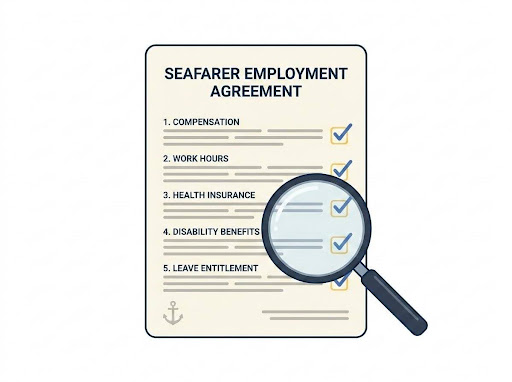
Before signing a Seafarer Employment Agreement, do not check only the salary, contract period, and joining date. Your contract and applicable Collective Bargaining Agreement (CBA) may contain important information about death compensation, missing-at-sea cases, insurance, jurisdiction, and nominee benefits. These clauses may become extremely important if a seafarer dies, suffers a serious incident, or goes missing during employment, so both the seafarer and family should understand them before joining the vessel.
A Seafarer Employment Agreement (SEA) defines the employment conditions agreed between the seafarer and shipping company. However, some benefits may also be governed by an applicable CBA. This means seafarers should keep copies of both documents and make sure their family knows where they are stored and what important benefits are mentioned in them.
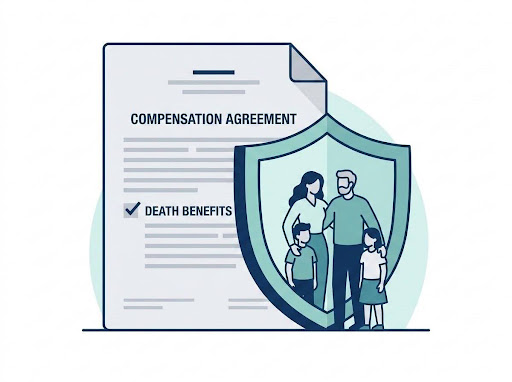
The first important clause to check is death compensation. If a seafarer dies during eligible employment, the amount payable to the family may depend on the employment agreement, applicable CBA, and relevant legal liability. The P&I Club does not simply decide how much money the family should receive.
Check the exact compensation available to the spouse or nominated beneficiary. Also check whether the agreement provides any additional benefit for dependent children, because compensation amounts and family benefits can differ significantly between agreements.
Do not stop after checking the compensation amount. Find out who is officially nominated to receive it and how the payment process works. Your nominee details should match your current family situation.
An outdated nominee can create unnecessary administrative or legal problems for the family. If you marry, have children, or want to change your beneficiary, review and update these details whenever required.
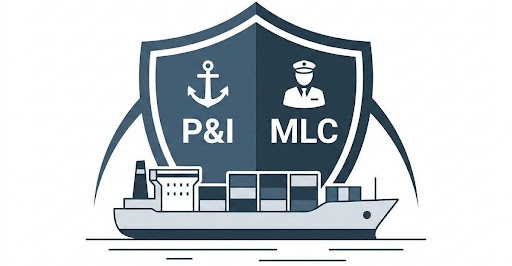
The second important area is the vessel’s P&I insurance and applicable MLC financial security. A shipowner may have insurance protection against certain liabilities involving death, long-term disability, repatriation, abandonment, and other crew-related obligations.
A seafarer should know whether the ship has the required financial security and which insurer or P&I Club is involved. This information can become important if the family later needs to understand how an eligible compensation claim is financially supported.
Check the applicable financial security certificate or documentation available onboard. It may contain useful information such as the name of the financial security provider or P&I Club, validity of the cover, and claim contact information.
Your family should also know these details. If something happens while you are at sea, they should not have to begin from zero trying to identify the insurer, P&I Club, vessel details, or company contact.
Every seafarer should check what the contract says if a crew member goes missing at sea and the body is never recovered. A clear contract may explain under what circumstances the missing seafarer can be treated as presumed dead and when death compensation may become payable.
This is particularly important because missing-person cases can involve Search and Rescue operations, official investigations, and legal questions about presumption of death. The wording of the employment agreement or CBA may therefore make a major difference for the family.
Check whether the contract requires physical recovery of the body before compensation can be considered, or whether official investigation findings and Search and Rescue results can be sufficient under the applicable terms.
Some agreements may contain clearer provisions for a seafarer who remains missing after an official investigation and search operation. Without clear contractual wording, the family could potentially face a more complicated process before compensation is settled.
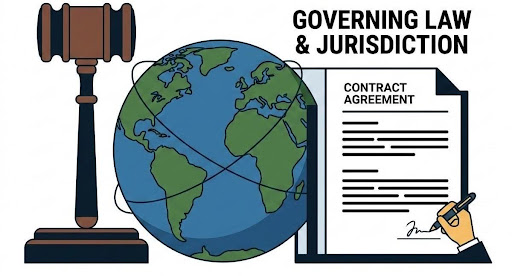
The governing law and jurisdiction clause tells you which country’s legal framework or dispute-resolution process may apply if something goes wrong. This becomes especially important when an Indian seafarer works on a foreign-flagged vessel.
A vessel may be registered in Panama, Liberia, the Marshall Islands, or another jurisdiction. If a dispute arises, the employment agreement may determine where proceedings or arbitration must take place.
Imagine your family has to pursue a compensation dispute in a foreign country. Foreign lawyers, documentation, travel, and unfamiliar legal procedures can make the process much more difficult and expensive.
Before signing, understand whether disputes must be handled in a foreign court, through arbitration, or through another mechanism. Knowing the jurisdiction clause in advance can help you understand how practical it would be for your family to pursue a claim.
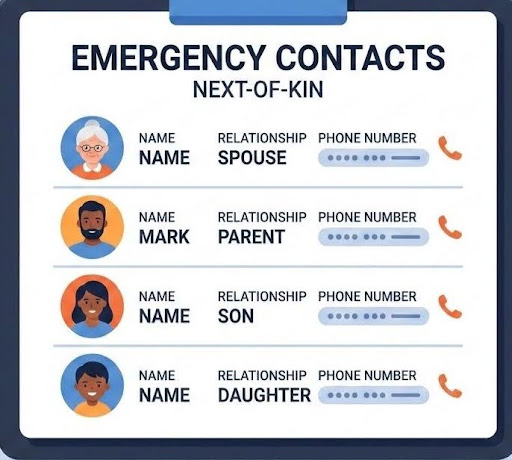
One of the simplest but most important things to verify is your nominee and next-of-kin information. Check your spouse or parents’ details, phone numbers, residential address, bank information, and emergency contacts whenever you sign or renew a contract.
Incorrect or outdated details can create problems when the company needs to contact the family or process an eligible compensation payment. Take a few minutes before joining to confirm that every important detail is correct.
Many seafarers carefully read the salary section of their contract but never properly check the CBA. This can be a mistake because important provisions relating to death compensation, dependent-child benefits, disability, leave, wages, and other employment rights may be written there.
If your employment is covered by a CBA involving a maritime union, identify that agreement and understand its important provisions. Your family should also know which CBA applies because they may need it when dealing with the company after a serious incident.
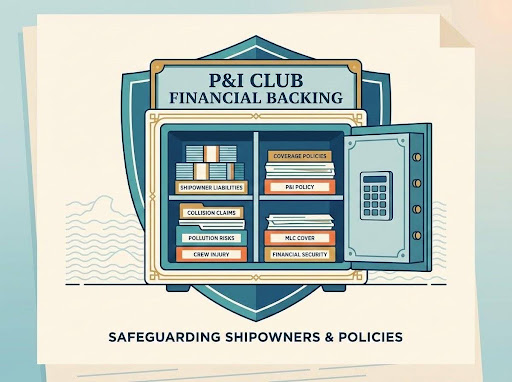
The P&I Club generally provides insurance protection to the shipowner against certain covered liabilities. It should not be understood as an organisation that independently decides what amount your family deserves.
The actual entitlement may come from the SEA, applicable CBA, and relevant legal liability. The P&I arrangement can then provide financial backing to the shipowner for covered obligations. Understanding this difference helps seafarers know where their rights actually come from.
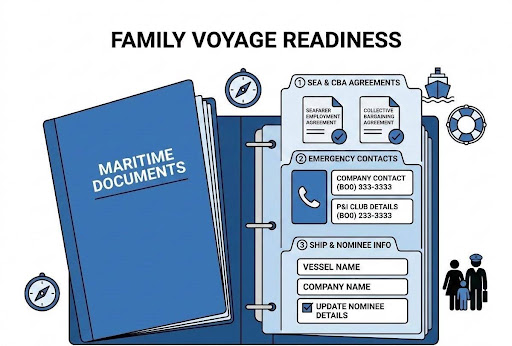
Your spouse, parents, or trusted family member should know the vessel name, company details, contract location, applicable CBA, nominee information, and important insurance or financial security contacts. They should also have copies of important documents whenever possible.
A seafarer may be thousands of kilometres away from home when an emergency occurs. Keeping everything organised beforehand can save the family from searching for essential information during an already difficult situation.
Before signing a seafarer contract, carefully check death compensation, P&I and MLC financial security, the missing-at-sea clause, jurisdiction and governing law, and your nominee or next-of-kin details. Keep copies of your SEA and CBA and make sure your family understands where these documents are stored. Your employment protection should be understood before you sail, not after an emergency occurs. For seafarers who want to keep important career, documentation, and financial information more organised, Sailor Pro app can also provide practical support throughout the sailing journey.
A seafarer should check salary and contract terms along with death compensation, applicable CBA, P&I and MLC financial security, missing-at-sea provisions, governing law, jurisdiction, and nominee information.
The Collective Bargaining Agreement may contain important information about compensation, disability benefits, dependent-child benefits, wages, leave, and other employment conditions that may not be fully detailed in the individual SEA.
It explains the compensation that may become payable to the nominated beneficiary or family if the seafarer dies under circumstances covered by the applicable employment terms.
The clause may explain what happens when a seafarer disappears and is not recovered, including when the person may be treated as presumed dead and when compensation may be processed.
It identifies the legal jurisdiction or dispute-resolution framework that may apply if a dispute occurs between the seafarer and employer.
Correct nominee and next-of-kin details help prevent confusion or delays when the company needs to contact the family or process an eligible compensation claim.
Generally, compensation entitlement comes from the employment agreement, applicable CBA, and relevant liability. The P&I Club provides financial protection to the shipowner for covered liabilities.
Disclaimer :- The opinions expressed in this article belong solely to the author and may not necessarily reflect those of Merchant Navy Decoded. We cannot guarantee the accuracy of the information provided and disclaim any responsibility for it. Data and visuals used are sourced from publicly available information and may not be authenticated by any regulatory body. Reviews and comments appearing on our blogs represent the opinions of individuals and do not necessarily reflect the views of Merchant Navy Decoded. We are not responsible for any loss or damage resulting from reliance on these reviews or comments.
Reproduction, copying, sharing, or use of the article or images in any form is strictly prohibited without prior permission from both the author and Merchant Navy Decoded.
Decoded Discount Alert! up to 50% OFF
Use Coupon Code Deep50