Hi this is Team Merchant Navy Decoded !!!

Please fill the below form with your query and we will get back to you in next 12 hours.

Rest assured your data is safe with us !!!🙂

Ask Your Query

Essential Documents for Seafarer ITR Filing

Many seafarers begin ITR filing by looking only at salary credits. They check whether ship income is taxable or not and then try to file the return quickly. But ITR filing should not begin with guesswork. It should begin with documents. One missing proof can create confusion later. For seafarers, documents are even more important because their income pattern is different from regular shore-based employees. A clean document file helps explain residential status, income source, bank credits, Indian income, and tax records properly.

What Is ITR for Seafarers?

ITR for Seafarers

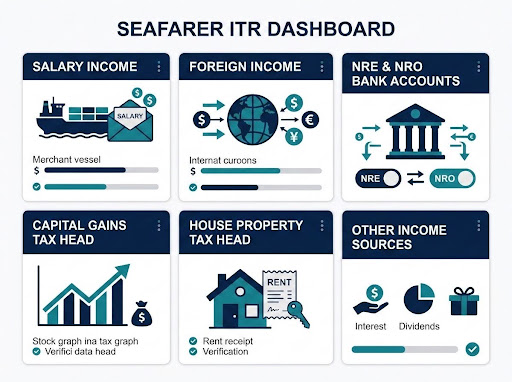
ITR means Income Tax Return. For seafarers, ITR filing may involve salary, foreign income, Indian income, NRE account, NRO account, rent, interest, dividends, capital gains, business income, TDS, residential status, and refund details. This is why ITR filing for seafarers should not be treated like a simple salary form. The Income Tax Department explains that taxable income is computed under different heads such as salary, house property, business or profession, capital gains, and other sources.

Why Documents Matter Before Filing ITR

Why Documents Matter Before Filing ITR

For seafarers, documents are not just paperwork. They are proof. Your tax filing may depend on sailing days, passport travel history, CDC entries, source of income, bank account type, Indian income, foreign income, and residential status. If documents are missing, even a genuine income position can become difficult to explain later. ITR forms are generally attachment-less, which means documents are not attached with the return. However, those documents should be retained and produced if demanded during assessment or inquiry.

Which Documents Are Needed for Seafarer ITR?

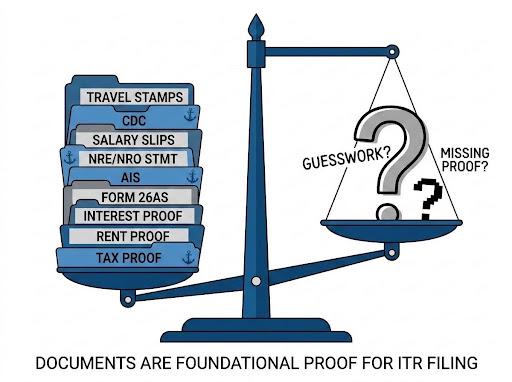
The essential documents for seafarer ITR include travel proof, sea-service records, employment proof, salary records, bank statements, tax records, Indian income proof, investment reports, and previous filing records

. A seafarer may need passport stamps, CDC pages, sign-on and sign-off proof, employment contract, salary slips, NRE and NRO bank statements, Form 26AS, AIS report, TDS details, rent documents, interest certificates, capital gains reports, and previous ITR acknowledgement. The exact documents depend on income source, residential status, and filing category.

Table of Contents

Passport Copy and Travel Stamps

Passport Copy and Travel Stamps

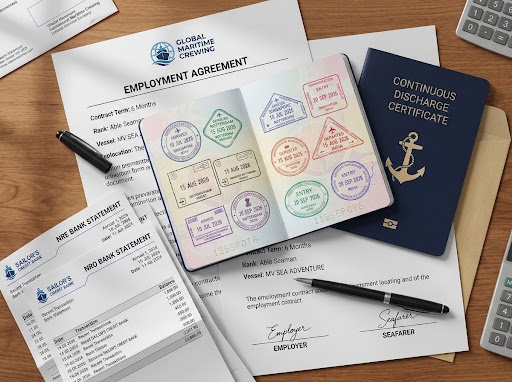
The first important document is your passport copy with clear entry and exit stamps. For seafarers, passport records help show travel movement during the financial year. If you are checking residential status, NRI status, or days spent outside India, passport stamps become very important. Do not depend only on memory or rough contract dates. Keep scanned copies of relevant passport pages after every contract. If there is any missing stamp, unclear date, or travel mismatch, discuss it with your CA before filing ITR.

CDC Copy and Sea Service Records

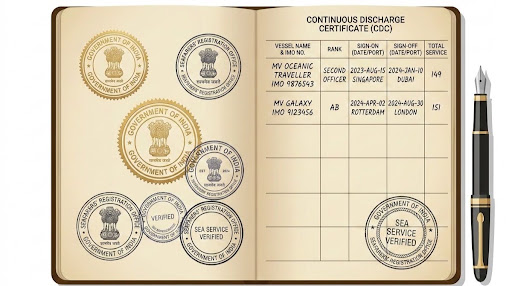
Your CDC is one of the most important seafarer records. It shows sea service, vessel details, rank, sign-on information, sign-off information, and port details. For tax filing, CDC records can help support your sailing period and service history. A seafarer may remember the month of joining, but ITR filing needs exact dates. CDC entries can support those dates. Keep scanned copies of all relevant CDC pages after every contract. Do not wait until filing season to search for old CDC records.

Sign-On and Sign-Off Proof

Sign-On and Sign-Off Proof

Sign-on and sign-off proof helps confirm when your contract started and ended. This may include company sign-on documents, sign-off documents, joining letters, relieving letters, travel records, and port-related documents. For seafarers, this proof can help explain sailing days, contract period, and work pattern. It can also help your CA match CDC records, passport records, salary period, and bank credits. If sign-on or sign-off dates are unclear, residential status and income-source checking can become confusing during ITR filing.

Employment Contract and Company Details

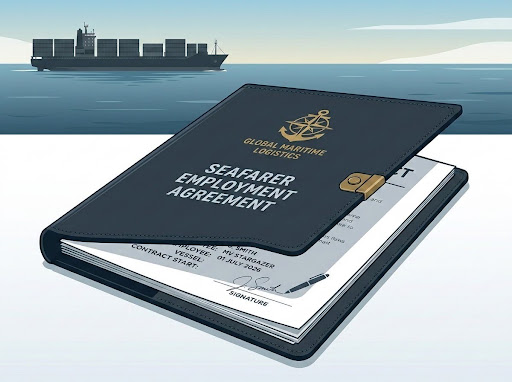
Your employment contract is an important proof of your job arrangement. It can show who employed you, your rank, vessel name, salary structure, contract period, payment terms, and employment conditions. Company details can include employer name, manning agency details, shipowner details, vessel name, vessel type, flag, and voyage-related information where relevant. Do not rely only on WhatsApp chats or verbal confirmation. Keep proper copies of the signed contract, appointment letter, company communication, and vessel details safely before filing ITR.

Salary Slips and Wage Statements

Salary Slips and Wage Statements

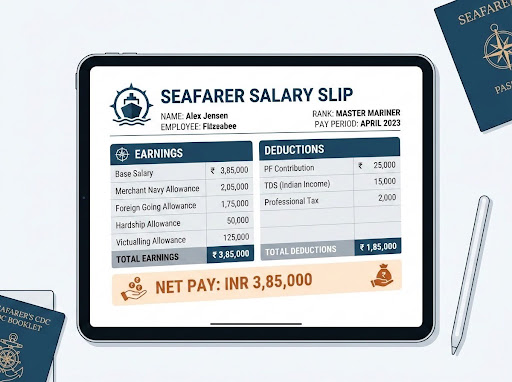
Salary slips and wage statements support your income records. They help match salary amount, currency, pay period, deductions, allowances, and bank credits. Many seafarers only look at the final amount credited in the bank, but salary slips can explain the salary structure in a better way. Keep monthly salary slips, wage statements, payment advice, and remittance documents wherever available. If there is any mismatch between salary slip and bank credit, it should be checked before filing the ITR.

NRE and NRO Bank Statements

NRE and NRO Bank Statements

Many seafarers have NRE and NRO accounts, and both should be checked before filing ITR. NRE statements may show foreign salary, remittances, transfers, and account movement. NRO statements may show Indian income, local transactions, rent, interest, dividends, or other credits. Keep full financial-year statements, not only screenshots of selected salary credits. Every credit should be understood properly. It may be salary, transfer, interest, rent, dividend, capital gain, or another income source. Bank statements help explain the full money trail.

Form 26AS and AIS Report

Form 26AS and AIS Report

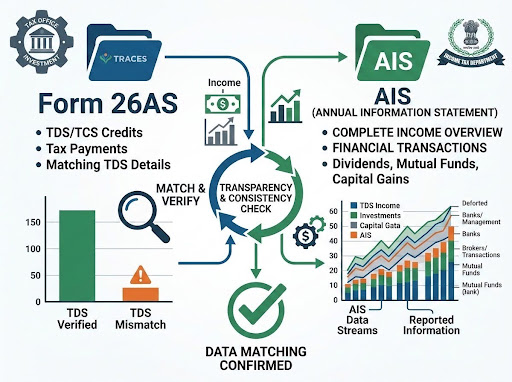
Form 26AS and AIS should be checked before filing ITR. Form 26AS helps verify tax-credit-related information such as TDS and TCS. AIS gives a wider view of taxpayer information for a financial year, including income, financial transactions, and tax details. The Income Tax Department explains that AIS provides complete information about a taxpayer for a particular financial year, and from AY 2023–24 onwards, Form 26AS on TRACES displays only TDS/TCS-related data while other details are available through AIS.

TDS Details and Tax Credit Proof

TDS Details

TDS details should be kept ready before filing ITR. TDS may be deducted on salary, bank interest, rent, professional income, or other income sources depending on the case. If TDS is deducted, it should be matched with Form 26AS, AIS, and income records. If excess TDS is deducted, refund may be possible depending on facts. If TDS is missing or mismatched, it should be checked before filing. Seafarers should keep TDS certificates, bank TDS details, and tax credit records safely.

Interest Income Proof

Interest Income Proof

Interest income is often ignored by seafarers. It may come from savings accounts, fixed deposits, NRO accounts, or other deposits. Even small interest income can appear in AIS, Form 26AS, or bank statements. Keep interest certificates, fixed deposit statements, savings account interest details, and bank year-end summaries. If interest is taxable in India, it should be checked properly. Many filing mistakes happen because seafarers focus only on ship salary and forget small Indian income sources like interest.

Rent Income Documents

If a seafarer owns property in India and receives rent, rent documents should be kept ready. This may include rent agreement, rent receipts, tenant details, bank credits, municipal tax proof, home loan interest certificate, and TDS details if applicable. Rent from Indian property should not be ignored only because the seafarer is sailing abroad. It may be connected with Indian income and should be reviewed properly. Proper rent documents help calculate income from house property and avoid confusion later.

Investment and Capital Gains Reports

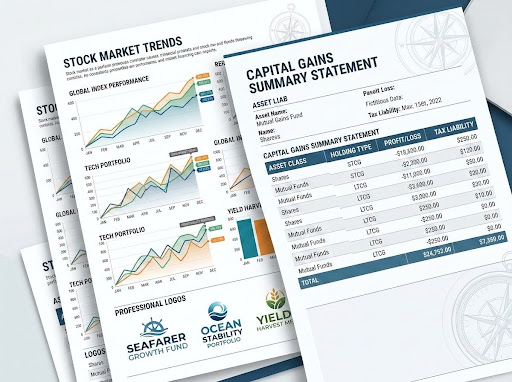
Investment documents are essential if you have mutual funds, shares, gold, land, property, or other investments. Keep mutual fund capital gains statements, demat reports, broker statements, dividend records, share transaction reports, property sale documents, and investment summaries. Capital gains can arise even if money was reinvested or not withdrawn fully. These details may also appear in AIS. Seafarers should not ignore investment income while filing ITR. A proper capital gains report helps calculate tax correctly and avoid mismatch with reported data.

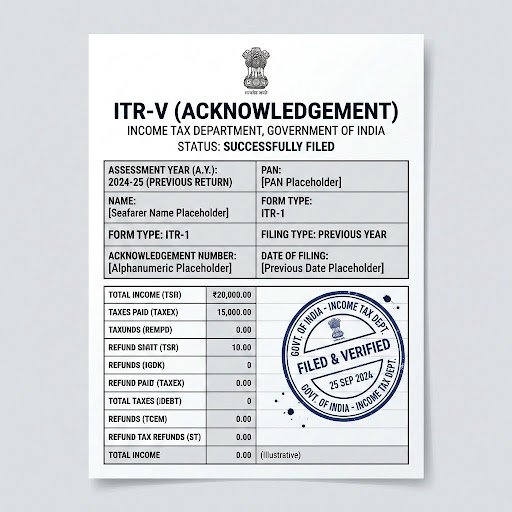
Previous ITR Acknowledgement

Previous ITR acknowledgement is useful for record continuity. It helps show past filing history, residential status used earlier, income reporting pattern, refund details, and tax compliance record. Banks, visa authorities, loan departments, or financial institutions may also ask for past ITR records. Keep the ITR-V acknowledgement, computation, filed return copy, refund details, and tax payment challans safely. Previous records can also help your CA compare current-year facts with earlier filings and avoid repeating mistakes blindly.

Final Advice for Seafarers

The safest rule is simple: documents first, filing later. Do not start ITR filing without proof. Do not depend only on memory. Do not ignore small Indian income. Do not file only with salary credits. Keep travel proof, job papers, bank records, tax records, investment reports, and income proofs ready before filing. If your case involves NRI status, foreign income, Indian income, capital gains, or multiple bank accounts, take CA guidance before submitting the return.

Taxation planning for seafarers should not only be seen as completing one return at the end of the year. It involves understanding residential status, foreign income, Indian income, bank accounts, documents, filing records, and financial choices. Sailor Pro app, an initiative by Merchant Navy Decoded, can help seafarers stay more organised and confident in financial planning.

Frequently Asked Questions (FAQs)

Essential documents include passport records, CDC entries, sign-on and sign-off proof, employment contract, company and vessel details, salary slips, NRE/NRO statements, Form 26AS, AIS, TDS details, interest proof, rent proof, investment reports, capital gains reports, and previous ITR acknowledgement.

Passport and CDC records help support travel history, sea service, sign-on dates, sign-off dates, and residential-status checking. These records are important because seafarers have a different work pattern from regular shore-based employees.

No. Seafarers should not file ITR only with salary slips. They should also check bank statements, AIS, Form 26AS, NRE/NRO accounts, rent, interest, dividends, capital gains, and other income proofs.

Form 26AS helps verify tax-credit-related information such as TDS and TCS. Seafarers should check it before filing to avoid missing tax credits or mismatch issues.

AIS stands for Annual Information Statement. It gives a wider view of taxpayer information for the financial year, including income, financial transactions, tax details, and other reported information.

Generally, ITR forms are attachment-less, so documents are not attached with the return. However, documents should be retained and produced if demanded by tax authorities.

Seafarers should keep NRE bank statements, NRO bank statements, savings account statements, fixed deposit statements, and interest certificates for the relevant financial year.

Seafarers should keep mutual fund reports, demat statements, broker reports, dividend records, capital gains statements, property sale documents, and investment transaction summaries.

As a safe habit, seafarers should keep important ITR documents for several years, especially passport records, CDC records, contracts, bank statements, AIS, Form 26AS, capital gains reports, and filed ITR acknowledgements.

The safest rule is to collect all documents first, check residential status, review income sources, match AIS and Form 26AS, verify bank records, and then file ITR with proper guidance.

Disclaimer :- The opinions expressed in this article belong solely to the author and may not necessarily reflect those of Merchant Navy Decoded. We cannot guarantee the accuracy of the information provided and disclaim any responsibility for it. Data and visuals used are sourced from publicly available information and may not be authenticated by any regulatory body. Reviews and comments appearing on our blogs represent the opinions of individuals and do not necessarily reflect the views of Merchant Navy Decoded. We are not responsible for any loss or damage resulting from reliance on these reviews or comments.

Reproduction, copying, sharing, or use of the article or images in any form is strictly prohibited without prior permission from both the author and Merchant Navy Decoded.

DIWALI SALE

Decoded Discount Alert! up to 50% OFF

DIWALI SALE

Decoded Discount Alert! up to 50% OFF

Use Coupon Code Deep50

Days
Hours
Seconds
0
Would love your thoughts, please comment.x
()
x