Hi this is Team Merchant Navy Decoded !!!
Please fill the below form with your query and we will get back to you in next 12 hours.
Rest assured your data is safe with us !!!🙂
Ask Your Query| For Beginner | For Professional |
|---|---|
| GME | Engine Side |
| G.P. Rating | Deck Side |
| ETO | G.P. Rating |
| IMUCET & Sponsorship | Combo Offers |
| Free Course | MEO |
| Free Course |
| For Beginner | For Professional |
|---|---|
| GME | Engine Side |
| G.P. Rating | Deck Side |
| ETO | G.P. Rating |
| IMUCET & Sponsorship | Combo Offers |
| Free Course | MEO |
| Free Course |
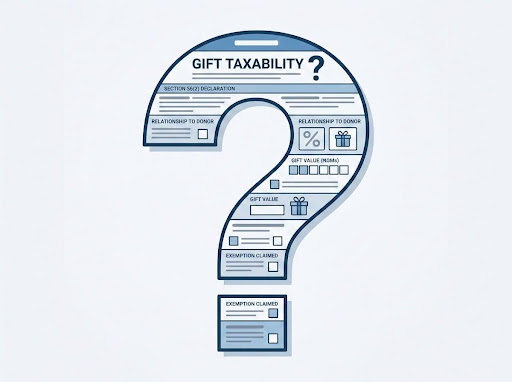
Many seafarers regularly send money to their parents, spouse, children, or other family members while working overseas. These transfers may help with household expenses, education, healthcare, investments, property payments, or long-term family planning. Many people call these transfers “tax-free gifts,” but that phrase should be understood carefully. The gift amount may be exempt in the hands of the recipient if the recipient is a specified relative, but future income generated from that money may still be taxable depending on who receives the gift and how the money is used.
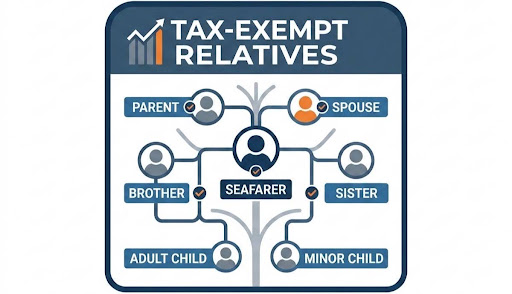
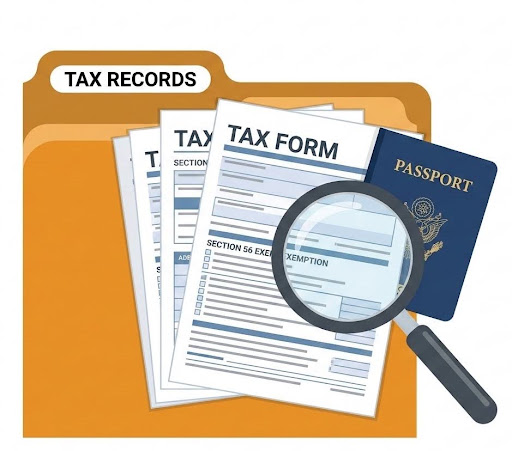
A tax-free gift means the amount received is not taxed as income in the recipient’s hands under the gift taxation rules. Under Section 56, gifts received from specified relatives are exempt from tax. The Income Tax Department explains that gifts received from relatives are exempt, and the definition includes spouse, brother or sister, brother or sister of spouse, brother or sister of either parent, lineal ascendant or descendant, and lineal ascendant or descendant of spouse.
Yes, seafarers can gift money to family members in India, but the transfer should be clean, documented, and made through proper banking channels. If the recipient is a specified relative under income-tax rules, the gift itself is generally not taxable in the recipient’s hands. This exemption is based on the relationship between donor and recipient. However, the source of funds, purpose of transfer, bank trail, and future income from the gifted money should still be checked properly.
Gifts from seafarers to specified relatives are generally not taxable in the hands of the recipient. The common confusion is the ₹50,000 rule. Many people think every gift above ₹50,000 becomes taxable. That is not correct. The ₹50,000 threshold mainly applies when money or property is received from a person who is not covered as a specified relative. Gifts from qualifying relatives are generally exempt under this rule, subject to the relationship condition.
For an individual, specified relatives include spouse, brother, sister, brother or sister of spouse, brother or sister of either parent, lineal ascendant or descendant, lineal ascendant or descendant of spouse, and spouse of the persons covered in the specified list. This is important for seafarers because the tax treatment changes depending on who receives the money. A gift to a parent, spouse, child, or sibling may be exempt, but a gift to a friend or distant non-covered person may trigger tax rules.
Parents are covered under the specified relative definition as lineal ascendants. This means a seafarer can generally gift money to father or mother without the gift amount becoming taxable in the parent’s hands. For example, if a seafarer gifts ₹5 lakh to his mother, the ₹5 lakh itself is generally exempt. However, if the mother invests that money in a fixed deposit and earns interest, that interest will usually be taxed in her own hands according to her tax position.
One practical advantage of gifting money to parents is that future income generated from the gifted funds is generally not clubbed back with the seafarer’s income. For example, if a parent invests the gifted money in a fixed deposit, the interest usually belongs to the parent for tax purposes. Still, proper records should be maintained. The seafarer should keep salary proof, remittance proof, and bank transfer records, while the parent should keep the gift deed, bank statement, and investment documents.
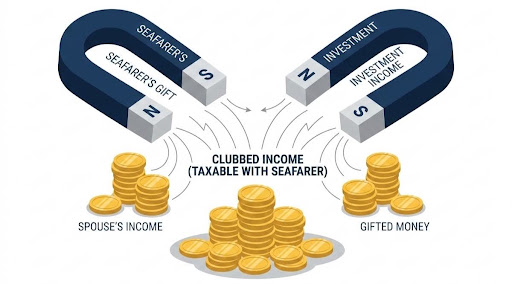
The clubbing rule can become important when a seafarer gifts money to a spouse and the spouse invests it in income-generating assets. For example, if a seafarer gifts ₹10 lakh to his spouse and the spouse invests it in a fixed deposit, the gift amount may be exempt, but the interest may be clubbed with the seafarer’s income depending on the facts. Similar issues can arise with bonds, mutual funds, shares, rental property, or other income-producing assets.
A gift to a minor child may be exempt when received, but the future income generated from the gifted money is usually not treated independently. Under clubbing provisions, a minor child’s income is generally clubbed with the income of the parent, subject to exceptions such as income earned through the child’s own skill, talent, knowledge, experience, or manual work. This means investing in a minor child’s name does not automatically create a separate tax-free investment structure.
Adult children are also covered within the family gift framework as lineal descendants. A gift made by a parent to an adult son or daughter is generally exempt in the recipient’s hands. Unlike gifts to a spouse or minor child, the future income generated from the gifted funds is ordinarily taxed in the adult child’s own hands. For example, if a seafarer gifts ₹8 lakh to an adult daughter and she invests it, the future interest or returns are usually reported by her.
Brother and sister are also covered as specified relatives. This means a seafarer can generally gift money to a brother or sister without the gift amount being taxable in their hands. However, future income earned from that amount should be reported by the recipient according to their own tax position. If the sibling invests the gift in fixed deposits, mutual funds, shares, or property, the income from those investments should be tracked and reported properly wherever required.
Gifts to non-relatives should be handled carefully. If money or property is received from a person who is not a specified relative and the value crosses the applicable threshold, it may become taxable in the recipient’s hands under Section 56. The Income Tax Department’s guidance on income from other sources explains that Section 56(2)(x) can apply when money, movable property, or immovable property is received and the value exceeds ₹50,000, subject to exceptions.
Yes, this is the most important point. The gift itself may be exempt because it is received from a specified relative, but income generated from that gift may still be taxable. For example, if a parent receives ₹5 lakh as a gift and earns interest from it, that interest may be taxable in the parent’s hands. If a spouse receives gifted funds and earns income, clubbing rules may apply. If a minor child earns income from gifted investments, clubbing rules may apply.
Recipient | Is Gift Generally Exempt? | Future Income Usually Taxed In |
Parent | Yes | Parent’s hands |
Adult child | Yes | Adult child’s hands |
Brother/Sister | Yes | Recipient’s hands |
Spouse | Yes | May be clubbed with donor |
Minor child | Yes | Usually clubbed with parent |
Non-relative | Depends on threshold/rules | Recipient’s hands if taxable |
This table is only a simple guide. The final treatment depends on relationship, documents, source of funds, type of income, and facts of the case.
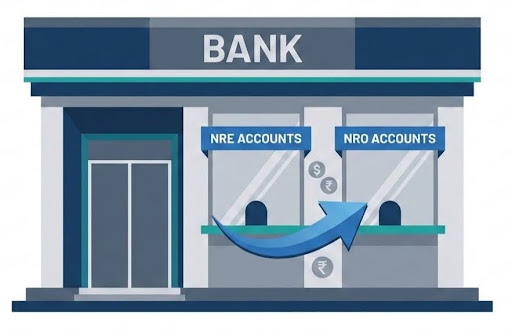
Seafarers should use the correct bank account based on the source of money. Foreign earnings are commonly maintained through an NRE account, while Indian income such as rent, pension, dividends, or Indian interest is commonly managed through an NRO account. The goal is to keep the money trail clear. If foreign salary is being gifted to parents, spouse, or children, the transfer should ideally show a clean route from foreign earnings to the correct bank account and then to the recipient.
Bank narration can help explain the nature of the transaction later. When transferring money to family, use clear narration such as “Gift to Father,” “Gift to Mother,” “Gift to Spouse,” or “Gift to Daughter.” This does not replace proper documents, but it creates clarity. Large transfers with unclear narration may create confusion later if the recipient’s bank statement is reviewed. A simple, transparent narration is much better than vague words like “payment,” “adjustment,” or “cash return.”
A gift deed is not always compulsory for every small bank transfer, but it is useful for large gifts. It helps prove who gave the gift, who received it, the relationship, the amount, date, and the fact that the transfer was voluntary and without consideration. A simple gift deed can reduce confusion if the recipient is later asked to explain a large bank credit. For seafarers, this becomes even more important because they may be onboard when clarification is needed.
A simple gift deed should mention the donor’s name, recipient’s name, relationship, PAN details where available, amount or asset gifted, date of transfer, mode of transfer, and confirmation that the gift is voluntary and without consideration. Both parties should keep a signed copy with bank proof. If the transfer is large, take professional help to draft it properly. The goal is not to overcomplicate the process, but to keep evidence ready if any tax or banking question arises.
Seafarers should keep salary records, employment contract, remittance advice, NRE or NRO bank statement, passport records, CDC entries, sign-on and sign-off records, and transfer proof. The recipient should keep bank statement, gift deed, transfer confirmation, PAN details, and investment records if the money is invested later. If future income is generated, the recipient should also keep interest certificates, mutual fund statements, dividend records, rent records, or capital gains reports as applicable.
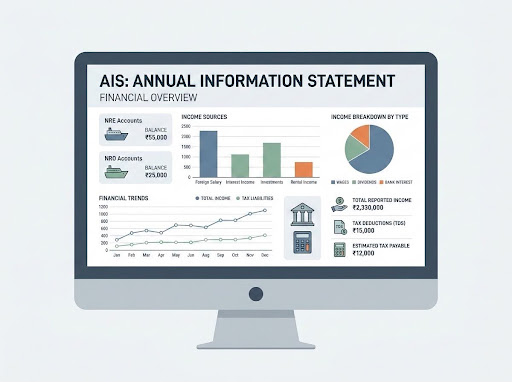
AIS gives a broader view of financial information reported against a PAN. The Income Tax Department explains that AIS provides a comprehensive view of taxpayer information, helps display complete information before filing the return, and allows online feedback. If a large transfer appears in bank or financial records, the recipient should be able to explain it properly. Form 26AS should also be checked for TDS and tax credits before filing.
The biggest mistake is assuming that “tax-free gift” means no documentation is needed. Another mistake is gifting to spouse or minor child without understanding future clubbing rules. Some seafarers transfer money from unclear accounts, use cash, ignore bank narration, or do not keep gift deeds. Others mix foreign salary, Indian rent, and investment proceeds in one account, making the money trail difficult to explain. The gift itself may be exempt, but poor records can still create confusion.
Seafarers should take CA help if the gift amount is large, the recipient is a spouse or minor child, the money will be invested, the source of funds is mixed, or the recipient has taxable income. CA guidance is also useful when the seafarer has NRE and NRO accounts, Indian income, foreign salary, capital gains, rent, or complex residential status. A professional can help decide documentation, disclosure, clubbing impact, and future tax treatment.
Seafarers can generally gift money to specified family members such as parents, spouse, children, brother, or sister without immediate gift-tax liability in the recipient’s hands. But the future income generated from the gifted funds must be checked separately. Gifts to parents and adult children may have one tax outcome, while gifts to spouse and minor children may have clubbing implications. Keep the transfer clean, use banking channels, preserve documents, and take CA guidance for large or investment-linked gifts.
Taxation planning for seafarers should not only be considered at the end of the year while filing the return. It should include proper assessment of residential position, Indian income, foreign income, NRE and NRO accounts, family gifts, clubbing rules, investments, and long-term wealth planning. Download Sailor Pro app – Built for Seafarers, an Initiative by Merchant Navy Decoded, to stay more organised and confident in your financial planning.
Yes, seafarers can generally gift money to specified relatives such as parents, spouse, children, brother, or sister without the gift amount becoming taxable in the recipient’s hands.
No, a gift from a seafarer to parents is generally not taxable in the parents’ hands. However, future income earned by parents from that money may be taxable in their own hands.
The gift itself may be exempt because spouse is a specified relative. However, income generated from the gifted money may be clubbed with the donor’s income depending on the facts.
The gift itself may be exempt, but income generated from the gifted funds is generally clubbed with the income of the parent whose income is higher, subject to exceptions.
A gift to an adult child is generally exempt in the recipient’s hands. Future income from the gifted money is usually taxed in the adult child’s own hands.
The ₹50,000 threshold mainly applies to gifts from non-relatives. Gifts from specified relatives are generally exempt without a separate monetary ceiling under this rule.
For large gifts, a gift deed is strongly recommended. It helps prove the relationship, amount, date, source, and voluntary nature of the transfer.
The account should match the source of funds. Foreign earnings are commonly transferred from NRE accounts, while Indian income is usually managed through NRO accounts.
Yes, future income from gifted money can be taxable. It may be taxed in the recipient’s hands, or in some cases clubbed with the donor’s income, especially for spouse or minor child situations.
CA help is useful when the gift amount is large, the recipient is spouse or minor child, funds will be invested, income will be generated, or the source of funds and residential status need proper review.
Disclaimer :- The opinions expressed in this article belong solely to the author and may not necessarily reflect those of Merchant Navy Decoded. We cannot guarantee the accuracy of the information provided and disclaim any responsibility for it. Data and visuals used are sourced from publicly available information and may not be authenticated by any regulatory body. Reviews and comments appearing on our blogs represent the opinions of individuals and do not necessarily reflect the views of Merchant Navy Decoded. We are not responsible for any loss or damage resulting from reliance on these reviews or comments.
Reproduction, copying, sharing, or use of the article or images in any form is strictly prohibited without prior permission from both the author and Merchant Navy Decoded.
Decoded Discount Alert! up to 50% OFF
Use Coupon Code Deep50