Hi this is Team Merchant Navy Decoded !!!

Please fill the below form with your query and we will get back to you in next 12 hours.

Rest assured your data is safe with us !!!🙂

Ask Your Query

Difference Between NRE and NRO Accounts for Seafarers

Indian seafarers often earn income from more than one source. While working onboard foreign vessels, they may receive salary from overseas companies. At the same time, they may also have Indian income such as rent, dividends, pension, fixed deposits, or investments. Since foreign income and Indian income are treated differently for banking and tax purposes, it is important to understand the difference between NRE and NRO accounts. Using the right account can help seafarers avoid tax confusion, TDS issues, and repatriation problems.

What is an NRE Account for Seafarers?

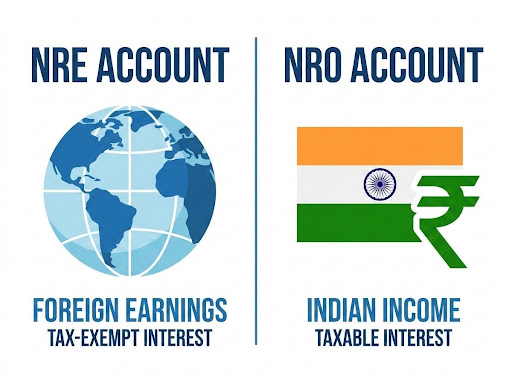
NRE stands for Non-Resident External account. For seafarers, an NRE account is generally used to keep foreign earnings in India. When salary or income earned outside India is remitted to India through banking channels, it can be credited to an NRE account and maintained in Indian rupees. The Income Tax Department explains that an NRE account is used by an NRI to transfer foreign earnings to India, and interest on NRE balances is exempt under Section 10(4)(ii).

What is an NRO Account for Seafarers?

NRO stands for Non-Resident Ordinary account. This account is generally used to manage income earned in India while the account holder is a non-resident. For seafarers, this may include rent from property in India, dividends, pension, Indian bank interest, fixed deposit interest, business income, or other legitimate Indian dues. The Income Tax Department clearly explains that an NRO account is used to manage income earned in India, and interest earned in an NRO account is taxable in the hands of an NRI.

NRE vs NRO Account for Seafarers: Main Difference

Difference Between NRE and NRO Accounts

The main difference is the source of funds. An NRE account is mainly for foreign earnings brought to India, while an NRO account is mainly for income earned in India. For example, foreign salary from sailing contracts may generally be routed through an NRE account, while rent from Indian property may be routed through an NRO account. This separation helps seafarers maintain clean records, explain the source of funds, track taxability, and avoid mixing exempt foreign earnings with taxable Indian income.

Table of Contents

Why Seafarers Should Not Mix NRE and NRO Accounts

Seafarers Should Not Mix NRE and NRO Accounts

Seafarers should not casually mix NRE and NRO accounts because the tax treatment is different. NRE interest may be exempt when the conditions are satisfied, while NRO interest is taxable. If Indian income is wrongly handled as foreign income, or foreign salary is mixed with Indian-source income, tax filing can become confusing. During ITR filing, the seafarer may need to explain income source, bank credits, TDS, Form 26AS, AIS, and residential status. Clean account separation makes this easier.

NRE Interest Tax Benefit for Seafarers

NRE interest is one of the biggest benefits of an NRE account. For eligible NRIs and PIOs, interest on money standing in an NRE account is exempt from tax in India under Section 10(4)(ii). The Income Tax Department also lists this exemption separately under exempt income. This is why many seafarers see interest credited in their NRE account without TDS deduction. However, the exemption depends on eligibility and correct account status, so seafarers should not ignore documentation.

NRO Interest Tax and TDS for Seafarers

NRO Interest Tax

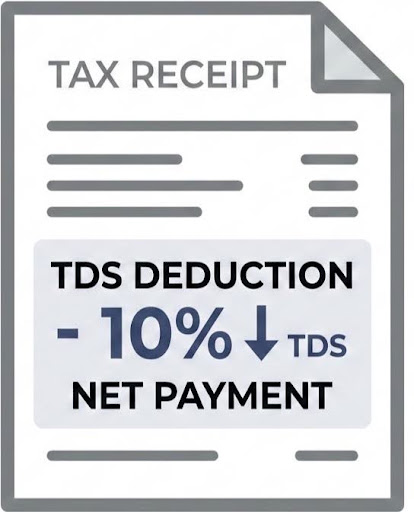
NRO interest is different from NRE interest. Interest earned in an NRO account is taxable in India for an NRI. Since it is taxable, banks may deduct TDS on NRO interest before crediting the net interest amount. This TDS may appear in Form 26AS and AIS. Seafarers should check NRO bank statements, interest certificates, Form 16A, AIS, and Form 26AS before filing ITR. If excess TDS is deducted, refund may be possible after correct ITR filing.

Repatriation Rules for NRE Account for Seafarers

Repatriation Rules

Repatriation means transferring money from India to another country. NRE accounts are useful because the funds are generally freely repatriable, subject to banking and regulatory requirements. This means both principal and interest in an NRE account can generally be sent abroad when the conditions are satisfied. For seafarers who may later need money outside India for family, investment, settlement, or foreign expenses, this is an important advantage. Still, banks may ask for documents depending on the transaction and compliance requirements.

Repatriation Rules for NRO Account for Seafarers

Repatriation Rules for NRO Account

NRO accounts have more restrictions compared to NRE accounts. RBI’s non-resident account FAQ explains that balances in NRO accounts of NRIs or PIOs are remittable up to USD 1 million per financial year, along with other eligible assets, subject to applicable rules. Current income such as rent, pension, dividends, and interest may generally be remitted abroad after tax and documentation requirements are met. Seafarers should check with their bank before planning large transfers from NRO accounts.

NRE vs NRO Repatriation for Seafarers

NRE vs NRO Repatriation for Seafarers

The simplest way to remember the difference is this: NRE funds are generally freely repatriable, while NRO funds have conditions and limits. If a seafarer wants to maintain foreign earnings in India with easier outward transfer options, an NRE account is usually more suitable. If the seafarer has income earned in India, an NRO account is usually the correct account. Before making large transfers, check source of funds, tax payment, bank documents, and whether any Form 15CA or CA certificate requirement applies.

Forms 15CA and 15CB for Seafarers

Forms 15CA and 15CB for Seafarers

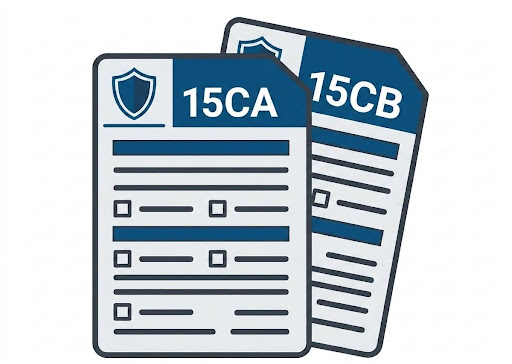
Many seafarers hear about Forms 15CA and 15CB while planning overseas remittances. These forms are not required for every transfer. The Income Tax portal explains that Form 15CA is used for information related to payments made to a non-resident or foreign company, and the relevant part depends on the case. Form 15CB is a CA certificate required for certain taxable remittances to non-residents where the payment exceeds ₹5 lakh during the financial year.

Existing Resident Account Conversion for Seafarers

Existing Resident Account Conversion for Seafarers

When an Indian resident becomes a person resident outside India, existing resident savings or current accounts may need attention. In practice, such accounts are often redesignated as NRO accounts after the customer becomes non-resident, based on bank and RBI requirements. This is important for seafarers because residential and employment status may change due to overseas contracts. Continuing to operate an old resident account without updating the bank may create banking or compliance issues. Seafarers should inform the bank and complete KYC updates when status changes.

Residential Status and Bank Accounts for Seafarers

Banking status and income-tax residential status are connected but not always the same. A seafarer should not decide tax treatment only by looking at whether the account is NRE or NRO. Residential status should be checked using passport stamps, CDC entries, sign-on and sign-off dates, travel records, and sea service proof. A person may be NRI for a particular year, resident in another year, or have a different tax position based on actual facts. Wrong assumptions can create ITR mistakes.

Which Account Should Seafarers Use for Foreign Salary?

Which Account Should Seafarers Use for Foreign Salary

For foreign salary or foreign earnings, an NRE account is generally preferred because it helps maintain a clear record that the money came from outside India. This can be useful for tax filing, bank documentation, and future repatriation. However, the salary route, employer structure, country of employment, residential status, and RBI/FEMA compliance should be checked. Seafarers should keep salary slips, contracts, remittance advice, CDC records, passport stamps, and bank statements to support the source of foreign funds.

Which Account Should Seafarers Use for Indian Income?

Which Account Should Seafarers Use

For Indian income, an NRO account is generally used. This may include rent from property in India, pension, dividends, Indian fixed deposit interest, mutual fund redemptions, or other income arising in India. Since NRO interest and many Indian-source incomes can be taxable, seafarers should track TDS and report income properly in ITR where required. Indian income should not be ignored only because the seafarer is working abroad or holding NRI status during the financial year.

Why Form 26AS and AIS Matter for Seafarers

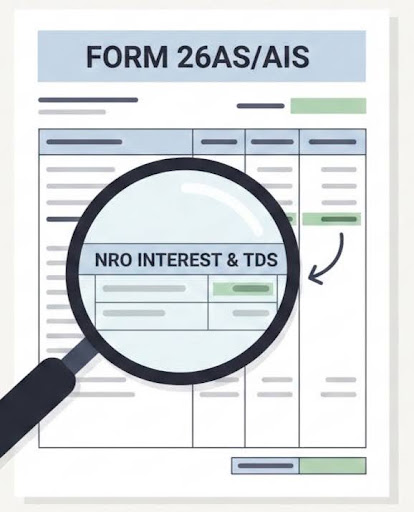
Form 26AS and AIS are important because they show tax and financial information reported against PAN. NRO interest, TDS, dividends, securities transactions, and other income may appear in these records. Before filing ITR, seafarers should not rely only on bank SMS or salary slips. They should check Form 26AS, AIS, NRE statements, NRO statements, Form 16A, rent records, dividend records, and investment reports. Matching these records can reduce refund delay, tax mismatch, and notice risk.

Documents Required for NRE and NRO Accounts for Seafarers

Documents Required

Seafarers should preserve NRE and NRO bank statements, salary slips, employment contracts, remittance advice, passport records, CDC entries, sign-on and sign-off documents, sea service certificates, Form 26AS, AIS, Form 16A, rental agreements, investment statements, and old ITR acknowledgements. These documents help explain residential status, income source, TDS, account type, and tax compliance. If a seafarer receives a notice or needs to claim refund, proper documents can make the response easier and stronger.

Common Mistakes Seafarers Make With NRE and NRO Accounts

The biggest mistake is treating NRE and NRO accounts as the same. Another mistake is assuming that all interest is tax-free because the seafarer is NRI. Some seafarers also continue using old resident accounts without updating the bank. Others route Indian income into the wrong account, ignore NRO TDS, or file ITR without checking Form 26AS and AIS. These mistakes can create tax mismatch, refund delay, banking complications, and unnecessary stress during compliance checks.

When Should Seafarers Take CA Help?

Seafarers should take CA help if they have foreign salary, NRE interest, NRO interest, rent, dividends, capital gains, property sale, multiple bank accounts, large remittances, Form 15CA or 15CB confusion, or residential status uncertainty. Professional guidance is also useful when a seafarer returns to India permanently, changes employment structure, or has mixed Indian and foreign income. A CA can help separate exempt income, taxable income, TDS credit, repatriation documents, and ITR disclosure properly.

Final Advice on NRE vs NRO Accounts for Seafarers

Final Advice on NRE vs NRO Accounts

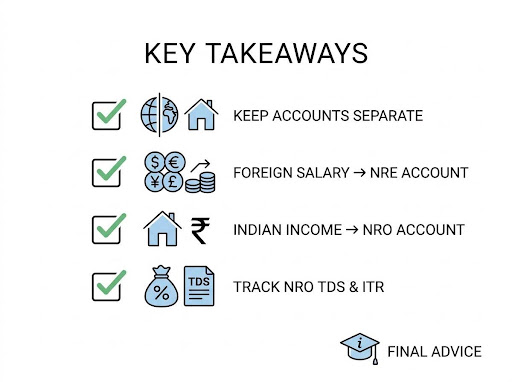
The difference between NRE and NRO accounts is simple but important. An NRE account is mainly suitable for eligible foreign earnings and generally offers tax-exempt interest and easier repatriation, subject to conditions. An NRO account is used for Indian income, and interest earned in it is taxable. Seafarers should keep foreign salary and Indian income properly separated, check TDS on NRO interest, review Form 26AS and AIS, update banks when status changes, and keep documents safely.

Stay Financially Prepared at Sea

Taxation planning for seafarers should not only be considered at the end of the year while filing the return. It should include proper assessment of residential position, NRI or resident status, NRE and NRO accounts, Indian income, foreign income, TDS records, repatriation rules, and long-term financial planning. Download Sailor Pro App – Built for Seafarers, an Initiative by Merchant Navy Decoded, to stay more organised and confident in your financial planning. 

Frequently Asked Questions (FAQs)

An NRE account is mainly used for foreign earnings brought to India, while an NRO account is used for income earned in India. NRE interest is generally exempt for eligible NRIs, while NRO interest is taxable in India.

Seafarers generally use an NRE account for foreign salary or foreign earnings remitted to India. It helps maintain a clear record of foreign income and generally allows easier repatriation, subject to applicable rules.

Seafarers should generally use an NRO account for Indian income such as rent, pension, dividends, Indian bank interest, or other income arising in India.

NRE account interest is generally exempt from tax in India for eligible NRIs and PIOs under Section 10(4)(ii), subject to required conditions.

Yes, NRO account interest is taxable in India. Banks may deduct TDS on NRO interest, and the seafarer should check Form 26AS, AIS, and bank interest certificates before filing ITR.

Yes, funds in an NRE account are generally repatriable, subject to banking and regulatory requirements. Seafarers should still keep source-of-funds documents safely.

Yes, but NRO repatriation has conditions. RBI FAQ states that NRO balances of NRIs or PIOs are remittable up to USD 1 million per financial year, along with other eligible assets, subject to applicable rules.

No, Forms 15CA and 15CB are not required for every remittance. The requirement depends on the nature of payment, amount involved, taxability, certificates, and bank procedures.

Yes, keeping them separate is usually better. It helps track foreign income, Indian income, TDS, taxability, repatriation status, and documents more clearly.

Seafarers should take CA help if they have NRE and NRO interest, foreign salary, Indian rent, dividends, capital gains, large remittances, residential status confusion, or Form 15CA and 15CB requirements.

Disclaimer :- The opinions expressed in this article belong solely to the author and may not necessarily reflect those of Merchant Navy Decoded. We cannot guarantee the accuracy of the information provided and disclaim any responsibility for it. Data and visuals used are sourced from publicly available information and may not be authenticated by any regulatory body. Reviews and comments appearing on our blogs represent the opinions of individuals and do not necessarily reflect the views of Merchant Navy Decoded. We are not responsible for any loss or damage resulting from reliance on these reviews or comments.

Reproduction, copying, sharing, or use of the article or images in any form is strictly prohibited without prior permission from both the author and Merchant Navy Decoded.

DIWALI SALE

Decoded Discount Alert! up to 50% OFF

DIWALI SALE

Decoded Discount Alert! up to 50% OFF

Use Coupon Code Deep50

Days
Hours
Seconds
0
Would love your thoughts, please comment.x
()
x