Hi this is Team Merchant Navy Decoded !!!
Please fill the below form with your query and we will get back to you in next 12 hours.
Rest assured your data is safe with us !!!🙂
Ask Your Query| For Beginner | For Professional |
|---|---|
| GME | Engine Side |
| G.P. Rating | Deck Side |
| ETO | G.P. Rating |
| IMUCET & Sponsorship | Combo Offers |
| Free Course | MEO |
| Free Course |
| For Beginner | For Professional |
|---|---|
| GME | Engine Side |
| G.P. Rating | Deck Side |
| ETO | G.P. Rating |
| IMUCET & Sponsorship | Combo Offers |
| Free Course | MEO |
| Free Course |
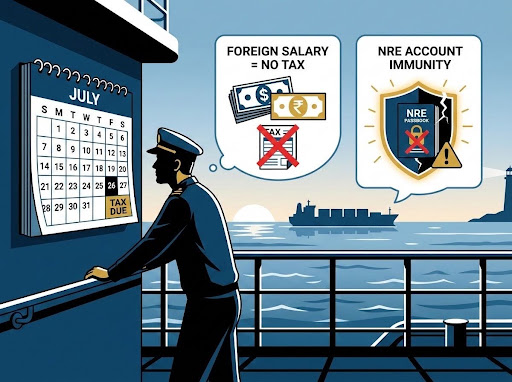
Many seafarers believe that if no tax is payable, filing an Income Tax Return is not important. Some think that if their salary is earned outside India, they can simply skip the return. Others wait until a notice arrives. Many also depend on friends and say, “Nothing happened last year, so nothing will happen this year either.” This mindset can become risky. For seafarers, ITR filing is not only about paying tax. It is also about keeping financial records clean.
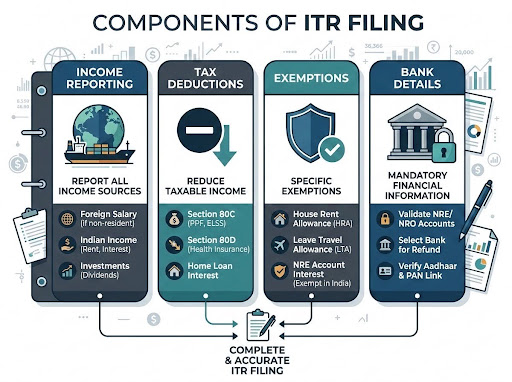
ITR filing means submitting your Income Tax Return to the Income Tax Department. It reports your income, tax paid, deductions, exemptions, refunds, residential status, bank details, and other required information. For seafarers, ITR filing can involve more than salary. It may include foreign salary, Indian income, NRE account, NRO account, rent, interest, dividends, capital gains, business income, and TDS. That is why ITR filing should not be seen only as a tax payment activity. It is also a financial record activity.
Many seafarers skip ITR because they assume their income is not taxable. Some believe foreign salary means no filing is needed. Some think NRE salary credit automatically means everything is clear. Some ignore small Indian income like bank interest, NRO interest, dividends, rent, or capital gains. Some are sailing during the filing season and delay the process. Some simply copy another seafarer’s advice. But every seafarer’s case can be different, so skipping ITR without checking can create problems later.
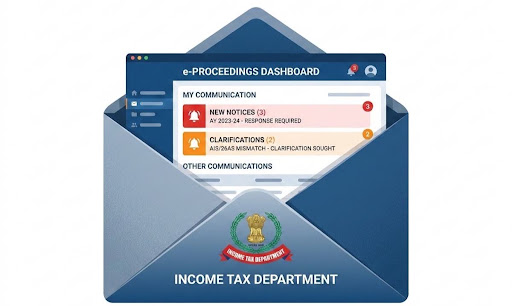
If you were required to file ITR and you do not file it, tax compliance issues may arise. Non-filing can become a problem when taxable income, TDS, high-value transactions, bank interest, capital gains, or other records are visible against your PAN. The Income Tax portal’s e-Proceedings service allows users to view and respond to notices, intimations, letters, defective return notices, adjustment notices, and clarifications issued by tax authorities. This means ignoring ITR does not always close the matter.
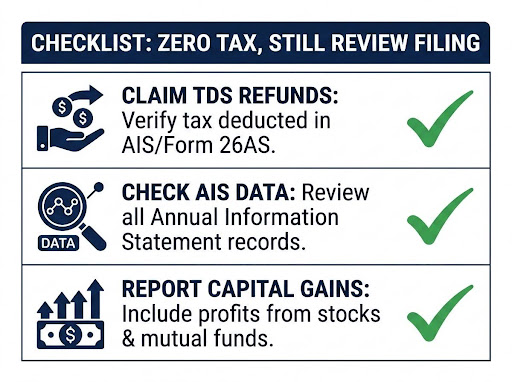
Yes, no tax can still need checking. A seafarer may have zero final tax payable, but income details may still need review. For example, TDS may have been deducted and refund may need to be claimed. Bank interest may appear in AIS or Form 26AS. Capital gains may exist from mutual funds or stocks. Rent may be received from property in India. So, the correct question is not only, “Is my tax zero?” The better question is, “Do I need to file ITR?”
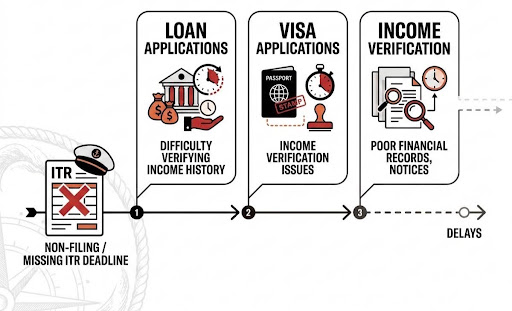
Non-filing can create problems when the taxpayer was required to file, but skipped the return. It may also create difficulty if there are mismatches in AIS, Form 26AS, TDS, bank records, investments, or income records. A seafarer may think nothing has happened, but the issue can come later during refund processing, loan documentation, visa paperwork, income verification, or tax notice response. If your PAN shows financial activity and you did not file when required, you may later need to explain the situation.
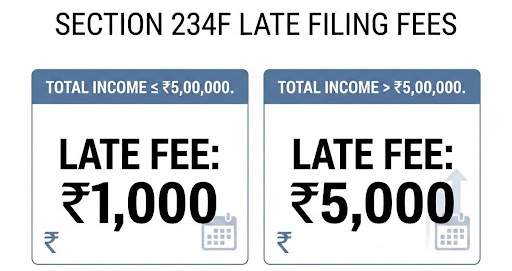
If a taxpayer was required to file ITR but missed the due date, late filing fee may apply under Section 234F. The Income Tax Department lists the fee as ₹1,000 where total income does not exceed ₹5,00,000 and ₹5,000 in other cases. It also states that no fee is payable where the assessee is not liable to furnish the return. This is why seafarers should not panic blindly, but should also not skip blindly. First check whether filing was required.
Yes, interest can keep adding if tax was payable and filing was delayed or not done. The Income Tax Department states that interest under Section 234A applies for delay in filing the return at 1% per month or part of a month on unpaid tax from the due date to the actual filing date. In non-filing cases, interest can apply from the due date to the date of completion of assessment. This means delay can increase the final amount payable.
Yes, if there is a mismatch, missing return, unpaid demand, defective return, or clarification required, a taxpayer may receive communication from the Income Tax Department. The e-Proceedings service allows registered users to view and respond to notices, intimations, letters, defective return notices, adjustment notices, and clarifications. For seafarers, this is important because many are away at sea and may miss emails or portal updates. Keeping records ready and filing correctly can reduce unnecessary stress later.
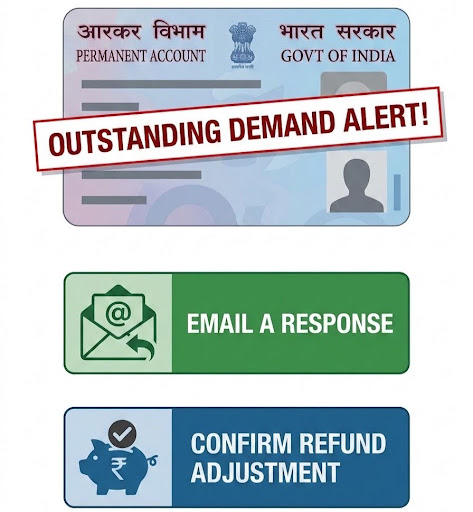
Outstanding demand means an amount shown as payable against a taxpayer’s PAN by the Income Tax Department. The e-Filing portal allows taxpayers to view and respond to outstanding demand. If a taxpayer does not respond to an outstanding demand, it may be confirmed and may be adjusted against refunds or shown as demand payable. For seafarers, an old demand can create stress during refund, loan, visa, or financial paperwork. It is better to file correctly and respond properly if any demand appears.
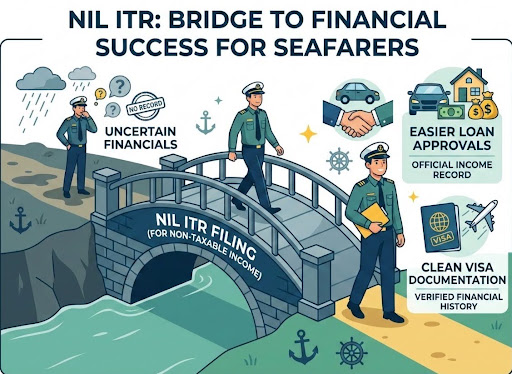
Sometimes a seafarer may have zero tax payable. This can happen because income is below the taxable limit, tax has already been paid, TDS covers the liability, or income is not taxable in India due to residential status and source rules. In such cases, NIL ITR may still be useful. NIL ITR means filing a return even when tax payable is zero. It can help create an official financial record for loans, visa paperwork, financial planning, refunds, and future documentation.
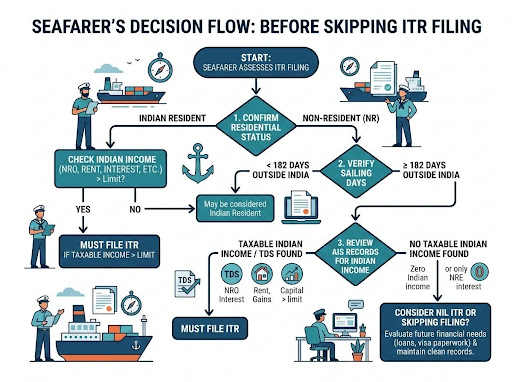
Even if foreign ship salary is not taxable in a particular case, Indian income may still matter. For a non-resident, income received in India, income accruing or arising in India, or income deemed to accrue or arise in India can be taxable in India. Seafarers should check NRO interest, FD interest, savings interest, rent from Indian property, dividends, capital gains, business income, professional income, and any TDS visible in AIS or Form 26AS before deciding to skip ITR.
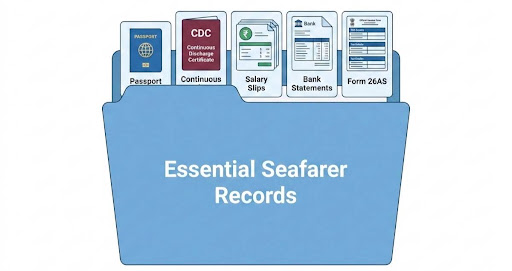
For seafarers, clean records are extremely important. Keep passport records, CDC entries, sign-on and sign-off details, salary slips, employment contract, bank statements, NRE and NRO account records, Form 26AS, AIS, investment statements, rent documents, capital gains reports, TDS details, and foreign income details in one folder. These documents help during ITR filing, tax notice response, refund claims, loan applications, visa documentation, and future financial planning. Poor records can create confusion even when the seafarer’s intention is honest.
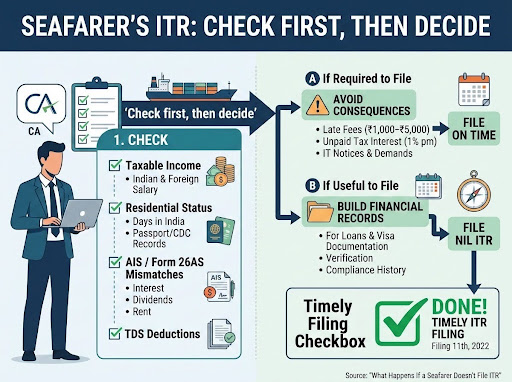
Before deciding not to file ITR, check your taxable income properly. Review your Indian income, TDS, AIS, Form 26AS, bank interest, rent, dividends, capital gains, business income, and professional income. Also check residential status for that financial year. Do not assume last year’s status will automatically apply this year. Sailing days, sign-on dates, sign-off dates, passport stamps, CDC records, and days spent in India may change every year. If you are confused, speak to a qualified CA before skipping ITR.
Do not ignore ITR just because your tax may be zero. Do not skip filing because another seafarer skipped it. Do not wait for a notice. Check your taxable income, Indian income, residential status, due date, TDS, AIS, Form 26AS, and documents. File on time if required. If tax is zero, check whether NIL ITR is useful for your financial record. Simple rule: do not blindly file, and do not blindly skip. Check first, then decide.
Taxation planning for seafarers should not only be seen as completing one return at the end of the year. It involves understanding residential status, foreign income, Indian income, bank accounts, documents, filing records, and financial choices. Sailor Pro app , an initiative by Merchant Navy Decoded, can help seafarers stay more organised and confident in financial
If a seafarer was required to file ITR and did not file, late fee, interest, notices, demand, refund adjustment, or future documentation issues may arise depending on the case.
No tax does not always mean no ITR. Filing may still be required or useful depending on taxable income, TDS, refund, Indian income, residential status, and filing conditions.
Yes, if there is mismatch, missing return, unpaid demand, TDS, high-value transactions, or income visible against PAN, a notice or communication may come from the Income Tax Department.
The late filing fee under Section 234F can be ₹1,000 if total income does not exceed ₹5,00,000 and ₹5,000 in other cases, where filing was required and the return was delayed.
Yes, if tax was payable and the return was delayed or not filed, interest under Section 234A can apply at 1% per month or part of a month on unpaid tax.
Seafarers should check their income, residential status, TDS, refund, Indian income, and future documentation needs. NIL ITR may not be mandatory in every case, but it can be useful.
Seafarers should check NRO interest, FD interest, savings interest, rent, dividends, capital gains, business income, professional income, and any TDS visible in AIS or Form 26AS.
It can create difficulty if financial records are required and no ITR history is available. Filed ITR records can support financial documentation, though they do not guarantee loan or visa approval.
Seafarers should keep passport records, CDC entries, contracts, salary slips, bank statements, NRE/NRO records, AIS, Form 26AS, investment reports, rent documents, capital gains reports, and previous ITR records.
The safest rule is to check taxable income, Indian income, residential status, TDS, AIS, Form 26AS, filing requirement, and documents before deciding whether to skip ITR.
Disclaimer :- The opinions expressed in this article belong solely to the author and may not necessarily reflect those of Merchant Navy Decoded. We cannot guarantee the accuracy of the information provided and disclaim any responsibility for it. Data and visuals used are sourced from publicly available information and may not be authenticated by any regulatory body. Reviews and comments appearing on our blogs represent the opinions of individuals and do not necessarily reflect the views of Merchant Navy Decoded. We are not responsible for any loss or damage resulting from reliance on these reviews or comments.
Reproduction, copying, sharing, or use of the article or images in any form is strictly prohibited without prior permission from both the author and Merchant Navy Decoded.
Decoded Discount Alert! up to 50% OFF
Use Coupon Code Deep50