Hi this is Team Merchant Navy Decoded !!!

Please fill the below form with your query and we will get back to you in next 12 hours.

Rest assured your data is safe with us !!!🙂

Ask Your Query

Transducers Onboard

Transducers Onboard

Each alarm, gauge, or automatic response on a ship comes from a single source: a state of some kind on the ship has been converted into an equivalent electrical signal for the ship’s control system to respond to. These transducers are often called sensors, but that is a general term, since each type relies on fundamentally different physical processes, and a single transducer that behaves incorrectly can have a variety of failure modes depending on what it is designed to measure.

Capacitive Transducers

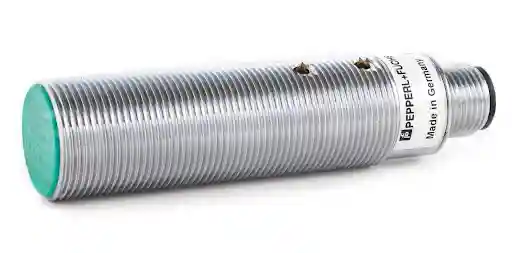
This type of transducer operates on the principles of a capacitor. Two plates and the dielectric, or insulator, between them make up the capacitor, and movement between the plates changes the capacitance, which is also measurable and proportional to the distance between the plates. This makes it ideal for measuring very small movements in an object’s position, which can be used to determine things like the level of a liquid in a tank, an object’s proximity, or, in some cases, minute pressure differences.

I/P Converters

I P Converters

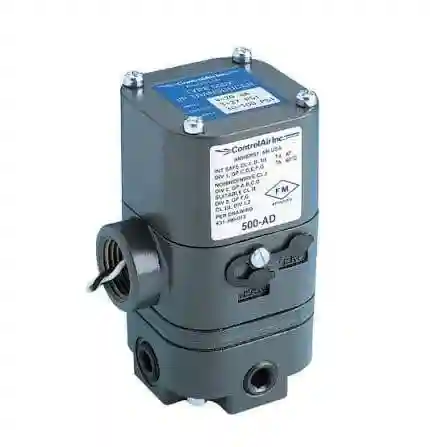
I/P converters, or current-to-pressure converters are somewhat different from the rest of the transducers listed here, as they are actually not sensors at all, but rather actuators. The reason for their inclusion here is that, while they perform the exact opposite function of the sensors listed above, they fulfill a similar role in the control systems of many ships.

The purpose of an I/P converter is to take an electrical current signal, typically a standard 4-20 mA signal, and convert it to a proportional pneumatic pressure, usually in the range of 3-15 psi. This is useful for ships because many valves and other mechanisms use pneumatic actuators to open and close, but the control system for such valves is often electrical rather than directly mechanical.

Table of Contents

Photovoltaic Transducers

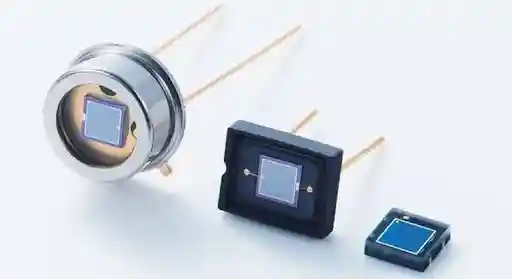
Photovoltaic transducers are another type of transducer which operate on principle: Rather than having a change in resistance or capacitance caused by an external factor, photovoltaic transducers generate electricity directly from light. This is done by using the same principles which allow solar panels to generate power from photons hitting the panel. On a ship, these transducers would most likely be used for flame detection, as the photovoltaic effect is particularly useful in determining the presence or absence of a particular wavelength of light.

Piezoelectric Transducers

Piezoelectric Transducers

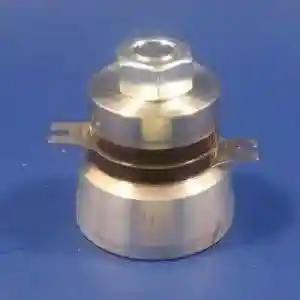
Crystals of certain materials have the interesting property of producing a voltage when subjected to a mechanical force. This force can be tension, compression, bending, or even vibration, and the resulting voltage can be used to directly measure the characteristics of the force applied. This allows piezoelectric transducers to be used to measure dynamic forces like vibrations or knocks, since applying a constant force to the transducer will cause it to produce a voltage for a short time, after which it will return to zero.

Resistive Transducers

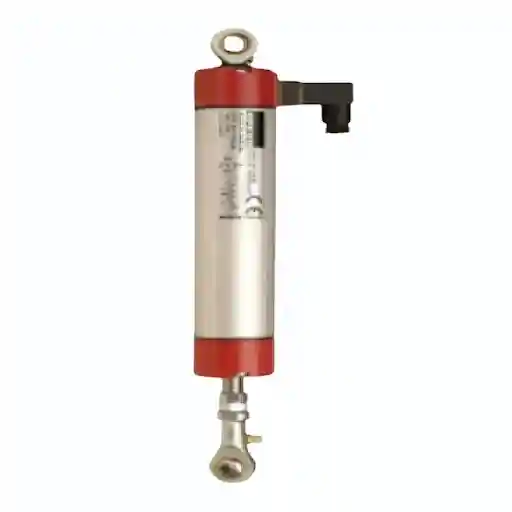
Resistive transducers are simple devices which usually involve a conductive material whose resistance varies as a function of the quantity to be measured. Typically this takes the form of a sliding contact which changes the effective length of a resistor, but there are also other mechanisms which can be used. This type of transducer is useful because resistance is simple to measure, and the change in resistance is usually proportional to the quantity being measured over a reasonable range.

Strain Gauge Transducers

Strain Gauge Transducers

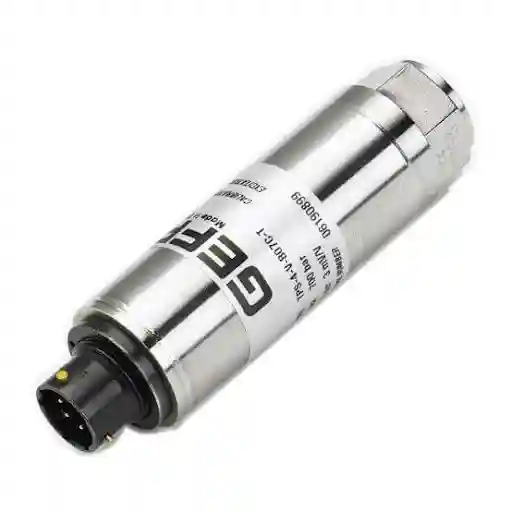
Strain gauge transducers are similar to resistive transducers, but are usually applied to a different medium. Rather than sliding contacts or other mechanisms changing the resistance, strain gauges use a thin strip of conductive material bonded to another surface so that when that surface is bent or stretched, the strain gauge’s resistance changes in a measurable way.

Thermocouples

Thermocouples

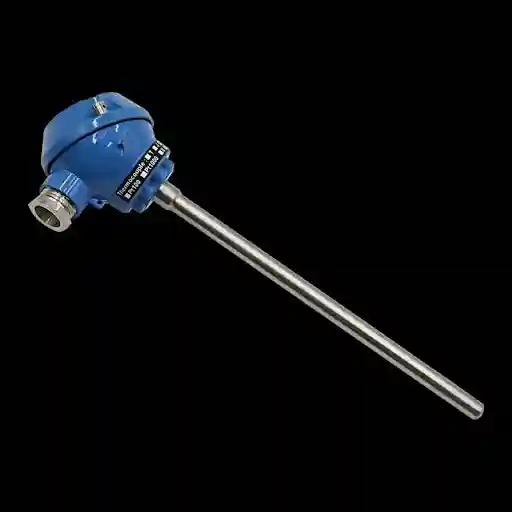
Thermocouples are somewhat different from nearly all of the other transducers listed here, as they operate based on a different principle entirely. A thermocouple is formed by joining two dissimilar metals together, and then exposing the junction to a temperature gradient. This causes a voltage to develop across the junction, which is proportional to the temperature difference.

Strain Gauge Transducers

It is worth noting that these seemingly disparate transducers actually have a common theme which becomes much more apparent when considering them as a whole. Each type has a particular physical mechanism which it exploits to turn a quantity of interest into an electrical signal which can be used by a ship’s control systems.

Capacitive, resistive, strain gauge, and photovoltaic transducers all rely on changes in an electrical property which are caused by physical changes to a circuit which is part of or attached to the transducer itself. Piezoelectric transducers also fall broadly into this category, as the voltage they generate is the result of physical changes to the crystalline structure of the transducer. Thermocouples differ from the rest in that they rely on an external power source to be able to measure temperature, but they have few moving or measurable parts which can lead to failures due to mechanical problems.

Each of these types of transducers can have a variety of possible failure modes, but there are a few common factors which might indicate a faulty transducer of a particular type. For the types which measure quantities by changing dimension (resistive, capacitive, strain gauge, and piezoelectric transducers), a change in the mechanical parts of the transducer, such as a sliding contact, can cause the transducer to behave unexpectedly. In transducers which operate on the photovoltaic effect, dirt or other debris on the surface of the transducer can block light from reaching the appropriate surface, changing the amount of power generated and thus the signal. Finally, transducers which operate on the Seebeck effect (thermocouples) are susceptible to changes in ambient temperature, and the accuracy of their readings depends on the proper calibration of their secondary circuits.

Conclusion

Looking at these transducers as a whole category shows that each one has a physical mechanism which it uses to turn a quantity of interest into an electrical signal. Some, like capacitive, resistive, strain gauge, and piezoelectric transducers, exploit a change in an electrical property like resistance or capacitance. Photovoltaic transducers generate electricity directly from light, and thermocouples generate a voltage from an applied temperature difference.

Knowing what physical processes are at work in a particular transducer can help narrow down the potential failure modes and causes of incorrect readings. For transducers which change a mechanical property, wear can cause incorrect readings. For transducers which change an electrical property, changes to circuitry or connections can be a culprit. Photovoltaic transducers can fail due to debris preventing light from entering, and thermocouples suffer from inaccuracies due to changes in ambient temperature.

Frequently Asked Questions (FAQs)

A strain gauge is technically a type of resistive transducer, but it is usually applied to a different medium and measures strain directly by virtue of its construction rather than using sliding contacts to change resistance.

Such transducers produce a voltage directly as a result of a force applied to them, but this voltage fades away rapidly when the force is applied constantly, so these transducers are typically used for vibration or impact measurements rather than measurements of a force which is unchanging.

An I/P, or current-to-pressure, converter takes an electrical current signal and converts it to a proportional pneumatic pressure signal. They are useful because many valves use pneumatic actuators to open and close, but the current signal can be easier to work with in a control system.

A thermocouple measures temperature difference, not absolute temperature, so cold junction compensation is required to determine the actual temperature being measured.

The change in capacitance, and thus the signal produced by such a transducer depends on the distance between plates, which is affected by many other factors besides the position of the object being measured, like temperature and humidity.

Disclaimer :- The opinions expressed in this article belong solely to the author and may not necessarily reflect those of Merchant Navy Decoded. We cannot guarantee the accuracy of the information provided and disclaim any responsibility for it. Data and visuals used are sourced from publicly available information and may not be authenticated by any regulatory body. Reviews and comments appearing on our blogs represent the opinions of individuals and do not necessarily reflect the views of Merchant Navy Decoded. We are not responsible for any loss or damage resulting from reliance on these reviews or comments.

Reproduction, copying, sharing, or use of the article or images in any form is strictly prohibited without prior permission from both the author and Merchant Navy Decoded.

DIWALI SALE

Decoded Discount Alert! up to 50% OFF

DIWALI SALE

Decoded Discount Alert! up to 50% OFF

Use Coupon Code Deep50

Days
Hours
Seconds
0
Would love your thoughts, please comment.x
()
x