Hi this is Team Merchant Navy Decoded !!!
Please fill the below form with your query and we will get back to you in next 12 hours.
Rest assured your data is safe with us !!!🙂
Ask Your Query| For Beginner | For Professional |
|---|---|
| GME | Engine Side |
| G.P. Rating | Deck Side |
| ETO | G.P. Rating |
| IMUCET & Sponsorship | Combo Offers |
| Free Course | MEO |
| Free Course |
| For Beginner | For Professional |
|---|---|
| GME | Engine Side |
| G.P. Rating | Deck Side |
| ETO | G.P. Rating |
| IMUCET & Sponsorship | Combo Offers |
| Free Course | MEO |
| Free Course |
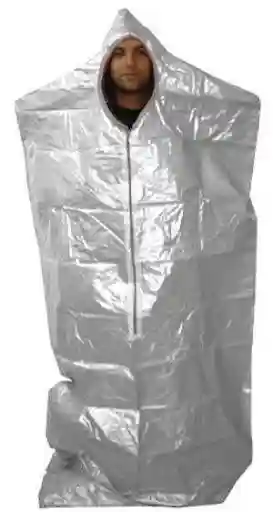
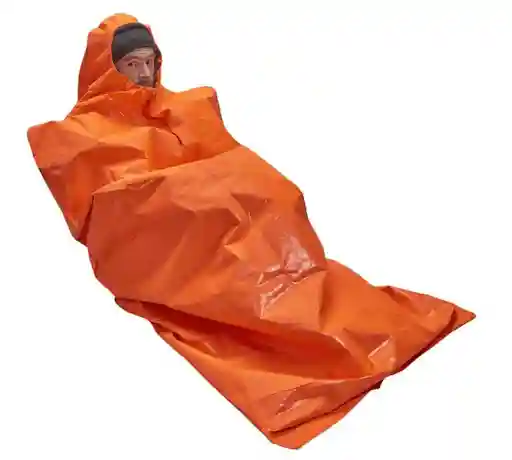
A Thermal Protective Aid (TPA) is used to protect people from getting cold after abandonment of the vessel. If a survivor gets into an open life raft/boat they may be very cold and wet. Due to wind and splashes of water, they can continue to lose body heat, and hypothermia can be very dangerous post-rescue. The TPA is a lightweight aid that can be worn around the body to reduce heat loss in windy, cold and wet conditions.
In this article we will look at the definition of a thermal protective aid, how it differs from immersion suits, regulatory requirements, and how to correctly use and maintain TPAs.
Definition
A thermal protective aid is a waterproof item with low thermal conductivity that covers the entire body apart from the face. It reduces heat lost from convection (cold air/wind) and evaporation (wet skin/clothing). They are similar to foil blankets in first aid, but larger and sturdier. They are often made from a metalised plastic film which means body heat is reflected back to the wearer. They are stored in a small sealed pack so can be easily stored within survival crafts.
Difference from immersion suits
It is easy to get confused between the two.
TPAs do not replace immersion suits. They are used to supplement immersion suits for wet and cold people in survival crafts without immersion suits.
Understanding Thermal Protective Aids is important for every marine engineer. For more guidance on shipboard safety and exam preparation, explore the MEO Class 4 Free Guidance Series
Â
Requirements for TPAs are given in SOLAS and LSA Code. In general:-
Â
TPAs are easy to use. However, if you are cold, wet and scared it may be difficult. Below is an outline of how to correctly deploy a TPA.
Wet Clothing: Wet clothing should be managed depending on the situation, temperature and manufacturer’s instructions. In general, outer layers can be wrung out or removed if you can quickly dry off and put additional protection on. However if removing clothing would mean you are exposed to wind do NOT remove it. Follow manufacturers instructions and training on board.
Condensation: As TPAs are waterproof and wind proof, internal condensation may form from breathing and sweat. Where possible, create a small gap in the pack to allow air flow to prevent becoming even more wet.
With Lifejackets: Depending on the design of the TPA, you may wear you life jacket over or under the TPA. Follow manufacturer instructions. Under no circumstances should you remove your life jacket in the water.
Everyone in Survival Crafts should know basic care for hypothermic people.
TPAs should be stored in dry conditions. They should be protected from sharp objects, heat and direct sunlight. Everyone assigned to a survival craft should know where they are stored.
Although TPAs are simple one-off items, they can degrade. They should therefore be checked as part of life saving appliance checks.
Â
To be effective people must know about TPAs. TPAs are demonstrated during abandon ship drills and survival craft training. This includes:-
In many cases TPAs will just be displayed in a drill (without opening sealed packs) or a training example will be given. This allows crew to be aware of what to expect.
Thermal protective aids are simple and inexpensive lifesaving devices. They can be easily overlooked. They are lightweight, waterproof bags with reflective surfaces to reduce heat loss in cold, wet conditions within life rafts/boats. They are not a replacement for immersion suits, nor are they intended to be used in the water. They are used in the hours following abandonment of the vessel, as it can still be very dangerous in cold, windy and wet conditions. Ensure that TPAs are known, in good condition and people know how to use them and they will be effective.
Waterproof items with low thermal conductivity. They cover the body (face excluded) to reduce heat loss from convection and evaporation. They are used in survival crafts or post-rescue.
Immersion Suits are worn prior to entering water to protect the wearer in water. TPAs are used in survival crafts or post-rescue. They are not designed to be worn in water or to jump in water.
Within the lifeboat, life raft and rescue boat equipment. As spare items in ship stores.
Minimum numbers are given in the LSA Code. Usually a percentage of people the craft can hold or minimum quantity (whichever is greater). Refer to current LSA Code for exact numbers for your craft.
Depends on the situation. Follow manufacturer instructions and training. If removing clothing would leave you exposed to cold and wind do not do so.
As TPAs are waterproof and windproof, moisture from breathing and sweating can condense inside. This can cause the wearer to become wetter.
No generally. They should be considered single use items and should be replaced once opened, used or damaged.
Checked to ensure the correct number of TPAs are in place. Checked to be intact, in date and recorded as part of regular life saving appliance checks.
Stopping of shivering, confusion, unclear speech and drowsiness. Insulate, handle with care and seek medical assistance quickly.
Disclaimer :- The opinions expressed in this article belong solely to the author and may not necessarily reflect those of Merchant Navy Decoded. We cannot guarantee the accuracy of the information provided and disclaim any responsibility for it. Data and visuals used are sourced from publicly available information and may not be authenticated by any regulatory body. Reviews and comments appearing on our blogs represent the opinions of individuals and do not necessarily reflect the views of Merchant Navy Decoded. We are not responsible for any loss or damage resulting from reliance on these reviews or comments.
Reproduction, copying, sharing, or use of the article or images in any form is strictly prohibited without prior permission from both the author and Merchant Navy Decoded.
Decoded Discount Alert! up to 50% OFF
Use Coupon Code Deep50