Hi this is Team Merchant Navy Decoded !!!
Please fill the below form with your query and we will get back to you in next 12 hours.
Rest assured your data is safe with us !!!🙂
Ask Your Query| For Beginner | For Professional |
|---|---|
| GME | Engine Side |
| G.P. Rating | Deck Side |
| ETO | G.P. Rating |
| IMUCET & Sponsorship | Combo Offers |
| Free Course | MEO |
| Free Course |
| For Beginner | For Professional |
|---|---|
| GME | Engine Side |
| G.P. Rating | Deck Side |
| ETO | G.P. Rating |
| IMUCET & Sponsorship | Combo Offers |
| Free Course | MEO |
| Free Course |
While walking around a ship and looking around typical machinery spaces, one would see that temperatures are measured almost everywhere: lube oil, jacket water, exhaust gas, bearing housing, tank, accommodation, reefer etc. The reason for such a prevalence is simple: temperature is usually the first parameter indicating an impending failure, and in many cases, it is the only one. A bearing about to seize will show a significantly increased temperature before the event, and a cylinder whose liner is about to crack will display such a temperature increase in the exhaust gas, among other symptoms.
This covers the type of temperature sensors, with an emphasis on the differences related to their operating principles, the areas for which they are best-suited, the strengths and weaknesses of each type.
While a single temperature sensor of a given type may be sufficient for its designated purpose, multiple variations must be used to cover the entire span of potential temperatures.

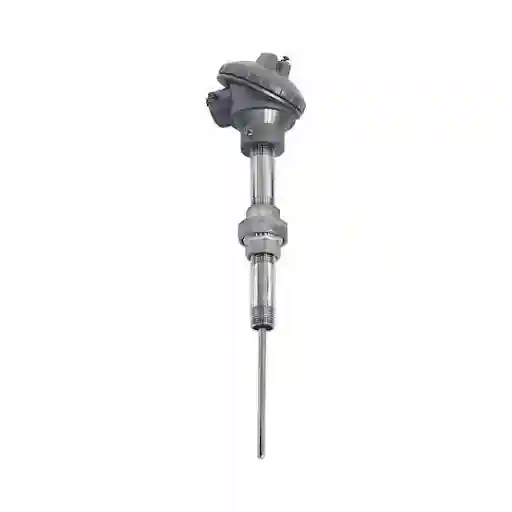
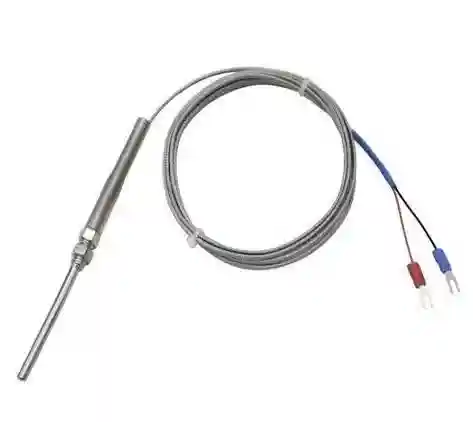
A thermocouple is a temperature sensor consisting of two dissimilar metals connected at two junctions. When the junctions are at different temperatures, there is a voltage proportional to the difference between the temperatures, generated by the thermocouple. The Seebeck effect, which is responsible for the generation of this voltage, does not require any external power for the operation of the sensor. The variety of metals used in thermocouples allows for a wide range of applications, as the choice of metal dictates the properties of the sensor. Different thermocouples, identified by letter designations, have different temperature ranges, as well as different resistance to the effects of the environment. This information is vital in selecting a type of a thermocouple for a particular application.
Thermocouples are simple to produce and operate, and can typically endure harsh conditions. They are thus used in a variety of applications where the temperature is too high, or the environment is too corrosive for other temperature sensors. These characteristics make thermocouples ideal for exhaust gas and turbocharger temperature monitoring. However, similar to other temperature sensors, they only measure the difference between two points. While the temperature at the hot junction is known, the temperature at the cold one must be estimated using other means, as the voltage generated depends on the difference between the two. This is referred to as cold-junction compensation, and inaccuracies in this estimate are a source of error for thermocouple measurements. Such a temperature sensor should therefore not be used when its junctions are subject to large variations in temperature, or when the cold junction is not under constant temperature conditions. A faulty connection may also affect the accuracy of measurements.

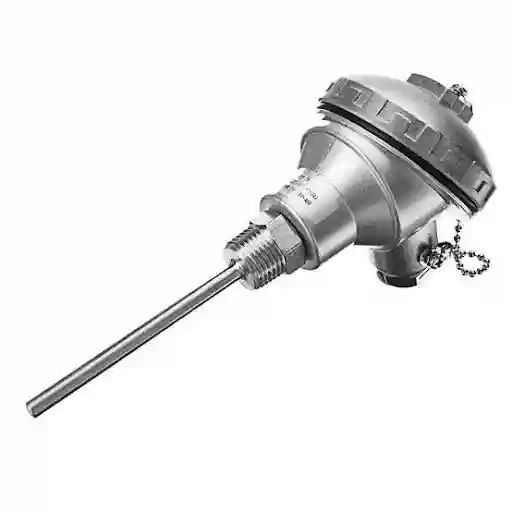
Resistance temperature detectors (RTDs), another type of temperature sensor, operate on a different principle. An RTD consists of a resistor, made from a pure metal (typically platinum), whose resistance varies nearly linearly with temperature. The change in resistance is measured and related to the change in temperature.
This allows for fairly accurate measurements, which is why RTDs are used in applications where precise temperature readings are required. They are typically used in low-temperature ranges, where their accuracy is applicable, and are not subject to large temperature variations. RTDs are more accurate and stable than thermocouples, but have a smaller range and are more expensive and less resistant to vibrations and other environmental factors.

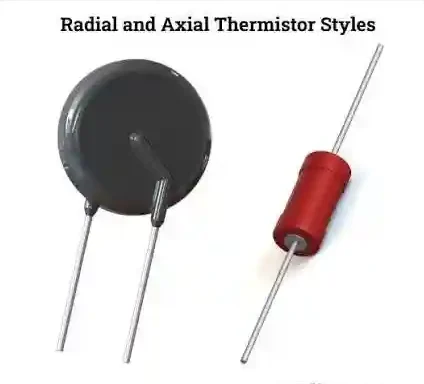
Thermistors are similar to RTDs, but are made from semiconductor materials, and thus exhibit a larger change in resistance with temperature. There are two types of thermistors, with resistance varying either exponentially or linearly with temperature. Due to their large change in resistance, thermistors are fairly simple to use in circuits. Variations of the two types of thermistors can be used for a variety of purposes, but are typically used in low-temperature ranges and narrow spans. They are most useful in applications where a small range of temperatures must be measured with precision.
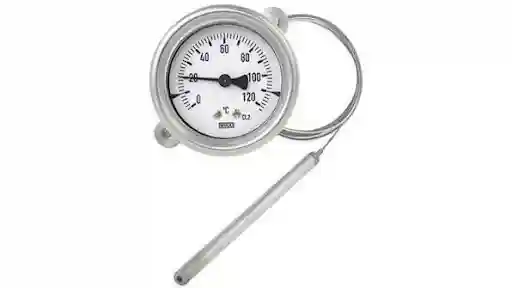
Bimetallic temperature sensors are yet another type of temperature sensor, which involve two metals with different coefficients of expansion. These two metals are bound together, typically in the form of a strip or a coil, so that they expand by different amounts upon heating. This causes the strip or coil to bend, which can be related to temperature. The bending itself can be used to drive a pointer on a dial, or to open or close a switch.
Bimetallic temperature sensors do not require an external power supply, or complex signal conditioning equipment. They are thus used in simpler applications, such as local indicators or thermal switches. They can be used in applications where other temperature sensors are impractical.

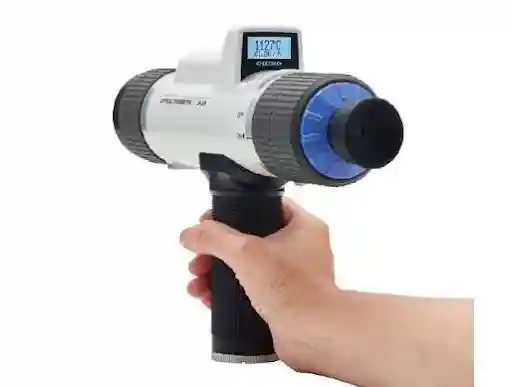
Optical pyrometers and infrared sensors are another category of temperature sensors. They operate on the principle that any body at a temperature above absolute zero emits infrared radiation. The amount of radiation depends on the temperature of the body, and can be related to it using a formula or a reference measurement. As such sensors do not require direct contact with the object being measured, they are most useful in applications where such contact is impossible or undesirable. These sensors can be used to measure the temperature of moving objects, or objects which are inaccessible in any other way. However, similar to contact temperature sensors, optical pyrometers require calibration. The calibration must take the emissivity of the material being measured into account, as it determines how much radiation will be emitted by the material at a given temperature. If the emissivity of a material is not known, the measurement will be inaccurate, even if the sensor itself is functioning normally.

It is not unusual to see a thermocouple or an RTD connected to a transmitter which converts the signal from a temperature sensor into a standard current loop signal. This current signal, most often following the 4-20 mA standard, is much more resilient to interference than a voltage signal, and can thus carry the signal through long distances. Current loop signals can also be easily routed to a central location, which is responsible for monitoring and displaying the measured values. A similar approach can be used to send the signal from a contact temperature sensor to a location where it can be read, processed, and displayed. It is common to see bimetallic temperature sensors used in local indicator applications, with no signal conditioning or transmission equipment.
In any case, the temperature reading is displayed locally, and, more often than not, transmitted to another location where it is monitored. The 4-20 mA standard is often used for such transmissions, as it is reliable and fairly simple to implement. The displayed temperature is only meaningful if there is an operator or an automated system which can react to the information, which is why alarm functions are also common. Similar to smoke detectors, temperature sensors typically have upper and lower limits, beyond which the alarm is triggered, notifying the operator of an imminent fault or emergency.
A temperature sensor must be calibrated regularly, to ensure that it provides accurate measurements. It is vital to recognize that a temperature sensor can provide consistent, but inaccurate measurements. That is why calibration is performed not to obtain accurate measurements, but to verify that the sensor measures the temperature correctly. This involves comparing the measurement provided by the sensor to a reference, or to a standard.
Temperature sensors can fail in different ways, depending on the type. Thermocouples can have a junction corroded or damaged, leading to an abrupt change in their characteristics. Similarly, an RTD can fail abruptly if the resistor in it burns out. More often than not, however, temperature sensors fail gradually. A faulty connection to the sensor can cause it to produce inconsistent measurements. This can be especially difficult to diagnose if the sensor is not located in an area easily accessible to inspection. Other common causes of failure include poor maintenance, and exposure to environmental factors beyond the capability of the sensor.
A comparison of the five main types of temperature sensors shows that they are each suited to a particular range of applications. Thermocouples, for example, sacrifice accuracy for range and resilience, making them suitable for high-temperature applications such as exhaust gas temperature measurements. RTDs sacrifice range and cost for accuracy, making them a good choice for low- and mid-range temperature measurements. Thermistors sacrifice range for sensitivity, and are thus used primarily in low-range, precision measurements. Bimetallic sensors sacrifice signal transmission for simplicity, and are thus used primarily as local indicators or switches. Infrared sensors sacrifice contact with the object for the ability to measure without it, and are thus used when other temperature sensors are inaccessible. After identifying the characteristics of a temperature sensor, a peculiar reading can be used to determine whether the fault lies in the sensor, the signal transmission, or the object being measured.
Thermocouples can typically endure higher temperatures and more severe conditions than RTDs. Exhaust gas temperatures are typically very high, and can exceed the operating range of an RTD.
A thermocouple produces a voltage proportional to the difference between the temperatures at its two junctions. A reference junction is typically used to measure the ambient temperature, and the voltage generated by the thermocouple is related to it to determine the temperature. The ambient temperature is thus compensated for when measuring temperature with a thermocouple.
Infrared sensors allow for measuring temperatures of objects without contacting them directly. This is beneficial in several applications, including measuring the temperature of a moving object. An infrared sensor can also be used in applications where contact with the object is impossible or undesirable in other cases.
A bimetallic sensor consists of two metals with different coefficients of expansion, bound together. Upon heating, the two metals expand by different amounts, causing the bimetallic strip to bend. This property is utilized in bimetallic temperature sensors to allow for measuring temperature by observing the rotation of a dial. Similar to switches, bimetallic temperature sensors require no power, as there is no electronic component to power.
A problem in the wiring between a sensor and a transmitter, or between a sensor and a controller, is likely to occur more frequently than a direct failure of the sensor. A faulty connection can occur due to moisture, or corrosion, for example. Any of these conditions can cause a change in the properties of the sensor, resulting in a change in the measurement. This issue would not be visible as a sensor failure, as the measurements would be changing gradually over time.
Disclaimer :- The opinions expressed in this article belong solely to the author and may not necessarily reflect those of Merchant Navy Decoded. We cannot guarantee the accuracy of the information provided and disclaim any responsibility for it. Data and visuals used are sourced from publicly available information and may not be authenticated by any regulatory body. Reviews and comments appearing on our blogs represent the opinions of individuals and do not necessarily reflect the views of Merchant Navy Decoded. We are not responsible for any loss or damage resulting from reliance on these reviews or comments.
Reproduction, copying, sharing, or use of the article or images in any form is strictly prohibited without prior permission from both the author and Merchant Navy Decoded.
Decoded Discount Alert! up to 50% OFF
Use Coupon Code Deep50