Hi this is Team Merchant Navy Decoded !!!

Please fill the below form with your query and we will get back to you in next 12 hours.

Rest assured your data is safe with us !!!🙂

Ask Your Query

Sensors, Transducers and Transmitters

Sensors, Transducers and Transmitters

Sensors, transducers and transmitters are key components in measurement and control systems. They are commonly used in industry to measure physical quantities such as temperature, pressure, level, flow and speed. On board ships they help to monitor machinery, keep systems running safely and provide information to control and alarm systems.

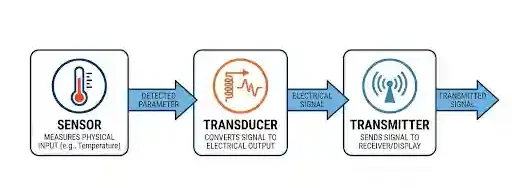
The three are closely related however they each have different roles. Sensors detect a physical change. Transducers convert one type of energy/physical quantity to another. Transmitters change a measurement into a suitable signal to transmit to a monitoring device/system.

Sensor

A sensor detects changes in a physical quantity. They can detect temperature, pressure, liquid level, movement, humidity and many other measurable factors.

Types of Sensor

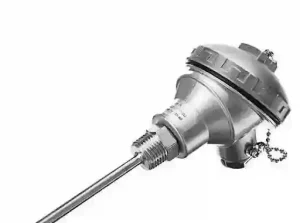
  • Temperature Sensor – Measures temperature of machinery, liquid/gas

Temperature Sensor

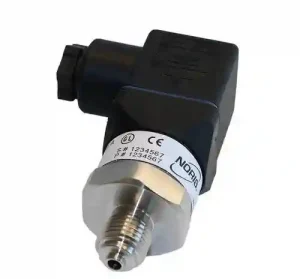
  • Pressure Sensor – Detects pressure of fluid in a pipe, tank or cylinder

Pressure Sensor

  • Level Sensor – Detects liquid level in a tank
  • Flow Sensor – Measures flow of liquid or gas
  • Proximity Sensor – Detects if an object is present or absent

Uses of Sensors On Board Ship

Sensors are commonly used in marine machinery systems. They can monitor main engine temperatures, lubricating oil pressure, cooling water flow, tank levels and other parameters. When a measurement goes above a certain limit it may cause an alarm to be triggered within the relevant monitoring system.

Transducer

Transducer

A transducer is a device that converts one type of energy/physical quantity to another. Within instrumentation they are commonly used to convert a physical quantity to an electrical signal. Some transducers convert electrical signals to physical responses.

Types of Transducer

  • Active Transducer – Creates an electrical signal by the measured physical quantity without any additional power source required for the sensor. Common example is thermocouples
  • Passive Transducer – An external power source is required as there is a change in electrical properties (resistance/capacitance) by the measured quantity. Common example is RTDs
  • Electrical Transducer – Converts physical quantity into an electrical signal or vice versa
  • Mechanical Transducer – Converts physical quantity to mechanical movement

Uses of Transducers on Board Ship

Transducers are used to monitor engine parameters, shaft speed, pressure, tank levels and vibration. They help convert physical parameters into signals so they can be processed by electronic instrumentation systems.

Table of Contents

Transmitter

Transmitter

A transmitter is an instrument that takes a measurement and produces a standard signal which can be transmitted to a remote indicator /alarm /controller /automation system.

Depending on the design the transmitter will amplify, condition, linearise and/or convert the received signal. It may also provide electrical isolation.

Common Types of Transmitter

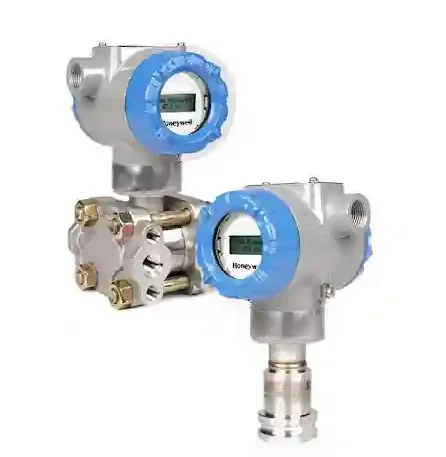
  • Pressure Transmitter – Produces a signal proportional to the pressure
  • Temperature Transmitter – Converts signal from temperature sensor to a standard signal
  • Level Transmitter – Sends information about the liquid level in a tank
  • Flow Transmitter – Gives a signal proportional to the flow
  • Differential Pressure Transmitter – Measures the pressure difference between two points, commonly used for measuring flow and monitoring filters

Uses of Transmitters on Board Ship

Transmitters provide information about measurements from machinery spaces, tanks and pipework to the engine control room, bridge displays or central alarm and monitoring systems. This means engineers can view the running conditions without having to look at every instrument individually.


Sensor

Transducer

Transmitter

Main Function

Detects physical quantity

Converts energy or physical quantity to

another

Converts measurement to

another system.

Typical Output

Physical response /change in measurable quantity

Electrical or useful signal

Standard signal (e.g. 4-20mA)

Example

RTD Sensor

Thermocouple

Pressure Transmitter

Main Role

Detection

Conversion

Signal Processing & Transmission

Working Example:

Main Engine Lubricating Oil Pressure Monitoring System:

  • Sensor – Pressure sensitive device detects the pressure of the lubricating oil line.
  • Transducer – The sensor converts the pressure change into a measurable electrical response.
  • Transmitter – The signal is conditioned and a proportional output (e.g. 4-20mA) is produced and sent to the monitoring system.
  • Display – The pressure is shown on a screen/display.
  • Alarm – If the pressure drops too low an alarm can be triggered by the monitoring system depending on how it has been designed.

This helps marine engineers monitor their machinery and respond to abnormal running conditions.

Benefits of Sensors, Transducers and Transmitters

  • Provides constant monitoring of machinery
  • Improves accuracy and reliability of measurements
  • Can be used in automated alarm and control systems
  • Reduces need to manually read measurements
  • Can help detect abnormal running conditions early
  • Helps run the ship safely and efficiently

Conclusion

Sensors, transducers and transmitters are vital parts of instrumentation and automation. Sensors detect physical changes, transducers convert this into a useful signal and transmitters process the measurements and share them with monitoring systems. On board ships these devices help marine engineers constantly monitor engines, pumps, tanks and other machinery to keep their operations safe and reliable.

Frequently Asked Questions (FAQs)

Its main function is to supply clean, properly conditioned fuel to the auxiliary diesel engine to ensure reliable combustion and electrical power generation.

A purifier removes water and solid impurities from fuel using a centrifuge.

A heater reduces viscosity of heavy fuel oil so that it can circulate and be injected under suitable conditions. The fuel and engine specifications will dictate whether it is needed and the degree of heating.

It provides the right quantity of fuel at injection pressure levels to the injector at the right time.

A blocked filter causes fuel flow restriction which results in low supply pressure and engine power loss, instability or shutdown.

Excess fuel is returned to maintain stable supply conditions and to allow the system to circulate more fuel than the engine consumes.

Disclaimer :- The opinions expressed in this article belong solely to the author and may not necessarily reflect those of Merchant Navy Decoded. We cannot guarantee the accuracy of the information provided and disclaim any responsibility for it. Data and visuals used are sourced from publicly available information and may not be authenticated by any regulatory body. Reviews and comments appearing on our blogs represent the opinions of individuals and do not necessarily reflect the views of Merchant Navy Decoded. We are not responsible for any loss or damage resulting from reliance on these reviews or comments.

Reproduction, copying, sharing, or use of the article or images in any form is strictly prohibited without prior permission from both the author and Merchant Navy Decoded.

DIWALI SALE

Decoded Discount Alert! up to 50% OFF

DIWALI SALE

Decoded Discount Alert! up to 50% OFF

Use Coupon Code Deep50

Days
Hours
Seconds
0
Would love your thoughts, please comment.x
()
x