Hi this is Team Merchant Navy Decoded !!!

Please fill the below form with your query and we will get back to you in next 12 hours.

Rest assured your data is safe with us !!!🙂

Ask Your Query

Provision Crane on Ship

Provision Crane on Ship
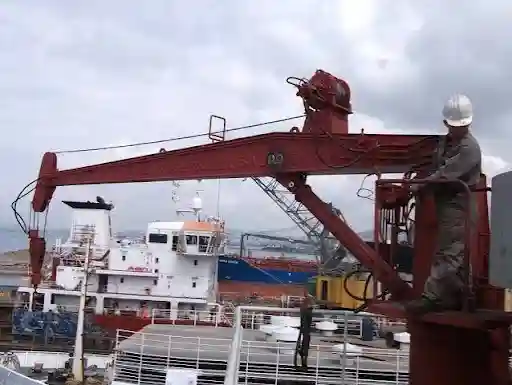
  • Provision cranes are used onboard vessels to allow for the loading and unloading of provision, stores, spares and other items.
  • Whilst in port, provisions will be supplied to allow the crew to have all necessary items for the voyage.
  • As these materials can be heavy and difficult to carry by hand, provision cranes are very useful on board vessels.
  • Provision cranes allow for relatively light materials to be lifted from land/supply vessels to the deck of the vessel safely.
  • To ensure safe and efficient loading/unloading of materials, provision cranes must be correctly maintained and operated.

To understand the working principles and operation of cranes onboard ships, explore the Introduction to Ships Cranes Course by Merchant Navy Decoded and improve your practical knowledge of shipboard crane systems.

Provision Crane 1

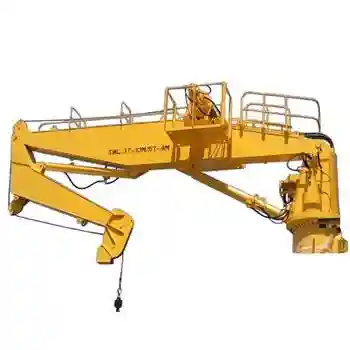
Main Components

Generally, provision cranes are mounted on a fixed base on the deck.

Components:-

  • Fixed Base – Supports the provision crane and ensures safe transfer of the load to the vessel.
  • Outriggers – Allow reaching to lift provisions.
  • Winch/Hoist – Load and unload material with the aid of a cable.
  • Hook – Connects to the material with the correct lifting equipment.
  • Swivel – Allows rotation of the crane (within limits).
  • Power Source – Provides power for the provision crane.
  • Controls – Control the provision crane.

Each component has its own purpose. In order to ensure reliable operation of the provision cranes, all components must be well maintained.

Want to improve your practical knowledge of shipboard equipment like provision cranes? Explore the Merchant Navy Decoded App for MND Flix courses, MMD Exam Support, STCW Course Finder, and other useful maritime learning resources.

Provision Crane 2

  • Provision cranes allow provisions to be lifted, moved and placed where required.
  • Depending on the design of the crane, they may be powered by electricity/hydraulics..

Operation

  • Ensure the provision is securely packed in containers/ nets.
  • Connect the hook to the lifting equipment.
  • Lift the materials up with controls.
  • Move the materials to their destination using the outriggers and swivel.
  • Lower the materials carefully to the desired position on the deck.
  • Remove the lifting equipment from the load.

Safety

  • Never exceed the Safe Working Load.
  • Ensure that the hook, cable, braking and lifting equipment are in good, working condition.
  • Don’t have people underneath loads.
  • Good communication between operator and signaller.
  • Avoid sudden movements.
  • Only qualified/authorised personnel should operate the provision cranes.

Table of Contents

Provision Crane Faults 1

  • At times, provision cranes may fail to operate.
  • This may be due to an issue with the power, problems with the controls or activation of safety systems..

Causes

  • No power.
  • Blown fuse/s in control circuits or tripped circuit breaker.
  • Emergency stop button has been activated.
  • Faulty switches/ relays in the control system.
  • Loose wiring.

Fault Finding

  • Investigate the power source. Check for any signs of fault on the controls.
  • Investigate any issues with safety systems and emergency stop buttons.
  • If investigating issues with electrical systems, only qualified personnel should perform this work. Appropriate isolation procedures must also be followed.Provision Crane Faults 2
  • Slow/abnormal movement.
  • Crane moves slowly, jerkily or may have unusual noise/vibration.
  • Hydraulic provision cranes may have issues with their hydraulic system.
  • Electric provision cranes may have issues within the motors/controls.

Causes

  • Low hydraulic fluid.
  • Clogged filters.
  • Air in system.
  • Leak in hydraulic system.
  • Faulty hydraulic pump.
  • Faults in motor/control systems.

Finding Faults

  • Check the quantity of hydraulic fluid.
  • Look for visible leaks in system.
  • Be aware of any warning signs.
  • Note any unusual noise or vibration.
  • If issues continue after this, turn the crane off.
  • Qualified personnel should inspect the provision crane.
  • If there continues to be issues, the provision crane should not be used until it has been inspected.

Provision Crane Faults 2

If there is an issue with the provision crane securing the load or allowing smooth lowering of the load, this can be a serious problem. This could be due to problems with the braking system, loading system or controls.

Causes

  • Worn/damaged loading brake.
  • Damaged cable.
  • Faulty valves in control system (hydraulic).
  • Issues with winch drum/sheave.
  • Faulty electric control system.

Finding Faults

  • If there is an issue with the crane securing the load, it must be taken out of operation immediately.
  • Ensure no one is under load and follow appropriate safety procedures as defined on the vessel.
  • Qualified maintenance personnel should assess the brakes, cable, winch and control systems before the provision crane is put back into operation.

Conclusion

  • Provision cranes are very important deck equipment. They allow efficient loading/unloading of provisions, stores and other items.
  • Multiple components work together to allow for safe lifting of loads: outriggers, fixed bases, winches, hooks and power sources.
  • Understanding how provision cranes operate and what to do in case of faults provides useful knowledge to marine engineers. Regular checks and maintenance and following correct safety procedures will allow reliable operation of the provision crane throughout its lifetime.

Frequently Asked Questions (FAQs)

A provision crane is deck machinery used to lift and transfer provisions, stores, spares and essential materials onboard ships.

Safe Working Load (SWL) is the maximum load a crane can safely lift under specified operating conditions.

Outriggers provide additional reach and support, helping the crane handle loads safely within its designed operating limits.

Low hydraulic fluid, clogged filters, air in the system, leaking pipes, faulty pumps or electrical control problems.

Only qualified and authorised maintenance personnel should inspect, troubleshoot and repair provision crane faults.

Disclaimer :- The opinions expressed in this article belong solely to the author and may not necessarily reflect those of Merchant Navy Decoded. We cannot guarantee the accuracy of the information provided and disclaim any responsibility for it. Data and visuals used are sourced from publicly available information and may not be authenticated by any regulatory body. Reviews and comments appearing on our blogs represent the opinions of individuals and do not necessarily reflect the views of Merchant Navy Decoded. We are not responsible for any loss or damage resulting from reliance on these reviews or comments.

Reproduction, copying, sharing, or use of the article or images in any form is strictly prohibited without prior permission from both the author and Merchant Navy Decoded.

DIWALI SALE

Decoded Discount Alert! up to 50% OFF

DIWALI SALE

Decoded Discount Alert! up to 50% OFF

Use Coupon Code Deep50

Days
Hours
Seconds
0
Would love your thoughts, please comment.x
()
x