Hi this is Team Merchant Navy Decoded !!!

Please fill the below form with your query and we will get back to you in next 12 hours.

Rest assured your data is safe with us !!!🙂

Ask Your Query

Pneumatic Valves

Pneumatic valves

Pneumatic valves are key components within control and automation systems on board ships. They use compressed air to control the flow, pressure or direction of air and fluids. These valves are widely used throughout the marine industry due to their reliability, fast response and safe operation. Pneumatic valves are often used within engine room automation, fuel oil systems, boiler control systems, starting air systems and remote operated systems.

What Is A Pneumatic Valve?

Pneumatic valves are devices which utilise compressed air to control the movement of a valve mechanism or the flow of a medium within a pipeline.

Depending on the design of the pneumatic valve it can be used to:

  • Control the flow of air/fluids by opening or closing
  • Controlling the direction of airflow
  • Controlling the pressure and flow rate
  • Automating machinery

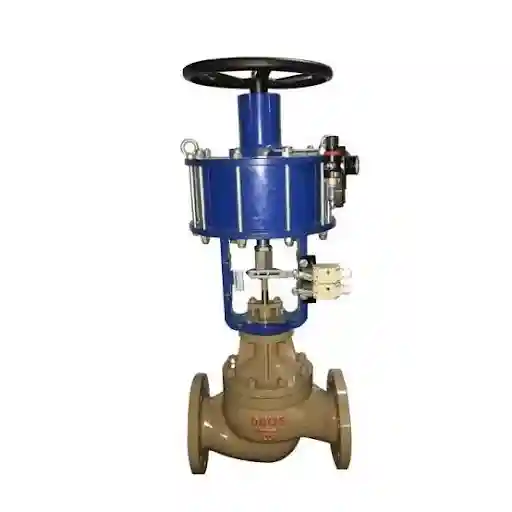
Some pneumatic valves will be fully operated by the air pressure, whilst other pneumatic valves will use compressed air to move an actuator which is connected to another process valve.

Principle Of Operation

This depends on what type of pneumatic valve you have. Most pneumatic control systems will have compressed air supply via an air compressor or instrument air system.

The basic principle is as follows:

  • Compressed air is supplied to the pneumatic valve via inlet
  • A manual, solenoid or pneumatic controller is used to operate the valve
  • Air pressure is applied to move the internal valve mechanism (spool, diaphragm, piston or actuator)
  • The valve opens/closes or changes direction
  • In some designs air is exhausted from the opposite side of the actuator

As an example, a pneumatic actuated fuel oil valve will use the compressed air to move a piston/diaphragm which will open/close the valve, controlling the fuel flow.

Table of Contents

Main Parts Of A Pneumatic Valve

The design will vary depending on the type of valve, however key parts include:

  • Body – Outer casing containing internal passageways and mechanisms
  • Spring – Returns the valve to its normal position depending on how the valve is designed
  • Actuator – Converts the compressed air into mechanical movement
  • Diaphragm/Piston – Takes in the air pressure to create movement depending on the valve design
  • Ports – Openings allowing air in/out of the valve. These are often referred to as pressure, working and exhaust ports
  • Seals – To prevent air leaking and to keep the correct pressure within the valve

Types Of Pneumatic Valves

There are a variety of pneumatic valves available, depending on their use and design. The most common are:

  • Directional Control Valves

Directional control valves are used to control the direction of compressed air. These are often referred to by how many ports and positions they have.

Examples include:

  • 2/2 Way Valve – 2 ports, 2 positions. Often used to open/close air flow

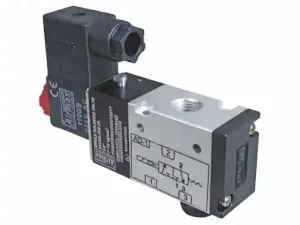
  • 3/2 Way Valve – 3 ports, 2 positions. Often used to operate single acting pneumatic cylinders

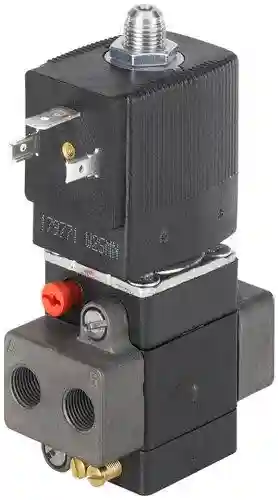
3 by 2 Way Valve

  • 4/2 Way Valve – 4 ports, 2 positions. Can be used to control double acting actuators

4 by 2 Way Valve

  • 5/2 Way Valve – 5 ports, 2 positions. Widely used to control double acting pneumatic cylinders.

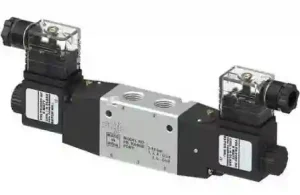
5 by 2 Way Valve

The first number refers to how many ports there are, the second number refers to how many positions.

  • Pressure Control Valves

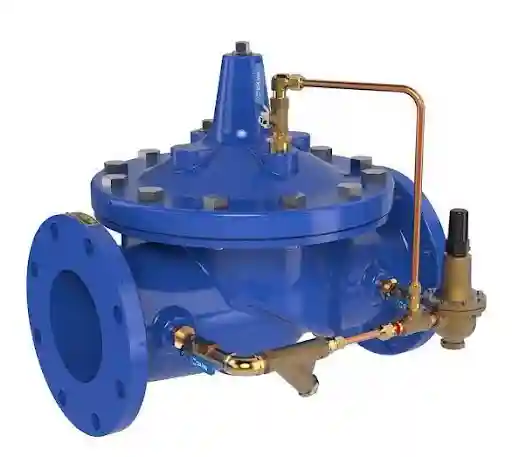
Pressure Control Valves

Pressure control valves are used to control or restrict the pressure within a pneumatic system.

Examples include:

  • Pressure Reducing Valve – Ensures the correct pressure is maintained downstream
  • Pressure Relief Valve – Opens to release excess pressure if it exceeds a set pressure
  • Pressure Sequence Valve – Will allow a specific operation to occur once a set pressure is reached
  • Flow Control Valves

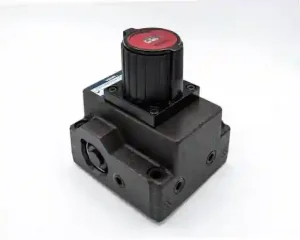
Flow Control Valves

Flow control valves control the flow rate of compressed air in a system. This can be used to control how fast pneumatic cylinders or actuators work.

  • Non Return Valve

Non return valves allow air to flow in one direction only. Also known as check valves.

  • Solenoid Operated Pneumatic Valves

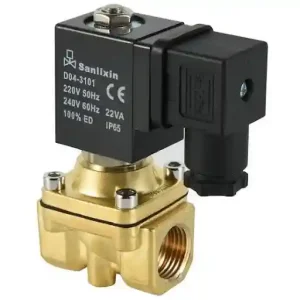
Solenoid operated pneumatic valves use a solenoid (electrically operated) to move the internal spool/poppet. Once an electric signal is sent to the solenoid it will change the position of the valve, controlling the air flow.

These are often used within automated systems.

Uses Of Pneumatic Valves On Ships

Pneumatic valves are used within a few systems on board ships due to their reliable remote and automated operation.

  • Main Engine Automation – Pneumatic control valves are used within certain engine control systems to operate air signals and actuators
  • Boiler Automation – Help control fuel, air and other processes using pneumatic actuators and control systems
  • Fuel Oil Systems – Remote operated valves are used to control or isolate fuel flow using pneumatic actuators
  • Starting Air Systems – Pneumatic control valves are used within starting air control systems to control the direction of the compressed air
  • Cargo Systems – Some cargo systems will use pneumatically operated valves to allow remote operation
  • Ventilation/HVAC – Pneumatic actuators may be used to control the dampers and control valves

Advantages Of Pneumatic Valves

  • Simple and reliable design
  • Fast response to control
  • Remote and automated operation
  • Can be used in certain hazardous environments if designed and installed correctly
  • Easy to integrate into pneumatic control systems
  • Generally simpler electrical equipment required at the actuator.

Common Issues & Maintenance

Like other components on board ships, pneumatic valves will require regular checking and maintenance.

Issue Possible Cause

    • Air leaks Damaged seals or loose connections
    • Slow operation Low air pressure or blocked air
    • Valve not operating Blocked passageways or faulty solenoid
    • Unsteady operation Moisture, dirt or damaged component

Not returning Weak/broken return spring

Maintenance

  • Regularly check the compressed air pressure
  • Check for any air leaks in the pipework
  • Drain any moisture from air filters and moisture separators
  • Clean any filters and replace damaged seals
  • Check solenoid coils and connections
  • Test valve during scheduled maintenance
  • Follow the manufacturers guidelines when dismantling.

Before carrying out any maintenance ensure that the air supply is isolated and any trapped pressure is released. Follow the vessel’s safety procedures to ensure that the equipment cannot operate.

Conclusion

Pneumatic valves play an important role within automation and control systems on ships. They utilise compressed air to operate machinery, control the airflow and control the movement of fluids using remote operated valves. Knowing the different types, principles of operation and uses will help marine engineers identify any issues and ensure reliable operation of pneumatic equipment on board

Frequently Asked Questions (FAQs)

To control the flow, direction or pressure of compressed air within a pneumatic system.

Pneumatic valves are a general term for valves which are operated by pneumatic energy or control air. Solenoid valves use an electromagnetic coil to operate the internal mechanism. Solenoid valves can also be used to control compressed air.

This refers to a pneumatic valve with 5 ports and 2 positions. These are often used to control double acting pneumatic cylinders.

They provide a reliable method of remote and automated control for machinery and fluid systems. They are also useful in situations where it would not be suitable to have electrical equipment.

Low air pressure, blocked filters, blocked pipework, air leaks or damaged components..

Disclaimer :- The opinions expressed in this article belong solely to the author and may not necessarily reflect those of Merchant Navy Decoded. We cannot guarantee the accuracy of the information provided and disclaim any responsibility for it. Data and visuals used are sourced from publicly available information and may not be authenticated by any regulatory body. Reviews and comments appearing on our blogs represent the opinions of individuals and do not necessarily reflect the views of Merchant Navy Decoded. We are not responsible for any loss or damage resulting from reliance on these reviews or comments.

Reproduction, copying, sharing, or use of the article or images in any form is strictly prohibited without prior permission from both the author and Merchant Navy Decoded.

DIWALI SALE

Decoded Discount Alert! up to 50% OFF

DIWALI SALE

Decoded Discount Alert! up to 50% OFF

Use Coupon Code Deep50

Days
Hours
Seconds
0
Would love your thoughts, please comment.x
()
x