Hi this is Team Merchant Navy Decoded !!!
Please fill the below form with your query and we will get back to you in next 12 hours.
Rest assured your data is safe with us !!!🙂
Ask Your Query| For Beginner | For Professional |
|---|---|
| GME | Engine Side |
| G.P. Rating | Deck Side |
| ETO | G.P. Rating |
| IMUCET & Sponsorship | Combo Offers |
| Free Course | MEO |
| Free Course |
| For Beginner | For Professional |
|---|---|
| GME | Engine Side |
| G.P. Rating | Deck Side |
| ETO | G.P. Rating |
| IMUCET & Sponsorship | Combo Offers |
| Free Course | MEO |
| Free Course |
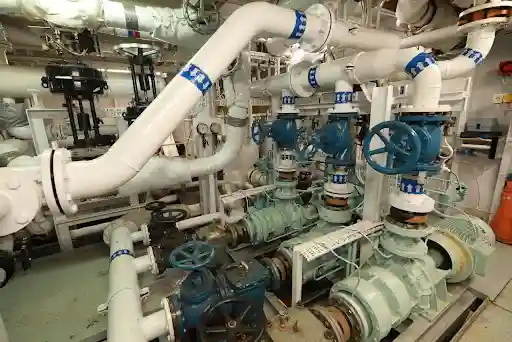
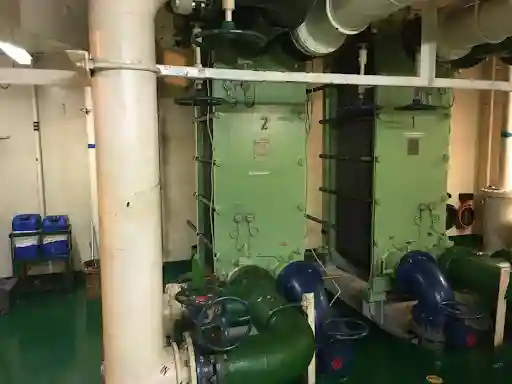
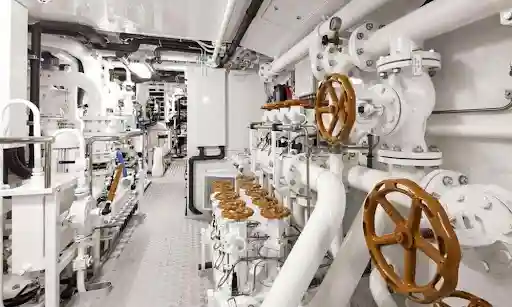
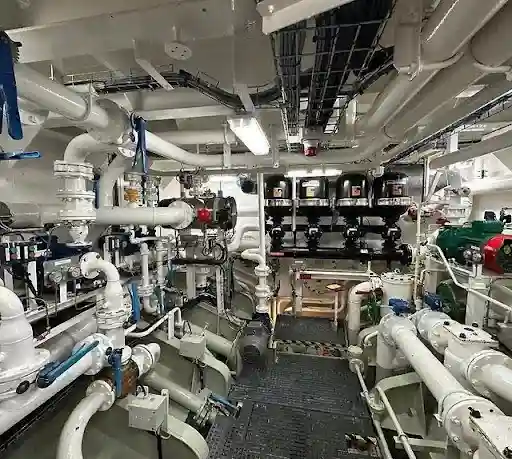
If you were to open up a ship you would find that there is a lot of pipework onboard. There will be pipework for seawater for cooling, fresh water for drinking, fuel for the engine, oil for bearings, steam for heaters, air for starting valves, bilge water to exit the ship, ballast water in and out. There will be miles of piping in the tanks, on the decks, in the engine room and within the accommodation. Usually in hot, damp areas with vibrations and not easy to access.
As piping systems are very important engineers will become familiar with understanding and maintaining them. Leaks at flanges or stuck valves can cause the system to fail causing flooding or fires. This article will explain the main piping systems onboard, what they are made of, how they are joined, how the valves operate and how they can be maintained.
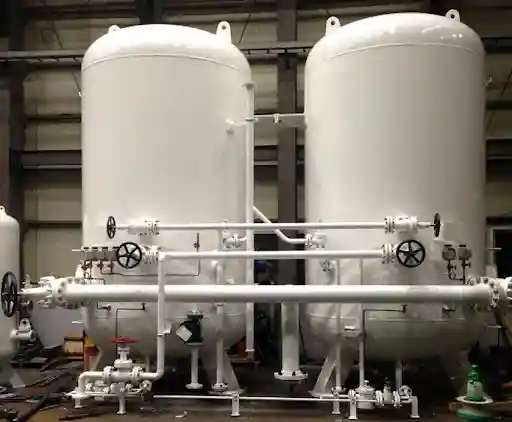
A piping system consists of piping, fittings, valves and supporting structure to allow the fluid to move from one place to another. All piping systems will have a source (Tank, Pump, Seawater), piping and valves. Most systems will have pumps to move the fluid, strainers/filters to keep the fluid clean and valves to control the flow. All systems will have a piping diagram showing where piping, valves, pumps and tanks are located. Understanding piping diagrams and knowing how they relate to actual piping is an important skill. If there are any differences between the piping diagram and the ship you should report this and ensure it is updated.
Understanding piping systems onboard ships is important for marine engineers. Along with studying piping diagrams, engineers should also learn how different shipboard systems operate in real conditions.
The Merchant Navy Decoded App provides access to MND FLIX, where marine engineers can explore practical learning resources related to shipboard machinery and systems.


Materials will depend on the fluid, pressure, temperature and environment.
Always use the correct material when repairing as incorrect materials can corrode quickly or burst under pressure.
Joints
Valves control the piping systems. The main types are:-
Valves should be labelled. It should be clear whether the valve is open or closed. Valves that won’t close/open are a common issue. Valves should be exercised and overhauled at scheduled intervals.
Strainers are used to protect pumps and equipment. A seawater strainer will prevent weed, shells and rubbish getting into the pump and coolers. Should be cleaned regularly to prevent reduced flow due to blockages. This can cause pumps to run dry or engines to overheat.
Piping is supported and hung to allow movement but not too much vibration. If there are no supports or they are loose the piping can crack due to vibration. Lagging is used on hot lines to reduce heat loss. This also prevents people and equipment from burning. On fuel lines it helps keep the fuel at the right temperature. Tracing (steam or electric) is used to keep heavy fuel and some other fluids warm. Lagging should be in good condition. Oil in the lagging is a fire risk so wet/oily lagging should be replaced.
Piping is colour coded with arrows indicating flow. Labels will indicate what the piping is for.
Always check the labels and diagrams before opening any piping. Don’t rely solely on colours.
The harsh conditions onboard mean there are several ways the piping can corrode.
Protection can be done using coatings, anodes, correct materials, good design to ensure good flow and chemical treatments. Wall thickness is often measured using ultrasonic gauges on important lines to see if there is any thinning.
Piping is important for fire and flooding. Many things are dictated by rules;
This will depend on the type and class of ship. Check current SOLAS and class rules.
Before opening any piping, valve or flange:-
Piping systems onboard a ship act like the blood stream of the ship. Each service (Seawater, Fuel, Steam, Air etc.) will have its own piping, valves and equipment. Knowing what each service carries, how it is joined, what valves are used, how it can fail and how to safely isolate will help you identify any leaks quicker, prevent costly mistakes and keep the ships systems running.
Seawater, Freshwater, Fuel Oil, Lube Oil, Bilge, Ballast, Firemain, Steam & Condensate, Air, Hydraulic, Sounding, Vent & Overflow, Sanitary & Drainage.
Carbon steel, Galvanised steel, copper nickel, Stainless steel, Plastic, GRP and Flexible hoses. Depending on what fluid is flowing, pressure, temperature and rules.
Gate Valve – Fully open or closed. Straight flow. For isolation.
Globe Valve – Better for controlling flow. Tight seal.
Prevent seawater from coming back into the ship.
Can be closed remotely from outside the area. Used in emergencies. E.g. Valves on fuel tanks during a fire.
To reduce heat loss, keep fuel/other fluids at correct temperature and prevent people from burning.
Sudden stoppage of liquid flow. E.g. Too quick closing of valves or air in line.
Can cause damage to piping.
Using ultrasonic thickness gauges on important lines. This will identify any thinning due to corrosion/erosion.
Identify what system you are dealing with. Ensure you have permission. Isolate. Lock/tag. Depressure and drain. Check for pressure build up. Wear correct PPE.
There is no universal colour coding on all ships. Always check the label and diagram.
Disclaimer :- The opinions expressed in this article belong solely to the author and may not necessarily reflect those of Merchant Navy Decoded. We cannot guarantee the accuracy of the information provided and disclaim any responsibility for it. Data and visuals used are sourced from publicly available information and may not be authenticated by any regulatory body. Reviews and comments appearing on our blogs represent the opinions of individuals and do not necessarily reflect the views of Merchant Navy Decoded. We are not responsible for any loss or damage resulting from reliance on these reviews or comments.
Reproduction, copying, sharing, or use of the article or images in any form is strictly prohibited without prior permission from both the author and Merchant Navy Decoded.
Decoded Discount Alert! up to 50% OFF
Use Coupon Code Deep50