Hi this is Team Merchant Navy Decoded !!!

Please fill the below form with your query and we will get back to you in next 12 hours.

Rest assured your data is safe with us !!!🙂

Ask Your Query

Pipe Thread Dimensions Chart: Complete Guide

A Pipe Thread Dimensions Chart is a reference table that provides the standard dimensions of pipe threads, including nominal pipe size, outside diameter (OD), threads per inch (TPI), pitch, and thread type. These charts help engineers, plumbers, machinists, marine engineers, and maintenance technicians select the correct fittings and ensure leak-free pipe connections.

Using the correct pipe thread dimensions is essential because pipe threads are designed to seal fluids and gases under pressure. Even a slight mismatch in thread profile or diameter can result in leaks, damaged fittings, or equipment failure.

Why is a Pipe Thread Dimensions Chart Important?

A pipe thread chart helps you:

  • Select the correct pipe fittings
  • Identify unknown thread sizes
  • Avoid thread damage
  • Ensure proper sealing
  • Prevent leaks
  • Maintain compatibility between components
  • Reduce maintenance time

Whether you work in marine engineering, oil & gas, plumbing, hydraulic systems, or manufacturing, a pipe thread dimensions chart is an essential reference.

Common Pipe Thread Standards

The most commonly used pipe thread standards are:

Thread Standard

Full Form

Common Regions

Thread Angle

Thread Type

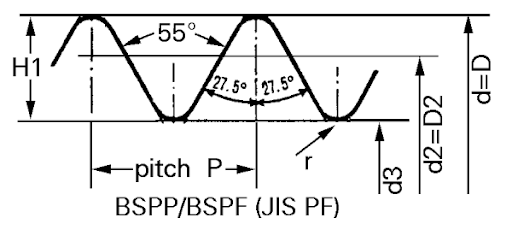
BSP

British Standard Pipe

Europe, Asia, Australia

55°

Parallel (BSPP) & Tapered (BSPT)

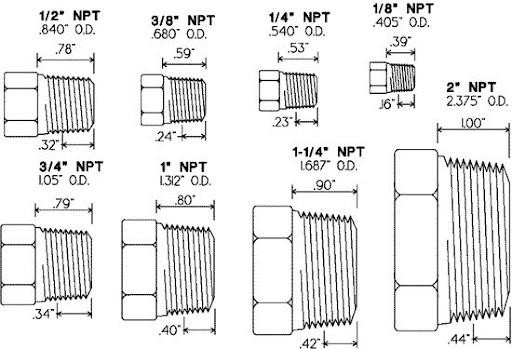
NPT

National Pipe Thread

USA & Canada

60°

Tapered

NPTF

National Pipe Thread Fuel

USA

60°

Dry Seal Tapered

Metric

ISO Metric Thread

Worldwide

60°

Parallel

The two most widely used standards are BSP and NPT, but they are not interchangeable because they differ in thread angle, dimensions, and sealing method.

Table of Contents

BSP Pipe Thread Dimensions Chart

The following table shows the commonly used BSP thread sizes.

BSP Pipe Thread Dimensions Chart

Nominal Size

Threads Per Inch (TPI)

Major Outside Diameter (mm)

Major Outside Diameter (inch)

1/8″

28

9.73

0.383

1/4″

19

13.16

0.518

3/8″

19

16.66

0.656

1/2″

14

20.96

0.825

3/4″

14

26.44

1.041

1″

11

33.25

1.309

1¼”

11

41.91

1.650

1½”

11

47.80

1.882

2″

11

59.61

2.347

Typical BSP dimensions based on ISO/BS standards.

NPT Pipe Thread Dimensions Chart

The following table lists the standard NPT thread dimensions.

NPT Pipe Thread

Nominal Size

Threads Per Inch (TPI)

Outside Diameter (mm)

Outside Diameter (inch)

1/16″

27

7.94

0.313

1/8″

27

10.29

0.405

1/4″

18

13.72

0.540

3/8″

18

17.15

0.675

1/2″

14

21.34

0.840

3/4″

14

26.67

1.050

1″

11.5

33.40

1.315

1¼”

11.5

42.16

1.660

1½”

11.5

48.26

1.900

2″

11.5

60.33

2.375

Typical NPT dimensions based on ASME B1.20.1.

How to Identify a Pipe Thread

Pipe Thread

Follow these simple steps:

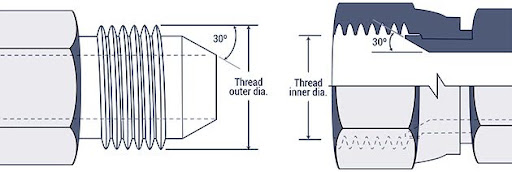
Step 1: Measure the Outside Diameter

Use a vernier caliper to measure the outside diameter of the male thread.

Step 2: Count the Threads

Use a thread pitch gauge to determine the Threads Per Inch (TPI).

Step 3: Check the Thread Type

Determine whether the thread is:

  • Parallel
  • Tapered

Step 4: Compare with the Pipe Thread Dimensions Chart

Match:

  • Outside Diameter
  • Threads Per Inch
  • Thread Type

This allows accurate identification of the pipe thread.

Understanding Nominal Pipe Size

One common misconception is that the nominal pipe size equals the measured thread diameter.

For example:

A 1/2-inch BSP thread has an outside diameter of approximately 20.96 mm, while a 1/2-inch NPT thread measures approximately 21.34 mm.

The nominal size refers to the approximate internal bore of the original pipe standard rather than the actual thread diameter.

Tips for Selecting the Correct Pipe Thread

  • Always identify the thread standard before installation.
  • Measure both diameter and thread pitch.
  • Never force BSP and NPT threads together.
  • Use thread sealant where required.
  • Replace damaged or worn fittings.
  • Verify compatibility with the system pressure and fluid.

Common Mistakes to Avoid

Avoid these frequent errors:

  • Assuming nominal size equals actual diameter
  • Mixing BSP and NPT fittings
  • Ignoring thread taper
  • Measuring only the diameter without checking TPI
  • Using incorrect sealing methods
  • Over-tightening threaded joints

Frequently Asked Questions (FAQs)

It is a reference table showing pipe thread sizes, outside diameters, thread pitch, and other dimensions used for identifying and selecting threaded pipe fittings.

BSP threads have a 55° thread angle and may be parallel or tapered, while NPT threads have a 60° angle and are tapered. They are not directly interchangeable.

Nominal pipe size refers to the historical approximate internal bore of the pipe, not the measured thread diameter.

No. Although some sizes have similar thread pitches, differences in thread angle and profile can cause leaks and damage.

Measure the outside diameter, determine the thread pitch (TPI), identify whether the thread is parallel or tapered, and compare the measurements with a standard pipe thread dimensions chart.

Disclaimer :- The opinions expressed in this article belong solely to the author and may not necessarily reflect those of Merchant Navy Decoded. We cannot guarantee the accuracy of the information provided and disclaim any responsibility for it. Data and visuals used are sourced from publicly available information and may not be authenticated by any regulatory body. Reviews and comments appearing on our blogs represent the opinions of individuals and do not necessarily reflect the views of Merchant Navy Decoded. We are not responsible for any loss or damage resulting from reliance on these reviews or comments.

Reproduction, copying, sharing, or use of the article or images in any form is strictly prohibited without prior permission from both the author and Merchant Navy Decoded.

DIWALI SALE

Decoded Discount Alert! up to 50% OFF

DIWALI SALE

Decoded Discount Alert! up to 50% OFF

Use Coupon Code Deep50

Days
Hours
Seconds
0
Would love your thoughts, please comment.x
()
x