Hi this is Team Merchant Navy Decoded !!!
Please fill the below form with your query and we will get back to you in next 12 hours.
Rest assured your data is safe with us !!!🙂
Ask Your Query| For Beginner | For Professional |
|---|---|
| GME | Engine Side |
| G.P. Rating | Deck Side |
| ETO | G.P. Rating |
| IMUCET & Sponsorship | Combo Offers |
| Free Course | MEO |
| Free Course |
| For Beginner | For Professional |
|---|---|
| GME | Engine Side |
| G.P. Rating | Deck Side |
| ETO | G.P. Rating |
| IMUCET & Sponsorship | Combo Offers |
| Free Course | MEO |
| Free Course |
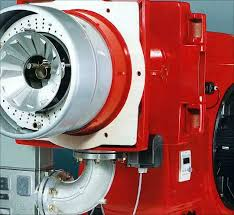
Ask a boiler operator what fails most often on the auxiliary boiler, and mostly, the answer comes back to the burner. Not the shell, not the tubes, the burner. A dripping atomizer tip, a cracked quarl, a scanner that’s stopped seeing the flame properly. It’s a small assembly compared to the boiler sitting around it, but it does the one job everything else depends on: taking thick, stubborn fuel oil and turning it into something that’ll actually burn cleanly.
And here’s the thing there isn’t just one design. Walk onto three different ships and you might find three different burner types doing that same job in three genuinely different ways. So let’s get into how each one is actually built, not just what it does in theory.
Marine residual fuel oil, straight out of the tank, is nowhere near ready to burn well. It’s viscous, it doesn’t vaporize evenly, and if you just squirt it into a furnace as a stream it’ll smoke and soot up everything in sight. Before it even reaches the burner it gets preheated usually somewhere around 90–120°C for the heavier grades to bring the viscosity down into a workable range. Get that preheat wrong in either direction and atomization suffers: too cold and the droplets come out too big, too hot and the spray gets uneven right at the tip.
Once it’s at the right viscosity, the burner’s job is to atomize it, break it into a fine mist, tens to low hundreds of microns across and mix that mist with the right amount of swirling combustion air. How that atomization actually happens is where the three main types genuinely part ways.
This is the design most people picture when they think “burner,” mostly because it’s mechanically the simplest of the three. There’s no separate atomizing medium here; the fuel oil itself does the work, forced through the tip under pressure, typically somewhere in the 7–15 bar range, sometimes higher on certain designs.
How it’s built:–
The catch: Atomization quality is entirely tied to oil pressure. Drop the pressure too low which happens naturally at low firing rates and the spray falls apart, droplets get coarse, and you get incomplete combustion. That’s why pressure jet burners typically only manage a turndown ratio (the range between minimum and maximum stable firing rate) of around 3.5:1, sometimes worse. Fewer moving parts, less to maintain, but a narrower operating window.
Uses:-
This is the design that’s dominated marine Scotch boilers for well over a century, and for a decent reason: Instead of relying on oil pressure alone to atomize, it uses a separate jet of steam (or sometimes compressed air) to physically tear the oil apart at the tip. That means atomization quality doesn’t collapse just because oil flow is low the steam keeps doing its job regardless.
Construction comes in two basic ways:-
One practical downside worth knowing: Without that steam or air flow constantly cooling the tip, the burner has to be pulled out of a lit boiler when it’s not firing otherwise residual heat will carbonize fuel sitting in the tip and clog it solid.
Uses:-
This one looks and works completely differently from the other two. Instead of pressure or a jet of steam, it uses a small, high-speed motor-driven cup to fling the oil apart through centrifugal force.
How it’s built :-
Primary air typically makes up a fairly small slice of the total combustion air; commonly cited figures put it around 7%, with the remaining 93% arriving as secondary air through the wind box and air register, directed into the flame by adjustable vanes.
Because atomization here depends on cup speed and primary air rather than fuel pressure, rotary cup burners handle low firing rates far more gracefully than a pure pressure jet design turndown ratios of 4:1 or better are typical, and they’re comparatively insensitive to viscosity swings, meaning they don’t demand quite as tight a control on fuel preheat. The trade-off is more moving parts (a cup, a drive motor, bearings, a belt or direct drive) and correspondingly more to maintain. Ignition on these is usually handled by a separate diesel oil igniter lance inserted through the wind box and air register, which gets automatically purged with air once the burner’s established and the igniter’s no longer needed.
Uses:-
Every one of the three designs above shares one detail :None of them lights the main heavy fuel spray directly with a spark.
Why not? A spark igniter can light easily vaporized diesel oil without much trouble. Heavy fuel oil, even properly preheated, is far harder to ignite reliably straight off a spark. So every burner arrangement uses a two-stage ignition sequence instead: a small pilot burner lights first, and the pilot’s flame is what actually lights the main burner.
STAGEÂ | What Happens |
1. Purge | Forced draft fan runs to clear any unburnt fuel vapour from the furnace before any ignition attempt |
2. Pilot ignition | A small diesel oil pilot burner is sparked alight diesel ignites far more reliably than heavy fuel |
3. Flame proving | The flame scanner (photocell) confirms the pilot flame is actually established and stable |
4. Main fuel admitted | Only once the pilot flame is proven does the burner management system (BMS) open the main fuel valve |
5. Main flame established | The heavy fuel spray ignites from the pilot flame, and the scanner shifts to confirming the main flame |
Â
What happens to the pilot after that depends on the design:-
Either way, the safety logic is the same: no proven pilot flame means no main fuel valve opening, ever. This is the same flame-scanner-and-BMS interlock covered further down, just applied one stage earlier in the sequence proving the pilot before proving the main flame, rather than only checking for a flame once fuel is already flowing.
This is also exactly what’s happening with the rotary cup burner’s diesel igniter lance mentioned above. It’s not a separate concept, it’s the same pilot-then-main logic, just implemented as a physical lance inserted through the wind box rather than a fixed pilot nozzle.
If a pilot flame fails to establish within a set trial-for-ignition period, the BMS aborts the whole start attempt and re-purges the furnace before allowing another try it doesn’t just keep sparking indefinitely into an unlit furnace.
Type | What atomizes the fuel | Typical turndown | Fuel preheat sensitivity | Moving parts |
Pressure jet | Oil pressure through swirl/orifice plate | 3.5:1 | High–narrow tolerance | Fewest |
Steam/air atomizing | Separate steam or air jet at the tip | 6:1 or better | Moderate | Few |
Rotary cup | Spinning cup + primary air shear | 4:1 or better | Lower – more tolerant | Most (cup, motor, drive) |
Whichever atomizing method is doing the work, everything downstream looks fairly similar. The atomized spray meets secondary combustion air delivered through a wind box and shaped by an adjustable air register – Vanes or a damper that controls both the volume and the swirl of the air. That mixture ignites, usually via a pilot flame or spark igniter running easier-to-light diesel oil rather than heavy fuel, and the whole flame is stabilized at its root by the quarl – A refractory-lined, typically conical throat that reflects heat back into the flame base and shapes the early flame envelope. A flame scanner (photocell, UV, or IR) watches continuously, and the burner management system won’t allow fuel to keep flowing if that scanner loses sight of the flame.
Loss of fuel preheat shows up as smoke and poor combustion on pressure jet and steam-atomizing burners alike, since both rely on viscosity being within a fairly tight window. Worn swirl or orifice plates degrade spray pattern gradually and get replaced on a schedule rather than run to failure. Low fuel supply pressure on a pressure jet burner can let fuel drip into the furnace instead of atomizing properly, a genuinely dangerous setup, since that unburned fuel can accumulate and ignite all at once. On rotary cup burners, worn cup bearings or a slipping drive belt show up as poor atomization even when everything else checks out fine. And across all three types, a spalled quarl, a fouled scanner, or sooted heat transfer surfaces downstream are the classic signs something upstream at the burner has been drifting out of adjustment for a while.
Three different mechanisms, one shared goal: take fuel that cannot burn cleanly on its own, and force it through pressure, through steam shear, or through raw centrifugal spin into droplets fine enough to actually combust properly. Pressure jet wins on simplicity, steam atomizing wins on turndown and a long, proven track record, rotary cup wins on tolerance for low loads and preheat variation. None of them is universally “the right one” it comes down to what the boiler was designed around and how the ship actually operates it.
It’s too viscous to form fine droplets unaided. Without atomization — by pressure, steam/air shear, or centrifugal spin it burns incompletely and you end up with soot, smoke, and poor heat transfer.
Depends entirely on the boiler and how it’s run. Pressure jet if you want mechanical simplicity, steam-atomizing if you want a wide, well-proven turndown range, rotary cup if the boiler needs to run comfortably at low loads without babying the preheat.
It’s the spread between a burner’s max and min stable firing rate. Wider turndown means the boiler can follow load changes without constantly stopping and restarting the burner, which is both more efficient and easier on the ignition components.
Without steam or air flow cooling the tip, residual furnace heat will carbonize any fuel left sitting in the passages and clog it. Pulling the burner out of a lit boiler avoids that.
The flame scanner, tied into the burner management system. Loss of a confirmed flame signal trips the fuel supply immediately, regardless of which atomizing method the burner uses.
Disclaimer :- The opinions expressed in this article belong solely to the author and may not necessarily reflect those of Merchant Navy Decoded. We cannot guarantee the accuracy of the information provided and disclaim any responsibility for it. Data and visuals used are sourced from publicly available information and may not be authenticated by any regulatory body. Reviews and comments appearing on our blogs represent the opinions of individuals and do not necessarily reflect the views of Merchant Navy Decoded. We are not responsible for any loss or damage resulting from reliance on these reviews or comments.
Reproduction, copying, sharing, or use of the article or images in any form is strictly prohibited without prior permission from both the author and Merchant Navy Decoded.
Decoded Discount Alert! up to 50% OFF
Use Coupon Code Deep50