Hi this is Team Merchant Navy Decoded !!!

Please fill the below form with your query and we will get back to you in next 12 hours.

Rest assured your data is safe with us !!!🙂

Ask Your Query

Lifejackets Onboard Ship

Lifejackets Onboard Ship

Lifejackets are very personal safety equipment, as they need to be worn in an emergency. They ensure that an individual can float on the surface of the water. However, they are often overlooked, as they are stored in lockers within cabins or on hooks. Most people will only see them during their initial safety briefing.

However, this is not advisable. Lifejackets must be in working order, be the correct lifejacket and can be put on quickly (potentially in the dark, possibly in a rush and on a rolling vessel). This page provides information on the purpose of lifejackets, the types on board, how to wear them correctly and how to maintain them.

Purpose

Lifejackets allow the wearer to float. A good lifejacket will ensure that unconscious individuals are placed in the correct position (with the mouth and nose above water) and support the head. In cold water people can become very weak and unconscious very quickly, so the correct positioning within the lifejacket is important. They make the wearer easily visible (bright colours, reflective strips, light source and whistle).

If you are preparing for your MEO Class 4 exams, understanding essential shipboard safety equipment, including lifejackets, is important. You can also explore our MEO Class 4 Free Guidance Series to understand the examination process and plan your preparation effectively.

Regulation Requirements

Lifejackets are regulated by SOLAS and LSA codes. Key requirements from this are:-

  • Enough lifejackets to cover all individuals on board, plus extra for those on watch, in remote positions or in survival craft.
  • Additional lifejackets in locations such as bridge and engine control room so that individuals on watch can access lifejackets easily. This also applies to other manned locations.
  • Lifejackets suitable for small children/infants.
  • Easily accessible, in easily accessible locations and clearly identifiable.
  • They must meet certain performance standards. They must support the individual, right unconscious individuals in an upright position within a short amount of time, be simply put on without assistance (within ~1 minute) and function well for a long period of time in water.
  • SOLAS lifejackets must contain an automatic light in water, a corded whistle and reflective strips so that rescuers can easily spot individuals in the dark. They should be bright and highly visible (usually red/orange).

Specific requirements and quantities can be found in the current SOLAS and LSA Codes. Check these, plus requirements from your flag state.

Types of Lifejacket

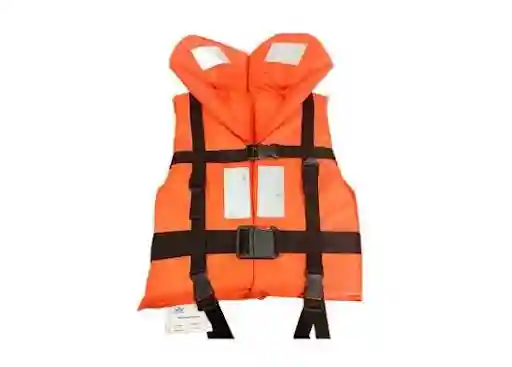
  • Closed-cell (Foam): These lifejackets contain closed-cell foam, meaning they are always buoyant. Therefore, no action is required from the individual making them less likely to fail. However, they are bulkier. They are the traditional SOLAS lifejacket and are often the main lifejackets used on board.

Closed-cell

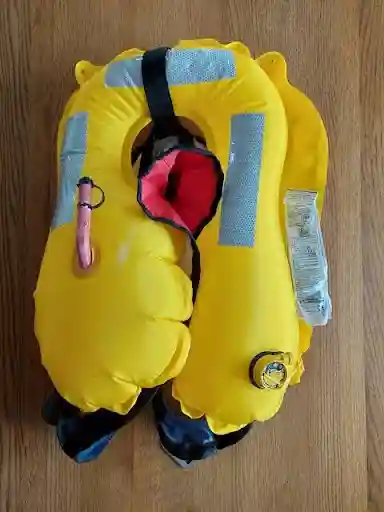
  • Inflatable: These lifejackets are compact and inflated using a gas cylinder. They can be inflated automatically once immersed in water or manually by pulling a cord. As they are less bulky and more comfortable, people may be more willing to wear them. However, they contain more components and are therefore more likely to fail (cylinder, triggering device, inflatable chamber). They require regular maintenance. They also contain a mouth inflation tube in case the wearer needs to inflate manually. Many SOLAS inflatable lifejackets contain both closed cell and inflatable sections. Check what lifejackets are approved to be used on your vessel.

Inflatable

  • Working vests: Some vessels may contain working vests or buoyancy aids, instead of SOLAS lifejackets. These should not be used as a replacement for SOLAS lifejackets in an abandonment situation. They may be used for specific tasks, for example working over the side, in a boat or on pilot ladders. Follow risk assessments and procedures on board.
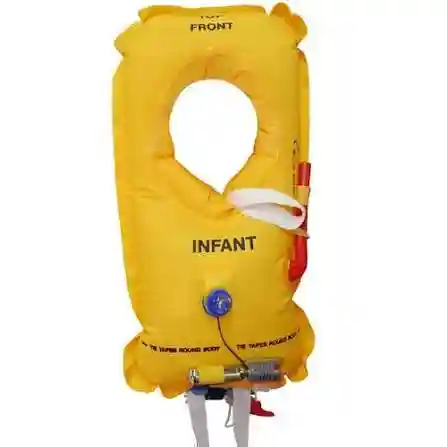
  • Child/Infant lifejackets: Smaller lifejackets with a strap around the groin to prevent falling off, and a different shape to support the head.

Infant lifejacket

  • Immersion/Anti-exposure suits: These items are not lifejackets. However, in cold water immersion suits can be worn to prevent hypothermia. The lifejacket is generally worn over an immersion suit or alternatively the immersion suit may contain buoyancy. The number of immersion suits required depends on the vessel and trade.

Table of Contents

Wearing

Training should be provided to all individuals on board. This should be included in safety briefings, muster instructions and regular drills. To wear a lifejacket in a typical scenario:-

  1. Remove lifejacket from storage. Quickly check for any obvious damage and that it is the correct way round. Instructions may be included on the lifejacket.
  2. Put a lifejacket over your head or insert arms in.
  3. Secure round the torso and body with straps/buckles. Secure groin strap (if present) to prevent the lifejacket from slipping.
  4. Ensure the lifejacket is tight. If it is loose it may slip over your face or fall off when jumping/entering water.
  5. Check the light and whistle are in place. Ensure reflective strips are visible.
  6. With inflatable lifejackets, avoid inflating in enclosed spaces or compartments in case you become trapped. Once out of the compartment/in open space, inflate with the cord. DO NOT inflate if the lifejacket is to be worn inflated already or if entering water. If the lifejacket does not inflate automatically, pull the manual cord. If required, inflate with mouthpiece. If unsure, follow instructions.
  7. Give assistance to others, particularly children and those struggling with fastening.
  8. Refer to information on lifejacket and the donning instruction poster in the vessel, as lifejacket styles vary.

Entering Water

If abandoning ship by jumping in water, refer to training given on the vessel. General guidance is:-

  • Try to climb down a ladder or slide, rather than jump in.
  • Be aware of where you are to avoid landing on individuals/objects.
  • Hold the lifejacket in place against your chest with one arm. If appropriate, place the other hand over your mouth and nose to stop the lifejacket from sliding up and hitting your face.
  • Keep legs together and straight and jump feet first.
  • Avoid diving.
  • Once in the water, move away from the vessel. Enter liferaft/boat as soon as possible. If this is not possible, stay with others and retain body heat. Blow the whistle and switch on the light.

Storage

  • Within all cabins, in easily accessible locations (usually close to bed or in lockers)
  • Muster stations, and in survival craft.
  • Watch stations (bridge, engine control room, other manned machinery spaces).
  • Extra lifejackets (including for children) in easily accessible storage.
  • Lifejackets should be stored in places where they will not be damaged, by heat, oil, moisture or compressive damage. They should not be stored under heavy items or in locked or inaccessible areas. All personnel on board should be aware of where their lifejacket and spares are.

Maintenance

As with all life saving equipment on board, lifejackets must be regularly maintained. Within the planned maintenance schedule for the vessel, lifejackets should be regularly checked (normally by a responsible officer monthly). Components requiring maintenance will be serviced annually and periodically.

Checks

  • Condition – no tearing/cuts/burns, contamination from oil, mould, and foam should not be brittle, cracked or water logged.
  • Straps, buckles and fastenings – all intact and functional.
  • Reflective strips – present, not peeling or dirty.
  • Whistle – present on cord, functional.
  • Light – present, battery not expired and functional. Ensure tested in accordance with manufacturer’s instructions.
  • Markings – Approval mark, vessel name/identification is legible.


With inflatable lifejackets, check that the gas cylinder, trigger and indicator are correct. Gas cylinders should not be expired, and should not be rusty. The inflatable chamber must not be damaged. The mouthpiece should be functional. Intervals and checks for maintenance depend on the manufacturer. Usually inflatable lifejackets are serviced at an approved servicing station, and usually once per year. Never rearmed or changed with parts which are not approved.

If lifejackets are faulty they must be removed from service and replaced. Do not continue to use questionable lifejackets. Records of checks are made, as required in the vessel’s SMS.

Training

To ensure lifejackets are effective, training is provided. On board training includes:-

    1. Safety briefing for new personnel including demonstration on putting on lifejackets.
    2. Instructions within cabins and muster stations on how to wear a lifejacket in appropriate languages for crew/passengers.
    3. Abandon ship drills, during which all personnel should wear/carry lifejackets to muster station.
    4. Practice wearing a lifejacket in adverse conditions, for example in darkness or in a rush.
    5. During drills, ensure that individuals have the correct lifejacket, that it fits and is properly fastened. Often incorrect fitting or wearing is found.

Common Issues

  • Incorrectly worn lifejackets, or loose meaning they may slip or fall off.
  • Lights missing/damaged (battery flat) or off.
  • Foam water logged/deteriorated due to age/wet storage.
  • Damage to webbing, buckles and stitching.
  • Inflatable lifejackets with expired gas cylinder, faulty trigger or leak.
  • Lifejackets stored in inaccessible or far locations, or removed from cabin and not replaced.
  • Unfamiliarity with lifejackets (no training/practice).
  • Working vests being used instead of lifejackets, when a SOLAS lifejacket is required.

Best Practice

  • Ensure all personnel know where their lifejacket is and can wear it correctly from day 
  • Included in monthly checks and records.
  • Battery in lights and gas cylinder in inflatable lifejackets are changed regularly. Inflatable lifejackets are serviced regularly.
  • Lifejackets should be clean and dry. Stored away from oil, heat and sharp objects.
  • Do not use lifejackets for anything other than its intended purpose, or alter.
  • Ensure that spares (including child sizes) are in the correct location.
  • Practice wearing lifejackets during drills in realistic conditions. Ensure correct fit.
  • Before every journey, check whistles and lights are in place and working.
  • Follow manufacturer’s instructions and current SOLAS/LSA code requirements, as requirements and differences vary between lifejacket types.

Conclusion

Lifejackets are a very simple piece of equipment. They help individuals float, put unconscious individuals in the correct upright position, and make individuals easier to spot. To do this effectively, there must be sufficient lifejackets for all individuals plus extra, in good condition, in easy to reach places and individuals must be able to wear them correctly and quickly without assistance. By regularly checking, maintaining, and practising with lifejackets, they will be ready to be used when required.

Frequently Asked Questions (FAQs)

They allow individuals to float. SOLAS lifejackets ensure unconscious individuals are placed in an upright position with mouths and noses above water and support the head.

Foam lifejackets are always buoyant. Inflatable lifejackets are inflated using gas cylinders. They can be inflated automatically in water or manually. They are compact, however contain more components and so are more likely to fail, and require regular maintenance.

Automatic light, corded whistle and retro reflective strips. Should be highly visible (usually red/orange).

Cabins, muster stations, survival craft, watch stations (bridge/engine control room). Spares for children and extra individuals.

Regularly. Usually checked monthly by responsible personnel. Inflatable lifejackets are serviced annually/periodically, depending on manufacturer and vessel maintenance system.

Once clear of enclosed areas or upon entering water, to prevent becoming stuck in a compartment. If a lifejacket does not automatically inflate, pull the manual cord.

To prevent lifejackets slipping up over the face or falling off in water.

Remove from service and replace. Do not continue to use questionable lifejackets.

No. Working vests/buoyancy aids may be used for certain tasks, but not as a replacement for SOLAS lifejackets in an abandoning scenario.

Disclaimer :- The opinions expressed in this article belong solely to the author and may not necessarily reflect those of Merchant Navy Decoded. We cannot guarantee the accuracy of the information provided and disclaim any responsibility for it. Data and visuals used are sourced from publicly available information and may not be authenticated by any regulatory body. Reviews and comments appearing on our blogs represent the opinions of individuals and do not necessarily reflect the views of Merchant Navy Decoded. We are not responsible for any loss or damage resulting from reliance on these reviews or comments.

Reproduction, copying, sharing, or use of the article or images in any form is strictly prohibited without prior permission from both the author and Merchant Navy Decoded.

DIWALI SALE

Decoded Discount Alert! up to 50% OFF

DIWALI SALE

Decoded Discount Alert! up to 50% OFF

Use Coupon Code Deep50

Days
Hours
Seconds
0
Would love your thoughts, please comment.x
()
x