Hi this is Team Merchant Navy Decoded !!!

Please fill the below form with your query and we will get back to you in next 12 hours.

Rest assured your data is safe with us !!!🙂

Ask Your Query

Immersion Suits on Ship

Immersion Suits on ship

Immersion suits allow individuals in cold water to be kept warm for significantly longer than they would be in just cold air. In cold water, individuals may suffer complete loss of dexterity in their arms and hands, and become extremely cold within a short amount of time. Immersion suits prevent water entry to the skin and retain body heat, increasing the chances of survival until rescue.

Understanding how immersion suits work, their safety features, and the correct way to wear them is important for every marine engineer. If you are preparing for your MEO Class 4 examinations, you can also explore the MEO Class 4 Free Guidance Series by Merchant Navy Decoded to get additional guidance for your exam preparation.

Why is cold water dangerous?

There are 3 phases to entering cold water:-

  • Cold shock (First minute(s)): Gasping, rapid breathing and raised heart rate occur. Inhaling water is common in this stage and can lead to death.
  • Failure to swim (10 to 30 mins): Muscles in arms and legs rapidly cool. Strength and coordination are reduced, meaning effective swimming or holding onto something is impossible.
  • Hypothermia (around 30 mins onwards depending on conditions): Core body temperatures start to drop, causing confusion, unconsciousness and eventual death if the individual is not rescued and warmed.

These timings can vary greatly depending on water temperature, the fitness/physique of the individual and what they are wearing. However, it is clear that in cold water, time is very limited for an individual, even with no protection. Wearing immersion suits means that heat is lost more slowly, delaying the effects of cold water. The effects of cold water in individuals wearing immersion suits can be delayed by hours compared to minutes.

Immersion Suit Description

Immersion Suit Description

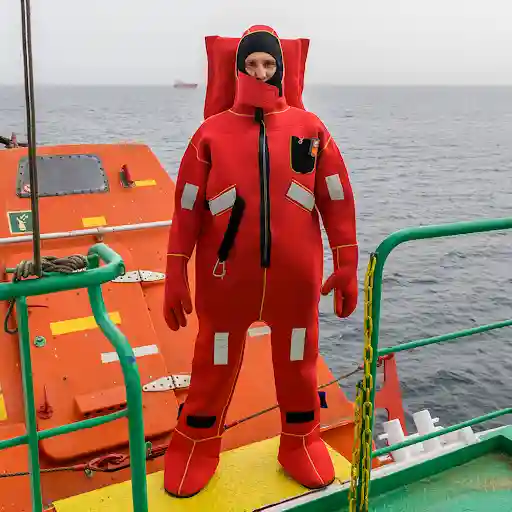
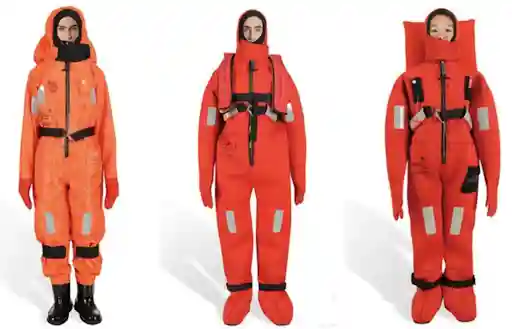
Immersion suits (SOLAS) are full body suits (with the exception of part of the face). They generally contain a hood, built in footwear and gloves/mitts. They are manufactured from waterproof thermal insulation materials (such as neoprene or foam). Seams are watertight, and watertight zips allow the suit to be closed. Seals are included on the face, wrists and sometimes ankles.

General features include:-

  • Watertight – water cannot penetrate skin.
  • Thermal insulation – prevents body temperature dropping too much. The suit will provide thermal protection for a specific number of hours in cold water.
  • Buoyancy (varies by suit) – allows the suit to be worn without needing a lifejacket, or must be worn with a lifejacket.
  • Highly visible – bright colours and retro-reflective strips.
  • A torch and whistle to send a distress signal.

Easy to put on quickly by the individual without assistance. Individuals can climb ladders, jump from a height into water and swim a short distance whilst wearing the immersion suit.

Exact requirements and standards (including duration of thermal protection, time to put on suit and jump height) can be found within the LSA Code. Refer to the latest versions of these.

Requirements

SOLAS regulations mean different individuals must be given immersion suits depending on the type of ship, trade and region. In general:

  • Most cargo ships must have an immersion suit for every individual onboard. However, in warmer waters there may be exceptions/conditions.
  • Individuals designated to be in the rescue boat crew (either in water or in open boat) must have immersion suits.
  • Suits must be easily accessible, e.g. in cabins. There must be additional suits available at watch stations and other manned areas, so individuals on duty can have access.
  • Vessels operating in cold regions (for example polar waters) will have further requirements.

Specific requirements for different vessels vary depending on vessel type and version of the regulations. Refer to latest versions of SOLAS and LSA Code, requirements in relation to flag state, and ship safety plan.

Table of Contents

Types of Immersion Suits

  1. Thermally insulated suits: Contain thermal insulation (foam/neoprene) to protect individuals in cold water. Many contain buoyancy, so may be worn without a lifejacket. Or, may need to be worn with a lifejacket. This is the most common type for abandon ship situations.
  2. Uninsulated suits: Waterproof but without thermal insulation. Must be worn with warm clothing underneath. Layers should be worn first. These suits are mainly used in less cold water, or as part of a layering system.
  3. Anti exposure suits: They are lighter than immersion suits. Used by individuals working in boats (rescue boat crews or exposed areas). Provide protection from cold/wet whilst still allowing movement. If they do not meet the standard, these cannot be used as a substitute for immersion suits for abandon ship situations.
  4. Buoyant and Non-Buoyant: Some immersion suits contain sufficient buoyancy to be worn alone. Some will require wearing a lifejacket over the top. Check labelling and manufacturer instructions (do not assume).

Wearing the Immersion Suit

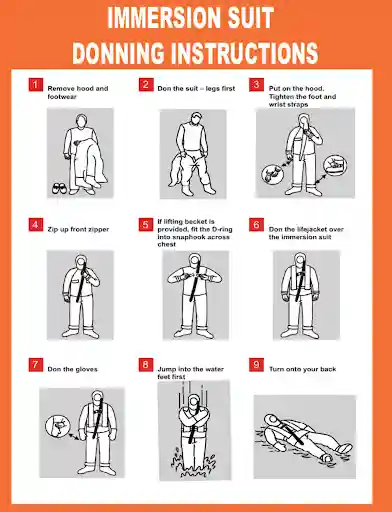
It is important to put on the suit quickly, however it must be done correctly to ensure it is properly sealed. If the suit is not properly sealed, water will enter and defeat the purpose of wearing it. Everyone should be trained to wear immersion suits. Instructions to wear the suit are usually located on the bag and in cabins.

Steps to wear:-

  1. Remove from the bag and lay flat. Remove sharp items (pens/knives) from pockets.
  2. If possible, wear warm clothing to add more layers. Do not wear anything that may tear the suit.
  3. Sit down. Put legs in one at a time. Pull up the suit. Make sure feet are fully inside the boots. Boots should be a good fit.
  4. Stand up and pull the suit up over the body. Put the arms in the sleeves.
  5. Put on the hood.
  6. Zipped up fully. This can be particularly hard to do by yourself. If possible get assistance from a partner. Ensure zipped fully and any flap over the zip is secured.
  7. Put on gloves/mitts (if separate) and adjust wrist and facial seals to be tight.
  8. Check for gaps. Neck, face, wrists and ankles should all be tight. If there are adjustable straps, tighten.
  9. Wear a lifejacket over the immersion suit (if suit is non-buoyant or required by ship procedure).
  10. Check torch, whistle and reflectivity.

As a result of urgency, many people may struggle wearing immersion suits. Therefore regular drills are important. Common errors include not zipping up the suit fully, allowing water entry.

Steps to wear

In Water

Immersion suits should be a last resort for entering the sea. Where possible, enter via ladder, slide or survival craft. If it is necessary to jump in:

  • Ensure water is clear below you and not too deep.
  • If required by suit design, hold the hood and facial seal shut. Hold onto a lifejacket/suit with 1 hand.
  • Jump feet first with legs together. Do NOT jump head first.
  • Once in water, move away from the ship. Get into a liferaft/boat if possible.

Staying in water

  • Do not remove the immersion suit. Even if uncomfortable, it is keeping you alive.
  • Minimise heat loss by remaining still. If possible, get into a HELP position (heat escape lessening posture) (knees pulled up and arms wrapped around torso). If there are multiple people, huddle together. This minimises heat loss and makes you easier to spot.
  • Use a torch and whistle to send a distress signal.
  • Stay close to others.
  • Although immersion suits reduce heat loss, they do not completely prevent it. The length of time someone can survive in cold water will depend on temperature of the water and suit. Getting into a raft/boat as soon as possible is a priority.

Storage

  • In cabins, easily accessible in bags.
  • Muster stations and survival crafts (as required).
  • Bridge, engine control room and other watch stations. Extra suits for individuals on duty.
  • Spares in store.
  • Stored away from heat, direct sunlight and sharp objects. Must not be in areas where they may be blocked, locked or damaged. Everyone should know where their immersion suit, and spare suits, are stored.

Care

  • Immersion suits left in lockers for long periods of time may not be suitable. They should be regularly checked as part of a safety system.
  • Monthly Checks
  • Suit and bag present, correct size and location.
  • No damage (tears, cuts, holes), degraded rubber, or damaged stitching.
  • Zip is smooth and fully closable. No degradation/corrosion. Lubricated as recommended by the manufacturer.
  • Face, wrist and foot seals are in good condition.
  • Retro reflective strips present.
  • Whistle and torch present and working. The battery in the torch is up to date.
  • The suit is not contaminated (oil/chemicals), is dry and clean.
  • The suit is packed as recommended by the manufacturer to prevent creasing or crushing.

Periodic Testing

Immersion suits should be periodically tested for water tightness. Testing is usually carried out by an approved servicing facility by either inflating or pressurising the suit. Testing frequency should follow manufacturer recommendations and regulation. Testing may be required following repairs. This ensures that suits are watertight. If there is a small leak in the suit, thermal protection can be greatly reduced.

Cleaning and Storing: If the suit has been used/wet, rinse with fresh water. Dry thoroughly. Do not use solvents, harsh detergents or heat. Immersion suits must NEVER be stored wet.

Repairs: Only repair as per manufacturer guidance, using approved methods and materials. If a suit is too damaged to be repaired, it should be replaced.

Record Keeping: Record checks, tests and replacements.

Training: Although putting on an immersion suit may seem straightforward in ideal conditions, during an emergency, in poor lighting, on a leaning vessel and quickly, it can be very difficult. Training should be provided on board, including:-

  • Information within induction on where suits are and how to wear them.
  • Instructions (cards/posters) in cabins and muster stations.
  • Regular drills, including wearing immersion suits. Many companies require individuals to wear immersion suits at least once a year as part of training.
  • Practice zipping, sealing and putting lifejackets over immersion suits.
  • Those who practice wearing immersion suits will be quicker and make fewer mistakes. Drills should also ensure that suits are the correct size for individuals. If the suit is the incorrect size, it will not function correctly.

Common Issues

  • Incorrect size, or in an incorrect cabin.
  • Stiff, corroded or difficult to open zips due to insufficient lubrication and/or incorrect storage.
  • Degraded seals, cracks or holes due to age, heat and incorrect folding.
  • No torch, or dead battery, or no whistle.
  • Wet/mouldy suits due to damp lockers.
  • Suits used for other purposes (work) causing damage.
  • Incorrectly fastened, in particular zips.
  • Leak tests overdue, or no records.
  • The crew are not practicing, therefore do not know how to wear suits.
  • Suits in inaccessible/locked locations.

Good Practice

  • Ensure everyone knows where their suit is, and that they have tried it on. Ensure suit fits.
  • Practice wearing the suit regularly. Time how long it takes.
  • Check zips, seals, torches and whistles in monthly checks.
  • Ensure suits are clean, dry and stored as per manufacturers instructions.
  • Ensure leak tests are carried out and suits serviced regularly. Have certificates.
  • Immediately replace damaged or questionable suits.
  • Only use suits for training/emergencies.
  • Remind individuals to remain in suits and in groups in water.
  • Follow manufacturer instructions and current SOLAS/LSA code requirements.

Conclusion

Immersion suits allow people to be kept alive long enough to be rescued in cold water. Cold water can be very dangerous to people. There are 3 stages to this danger, beginning with cold shock in the first minute, to hypothermia. Immersion suits delay this process. In order for immersion suits to work properly, they must fit the individual, be in good condition, have tightly zipped zips and seals and be quickly wearable. By checking, testing and practicing with immersion suits, if the worst happens, they will perform well.

Frequently Asked Questions (FAQs)

Immersion suits are waterproof and thermally insulated. They prevent water getting to skin, and retain body heat, delaying hypothermia. This increases the chance of survival until rescue.

Lifejackets keep people afloat and upright. Immersion suits protect individuals in cold water. Some immersion suits contain buoyancy, however some must be worn with lifejackets.

According to LSA code, immersion suits should be worn (by oneself) within approximately 2 minutes. Refer to current regulations for exact information. Practicing regularly will allow individuals to wear them quicker.

No. Removing the suit puts the individual at risk of becoming cold.

Heat escapes lessening posture. When in water alone, bring knees up and wrap arms around the torso. When in a group, huddle together.

If the zip is not fully closed, or is difficult to open, water can get in and render the suit useless. Zips should therefore be checked, well lubricated and fully closed.

Should be regularly checked (usually monthly). Leak tests should be carried out at intervals given by manufacturer and regulations, by an approved service. Check current requirements

A lightweight suit worn by individuals working in boats or exposed areas (such as rescue boat crews). They provide protection from cold/wet but allow movement.

This depends on ship type, trade and region. Many cargo ships must carry suits for every individual onboard. Extra suits must be available at watch stations. Refer to current SOLAS requirements and requirements in relation to flag state.

Disclaimer :- The opinions expressed in this article belong solely to the author and may not necessarily reflect those of Merchant Navy Decoded. We cannot guarantee the accuracy of the information provided and disclaim any responsibility for it. Data and visuals used are sourced from publicly available information and may not be authenticated by any regulatory body. Reviews and comments appearing on our blogs represent the opinions of individuals and do not necessarily reflect the views of Merchant Navy Decoded. We are not responsible for any loss or damage resulting from reliance on these reviews or comments.

Reproduction, copying, sharing, or use of the article or images in any form is strictly prohibited without prior permission from both the author and Merchant Navy Decoded.

DIWALI SALE

Decoded Discount Alert! up to 50% OFF

DIWALI SALE

Decoded Discount Alert! up to 50% OFF

Use Coupon Code Deep50

Days
Hours
Seconds
0
Would love your thoughts, please comment.x
()
x