Hi this is Team Merchant Navy Decoded !!!
Please fill the below form with your query and we will get back to you in next 12 hours.
Rest assured your data is safe with us !!!🙂
Ask Your Query| For Beginner | For Professional |
|---|---|
| GME | Engine Side |
| G.P. Rating | Deck Side |
| ETO | G.P. Rating |
| IMUCET & Sponsorship | Combo Offers |
| Free Course | MEO |
| Free Course |
| For Beginner | For Professional |
|---|---|
| GME | Engine Side |
| G.P. Rating | Deck Side |
| ETO | G.P. Rating |
| IMUCET & Sponsorship | Combo Offers |
| Free Course | MEO |
| Free Course |
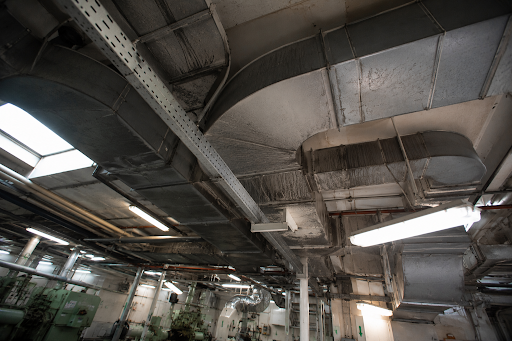
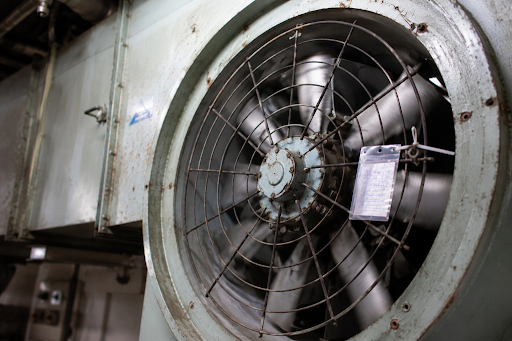
Stand in a working engine room and you’ll notice the fans before you notice almost anything else not because they’re loud exactly, but because they’re the reason the space is survivable at all. A main engine burning fuel and a number of generators running flat out throw off enormous heat, consume huge volumes of combustion air and would turn the engine room into an oven within minutes without a constant, deliberate exchange of air. That exchange isn’t incidental. It’s engineered, regulated, and critically designed to be shut down instantly and completely the moment there’s a fire.
That last part is what makes engine room fans a genuinely interesting safety topic rather than just an HVAC afterthought. The same system that keeps the space liveable every normal day has to become an active participant in starving a fire of oxygen the one day it matters most.

Two separate demands drive the airflow requirement, and it’s worth keeping them distinct:
There’s a third, quieter reason too: ventilation limits the buildup of flammable vapours and fumes from fuel systems, purifiers, and minor leaks, keeping the atmosphere below the concentration where an explosion risk becomes real.
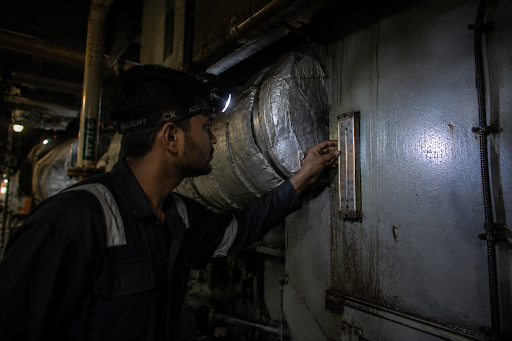
Quick pointer: If you ever notice engine room ambient temperature creeping up without an obvious machinery cause, check fan performance and duct condition before assuming it’s a cooling water problem. Ventilation issues get overlooked precisely because the fans are always running in the background.
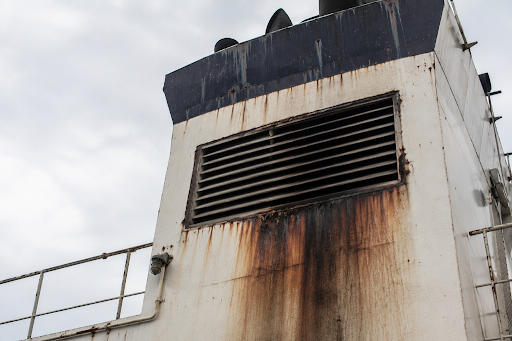
The system works on a supply-and-exhaust principle, and the direction of airflow through the room is deliberate, not incidental :-
Quick pointer: Positive pressure isn’t just a comfort feature, it’s a genuine safety design choice. A properly balanced system makes it physically harder for smoke or vapour from an adjacent space to enter the engine room during an incident elsewhere on the vessel.
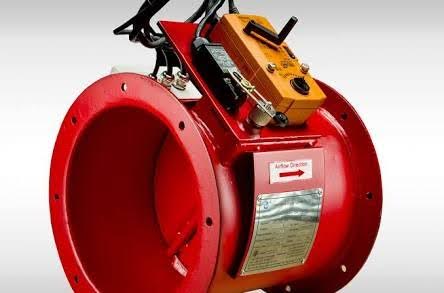
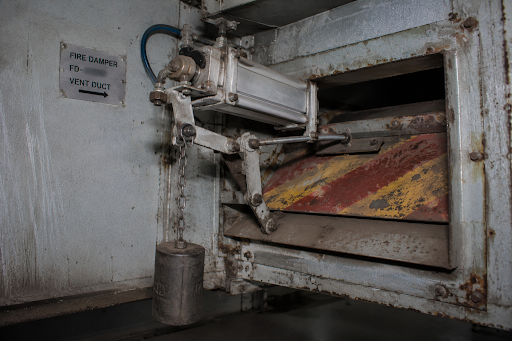
Fire Dampers: The Safety Half of the System
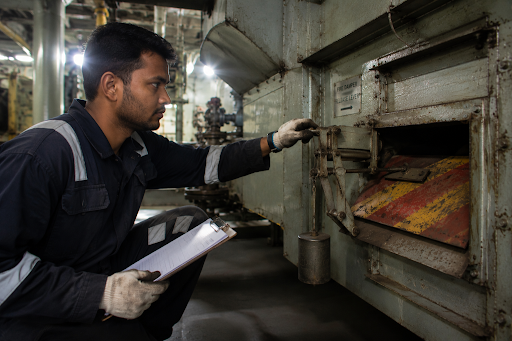
Every engine room ventilation opening is fitted with a fire damper, and understanding how they’re built to fail is just as important as understanding how they normally operate.
Quick pointer: Know exactly where your vessel’s ES groups are and which fans and pumps each one covers before you ever need them in an emergency. The two seconds spent hesitating over which switch does what is exactly the kind of delay this system is designed to eliminate.
Engine room fans do two jobs that look unrelated until you consider them together: keeping a hot, air-hungry space liveable every single day, and instantly reversing that role to help starve a fire of oxygen on the one day it counts most. The supply-and-exhaust airflow principle, the fail-safe design of fire dampers, and a remote shutdown system that never requires someone to walk back into danger are what make that dual role work. Test the dampers, keep the remote stops functional, and treat the ventilation system with the same seriousness given to any other fire safety equipment on board because that’s exactly what it is.
A frequency signal proportional to engine speed.
To convert frequency into a standard 4–20 mA signal for tachometers and automation systems.
Approximately 140 RPM
710 RPM or 200 RPM maintained for 10 seconds.
The converter activates alarms and sends a shutdown signal to stop the engine.
Disclaimer :- The opinions expressed in this article belong solely to the author and may not necessarily reflect those of Merchant Navy Decoded. We cannot guarantee the accuracy of the information provided and disclaim any responsibility for it. Data and visuals used are sourced from publicly available information and may not be authenticated by any regulatory body. Reviews and comments appearing on our blogs represent the opinions of individuals and do not necessarily reflect the views of Merchant Navy Decoded. We are not responsible for any loss or damage resulting from reliance on these reviews or comments.
Reproduction, copying, sharing, or use of the article or images in any form is strictly prohibited without prior permission from both the author and Merchant Navy Decoded.
Decoded Discount Alert! up to 50% OFF
Use Coupon Code Deep50