Hi this is Team Merchant Navy Decoded !!!

Please fill the below form with your query and we will get back to you in next 12 hours.

Rest assured your data is safe with us !!!🙂

Ask Your Query

Differential Pressure Transmitter Working Principle

A differential pressure transmitter, commonly called a DP transmitter, is an important measuring instrument used in industrial and marine systems to measure the difference between two pressures. It converts the pressure difference into a standardized electrical signal for monitoring and control purposes.

Differential pressure transmitters are widely used onboard ships for measuring flow, tank level, filter condition, and pressure differences across pumps and pipelines. They play a major role in automation, machinery safety, and efficient system operation.

Working Principle of Differential Pressure Transmitter

The working principle of a differential pressure transmitter is based on measuring the pressure difference between two points and converting it into an electrical output signal.

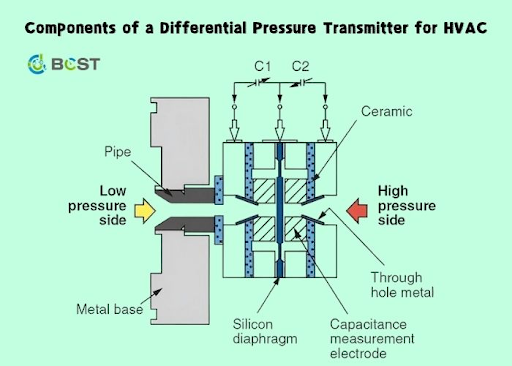
A DP transmitter has two pressure connections:

  • High-pressure side (HP)
  • Low-pressure side (LP)

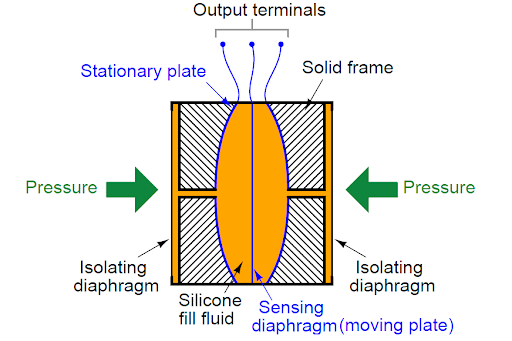
The pressure from both sides acts on a sensing element, usually a diaphragm. When there is a difference between the two pressures, the diaphragm deflects or moves.

The amount of diaphragm movement depends on the pressure difference:

  • Larger pressure difference → larger diaphragm movement
  • Smaller pressure difference → smaller movement

This movement is detected by electronic sensing circuits inside the transmitter. The transmitter then converts the pressure difference into a standard electrical output signal, commonly:

  • 4–20 mA current signal
  • Digital output signal

For example:

  • 4 mA may represent minimum differential pressure
  • 20 mA may represent maximum differential pressure

This output signal is transmitted to:

  • Control panels
  • PLC systems
  • Alarm systems
  • Automation systems

The transmitter continuously measures and sends pressure data for monitoring and automatic control.


Table of Contents

Main Components of Differential Pressure Transmitter

A differential pressure transmitter mainly consists of:

  1. Pressure Ports: Two separate ports are provided:
  • High-pressure port
  • Low-pressure port
  1. Diaphragm: A flexible sensing element that moves according to pressure difference.
  2. Sensing Element: Detects diaphragm movement and converts it into electrical signals.
  3. Electronic Circuit: Processes and amplifies the signal.
  4. Output Section: Transmits the standardized output signal to monitoring systems.
  5. Protective Housing: Protects internal components from vibration, moisture, dust, and harsh marine environments.

Applications Onboard Ships

Differential pressure transmitters are widely used in shipboard systems.

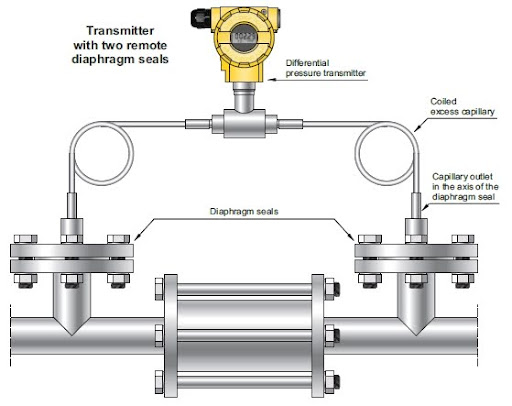
  1. Flow Measurement: Used with orifice plates or venturi tubes to measure fluid flow in pipelines.
  2. Boiler Systems: Monitor air and fuel pressure differences for efficient combustion control.
  3. Filter Monitoring: Used to detect clogging in fuel oil and lubricating oil filters.
  4. Tank Level Measurement: Measures liquid level in ballast, fuel, and cargo tanks using hydrostatic pressure difference.
  5. Pump Performance Monitoring: Checks suction and discharge pressure difference across pumps.

5. Importance of Sewage Treatment Plant

Environmental Protection: Ends the spillage of partially treated sewage, hence, it can significantly reduce water pollution.

Compliance with Regulations: Promotes adherence to global policies that prohibit marine pollution.

Public Health: Promotes the health and safety of passengers and crew sewage management by treating wastewater well.

Sustainability: Environmental care activities in maritime operations are encouraged by promoting sustainable practices that are free from environmental hazards.

Maintenance of Differential Pressure Transmitters

Routine maintenance includes:

  • Cleaning impulse lines
  • Checking for leakage
  • Verifying calibration
  • Inspecting wiring connections
  • Testing output signals

Regular maintenance ensures accurate readings and safe operation onboard ships.

Conclusion

Differential pressure transmitters are essential instruments used for measuring pressure differences in marine and industrial systems. They work by detecting the difference between high and low pressures and converting it into a standard electrical signal for monitoring and control.

Onboard ships, DP transmitters are widely used for flow measurement, tank level monitoring, filter condition monitoring, and boiler automation. Their accuracy, reliability, and compatibility with automation systems make them important components in modern maritime engineering and ship safety systems.

Disclaimer :- The opinions expressed in this article belong solely to the author and may not necessarily reflect those of Merchant Navy Decoded. We cannot guarantee the accuracy of the information provided and disclaim any responsibility for it. Data and visuals used are sourced from publicly available information and may not be authenticated by any regulatory body. Reviews and comments appearing on our blogs represent the opinions of individuals and do not necessarily reflect the views of Merchant Navy Decoded. We are not responsible for any loss or damage resulting from reliance on these reviews or comments.

Reproduction, copying, sharing, or use of the article or images in any form is strictly prohibited without prior permission from both the author and Merchant Navy Decoded.

SUMMER SALE 2026

Decoded Discount Alert! up to 50% OFF

Use Coupon Code PSJ50

Days
Hours
Seconds

DIWALI SALE

Decoded Discount Alert! up to 50% OFF

DIWALI SALE

Decoded Discount Alert! up to 50% OFF

Use Coupon Code Deep50

Days
Hours
Seconds
0
Would love your thoughts, please comment.x
()
x