Hi this is Team Merchant Navy Decoded !!!
Please fill the below form with your query and we will get back to you in next 12 hours.
Rest assured your data is safe with us !!!🙂
Ask Your Query| For Beginner | For Professional |
|---|---|
| GME | Engine Side |
| G.P. Rating | Deck Side |
| ETO | G.P. Rating |
| IMUCET & Sponsorship | Combo Offers |
| Free Course | MEO |
| Free Course |
| For Beginner | For Professional |
|---|---|
| GME | Engine Side |
| G.P. Rating | Deck Side |
| ETO | G.P. Rating |
| IMUCET & Sponsorship | Combo Offers |
| Free Course | MEO |
| Free Course |
Some pressure transmitters will just read the pressure within the system while others will read the pressure drop. If a fuel filter was becoming blocked, there would be no pressure change inside the tank but the pressure difference would increase. This is what a differential pressure transmitter will read. There are lots of pieces of equipment on board that are monitored by a differential pressure transmitter.
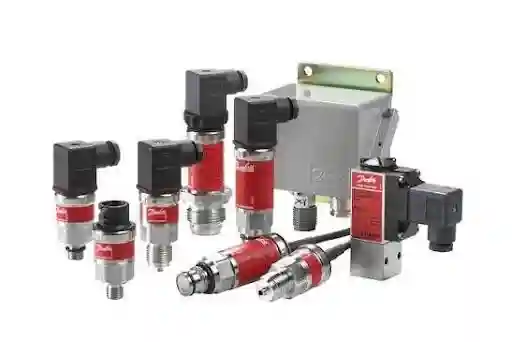
This post will look at the different types of pressure transmitter and switch, and also will take a closer look at differential pressure transmitters, how they work, where they are used and how to calibrate.
Want to understand how Pressure Transmitters and Pressure Switches work onboard ships? Explore the Automation Package by Merchant Navy Decoded to learn about sensors, transducers, pressure switches, differential pressure transmitters, and their practical applications in shipboard automation systems.
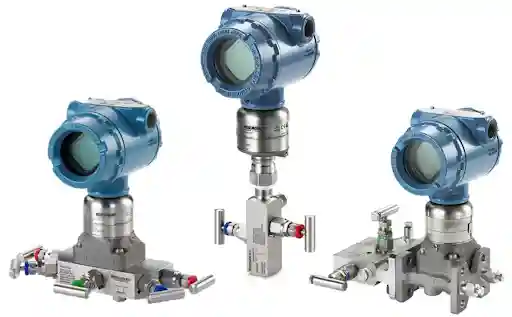
A differential pressure (DP) transmitter will have two pressure connections. Usually labelled H (high) and L (low). Inside the transmitter there will be a sensing diaphragm between two chambers. The high pressure will be acting on one side of the diaphragm and the low pressure on the other side.
The difference in pressure is what matters. If both sides are reading 5bar then the diaphragm will not move and the transmitter will read 0. If the high pressure is reading 5.4bar and the low pressure is reading 5bar then there is a 0.4bar pressure difference. The diaphragm will move a little and the transmitter will read accordingly.
This small movement is picked up in the same way as other transmitters. The most common ways are using a capacitive cell where the diaphragm moves between two plates causing a change in capacitance. Or a piezoresistive element where the strain gauges on the diaphragm change resistance. The transmitter will amplify and condition the signal and give a 4-20mA signal. 4mA will be the lowest point and 20mA will be the highest. Many transmitters will also have a digital protocol (such as HART) to allow them to be configured.
Whilst the transmitter may be reading 0.4bar difference, both sides may be receiving a high line pressure (such as 10/20bar). A quality DP transmitter will be able to cope with this high static pressure and will still be able to detect this small difference. If only one side was over pressurised (for example by incorrectly opening a valve) then the diaphragm could be damaged. Therefore, it is very important to follow the correct valve sequence.
There are many places differential pressure can be used:-
A DP transmitter will not normally be connected directly to the process. They will be connected via small bore impulse lines. Often these will go through a manifold.
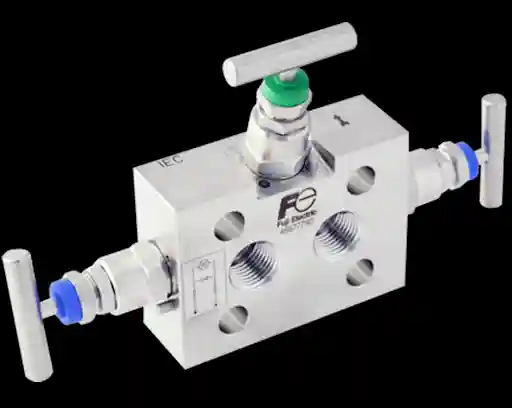
A 3 valve manifold will have two isolation valves (one for each side) and an equalising valve connecting the high and low sides. A 5 valve manifold will have 2 extra valves to vent or drain. It allows us to isolate the transmitter, equalise the high and low sides to check zero and safely vent.
For level monitoring there will be wet legs (reference line filled with liquid) and dry legs (reference line left empty/gas filled). This will affect how the reading is calculated and zeroed. It is important to know what type you have. Impulse lines can become blocked with sludge, trap air/gas or leak. This will cause an incorrect reading. Many issues with faulty transmitters are actually caused by the impulse lines.
A differential pressure switch will do the same job as a differential pressure transmitter but will not give a continuous signal. There are 2 pressure connections and the sensing element (diaphragm/piston) will be acted upon by high pressure on one side and low pressure on the other. There is a spring opposing the movement. When the pressure difference overcomes the spring force the element will move and activate the micro switch.
Like any pressure switch, the spring will set the setpoint. There will be a differential (deadband). Often used for alarms on filters. When the pressure difference across the filter reaches 0.8bar the DP switch will trip indicating that the filter needs cleaning/changing. The setpoint will come from the manufacturer or equipment manual.
We want to ensure we have the correct output for the pressure difference across the range. If not, we will need to adjust.
Before calibration
Calibration
Make sure you follow the valve sequence. At all times we don’t want the diaphragm to see a large pressure difference.
A common error is to rush. If you increase the pressure quickly the switch may seem to trip at a higher pressure.
There can be injury if pressure is trapped on one side. Isolate, vent and prove the instrument is de-pressurised before disconnecting. Use test equipment suitable for the pressure. Don’t exceed the instrument’s limits on either side. Follow permit to work/isolation. Notify the control room before inhibiting any alarms/trips. Ensure they are reconnected. Extra care should be taken on steam, hot oil and high pressure systems.
There are different pressure instruments to answer different questions. Gauge and absolute transmitters will tell us the pressure. A differential transmitter/switch will tell us how much pressure is being lost or how high the level is or how much flow there is. This is why they are used on filters, boilers, coolers and flow lines. Understanding the high and low sides, treating the manifold and impulse lines with care, calibrating to a good reference and recording your results means you can trust a differential pressure reading.
Measures the pressure difference between 2 pressures. The output will be proportional to this, usually in a 4-20mA signal.
Filters/strainers, boiler drum level, tank level, flow measurement (orifice plates), air coolers/heat exchangers, ventilation filters.
Gauge measures pressure relative to the atmosphere. Absolute measures pressure relative to a vacuum. Differential measures the pressure difference.
Has 2 isolation valves and 1 equalising valve. Allows you to isolate the transmitter, equalise the high and low sides to check zero and avoid applying uneven pressure to the diaphragm.
Used for level measurements. Wet legs are filled with liquid. Dry legs are left empty/gas filled. This affects how the reading is calculated and zeroed.
Isolate. Open equalising valve. Both sides will be seeing the same pressure. Should read 0 differential (4mA).
If you open/close the valves in the wrong sequence there will be a large pressure difference across the diaphragm and may damage it.
A switch will only change the contacts when the pressure difference reaches a certain value whereas a transmitter will give a continuous signal.
The small bore lines can become blocked with sludge, trap air/gas or leak. This will change the pressure reaching the transmitter.
Disclaimer :- The opinions expressed in this article belong solely to the author and may not necessarily reflect those of Merchant Navy Decoded. We cannot guarantee the accuracy of the information provided and disclaim any responsibility for it. Data and visuals used are sourced from publicly available information and may not be authenticated by any regulatory body. Reviews and comments appearing on our blogs represent the opinions of individuals and do not necessarily reflect the views of Merchant Navy Decoded. We are not responsible for any loss or damage resulting from reliance on these reviews or comments.
Reproduction, copying, sharing, or use of the article or images in any form is strictly prohibited without prior permission from both the author and Merchant Navy Decoded.
Decoded Discount Alert! up to 50% OFF
Use Coupon Code Deep50