A deck officer’s career should not be planned only around the next examination. Cadets and officers must understand how certification, sea service, experience, responsibility, and professional competence work together at every stage of rank progression.
The 2025 rank-wise data provides a useful view of India’s deck officer certification pipeline. Second Mate recorded the highest issuance, followed by First Mate and Master. The falling numbers at higher ranks reflect the natural narrowing of the career structure.
What Is a Deck CoC?
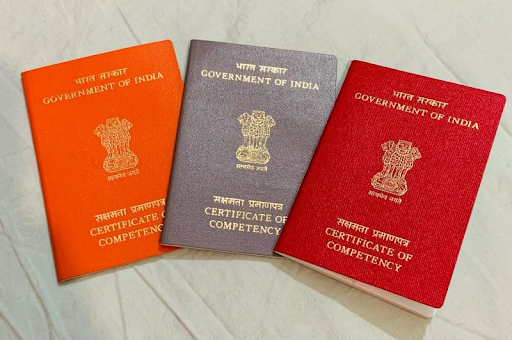
A Certificate of Competency, commonly called a CoC, confirms that a seafarer has met the required training, sea service, examination, medical, and competency standards for a particular rank and area of operation.
STCW establishes international training and certification standards for masters, officers, and watchkeeping personnel. In India, eligible candidates must follow the applicable DG Shipping examination and certification process before receiving a deck officer CoC.
Rank-Wise CoCs in 2025
The three main deck ranks covered in the 2025 record were Second Mate, First Mate, and Master. Together, these categories recorded a total of 4,433 Certificates of Competency during the year.
Second Mate recorded 2,404 CoCs, First Mate recorded 1,270, and Master recorded 759. The figures show a clear career pyramid, with the largest number at the junior officer level and the smallest at command level.
Second Mate CoCs in 2025
Second Mate recorded the highest issuance, with 2,404 CoCs. This included 2,373 Foreign Going certificates and 31 Near Coastal Voyage certificates, making Second Mate the largest rank category in the 2025 data.
Second Mate represented approximately 54.2% of the combined rank-wise total. This means more than half of the CoCs issued across these three ranks belonged to officers entering or progressing through the operational level of the deck department.
Why Second Mate Led
Second Mate is an important officer-level milestone for deck cadets after completing the required education, approved sea service, post-sea training, examinations, and other applicable certification requirements.
DG Shipping guidance describes the Second Mate Foreign Going CoC as a certification step available after the required cadet sea service and post-sea education. A larger candidate base therefore reaches this stage compared with higher management-level ranks.
What This Means for Cadets
The high Second Mate figure shows that many candidates are moving from cadetship towards officer-level certification. However, it may also mean greater competition for junior officer vacancies among newly certified candidates.
Cadets should therefore focus on more than passing examinations. Practical bridge knowledge, communication, safety awareness, professional behaviour, documentation, interview preparation, and genuine sea-service experience can all influence future employment opportunities after receiving the CoC.
To stay ahead in this competitive environment, cadets are encouraged to use the Sailor Pro app, a dedicated tool designed to help you track certification requirements and key career milestones effectively.
Chief Mate CoCs in 2025
First Mate recorded 1,270 CoCs during 2025. This included 1,239 Foreign Going certificates and 31 Near Coastal Voyage certificates, placing Cheif Mate second in the rank-wise issuance record.
Chief Mate represented approximately 28.6% of the combined total. The number was almost 47% lower than the Second Mate figure, showing how the certification pipeline becomes narrower after officers enter the junior operational ranks.
Why Chief Mate Numbers Fell
Progressing to Cheif Mate requires additional qualifying sea service, management-level preparation, examinations, courses, and stronger professional competence. Officers may reach these requirements at different speeds depending on employment opportunities and personal circumstances.
Some Second Mates may face delayed joining, insufficient qualifying sea time, examination difficulties, medical issues, document problems, or changes in career plans. Therefore, not every certified Second Mate progresses immediately to First Mate.
What First Mate Represents
First Mate represents an important move from operational duties towards management-level responsibility. Officers at this stage require stronger knowledge of navigation, cargo operations, stability, safety management, emergency response, leadership, and crew supervision.
The rank is also a major preparation stage for future command. A First Mate must develop sound judgement and leadership instead of depending only on theoretical examination knowledge or the experience gained during earlier junior officer roles.
Master CoCs in 2025
Master recorded 759 CoCs, including 721 Foreign Going and 38 Near Coastal Voyage certificates. This was the lowest issuance among the three ranks included in the 2025 deck-side comparison.
Master CoCs represented approximately 17.1% of the combined total. The figure was around 40% lower than First Mate issuance and nearly 68% lower than Second Mate issuance, clearly showing how the officer pyramid narrows at command level.
Why Master CoCs Were Lowest
Becoming a Master requires years of qualifying sea service, management experience, examination preparation, leadership development, and professional maturity. The Master carries overall responsibility for the vessel, crew, navigation, cargo, safety, security, and regulatory compliance.
Because the responsibility is much greater, fewer officers reach command certification during the same period. The smaller number does not show lower importance. Instead, it reflects the experience, competence, and long-term commitment required to reach the highest deck rank.
FG and NCV Comparison
Foreign Going certificates formed the majority at every rank. The 2025 data included 2,373 Second Mate FG, 1,239 First Mate FG, and 721 Master FG certificates.
NCV issuance was much smaller, with 31 Second Mate, 31 First Mate, and 38 Master certificates. FG and NCV pathways have different operating limits and requirements, so candidates must follow the route matching their sea service and career plans.
The Deck Officer Pyramid
The 2025 record forms a clear professional pyramid. Second Mate created the widest base with 2,404 certificates, First Mate formed the middle with 1,270, and Master stood at the top with 759.
This structure is natural in professional careers. Many candidates enter the junior officer pathway, fewer complete the requirements for management-level certification, and an even smaller number reaches the experience and competence needed for command.
Do CoC Numbers Show Jobs?
A higher number of CoCs does not prove that the same number of jobs or promotions were available. Certification figures show how many candidates received certificates, not how many were immediately employed in that rank.
Companies also consider vessel experience, rank experience, appraisals, medical fitness, interview performance, communication, employment history, and available vacancies. Receiving a CoC makes an officer qualified, but it does not automatically guarantee placement or promotion.
How Officers Should Plan
Deck officers should start planning the next rank before completing their current contract. They should understand qualifying sea-service requirements, mandatory courses, examination subjects, document validity, application procedures, and expected preparation time.
For booking deck-related courses, officers are encouraged to use the STCW Course Finder (stcwcoursefinder.com), which simplifies the process of comparing institutes and securing available training batches.
Important certificates and records should be maintained carefully. Officers are invited to download the Sailor Pro app for the efficient management of maritime documents and precise expiry tracking, ensuring that early planning is never hindered by incomplete records.
Table of Contents
How Officers Should Plan
Deck officers should start planning the next rank before completing their current contract. They should understand qualifying sea-service requirements, mandatory courses, examination subjects, document validity, application procedures, and expected preparation time.
For booking deck-related courses, officers are encouraged to use the STCW Course Finder (stcwcoursefinder.com), which simplifies the process of comparing institutes and securing available training batches.
Important certificates and records should be maintained carefully. Officers are invited to download the Sailor Pro app for the efficient management of maritime documents and precise expiry tracking, ensuring that early planning is never hindered by incomplete records.
Final Advice for Officers
The 2025 figures show that Second Mate dominated issuance with 2,404 CoCs, followed by First Mate with 1,270 and Master with 759. These numbers reflect a normal reduction as responsibility increases.
Deck cadets and officers should use this information as a planning tool, not as a guarantee of employment. Focus on sea service, knowledge, discipline, leadership, and practical competence so that every CoC becomes a meaningful step towards long-term career growth.
Higher ranks require more sea service, experience, examinations, management knowledge, and responsibility. Not every officer progresses at the same speed or continues until command level.
FG refers to Foreign Going certification, while NCV refers to Near Coastal Voyage certification. Their operating limits, sea-service conditions, examinations, and certification requirements may differ.
No. A CoC confirms professional qualification for a rank, but employment depends on vacancies, vessel experience, interviews, medical fitness, appraisals, and company selection.
Cadets should complete the required approved sea service, keep documents updated, meet training requirements, prepare thoroughly for examinations, and strengthen practical bridge and communication knowledge.
Disclaimer :- The opinions expressed in this article belong solely to the author and may not necessarily reflect those of Merchant Navy Decoded. We cannot guarantee the accuracy of the information provided and disclaim any responsibility for it. Data and visuals used are sourced from publicly available information and may not be authenticated by any regulatory body. Reviews and comments appearing on our blogs represent the opinions of individuals and do not necessarily reflect the views of Merchant Navy Decoded. We are not responsible for any loss or damage resulting from reliance on these reviews or comments.
Reproduction, copying, sharing, or use of the article or images in any form is strictly prohibited without prior permission from both the author and Merchant Navy Decoded.