Hi this is Team Merchant Navy Decoded !!!

Please fill the below form with your query and we will get back to you in next 12 hours.

Rest assured your data is safe with us !!!🙂

Ask Your Query

Boiler Feed Water System on Ships: Working Principle, Components and Safety

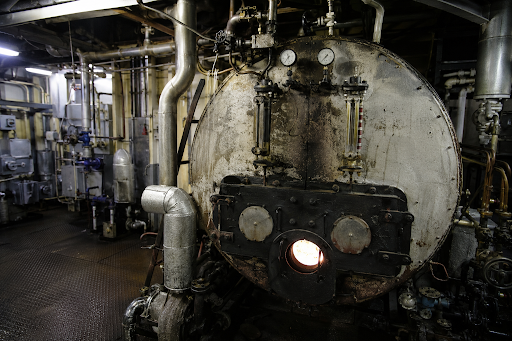
A marine boiler requires just one thing: a continuous, correctly conditioned supply of water arriving at exactly the rate the water level demands. But “just water” undersells the problem considerably. Feed it water that’s too cold, too oxygenated, or contaminated with dissolved solids, and you’re not looking at an inefficiency, you’re looking at pitting corrosion, scale buildup on heat transfer surfaces, and  in the worst case  a low water level condition that can seriously damage a boiler shell in a very short space of time.

Boiler Feed Water System

The Boiler feed water system is what prevents all of that. 

Why Feed Water Needs This Much Attention

Steam leaving the boiler eventually returns as condensate, and in principle that water could simply be pumped straight back in. In practice, several things make that impossible without a system in between:

  • Losses need replacing: Condensate is never fully recovered, steam is used up in various services, drained away or lost to atmosphere on an open system so make-up water has to be continuously added to keep the cycle balanced.
  • Dissolved oxygen has to go: Cold water carries dissolved oxygen, and oxygen in contact with hot boiler metal is a direct cause of pitting corrosion. Feed water needs to be deaerated, heated and vented  before it reaches the boiler.
  • Temperature matters for both efficiency and safety: Feeding cold water into a hot boiler wastes fuel raising its temperature back up, and can also introduce thermal stress into boiler components not designed for a sudden cold shock.
  • Water level has to be tightly controlled. Too low, and heating surfaces can overheat and fail. Too high and priming occurs  water carrying over into the steam lines and turbines, where it doesn’t belong and can cause real damage.


Quick pointer: If you ever see a feed water temperature reading trending down for no obvious reason, check the cascade tank heating arrangement before anything else. A cooler-than-normal feed supply is one of the first things worth ruling out when boiler performance starts drifting.

Working Principle: From Condensate to Boiler

Working Principle From Condensate to Boiler

Condensate to Boiler

Working Principle of boiler feed water system

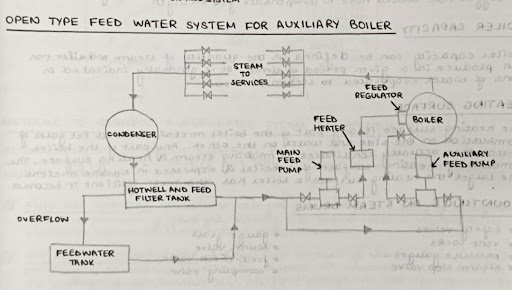
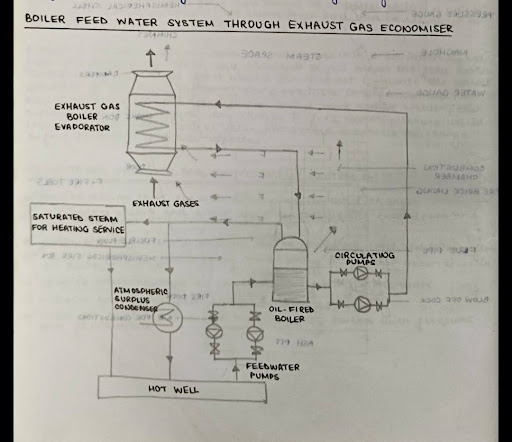
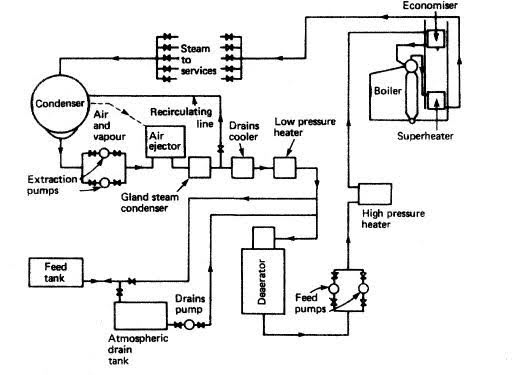
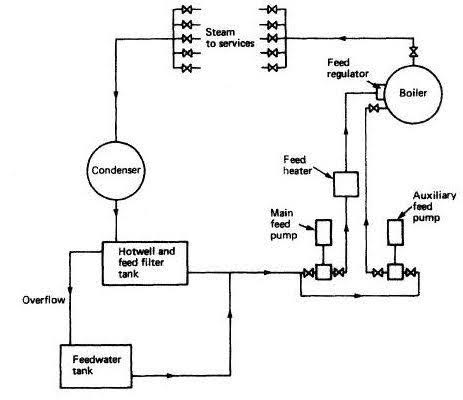
The system works as a continuous loop, typically centred on a cascade tank (also called a hotwell) that acts as the collection and conditioning point before water goes anywhere near the boiler:

  1. Condensate returns from steam-consuming services throughout the ship and drains back into the cascade tank, along with make-up water added to cover system losses.
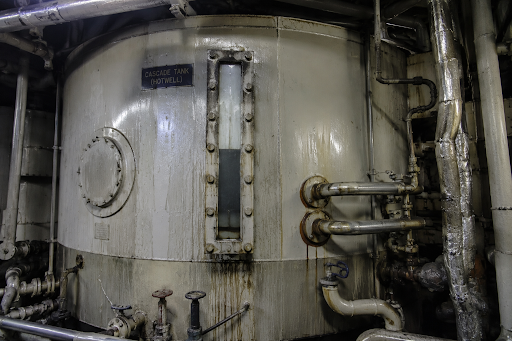
  2. The cascade tank keeps this water hot – typically maintained above roughly 90°C  either by dumping returning condensate into it without cooling, or through dedicated steam heating coils when condensate return alone isn’t sufficient to hold that temperature. This heat isn’t incidental; it’s what drives dissolved oxygen out of the water before it ever reaches the boiler.
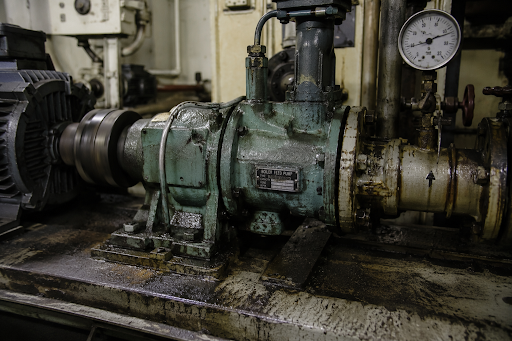
  3. Boiler feed pumps take suction from the cascade tank, typically arranged in pairs for redundancy, and deliver water toward the boiler through main and auxiliary feed lines.
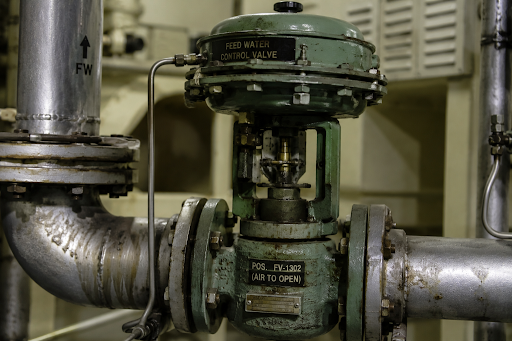
  4. A feed water regulating valve, usually a pneumatically actuated globe valve, automatically throttles flow to each boiler in response to the actual water level, keeping it constant despite changing steam demand.
  5. The feed check valve, a screw-down non-return valve mounted near the boiler shell, gives final control over water entry and  critically  prevents boiler water from blowing back into the feed line if feed pressure ever drops below boiler pressure.
  6. A small continuous bleed is typically diverted back to the cascade tank from the feed pump discharge, ensuring water keeps circulating through the running pump even when the regulating valve is fully closed, protecting the pump from operating against a dead head.

From Condensate to Boiler

From Condensate to Boiler


Quick pointer: The feed check valve is doing a genuinely important job beyond just letting water through – It’s a non-return valve first and a control valve second. If it isn’t seated properly, boiler pressure can push backward into the feed line the moment pump pressure dips, which is exactly the scenario it exists to prevent.

Table of Contents

Key Components of the System

  • Cascade tank (hotwell) : The central collection and deaeration point for returning condensate and make-up water, with level maintained automatically by float-controlled filling valves, and a manual filling option for when automatic supply can’t keep up.
  • Boiler feed pumps : Typically fitted in pairs, taking suction from the cascade tank and supplying both main and auxiliary feed lines.

Key Components of the System

  • Feed water regulating valve: Automatically controls flow into the boiler to maintain constant water level as steam demand changes.

Key Components of the System

  • Feed check valve : A non-return valve giving final control over feed water entry at the boiler shell, positioned near the working water level.
  • Deaerating heater : Used in some systems to strip dissolved oxygen from feed water before it enters the boiler, working alongside or in place of cascade tank heating.
  • Chemical dosing system: Introduces treatment chemicals to control pH and prevent both corrosion and scale formation within the boiler.
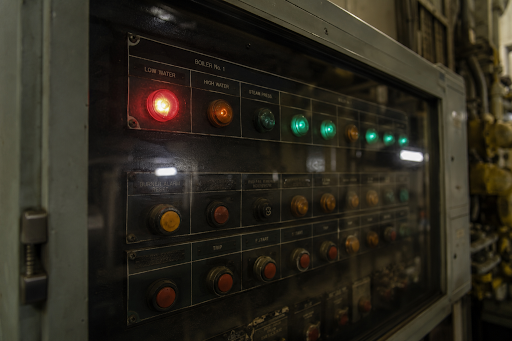
  • Water level gauges and alarms Provide visual and automatic indication of boiler water level, with alarms for both high and dangerously low conditions.

Feed Water Treatment: The Chemistry Side of the System

Feed Water Treatment

Mechanically correct feed water flow doesn’t guarantee a healthy boiler if the water chemistry itself is wrong. Feed water treatment typically addresses:

  • pH control, through chemical dosing, to minimise the corrosive potential of the water.
  • Oxygen scavenging, often chemically assisted alongside thermal deaeration, to further reduce the dissolved oxygen thermal deaeration alone doesn’t fully remove.
  • Scale prevention, by managing dissolved solids that would otherwise deposit on heat transfer surfaces and reduce boiler efficiency over time.
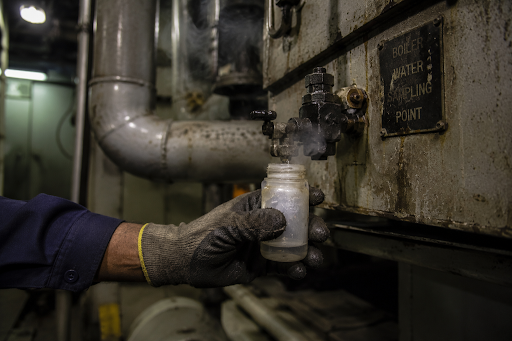
  • Regular water sampling, taken through a dedicated sampling valve, to verify chemical treatment levels are actually where they need to be rather than assuming the dosing system is performing correctly.

Safety Considerations

  • Low water level is a genuine emergency, not just an alarm to acknowledge. A boiler with insufficient water covering its heating surfaces can suffer serious, rapid damage : low water alarms and automatic fuel cut-offs exist specifically to prevent this, and should never be bypassed or ignored.
  • High water level risks priming and carryover. Water entering steam lines and downstream machinery can cause water hammer and damage to turbines or other steam-consuming equipment; this is why level control is a continuous automatic function, not a periodic manual check.
  • Feed check valves must be inspected for correct operation, since they’re subjected to constant movement from fluctuating feed pressures and are a critical line of defence against backflow into the feed system.
  • Cascade tank temperature should be monitored and maintained, since falling below the required deaeration temperature reintroduces the oxygen corrosion risk the whole heating arrangement exists to prevent.
  • Chemical dosing must follow correct procedures and PPE requirements, since boiler treatment chemicals are handled in concentrated form before dilution into the system.

Safety Considerations

Maintenance of the Feed Water System

  • Test low and high water level alarms regularly, confirming they trigger at the correct set points and that associated automatic actions (such as fuel cut-off) actually function.
  • Inspect and service feed check valves and regulating valves per the planned maintenance schedule, since a sticking or leaking valve compromises exactly the water level control the system is built around.
  • Sample and test feed water chemistry on a routine schedule, adjusting chemical dosing based on actual results rather than assuming dosing rates set previously remain correct.
  • Check cascade tank float switches and automatic filling valves for correct operation, since a fault here can silently starve the boiler feed pumps of suction.
  • Keep boiler feed pumps in good mechanical condition, monitoring for cavitation, unusual noise, or reduced output, since pump performance directly determines the system’s ability to maintain water level under load.
  • Verify the continuous bleed line back to the cascade tank remains clear, since a blocked bleed removes the pump protection it’s designed to provide.

Conclusion

The boiler feed water system doesn’t do anything  dramatic – It just keeps hot, deaerated, correctly treated water arriving at the boiler at precisely the rate the water level calls for, watch after watch. But that quiet, continuous balancing act is what keeps a boiler free from corrosion, scale, and the genuinely dangerous consequences of incorrect water level. Understand the loop from cascade tank through feed pump and regulating valve to feed check valve, respect the water level alarms without exception, and keep feed water chemistry genuinely monitored rather than assumed, and the system will keep doing its unglamorous but essential job.

Frequently Asked Questions (FAQs)

The cascade tank collects returning condensate and make-up water, and keeps it hot – typically above around 90°C which helps drive dissolved oxygen out of the water before it reaches the boiler, reducing the risk of pitting corrosion.


It’s a non-return valve mounted near the boiler shell that gives final control over feed water entering the boiler and, critically, prevents boiler water from blowing back into the feed line if feed pump pressure drops below boiler pressure.

Dissolved oxygen in contact with hot boiler metal causes pitting corrosion, which can seriously damage boiler internals over time. Thermal deaeration in the cascade tank, sometimes combined with chemical oxygen scavenging, is used to remove it before the water reaches the boiler.

Too low, and heating surfaces can overheat and suffer serious, rapid damage since they’re no longer adequately covered by water. Too high, and priming can occur, carrying water into steam lines and downstream equipment like turbines, which can cause water hammer and damage.


Chemical treatment controls pH to reduce corrosion risk, assists with oxygen removal, and prevents dissolved solids from depositing as scale on heat transfer surfaces — all factors that mechanical filtration and heating alone can’t fully address.

Disclaimer :- The opinions expressed in this article belong solely to the author and may not necessarily reflect those of Merchant Navy Decoded. We cannot guarantee the accuracy of the information provided and disclaim any responsibility for it. Data and visuals used are sourced from publicly available information and may not be authenticated by any regulatory body. Reviews and comments appearing on our blogs represent the opinions of individuals and do not necessarily reflect the views of Merchant Navy Decoded. We are not responsible for any loss or damage resulting from reliance on these reviews or comments.

Reproduction, copying, sharing, or use of the article or images in any form is strictly prohibited without prior permission from both the author and Merchant Navy Decoded.

DIWALI SALE

Decoded Discount Alert! up to 50% OFF

DIWALI SALE

Decoded Discount Alert! up to 50% OFF

Use Coupon Code Deep50

Days
Hours
Seconds
0
Would love your thoughts, please comment.x
()
x