Hi this is Team Merchant Navy Decoded !!!

Please fill the below form with your query and we will get back to you in next 12 hours.

Rest assured your data is safe with us !!!🙂

Ask Your Query

Auxiliary Engine Fuel Oil System

Auxiliary Engine Fuel Oil System

The auxiliary engine fuel oil system forms part of the ship’s system that provides clean fuel for the auxiliary diesel engines used to generate electrical power. The auxiliary engines drive alternators which supply electrical power to machinery, lighting, pumps and other shipboard equipment.

In order for the engines to operate reliably, the correct fuel must be supplied in the right quantity and at sufficient pressure. The fuel oil system also ensures that the fuel has suitable cleanliness and viscosity. As such, the fuel system incorporates storage tanks, transfer pumps, settling tanks, purifiers, service tanks, filters and fuel injection equipment. The system may be configured with heaters and booster pumps depending on engine specifications and the fuel used.

Main Components of the Fuel Oil System

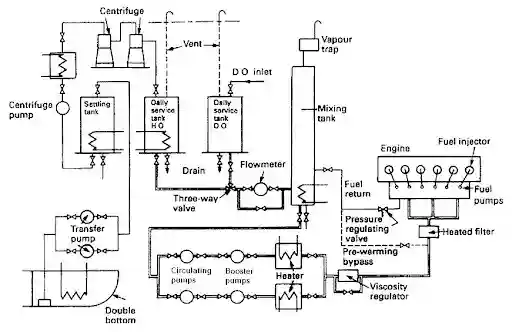
The auxiliary engine fuel oil system has a number of components which have specific

functions.

  • Fuel oil storage tank: Stores the fuel received during bunkering. It is generally situated in the double bottom or a designated tank space
  • Transfer pump: Transfers fuel from the storage tank to the settling tank or service tank as required
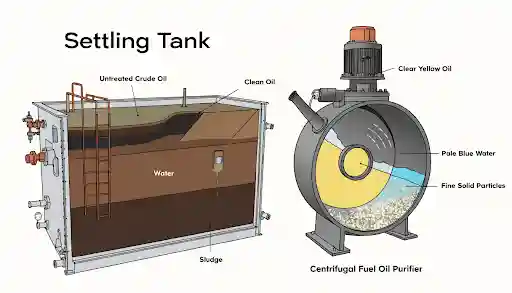
  • Settling tank: Enables free water and heavier impurities to separate to the bottom of the tank prior to further treatment
  • Fuel oil purifier: Removes water and solid impurities from the fuel using a centrifuge
  • Fuel oil service tank: Stores the cleaned fuel for auxiliary engines
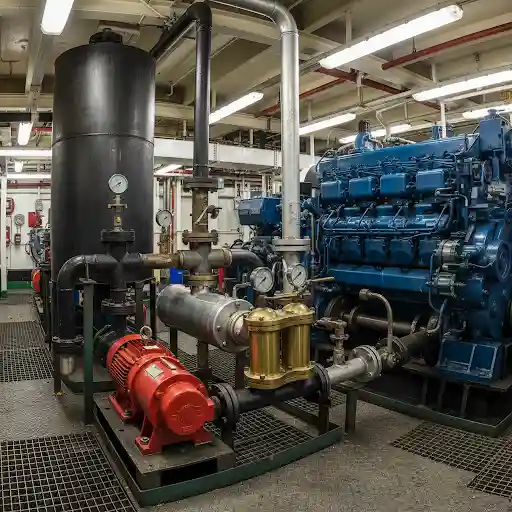
  • Fuel oil supply or booster pump: Provides fuel at the required pressure and flow rate to the auxiliary engines
  • Fuel oil heater: Used to heat heavy fuel oil and reduce its viscosity to suit injection requirements
  • Fuel oil filters: Removes remaining solid particles from the fuel as well as protecting fuel pumps and injectors
  • Fuel injection pump: Provides fuel at injection pressure levels suitable for the auxiliary engine
  • Fuel injector: Atomises fuel and sprays it into the combustion chamber
  • Return line: Returns excess fuel to the relevant tank or circulation system according to the configuration of the fuel system.

Working Principle of the Auxiliary Engine Fuel Oil System

The fuel oil system works through a sequence of storage, treatment, supply and injection.

Step 1: Fuel Storage

Fuel received during bunkering is stowed in fuel oil storage tanks. The fuel may consist of marine diesel oil (MDO), marine gas oil (MGO) or heavy fuel oil (HFO) depending on the vessel and engine configuration.

Step 2: Fuel Transfer

The transfer pump draws fuel out of the storage tank and transfers it to the settling tank. Strainers fitted in the system remove some larger particles from the fuel prior to treatment.

Step 3: Settling and Purification

settling tank

The settling tank holds the fuel under suitable ambient conditions in order that free water and heavier impurities settle to the bottom. The fuel then flows to a centrifuge purifier where more free water and solid materials are removed. Fuel treatment is necessary because impurities in the fuel will cause wear and blockage and damage to fuel injection equipment.

Step 4: Service Tank

The cleaned fuel then flows to the fuel oil service tank which is a readily available supply tank for the auxiliary engines. The contents of the service tank are monitored with regular draining of the tank to remove any accumulated water.

Step 5: Fuel Supply to the Engine

Fuel Supply to the Engine

Fuel is drawn from the service tank via the supply configuration. Depending on the system design, a supply or booster pump will provide the fuel to the filters and, where applicable, to a heater. Where heavy fuel oil is used, a heater is used to adjust viscosity according to injection conditions. The fuel will need less heating if it is MDO or MGO.

Step 6: Fuel Injection and Combustion

The fuel arrives at the engine driven fuel injection pumps. They supply the required amount of fuel at high pressure to the injectors. The injectors atomise the fuel and send it to the combustion chamber where it mixes with hot compressed air and burns.

This combustion process generates the power needed to drive the alternator and generate electricity.

Step 7: Excess Fuel Return

In many cases, there is a return line to return any excess fuel to the service tank or to a circulation system. This enables the fuel system to return excess fuel and to keep the correct supply conditions. It also avoids unnecessary fuel wastage.

The specific configuration of the return circuitry will vary depending on the engine manufacturer’s design.

Table of Contents

Fuel Oil Treatment and Its Importance

Fuel treatment is essential to protect the auxiliary engine and to ensure that combustion is efficient. Treatment is required because fuel may contain water, rust, sediments or other contaminants which may damage precision equipment.

The main goals of the fuel treatment process are to:

  • Remove water and solid impurities
  • Reduce abrasive wear of the fuel pumps and injectors
  • Ensure clean fuel for combustion
  • Prevent filter blockage
  • Improve engine reliability and performance

The settling tank and purifier have distinct but complementary roles. The settling tank allows some free water and more dense contamination to be removed while the centrifuge/purifier achieves better separation.

Common Problems in the Fuel Oil System

Fuel system problems can occur which cause the engine to start badly, run at inconsistent speed, lose power or fail altogether.

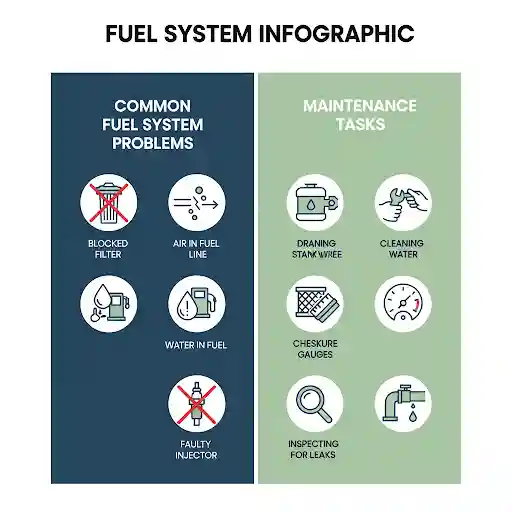
Common issues with the fuel oil system include:

  • Blocked fuel filters
  • Air in the fuel line
  • Water in fuel
  • Low fuel supply pressure
  • Faulty fuel injector
  • Incorrect viscosity of fuel
  • Poor purification

These factors should be checked and addressed in routine maintenance of the system.

Maintenance of the Fuel Oil System

Maintenance of the fuel oil system is critical in keeping the auxiliary engine in good working condition ready to be called upon to generate the vessel’s electrical power.

Key activities for fuel system maintenance include:

  • Checking the fuel tank levels and removing any collected water as instructed
  • Checking for leaks and abnormal operation in transfer and booster pumps
  • Regular cleaning of strainers and replacement of filters as required
  • Maintaining the purifiers in accordance with manufacturer’s instructions
  • Checking fuel pressure and temperature during operation
  • Checking the fuel pipes, joints and return lines for leakage
  • Testing and overhauling fuel injection pumps and injectors at prescribed intervals
  • Verifying alarms and automatic changeover features where fitted
  • Maintaining records of inspection and repairs

Fuel leakage must be dealt with promptly because it creates a fire hazard in the engine room. Maintenance should be carried out using the vessel’s isolation procedures and the manufacturer’s instructions.

Conclusion

The auxiliary engine fuel oil system plays a vital role in the efficient generation of the vessel’s electrical power. It stores, transfers and cleans the fuel and supplies it at the right pressure and in the correct quantity to the auxiliary engines. Each element of the system contributes to reliable auxiliary engine operation. Appropriate fuel treatment, regular maintenance and early fault detection minimises breakdowns, protects equipment and ensures

Frequently Asked Questions (FAQs)

Its main function is to supply clean, properly conditioned fuel to the auxiliary diesel engine to ensure reliable combustion and electrical power generation.

A purifier removes water and solid impurities from fuel using a centrifuge.

A heater reduces viscosity of heavy fuel oil so that it can circulate and be injected under suitable conditions. The fuel and engine specifications will dictate whether it is needed and the degree of heating.

It provides the right quantity of fuel at injection pressure levels to the injector at the right time.

A blocked filter causes fuel flow restriction which results in low supply pressure and engine power loss, instability or shutdown.

Excess fuel is returned to maintain stable supply conditions and to allow the system to circulate more fuel than the engine consumes.

Disclaimer :- The opinions expressed in this article belong solely to the author and may not necessarily reflect those of Merchant Navy Decoded. We cannot guarantee the accuracy of the information provided and disclaim any responsibility for it. Data and visuals used are sourced from publicly available information and may not be authenticated by any regulatory body. Reviews and comments appearing on our blogs represent the opinions of individuals and do not necessarily reflect the views of Merchant Navy Decoded. We are not responsible for any loss or damage resulting from reliance on these reviews or comments.

Reproduction, copying, sharing, or use of the article or images in any form is strictly prohibited without prior permission from both the author and Merchant Navy Decoded.

DIWALI SALE

Decoded Discount Alert! up to 50% OFF

DIWALI SALE

Decoded Discount Alert! up to 50% OFF

Use Coupon Code Deep50

Days
Hours
Seconds
0
Would love your thoughts, please comment.x
()
x