Hi this is Team Merchant Navy Decoded !!!
Please fill the below form with your query and we will get back to you in next 12 hours.
Rest assured your data is safe with us !!!🙂
Ask Your Query| For Beginner | For Professional |
|---|---|
| GME | Engine Side |
| G.P. Rating | Deck Side |
| ETO | G.P. Rating |
| IMUCET & Sponsorship | Combo Offers |
| Free Course | MEO |
| Free Course |
| For Beginner | For Professional |
|---|---|
| GME | Engine Side |
| G.P. Rating | Deck Side |
| ETO | G.P. Rating |
| IMUCET & Sponsorship | Combo Offers |
| Free Course | MEO |
| Free Course |
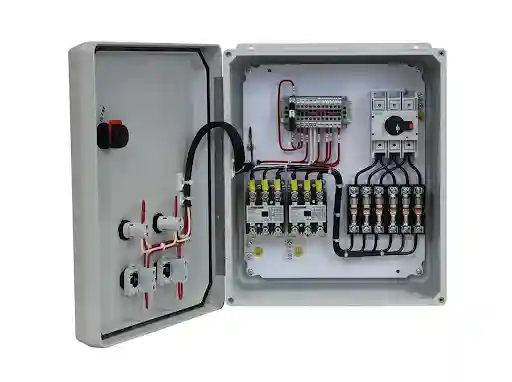
Starter panels are important within electrical systems in many applications including marine, industry and engineering. They allow control to be provided over electric motors to start and stop. Starter panels contain many electrical components in a safe and systematic way. Although starter panels simply appear as a metal box, they contain many key components.
With many electric motors being used on ships (for pumps, fans, compressors and many other ancillary machines) starter panels are very important within marine engineering. Understanding the components of a starter panel will give marine engineers knowledge on the electrical systems of ships.
Understanding electrical circuit diagrams is important for learning how starter panels operate onboard ships. To improve your knowledge of electrical circuits and their working principles, explore the Electrical Circuit Diagram Course by Merchant Navy Decoded.
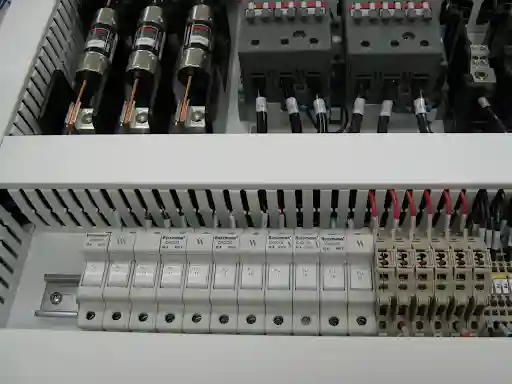
Starter panels act as enclosures for electrical components and are used to control electric motors. Within starter panels there are many components including contactors, relays, fuses, transformers and terminal blocks.
Different types of starters can be used within starter panels. These include: Direct On Line (DOL), Star Delta, Soft Starters and Variable Frequency Drives (VFD).
Explore the Merchant Navy Decoded App for MND Flix courses, MMD Exam Support, STCW Course Finder, Job Opportunities, Financial Guidance, DG Shipping Updates, and other useful maritime services—all in one place.
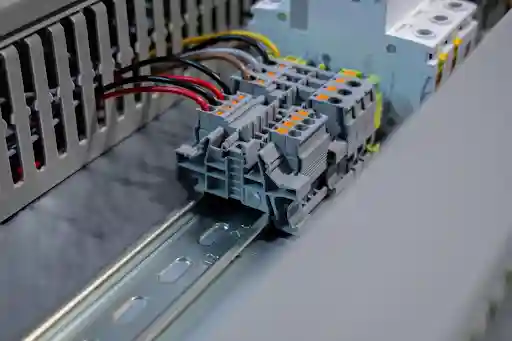
Mounting rails are metal strips within the starter panel. The mounting rails allow many components within the starter panel (terminal blocks, relays and control components) to be easily fixed. This allows a well ordered layout within the starter panel, as well as making maintenance and replacement of components easier.
Terminal blocks allow wires to be joined together. Secure electrical connections can be made between input and output wires. Terminal blocks are generally mounted onto DIN rails. Different sizes and colours of terminal blocks can be found depending on the application.
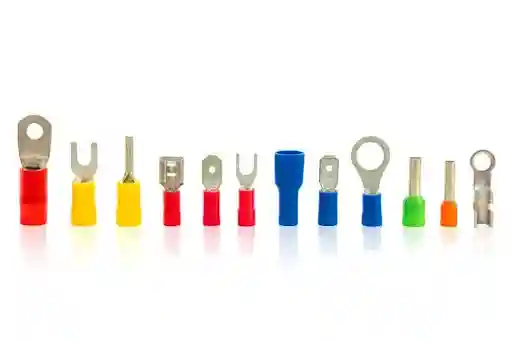
Crimp connectors are small metallic connectors which can be attached to wires. They allow secure connections to be made. A crimping tool can be used to secure the connection, allowing the connector to form a tight fit around the conductor. Crimped connectors prevent loose strands of wire and mean secure connections can be made.
Types of CrimpConnector:
Crimp connectors are often used within starter panels to connect wires to terminals and components.
Cable glands are mechanical components which allow cables to be run into or out of a starter panel. Depending on the design and rating, cable glands provide protection for the cables from dust, moisture and general damage. In marine engineering cable glands are very important as the electrical equipment may be exposed to vibrational forces, humidity and harsh conditions.
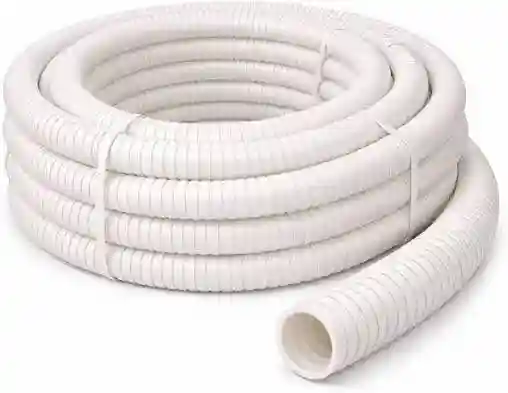
Cable conduits are protective channels for electrical cables. This means that electrical cables can be neatly arranged and less damage occurs due to friction, vibration and accidental contact. Cable conduits can be either metallic or non-metallic depending on application.
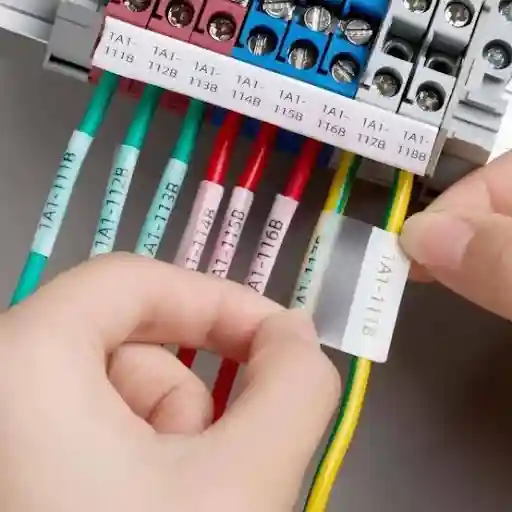
Cable tags can be added to cables to allow engineers/technicians to easily identify different cables. Each cable may be labelled with a unique identification number/code depending on electrical drawings/diagrams.
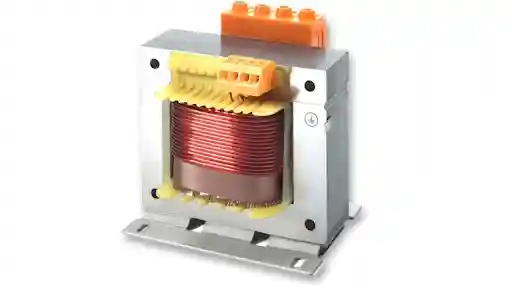
Control transformers allow the supply voltage to be changed to an appropriate voltage to be used within the control circuit in a starter panel. For example, a starter panel may have a high voltage for the motor circuit, however the control components (contactors, relays, indicators etc) require a low voltage.
Ensure reliable control circuit operation.
Current Transformers (CT) are a type of instrument transformer. They allow large alternating currents to be measured safely. The high primary current can be scaled down to a smaller, proportionate current to be used in measuring equipment and protective relays. CTs are commonly used in electrical panels to allow current to be monitored and protected.
The current transformer differs from the control transformer in that it does not provide power to control components. Instead it is used to measure current.
Fuses are electrical safety devices. They protect electrical circuits from excess current. If the current within a circuit exceeds the design limits of the fuse, the metal inside the fuse will melt, breaking the circuit. Fuses are commonly used in starter panels to protect control circuits and components.
Starter panels contain many electrical components, each with a specific purpose, to ensure safe and reliable operation of electrical equipment. Components such as mounting rails, terminal blocks, transformers and fuses all play an important role to ensure electrical systems are well organised.
Understanding the components in starter panels is very important for marine engineers as they are widely used on ships. Knowledge of what functions each component performs and why they are important can improve the understanding of marine electrical systems and how to maintain them.
A starter panel is an electrical enclosure used to control, start, stop and protect electric motors from electrical faults.
A mounting rail is a metal strip used to securely fix electrical components such as relays and terminal blocks.
Terminal blocks provide secure electrical connections between wires and help organise circuits for easier maintenance and fault finding.
A cable gland is a mechanical device used to secure cables entering or leaving an electrical enclosure while providing protection.
A current transformer measures high alternating current by converting it into a smaller proportional current for meters and protective relays.
Disclaimer :- The opinions expressed in this article belong solely to the author and may not necessarily reflect those of Merchant Navy Decoded. We cannot guarantee the accuracy of the information provided and disclaim any responsibility for it. Data and visuals used are sourced from publicly available information and may not be authenticated by any regulatory body. Reviews and comments appearing on our blogs represent the opinions of individuals and do not necessarily reflect the views of Merchant Navy Decoded. We are not responsible for any loss or damage resulting from reliance on these reviews or comments.
Reproduction, copying, sharing, or use of the article or images in any form is strictly prohibited without prior permission from both the author and Merchant Navy Decoded.
Decoded Discount Alert! up to 50% OFF
Use Coupon Code Deep50