Hi this is Team Merchant Navy Decoded !!!
Please fill the below form with your query and we will get back to you in next 12 hours.
Rest assured your data is safe with us !!!🙂
Ask Your Query| For Beginner | For Professional |
|---|---|
| GME | Engine Side |
| G.P. Rating | Deck Side |
| ETO | G.P. Rating |
| IMUCET & Sponsorship | Combo Offers |
| Free Course | MEO |
| Free Course |
| For Beginner | For Professional |
|---|---|
| GME | Engine Side |
| G.P. Rating | Deck Side |
| ETO | G.P. Rating |
| IMUCET & Sponsorship | Combo Offers |
| Free Course | MEO |
| Free Course |
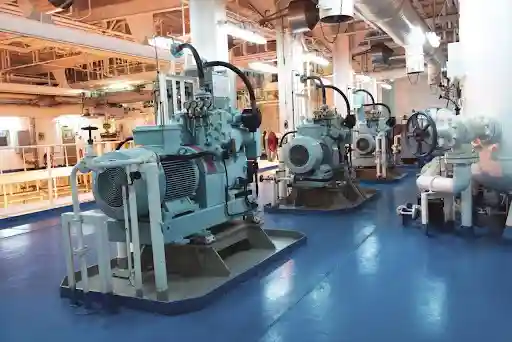
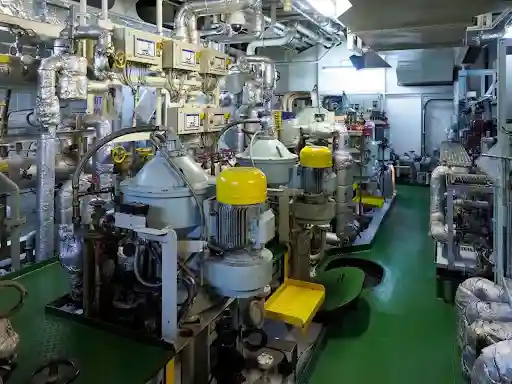
When people think about Machinery on ships the first thing that comes to mind is the main engine and propeller. But there are many pieces of machinery that are required to be able to turn the main engine. These include cooling water, clean fuel, lubricating oil, starting air and electricity. There are many pieces of machinery to give the ship clean water to drink, heat, cool and treat the sewage and bilge. Plus there is the steering gear. All these come from the auxiliary machinery.
The auxiliaries are generally not noticed unless there is an issue. This article will discuss the main auxiliaries and how they work. For example the purifiers, fresh water generator, sewage treatment plant and oily water separator.
Everything that supports the main propulsion and operation of the ship, excluding the main engine. This can be broken up into categories:
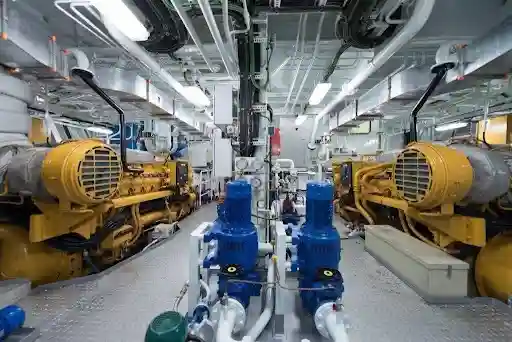
Most vessels have multiple generators driven by diesel engines. These are usually medium speed engines linked to an alternator. The electricity is supplied to the main switch board. This electricity is then distributed throughout the vessel Multiple generators are fitted so only one generator will be out of action at any one time for maintenance. The generators also need their own fuel, lubricating oil, cooling water and starting system. All generators are reliable with good load sharing and regular maintenance. The standby generator must be ready for use at any time.
Understanding auxiliary machinery becomes easier when you connect theoretical knowledge with practical shipboard operations.
The Merchant Navy Decoded App helps marine engineers access technical learning resources through MND FLIX. Seafarers can also explore MMD exam support, DG Shipping updates, and other useful services in one place.
If you want to improve your understanding of auxiliary machinery and prepare for shipboard duties, explore the Merchant Navy Decoded App.
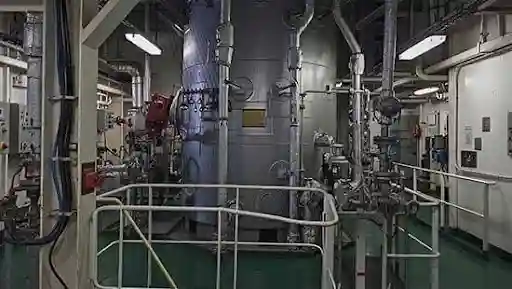
The auxiliary boiler provides steam for heating the fuel, accommodation, tank heating coils and other services. This is especially useful when in port or when the main engine is not running. The exhaust gas economiser recovers heat from the main engines exhaust to produce steam at sea. This saves fuel. The most important part of this is the boiler water level (explained in the boiler water level controller article). Water is treated and blown down. Safety valves and burner management are part of day to day maintenance.
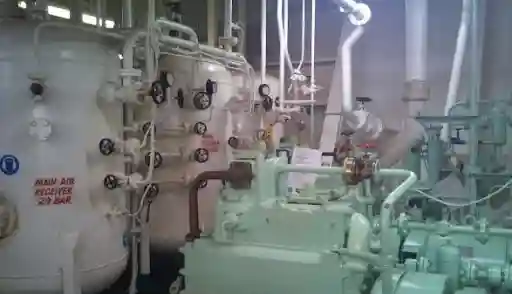
Compressed air is used for starting the main and auxiliary engines, control air, servicing air for tools and many valves and instruments. Main air compressors provide high pressure air to the starting air receivers. Usually around 30bar, depending on the engine. The low pressure air is supplied to the control and servicing systems. This is passed through filters and dryers. Air receivers and coolers must be drained regularly to avoid corrosion and sticking valves. Safety valves must be tested regularly. The compressors also have automatic controls that must be tested regularly.
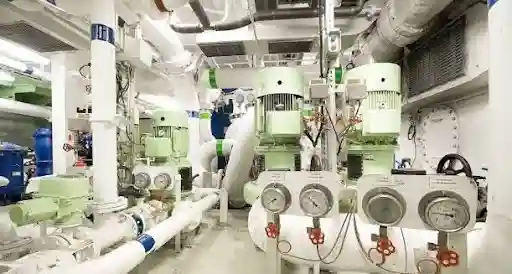
There are many pumps on board. Most are either centrifugal or positive displacement.
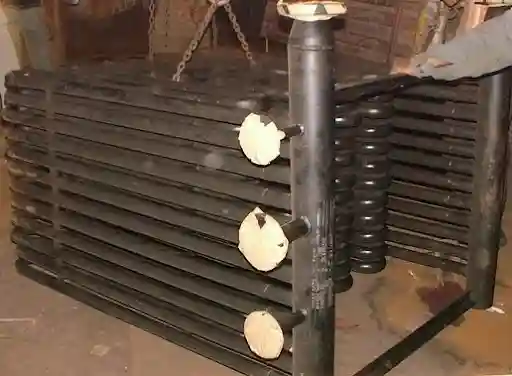
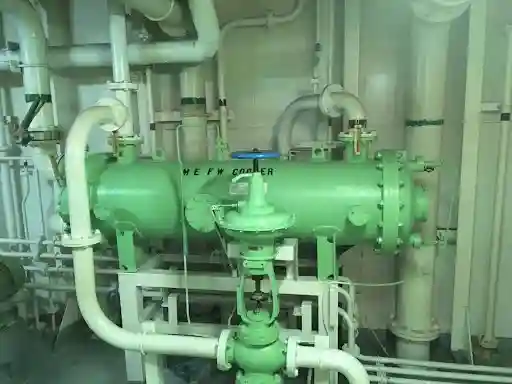
Plate, Shell and tube coolers are used to transfer heat from the cooling water, lubricating oil, charge air, fuel and seawater(without intermixing the fluids) The main issue with these is fouling. Marine growth, scaling and dirt can build up on the seawater side reducing the heat transfer. This causes the engine to run hotter. Regular cleaning, anode checks and leak checks must be done.
These are centrifugal separators. The oil is spun fast to allow the heavier water and solids to separate out from the cleaner oil. Purifiers are fitted on board to clean the fuel oil and lubricating oil.
The purifier will separate water, solids and oil. This is achieved by using a water seal and gravity disc. Newer machines will have automatic water detection. The clarifier will only remove solids and a little water.
Key points to have good separation:-
Modern separators are self cleaning and will automatically discharge the sludge. The sludge will be collected in a sludge tank and dealt with according to the vessel’s waste policy. The bowl spins very fast and must be assembled correctly and balanced. Never run if anything is wrong as this can cause vibrations and bowl failure.
Issues with purifiers include poor separation due to incorrect temperature and throughput. Water carryover due to loss of water seal. Vibrations due to worn bearings or unbalanced bowls. Blocked nozzles and discharge ports.
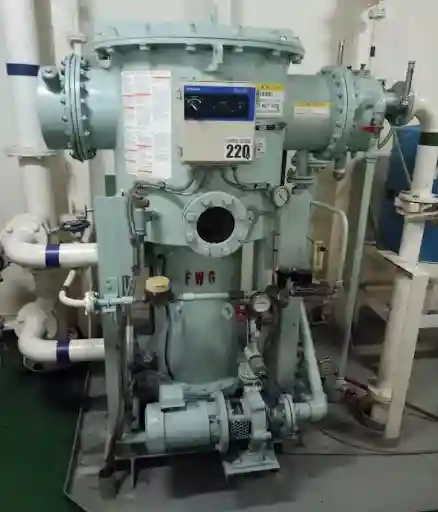
Fresh water is needed on board for drinking, washing, cooking, boiler feed and make up water for cooling the engine. This is achieved by using a fresh water generator (sometimes called an evaporator).
The unit operates under a vacuum so the boiling point of the seawater is greatly reduced. Usually around 40-50°C. The heat is usually free from the jacket cooling water of the main engine. The seawater is fed into the evaporator and heated by the jacket water. The vapour rises and goes through a demister to stop water droplets being carried over. The vapour enters the condenser and is cooled using seawater. This produces distilled water. This is pumped out using a distillate pump. The reject brine is removed using a brine ejector/pump. This also helps create the vacuum.
Salinometer– A salinity meter is used to check the quality of the water. If the salinity rises above a set level an alarm will sound. The water will then be redirected back to the evaporator using a solenoid valve. This stops salty water going into the freshwater tanks. The water will then be treated (such as adding minerals and chlorinating) before use.
Best practice – Usually not run in port or near to land as the seawater may be contaminated. Descale the tube nests periodically. Fouling can cause inefficiency. Common issues are vacuum leaks, blocked demister and failed ejector.
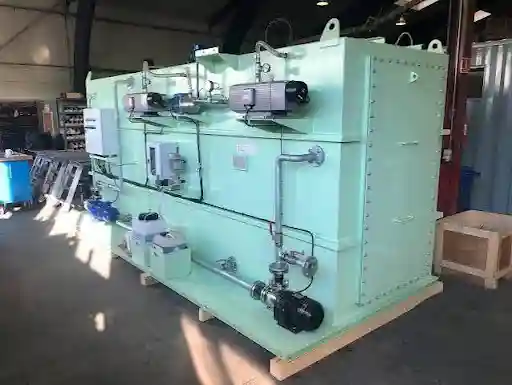
All toilet and domestic waste produced on the vessel must be dealt with. Rules are in place to ensure only certain amounts can be discharged. The sewage treatment plant (STP) will treat the waste to make it clean enough to discharge. Rules are in place in MARPOL Annex IV and must be type approved.
The most common type is a biological (aerobic) system.Â
Excess sludge is removed and stored to be discharged ashore.
The bacteria must be fed regularly, have air and be in the correct conditions. Too much disinfectant, chemicals or harsh cleaning products can kill the bacteria and the plant will not function correctly. Do not put harmful chemicals, lots of detergents, oil or non biodegradable items down the drains.
The amount that can be discharged depends on how far away from land you are, what type of plant you have and any special areas. For example some regional sea areas. The vessel’s sewage management plan and current rules apply.
Common issues – Smelly due to failed blowers or dead bacteria. Foaming. Blocked air diffuser. No chlorine tablets. Pump or float switch failure. Untreated waste.
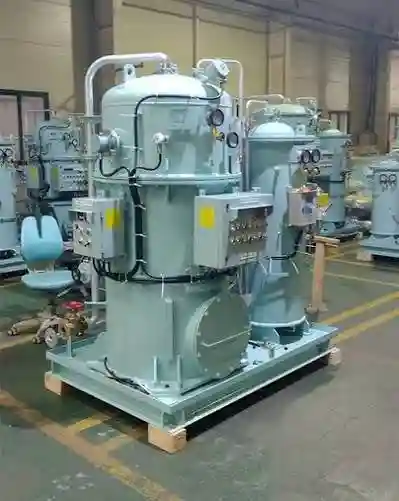
Water from the bilges will contain oil from leaks, drips and cleaning. This oily water cannot be discharged overboard without treatment. Strict rules are in place in MARPOL Annex I. The oily water separator will treat the water to ensure the oil content is within the limits. Usually 15ppm.
The oily water is pumped in. Gravity separation is used. Often helped by coalescer plates or filters. This will cause the small oil droplets to join together making larger droplets. The oil will float to the top and be collected. It is then drained to the oil sludge tank. The clean water will exit at the bottom. An oil content meter is fitted (15ppm bilge alarm). If the oil content goes over the limit an alarm will sound. An automatic shut off will close the overboard discharge.
This is a serious offence if discharged illegally. The oil content meter and automatic shut off must never be bypassed. Everything is recorded in the oil record book.
Best practice – Keep bilges as clean as possible. Deal with leaks at the source to reduce oily water. The oil content meter must be maintained and calibrated regularly. Filter elements and coalescers must be in good condition. Everything must be recorded.
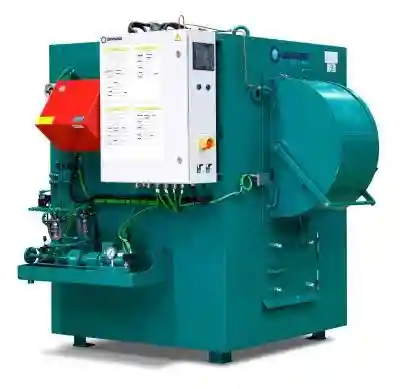
The incinerator will burn solid waste, sludge oil and some other waste. This reduces the amount of waste that needs to be carried on board. Rules apply to what can be burned and what emissions can be made (MARPOL Annex VI). The incinerator must be operated according to the manual. The furnace must be at the correct temperature. Certain materials must not be burned such as plastics containing harmful substances. The ash is stored and landed.
The steering gear turns the rudder. This is one of the most critical pieces of auxiliary machinery. Most vessels will have an electro-hydraulic system. Hydraulic pumps (often variable displacement) are used. Rams or rotary vane units will turn the rudder stock. Rules state that there must be two independent power sources (or equivalent) so if one fails the ship will still be steerable. There is an emergency local control. The steering gear is tested prior to every departure. The rudder angle indicators and alarms must work.
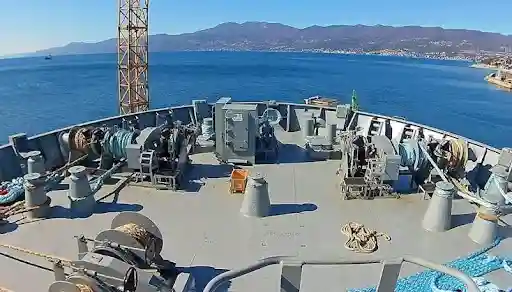
Windlass, mooring winches, cargo cranes, hatch covers etc are also auxiliaries. These are usually hydraulic or electric. Required for cargo loading and unloading, Holding the ship at anchorageÂ
The refrigeration plant provides a cool temperature for the food stores. The air conditioning plant provides cool air and ventilation for the accommodation and control room. These are both vapour compression systems. A compressor, condenser, expansion valve and evaporator are used. The refrigerant will cycle around. The compressor will compress the gas making it hot. The condenser will cool the gas turning it into a liquid. This is done using seawater or freshwater. The expansion valve will reduce the pressure causing the liquid to evaporate. This will absorb heat in the evaporator causing a cool temperature.Â
Common issues include leaking refrigerant, low charge, dirty condensers and faulty controls. Rules apply to the refrigerants. Leaks must be dealt with by trained personnel.
Vessels carrying ballast water will now have ballast water treatment systems installed. This will kill or remove the living organisms in the water. This prevents invasive species spreading. The systems will use filters, ultraviolet or chemical treatments. Operation and recording is done according to the vessel’s ballast water management plan.
Whilst the main engine gets all the attention the auxiliaries are what make the ship run. The generators and boilers provide power and steam. The compressors provide air. Pumps and coolers ensure everything is at the correct temperature. The purifiers ensure the fuel and oil is clean. The fresh water generator turns seawater into drinkable water. The sewage plant and oily water separator ensure the ship does not pollute the sea. The steering gear ensures the ship can go where it wants to. Knowing what each machine does, what they need and how they fail will help you find faults much quicker and keep the whole ship running smoothly.
 All machinery that supports the ship and main engine. This includes generators, boilers, compressors, pumps, purifiers, fresh water generator, sewage treatment plant, oily water separator, steering gear and refrigeration.
The oil is spun fast so the heavier water and solids are thrown to the outside. Leaving clean oil at the centre to be extracted.
The seawater is boiled using a vacuum. This means it boils at a low temperature. The heat comes from the jacket water of the engine. The vapour is cooled in the condenser. This makes distilled water. The rejected brine is pumped out.
It measures the salt content of the water. If it is too high the water will be sent back to the evaporator.
Biological sewage treatment plants use bacteria to break down the waste. The waste is passed through an aerated chamber. Then the solids will settle in another chamber. The clean water is then disinfected using chlorine or ultraviolet.
Harmful chemicals, harsh cleaning products and oil can kill the bacteria.
It separates the oil from the bilge water. This ensures the oily water going overboard has no more than 15ppm of oil. An oil content meter and automatic shut off will stop the discharge.
It is a serious offence to discharge illegally. Bypassing the equipment is against the rules and will incur heavy penalties.
So if one fails the ship can still be steered.
To ensure they will automatically start and take over if the pump fails or pressure drops.
Disclaimer :- The opinions expressed in this article belong solely to the author and may not necessarily reflect those of Merchant Navy Decoded. We cannot guarantee the accuracy of the information provided and disclaim any responsibility for it. Data and visuals used are sourced from publicly available information and may not be authenticated by any regulatory body. Reviews and comments appearing on our blogs represent the opinions of individuals and do not necessarily reflect the views of Merchant Navy Decoded. We are not responsible for any loss or damage resulting from reliance on these reviews or comments.
Reproduction, copying, sharing, or use of the article or images in any form is strictly prohibited without prior permission from both the author and Merchant Navy Decoded.
Decoded Discount Alert! up to 50% OFF
Use Coupon Code Deep50