Hi this is Team Merchant Navy Decoded !!!

Please fill the below form with your query and we will get back to you in next 12 hours.

Rest assured your data is safe with us !!!🙂

Ask Your Query

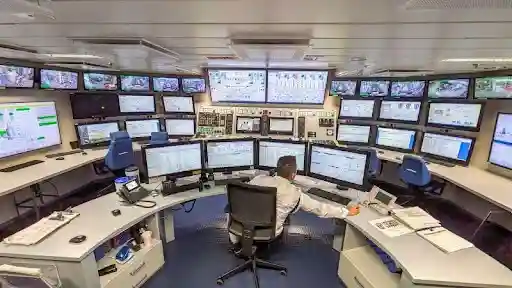
Engine Control Room in Ship

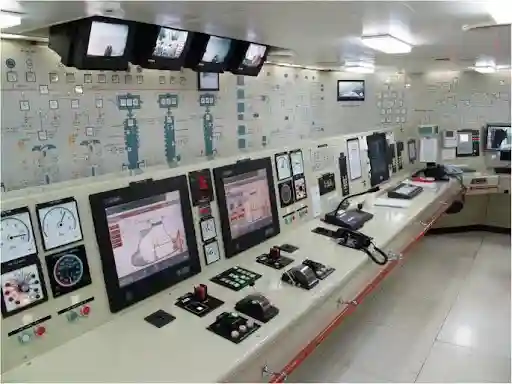
The engine room control room can be found behind a heavy door at the top of the engine room. There is less noise here and it is cooler. There are large windows looking down onto machinery and there are consoles, screens, a switch board and alarm lights. The engine room control room (ECR) is where the engineers control the machinery.

All the systems are found here. The engine room control system, alarm/monitoring system, manoeuvring system, switch board and engineers call alarm. Here the engineer can keep track of all of these systems.

Engine Control Room in Ship

Purpose of the ECR

The ECR is the main area for monitoring and controlling the machinery space. The main functions of the ECR are:- 

  • Controlling the main engine when manoeuvring and handing over from the bridge.
  • Monitoring the machinery by having screens showing temperatures, pressures, levels and alarms.
  • Controlling the electrical plant by starting, paralleling and sharing between the generators. Monitoring the power supply.
  • Reacting to any alarms and faults. Deciding what to do and instructing engineers.
  • Handling emergencies (fires, flooding, blackouts etc).
  • Keeping logs and records.

For a ship with an unmanned machinery space the alarm/monitoring system will give alarms and the duty engineer will be called to the ECR.

Purpose of the ECR

Learn More with the Merchant Navy Decoded App

Want to improve your practical marine engineering knowledge? Explore the Merchant Navy Decoded App, where seafarers can access MND FLIX technical learning resources, MMD exam preparation support, DG Shipping updates, and other useful maritime services.

Explore the Merchant Navy Decoded App

Types of Directional Control Valve

The ECR is generally located inside the engine room casing. This gives a safe and secure area for the engineers to work from. The ECR will generally be located on a platform so large windows can be used to look down onto the machinery. The ECR will also be sound proofed so that engineers can still hear alarms, communicate and use the telephone. The ECR will also be air conditioned so that the electronics and engineers can work in a cool environment.

The ECR will be constructed so that it has fire protection. This includes fire rated areas and doors (SOLAS and class rules), escape routes and emergency lighting. The ECR must be accessible and can be exited easily.

Layout can vary between ships. Older ships will have large screens with lots of meters and switches. Newer ships will have screens and consoles. However, the principles are the same.

Table of Contents

Contents of the ECR

  1. Main Engine Control Console:

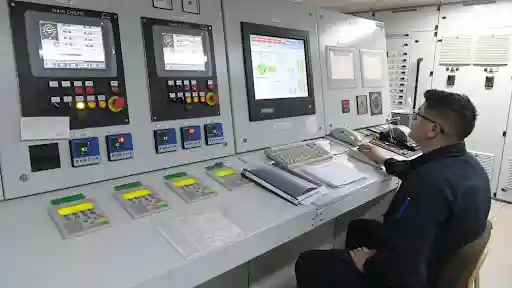
    This will have the controls for the engine. This includes a control lever or telegraph repeater, start, stop and emergency stop buttons, speed and rpm screens, control station selector (Bridge, ECR, Local) and indicators showing engine status. This is connected to the remote control system and engine control system. This is a key control point for the engine. The local control is the back up.
  2. Alarm and Monitoring System:

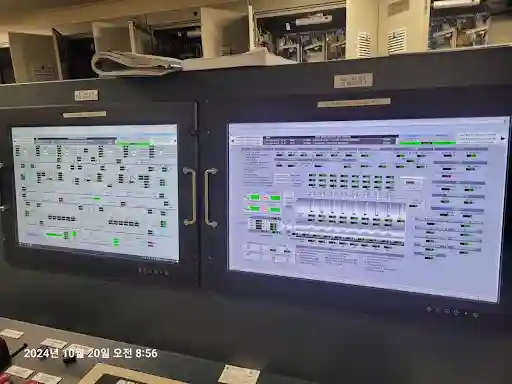
    Screens showing temperatures, pressures, levels and alarms. Alarms will sound and alarm lights will flash on the panel. The alarms will be acknowledged here. Usually trend screens will also be available and alarm history to help identify faults.
  3. Safety System Panel

    : Shows shutdown and slow down conditions. This includes override conditions and emergency stop. Once shutdown, the ECR will be reset here.
  4. Main Switch Board and Power Management:

    Many ships will have the main switch board located in or next to the ECR. This allows the engineer to easily see what generators, bus bars and load are being used. This will include the synchroscope, meters, generator controls, power management system, preferential trip indicators and insulation monitor. The electrical plant (covered in electrical distribution) can be controlled from here.
  5. Auxiliary System panels:

    Boiler, fuel and lube oil, cooling water, air compressors, purifiers, steering gear, bilge and ballast panels or screens. These will show the status and will allow the engineer to start/stop the equipment.
  6. Engineers Call and Extension Alarm:

    This system will be controlled from the ECR. It will send alarms to the cabins, mess and bridge. The duty engineer selector will be found here. This will include a dead man alarm.
  7. Fire Detection and Fire Fighting Controls:

    The fire detection and alarm system will be found here using a repeat panel. This will show which zone has an alarm. The ECR will usually have remote controls for emergency functions, such as stopping fans and pumps, closing quick closing valves on fuel tanks, and starting emergency fire pumps. This will also have indicators for the fixed fire fighting system.
  8. Communications:

    Telephones, intercom/sound powered phone system to the bridge, steering gear room, emergency generator room and other key areas. General alarm and PA system. Good communications are vital, especially when manoeuvring.
  9. Monitoring and Logging:

    Tank level gauges, bilge level alarms, data logger, printer, clocks and log book. Many ships will have CCTV cameras in the engine room that can be viewed from the ECR.
  10. Computers:

    A workstation will generally be used for planned maintenance, manuals, drawings and reports. The single line diagram and key manoeuvring diagrams will be kept handy.

Control Stations

The engine can be controlled from the bridge, ECR and local. At any one time only one control station can be used. This will be shown using a selector switch and indicator lights. Normally the bridge will be used at sea, ECR during manoeuvring or on request and the local control is the back up.

Proper handing over must be performed. The engineer on duty will confirm which control station is being used. The bridge will confirm this. The risk of getting confused over which control station is being used is high.

Watch Keeping in ECR

Watch Keeping in ECR

For a manned engine room, an engineer will be on watch in the ECR. They will monitor alarms, take regular logs, do rounds and respond to any abnormalities. For an unmanned engine room, the ECR may be manned during the day and during manoeuvring. At night it can be unmanned due to the alarm system, extension alarm and dead man alarm.

Good watch keeping will include:-

  • Proper handing over: Read log, check status and ask any questions if anything unusual.
  • Check the alarm panel and acknowledge alarms: Find out what caused the alarms.
  • Take regular logs: Compare it to normal values. Spot slow changes.
  • Good communications with the bridge:  Especially during and before manoeuvring. Also with other engineers.
  • Do rounds: Often problems will be picked up by people rather than the sensors and screens.

Emergencies in ECR

The ECR is the first place to deal with an emergency so it is important to know what to do.

  • Fire in the engine room: The fire detection panel will show where the fire is. The engineer will inform the bridge, sound alarm and use the remote controls (stop fans/pumps, close QCVs, prepare fixed fire fighting system) as per procedures and instructions from the Master. If the ECR is unsafe, engineers will exit using the escape route and control from the local control.
  • Blackout: Emergency generator will start. Standby generator will be started and connected. The engineer will bring the essential services back online in order. Monitor the switch board and engine alarms. This sequence will be practiced in drills.
  • Flooding: Bilge alarms and level indicators will show where the flooding is. The engineer will start the bilge pumps.
  • Failure during manoeuvring: The engineer will find the cause from the alarm and safety panels. Inform bridge straight away. Decide to restart, change control stations or request more time.
  • Evacuation from ECR: Must be clear. Engineers should know the local control can be used to control the engine.

Human Factors

There is a lot of information to be taken in by 1 or 2 people so the layout is important. Key things are:-

  • Alarms should be prioritised: Important alarms shouldn’t be overwhelmed by nuisance alarms.
  • The temperature, light and noise should be comfortable: Fatigue, heat and distractions will cause mistakes.
  • Panels should be neat and labelled: Indicators should be clear.
  • Try to avoid alarm fatigue by dealing with constant false alarms and ensuring alarms are set correctly.
  • Good communications: Clear instructions between the bridge and ECR.
  • Good watch keeping: Fatigue can be a risk so it is important to have breaks.

Common Issues

  • Nuisance alarms: False alarms due to faulty sensors or incorrect limits. This can cause real alarms to be missed.
  • Equipment failure: The engineer should know what the back up indicators are.
  • Loss of communications:  Telephone/intercom not working. Difficult to communicate.
  • Air conditioning  not working : Can cause overheating of electronics.
  • Dust, heat or condensation causing damage.
  • Confusion over control stations. Bridge, ECR and local.
  • Messy area. Obstructing escape routes and controls.
  • Inhibited alarms. Alarms not reset.

Best Practices

  • Ensure the ECR is neat, tidy and clear. Escape routes and doors must be clear.
  • Regular testing of control station changeover, emergency stop, alarms and communications. Also before manoeuvring.
  • Ensure the extension and dead man alarms are working.
  • Have up to date key diagrams, single line, manoeuvring and emergency procedures.
  • Never inhibit alarms, override safety or have the wrong control station unless there is a clear reason and logged.
  • Practice blackout recovery, fire and ECR evacuation. Everyone will know what to do.
  • Ensure air conditioning and ventilation are in good condition. Electronics rely on this.
  • Log accurately. Ensure anything unusual is included in handing over.

Conclusion

The engine control room is a small area but performs a massive task. It is used to control the engine, monitor the machinery, control the electrical plant, react to alarms and deal with emergencies. All of the systems mentioned are used here. The control system, safety system, alarm/monitoring system, manoeuvring system, switch board and engineers call alarm. Knowing what is in the ECR, who is controlling it, how to hand it over and what to do in emergencies means you are actively controlling the machinery on board.

Frequently Asked Questions (FAQs)

The ECR is an enclosed and air conditioned area. It is generally located in the engine room casing. It is used to control and monitor the main engine, generators and machinery.

Main engine control console, Alarm and Monitoring system, Safety system panel, Main switch board and Power management, Auxiliaries, Engineers call/alarm controls, Fire detection and fire fighting controls, Communications and Logging.

It will depend on the control station selected. The engine will generally be controlled from the bridge at sea, ECR during manoeuvring or on request. The local control is a back up. Only 1 control station can be used at any one time.

It allows the engineer to hear the alarms and communicate. The electronics and engineers can work reliably.

The alarm/monitoring system, extension and dead man alarms will be used. The duty engineer will be called to the ECR if there is a problem.

Inform the bridge. Use the remote emergency controls as much as possible. Exit using the escape route. Control the engine from the local control.

There is a risk of confusion over which control station is being used. The bridge and ECR must confirm which one is in control.

The engineer will be able to see the switch board and status of the generators. The standby generator will be started and connected. Essential services will be brought back online in order.

Disclaimer :- The opinions expressed in this article belong solely to the author and may not necessarily reflect those of Merchant Navy Decoded. We cannot guarantee the accuracy of the information provided and disclaim any responsibility for it. Data and visuals used are sourced from publicly available information and may not be authenticated by any regulatory body. Reviews and comments appearing on our blogs represent the opinions of individuals and do not necessarily reflect the views of Merchant Navy Decoded. We are not responsible for any loss or damage resulting from reliance on these reviews or comments.

Reproduction, copying, sharing, or use of the article or images in any form is strictly prohibited without prior permission from both the author and Merchant Navy Decoded.

DIWALI SALE

Decoded Discount Alert! up to 50% OFF

DIWALI SALE

Decoded Discount Alert! up to 50% OFF

Use Coupon Code Deep50

Days
Hours
Seconds
0
Would love your thoughts, please comment.x
()
x