Hi this is Team Merchant Navy Decoded !!!

Please fill the below form with your query and we will get back to you in next 12 hours.

Rest assured your data is safe with us !!!🙂

Ask Your Query

Level Monitoring & Measuring

Level Monitoring

Level monitoring and measuring systems are an important part of instrumentation and automation systems on board ships which can be used to determine how much liquid/ material is present within tanks, containers and equipment. Accurate level measuring is important to ensure the levels of fuel oil, lubricating oil, fresh water, ballast water, bilge water and cargo are monitored accurately.

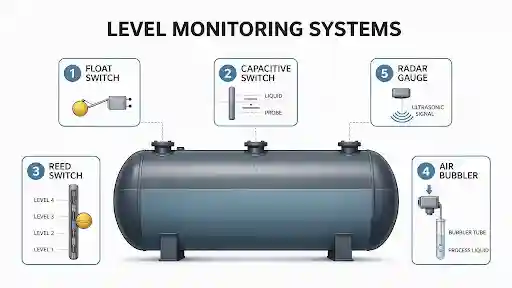
Incorrect level measuring can cause issues such as overflow of tanks, damage to pumps, dry running and cargo loss. Different types of measuring systems are used depending on the type of liquid, tank layout and what level of accuracy is required. Methods of measuring liquid level include; float switches, capacitive switches, reed switches, air bubbler systems and radar level gauges.

Float and Capacitive switches

Float Switch
  • Float Switch

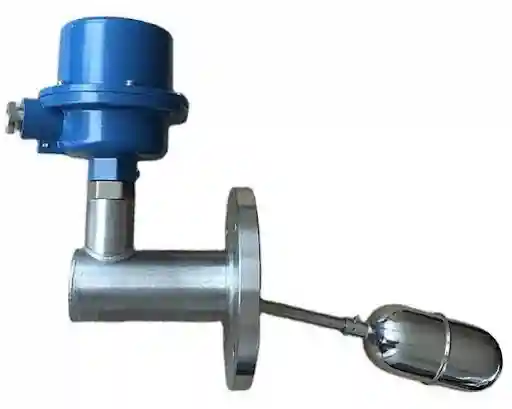
A float switch is a simple method of detecting if a liquid has reached a certain level. They consist of a float element which moves up and down depending on the level of liquid.

Principle of Operation:

  1. The float is located on the surface of the liquid
  2. As the liquid level rises the float will move up
  3. At a set point the switch will activate
  4. This causes the switch to change its electrical contact and send a signal to the alarm/control system
  5. When the liquid level lowers the float moves down and the switch can return to its original position

Applications on board ships:

Used on ships to;

  • Detect high levels in Bilge wells
  • Detect high levels in freshwater and fuel oil tanks
  • Control the start/stop of pumps
  • Detect high/low levels in machinery tanks
  1. Capacitive Switch

A capacitive switch can detect if there is any liquid present by detecting any change in electrical capacitance. The switch usually consists of an electrode and electrical circuit to detect any change in dielectric properties of the liquid.

Principle of Operation:

  1. The sensor will create an electrical field around the electrode
  2. The liquid level changes causing the material around the electrode to change
  3. This causes a change in capacitance
  4. This change is detected by the electronic circuit
  5. Once a set level of capacitance has been reached the switch will change its output and activate the alarm/control system

Applications on board ships:

  • Detect liquid levels in tanks
  • Detect high/low levels
  • Detect liquid levels in machinery systems
  • Detect if there is liquid present in certain closed vessels

The sensor needs to be chosen and calibrated accordingly depending on the liquid being measured as different liquids have different dielectric properties.

Reed Switch

Reed Switch

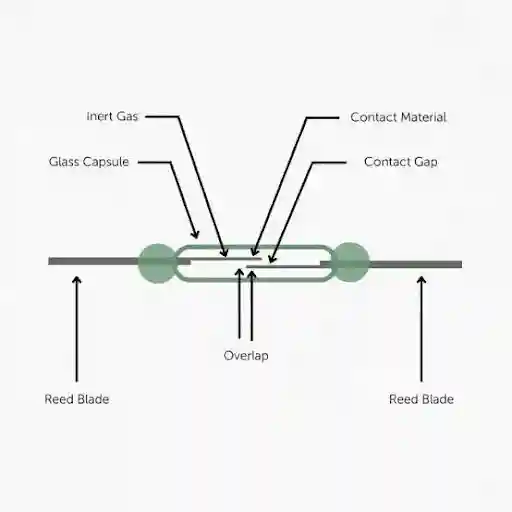
A reed switch is an electrical switch which uses a magnetic field. The switch consists of two thin pieces of ferromagnetic metal contacts inside a small glass tube.

Principle of Operation:

  1. A magnetic float moves up and down the guide tube depending on liquid level
  2. The float contains a permanent magnet
  3. The permanent magnet will get close to the reed switch causing the magnetic field to act upon the metal contacts
  4. The contacts will either close or open depending on the configuration of the switch
  5. This will create an electrical signal which will be sent to the alarm/indicator/control system

As the float moves away the magnetic field becomes weaker and the contacts will go back to their original position.

Applications on board ships:

Used on ships to;

  • Detect liquid levels in fuel oil and freshwater tanks
  • Detect high/low levels
  • Detect liquid levels
  • Control pumps

Advantages:

  • Simple and reliable design
  • No electrical contact between the float and contacts
  • Good for certain closed tank applications
  • Low maintenance when fitted correctly.

Table of Contents

High/Low Overfill Alarms in Cargo Tanks

Fuel treatment is essential to protect the auxiliary engine and to ensure that combustion is efficient. Treatment is required because fuel may contain water, rust, sediments or other contaminants which may damage precision equipment.

The main goals of the fuel treatment process are to:

  • Remove water and solid impurities
  • Reduce abrasive wear of the fuel pumps and injectors
  • Ensure clean fuel for combustion
  • Prevent filter blockage
  • Improve engine reliability and performance

The settling tank and purifier have distinct but complementary roles. The settling tank allows some free water and more dense contamination to be removed while the centrifuge/purifier achieves better separation.

Common Problems in the Fuel Oil System

Fuel system problems can occur which cause the engine to start badly, run at inconsistent speed, lose power or fail altogether.

Common issues with the fuel oil system include:

  • Blocked fuel filters
  • Air in the fuel line
  • Water in fuel
  • Low fuel supply pressure
  • Faulty fuel injector
  • Incorrect viscosity of fuel
  • Poor purification

These factors should be checked and addressed in routine maintenance of the system.

Maintenance of the Fuel Oil System

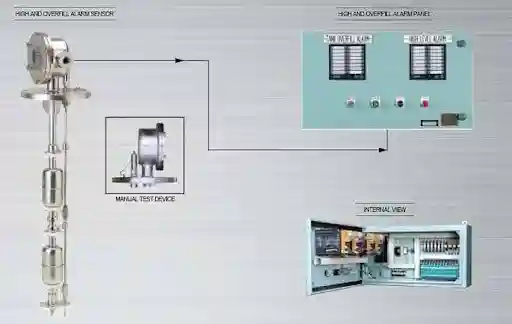
High/Low Overfill Alarms in Cargo Tanks are important safety devices which are used to prevent cargo overfilling beyond the allowed level during loading.

These are very important on oil tankers and other vessels which carry liquid cargo. If the tank is filled too much it can cause overfilling of cargo, pollution, damage to equipment and can be a serious hazard.

High Level Alarm

This can give an early warning when the cargo has reached a set level.

Once the liquid has reached the high level sensor, this will send an electrical signal to the cargo control room/alarm panel. The operator can then take action to reduce the flow of cargo.

Overfill Alarm

This is another safety alarm which is used to detect when the cargo has reached a higher level. This will activate once the liquid has reached a set level which is close to maximum allowed fill.

This will give another warning that the loading can be stopped.

Principle of Operation:

  1. A level sensor will be fitted inside the cargo tank at the required height
  2. As the cargo is loaded, the level will increase
  3. Once the liquid has reached the high level sensor, the high level alarm will activate
  4. Once the level continues to increase and reaches the overfill sensor the overfill alarm will activate
  5. This will send the alarm to the cargo control room and they can take immediate action depending on the loading plan and safety procedures

Importance:

  • Prevent overfilling of cargo tanks
  • Reduce the risk of marine pollution
  • Improves safety
  • Early warning to cargo control room
  • Ensure the correct safety requirements are met for tankers.

If needed the high and overfill alarms should be independent and should be tested at set intervals and before any relevant cargo operations.

Air Bubbler Level Gauging

Air Bubbler Level Gauging

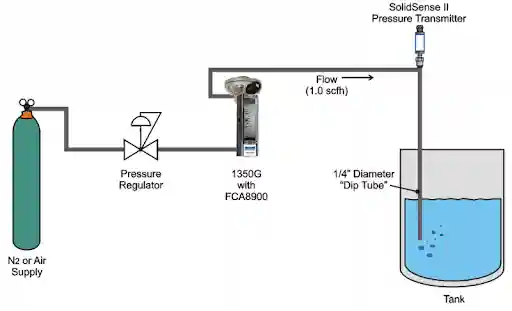
Air bubbler level gauging uses air pressure to measure liquid levels in tanks. This is often used in tanks where it would be inconvenient to fit moving equipment.

Principle of Operation:

A continuous supply of compressed air is passed through a pipe or dip tube going into the tank. The bottom of the tube is placed near the bottom of the tank.

As air is passed through, bubbles will form at the open end of the dip tube. The pressure will increase inside the tube until it equals the pressure from the liquid above.

This pressure is directly proportional to the height and density of the liquid.

The formula for this is;

P = ρgh

Where,

P = Pressure of liquid at dip tube opening

ρ = Density of liquid

g = Acceleration due to gravity

h = Height of liquid above the tube opening

The air pressure required to create continuous bubbling can be used to calculate the liquid level.

Applications on board ships:

Used on ships to;

  • Sounding in certain storage tanks
  • Monitor fuel oil and freshwater tanks
  • Measure liquid levels in tanks where a simple dip tube can be used
  • Certain remote tank gauging

Advantages:

  • No moving parts in the tank
  • Can be used with certain corrosive/dirty liquids if designed correctly
  • Can be fitted outside the tank
  • Simple principle of operation.

Disadvantages:

  • Requires a continuous supply of clean regulated air
  • Can give incorrect readings if the dip tube becomes blocked
  • Changes in liquid density will affect the reading
  • Air can leak causing incorrect readings

Radar Level Gauging

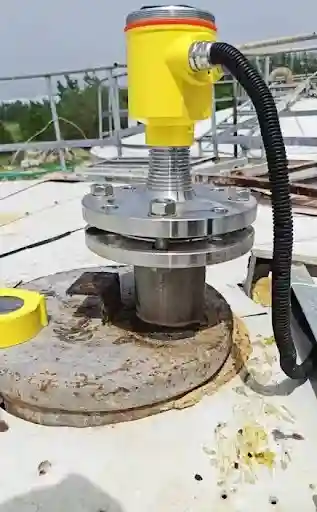
Radar Level Gauging is a modern method of measuring liquid levels in tanks. This method is widely used on cargo tanks on board ships to give accurate readings without direct contact with the cargo.

Principle of Operation:

This works by using electromagnetic wave reflections.

  1. A radar transmitter is fitted to the top of the tank
  2. Microwave signals are transmitted into the tank
  3. The signals pass over the tank and hit the liquid surface
  4. Some of the signals will reflect off the surface of the liquid
  5. The time taken for the signal to reach the surface and reflect back will be measured
  6. The time will be used to calculate the liquid level based on the distance travelled and the known height of the tank

The basic formula for this is;

D = (c x t)/2

Where,

D = Distance between radar antenna and liquid surface

c = Speed of electromagnetic waves

t = Time taken for signal to travel

The 2 is included because the signal needs to travel to the liquid and back.

The liquid level can be calculated by subtracting the distance from the reference height of the tank.

Types of Radar Level Gauging:

  1. Non contact radar – Antenna is fitted above the liquid surface and detects distance using reflected microwave signals
  2. Guided Wave Radar – Microwave signal is passed along a probe/cable inside the tank. The reflected signal is used to detect liquid level

Applications on board ships:

Used on ships to;

  • Measure liquid levels in cargo tanks on oil and chemical tankers
  • Monitoring fuel oil and storage tanks
  • Measure liquid levels in ballast tanks if appropriate
  • Remote monitoring from the cargo control room

Advantages:

  • No direct contact with liquid (non contact)
  • Continuous level measuring
  • Suitable for many liquids
  • Can be used in tanks
  • Less manual tank sounding is required

Disadvantages:

  • Can be more expensive to install & fit compared to simpler systems
  • Foam, vapour, internal obstacles and incorrect positioning can affect performance
  • Correct set up & calibration is needed for accurate readings

Comparison of Different Level Monitoring Systems

Method

Working principle

Main application

Float switch

Movement of a float with liquid level

High and low level alarms

Capacitive switch

Change in electrical capacitance

Liquid presence and level detection

Reed switch

Magnetic field operates electrical contacts

Tank level switching

Air bubbler

Air pressure balances liquid pressure

Tank level measurement

Radar gauging

Reflection of microwave signals

Continuous cargo tank measurement

Conclusion

Level monitoring and measuring is an essential process to ensure safe tank and cargo operations. Float, capacitive and reed switches are all commonly used to detect liquid levels and give alarm signals. Air bubbler and radar systems can be used to measure liquid levels. Each system will have different principles of operation, advantages and disadvantages. Choosing the right system, regularly testing, and ensuring the equipment is properly maintained will help prevent tanks from overflowing, protect machinery and ensure safe operations on board ships.

Frequently Asked Questions (FAQs)

To help the marine engineer and deck officers monitor the contents of tanks, prevent overfilling, protect pumps and ensure safe operations.

Level switches will give an ON/OFF signal when the liquid has reached a set level. Level transmitters will usually give a continuous signal.

They can give a warning during loading of cargo and help to prevent tanks from being filled beyond the allowed levels.

Measuring liquid levels by calculating the air pressure needed to create continuous bubbling from the dip tube.

It is able to continuously measure the level without direct contact (non contact).

Non contact radar uses microwave signals passing through the tank. Guided wave radar uses a probe/cable to pass the signal through the tank.

Disclaimer :- The opinions expressed in this article belong solely to the author and may not necessarily reflect those of Merchant Navy Decoded. We cannot guarantee the accuracy of the information provided and disclaim any responsibility for it. Data and visuals used are sourced from publicly available information and may not be authenticated by any regulatory body. Reviews and comments appearing on our blogs represent the opinions of individuals and do not necessarily reflect the views of Merchant Navy Decoded. We are not responsible for any loss or damage resulting from reliance on these reviews or comments.

Reproduction, copying, sharing, or use of the article or images in any form is strictly prohibited without prior permission from both the author and Merchant Navy Decoded.

DIWALI SALE

Decoded Discount Alert! up to 50% OFF

DIWALI SALE

Decoded Discount Alert! up to 50% OFF

Use Coupon Code Deep50

Days
Hours
Seconds
0
Would love your thoughts, please comment.x
()
x