Hi this is Team Merchant Navy Decoded !!!

Please fill the below form with your query and we will get back to you in next 12 hours.

Rest assured your data is safe with us !!!🙂

Ask Your Query

Flame Sensor onboard Ships

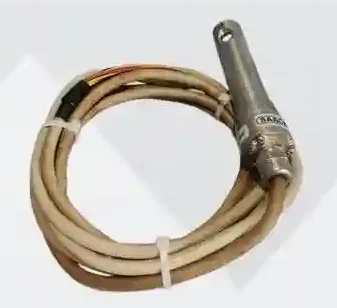
flame sensor

A flame sensor is an important safety device used to detect flames within a combustion appliance. These can commonly be found within marine boilers, oil burners, incinerators and other fuel burning devices. The main purpose of a flame sensor is to ensure that combustion is taking place correctly and reduces the risk of unsafe conditions occurring.

Flame detection is an important part of safe operations onboard ships, as fuel oil is used within boilers and other combustion appliances. This can pose a serious risk if not burnt correctly within the combustion chamber. A flame sensor will be used alongside the burner control system to detect the flame.

Want to understand how flame sensors work in marine boilers? Explore the Boiler System Course by Merchant Navy Decoded to strengthen your knowledge of boiler operation, burner control systems, safety interlocks, and troubleshooting for practical shipboard applications.

What is a Flame Sensor?

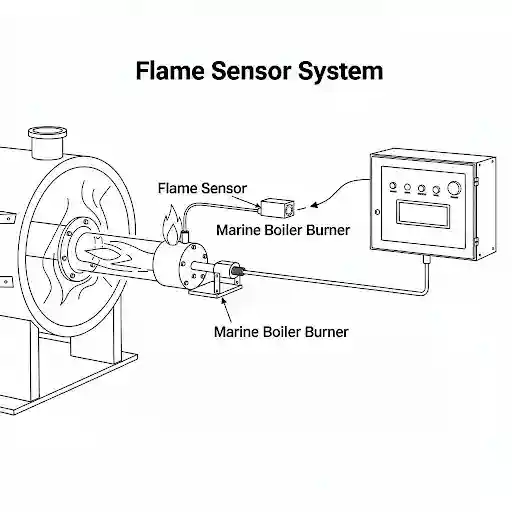
Flame Sensor system

A flame sensor detects a flame by sensing the radiation given off. Depending on the sensor type, it will detect either ultraviolet (UV), infrared (IR) or visible light. The sensor will send a signal to the burner management or flame safeguard system, which will then determine whether there is a flame present and if the burner can continue to operate safely. If the flame goes out whilst fuel is being supplied to the burner, the control system triggered by the flame goes out will trigger the correct safety sequence. This will usually involve shutting off the fuel supply.

Principle

However, the principle will usually be:

  • Flame detection: Once the burner ignites, radiation will be given off from the flame
  • Signal: The sensor will detect the radiation and convert it into an electrical signal. The signal will be sent to the flame safeguard system. This will analyse the signal to determine whether there is a correct flame
  • Monitoring: The system will monitor the flame whilst the burner is operating
  • Flame failure: If the flame goes out or the signal is outside of the acceptable range, a flame failure will be detected
  • Burner control system: Depending on the system, the burner control system will shut off the fuel supply via the correct safety shut off valves and alert you with an alarm

Table of Contents

Types of Flame Sensor

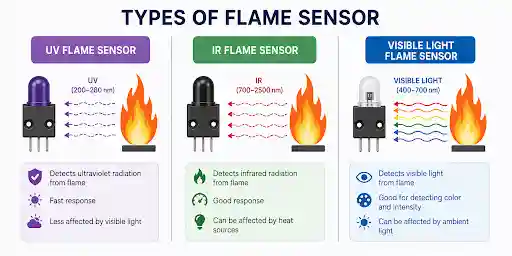
Types of Flame Sensor

Ultraviolet(UV) Flame Sensor

This sensor detects ultraviolet radiation that is being emitted from the flame. These are commonly used in industrial and marine applications where the detector needs to differentiate between the flame and other light sources.  Usually, UV detectors will only detect certain wavelengths of radiation from the flame. This depends on the design of the detector, type of fuel that is being burnt and how it has been installed.

Infrared (IR) Flame Sensor

This detects infrared radiation from the combustion. Some detectors will analyse the variation in intensity or flicker of the flame to help differentiate it. 

These can be used within the correct industrial applications. This depends on the detection range needed and burner design.

Visible Light Flame Sensor

This detects the visible light being emitted from the flame. Whilst these can be used in some flame detection applications, they are often more prone to interference from external light sources than specialised UV or IR flame detectors. The correct type depends on the type of combustion appliance, conditions and manufacturers requirements.

Applications on Ships

Marine Boilers: Flame sensors are used to monitor the flame within the burner. If the flame goes out, the burner safety will shut off the fuel supply to prevent accumulation of unburnt fuel.

  • Auxiliary Boilers: Help to ensure combustion is taking place and give safe automatic control over the burner
  • Incinerators: Flame detection can be used to monitor combustion and aid with safety interlocks
  • Oil fired heating: Flame sensors can be used within the correct fuel burning heater to ensure correct ignition and combustion
  • Burner Management System: Give information about the flame to aid with burner sequencing, alarms and safety shutoff

Common Issues

Sometimes flame sensors can fail to detect a flame or give an unreliable signal. Common issues include:

  • Dirty lens: The flame can be blocked due to soot, oil or dirt build up on the detector
  • Incorrect positioning: The detector may not be correctly positioned to view the flame
  • Wiring issues: Poor connections or damaged cables can cause issues
  • Faulty detector: The detection component may have failed or become degraded
  • Incorrect settings: The flame safeguard system may not have been set up correctly
  • Poor Combustion: Poor or weak flame may result in the signal being outside of the acceptable range

Always refer to the manufacturers manual and vessel safety procedures when troubleshooting issues. Never bypass a flame sensor to allow a burner to continue.

Maintenance

A regular inspection and maintenance of the flame sensor will ensure reliable detection.

  • Check for damage to the flame sensor and fitting
  • Ensure the lens/window is clean using the correct method from the manufacturer
  • Check for any damage or loose connections to the wiring
  • Ensure the detector is correctly positioned.
  • Test flame failure and burner shutoff using the correct method
  • Check alarms and interlocks as per your maintenance schedule
  • Always record inspections, tests and any remedial actions
  • Ensure the equipment is isolated as required. Follow the vessel’s permit to work and lockout procedures. 
  • Ensure any fuel or ignition risks are under control.

Advantages

  • Quick detection of flame failure
  • Prevent accumulation of unburnt fuel
  • Improves the safety and reliability of the burner
  • Allow for automatic control of the burner.
  • Correctly installed and maintained reduce the risk of dangerous conditions

Conclusion

A flame sensor is an important safety device within marine combustion appliances. It detects the radiation from the flame and informs the burner control system. If the flame goes out, the system can shut off the fuel supply and trigger the correct safety action. Regular checks, correct positioning and testing of the sensor will ensure a reliable system and safe combustion onboard.

Frequently Asked Questions (FAQs)

To detect a flame and send a signal to the burner safety.

The flame safeguard will detect a flame failure and will usually shut off the fuel supply via the safety shutoff valves. The correct alarm/shutdown will be triggered.

Common flame sensors include UV, IR and visible light. This depends on the burner and manufacturers requirements.

Yes, the dirt or soot on the lens of the detector can cause a weaker signal and indicate a flame failure.

No, you should never bypass a flame safeguard as this can cause a serious risk of fire/explosion. The issue should be investigated and rectified using the correct procedures.


Disclaimer :- The opinions expressed in this article belong solely to the author and may not necessarily reflect those of Merchant Navy Decoded. We cannot guarantee the accuracy of the information provided and disclaim any responsibility for it. Data and visuals used are sourced from publicly available information and may not be authenticated by any regulatory body. Reviews and comments appearing on our blogs represent the opinions of individuals and do not necessarily reflect the views of Merchant Navy Decoded. We are not responsible for any loss or damage resulting from reliance on these reviews or comments.

Reproduction, copying, sharing, or use of the article or images in any form is strictly prohibited without prior permission from both the author and Merchant Navy Decoded.

DIWALI SALE

Decoded Discount Alert! up to 50% OFF

DIWALI SALE

Decoded Discount Alert! up to 50% OFF

Use Coupon Code Deep50

Days
Hours
Seconds
0
Would love your thoughts, please comment.x
()
x