Hi this is Team Merchant Navy Decoded !!!

Please fill the below form with your query and we will get back to you in next 12 hours.

Rest assured your data is safe with us !!!🙂

Ask Your Query

Fire Detectors On ship

Fire Detectors On ship

If there was a fire on land we would obviously evacuate and the fire brigade would arrive but in the middle of the ocean there is no one arriving. The fire brigade is the crew and the nearest port could be days away. This means that we cannot rely on people smelling or seeing smoke. We need a system to monitor all areas and give an alarm as soon as anything looks wrong.

This is what the fire detection and alarm system does. It uses detectors, call points and a central panel. It is designed to a standard given by SOLAS and the FSS Code. Detectors are just one part of the system.

Fire Detectors

Understanding how a fire can develop

It is useful to understand what a fire produces as each type of detector will be based on one of these factors.

When a fire is first starting it will produce very small particles that you cannot see. Then visible smoke will start to appear. As the fire grows the temperature of the area will start to increase. When it is fully burning there will be an open flame producing light. Some fires will also produce gases that can be detected. For example fuel or gas fires.

Smoke can be detected, heat can be detected, open flame can be detected and gas can be detected. However none of these is the best in all situations.

Smoke Detectors

Smoke Detectors

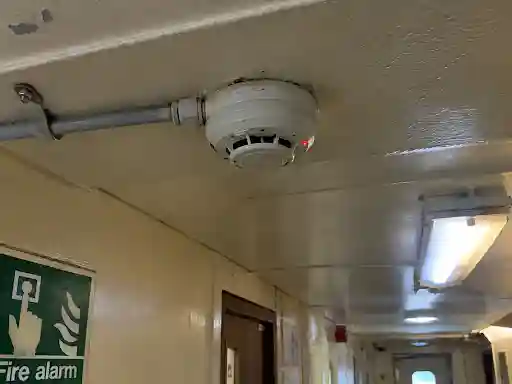
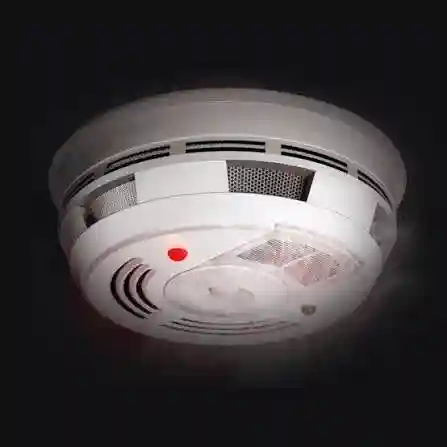
These are the main types of detector used. They are usually found in areas such as accommodation, corridors, cabins and control rooms. They are used to give an early warning of fire.

  • Ionisation detectors work by having a weak electrical current in a chamber of ionised air. This chamber contains a small radioactive source. When smoke particles enter the chamber they disrupt the current and cause it to drop. This activates the alarm. They are good at detecting the small particles produced by fast burning fires
  • Photoelectric detectors work using a light source and receiver. There are two types of these. Scattering detectors work by detecting the light being scattered by the smoke. Obscuration detectors work by detecting the lack of light reaching the receiver. These are good at detecting the larger amount of smoke produced by slow burning fires.
  • Projected beam detectors work by having a beam of light projected across large areas to the receiver or reflector. Any smoke present in the beam will reduce the strength of the light and activate the alarm. They are good in large open areas.

These will give the earliest warning but are more likely to go off due to non-fire issues such as cooking smells, steam, dust and exhaust fumes from the engines. Areas such as the galley or laundry are usually heat detectors.

Table of Contents

Heat Detectors

Heat Detectors

These do not detect smoke and therefore will be slower to react than smoke detectors. They are less likely to cause false alarms so are used in areas where smoke detectors would be causing constant false alarms.

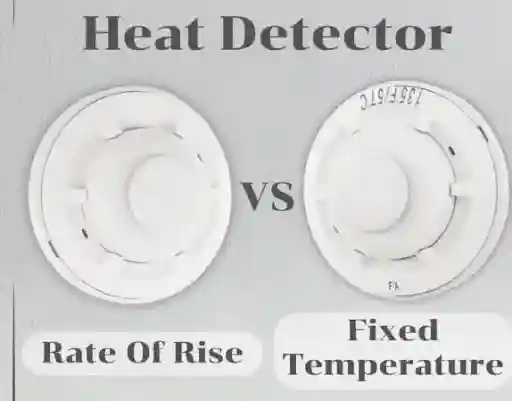
  • Fixed temperature detectors activate when the air around them reaches a set temperature. Some use a melting element, some use a bimetallic element and some use an electronic sensor. They will only activate when the area is really hot. This makes them very reliable but they are slow.
  • Rate of rise detectors detect how quickly the temperature is rising. If the temperature rises faster than a set amount the alarm will activate. This means they can detect rapidly growing fires even if the room is not hot. They will not activate due to slow changes such as the sun heating up the area.
  • Combination detectors do both. They will quickly detect rapidly growing fires but will still activate if the temperature increases slowly to a dangerous level.

The temperature must be set to suit the area. If a heat detector was put in a hot area such as the boiler room or drying room then it would activate due to normal conditions. Therefore the temperature should be set higher.

Flame Detectors

Flame Detector

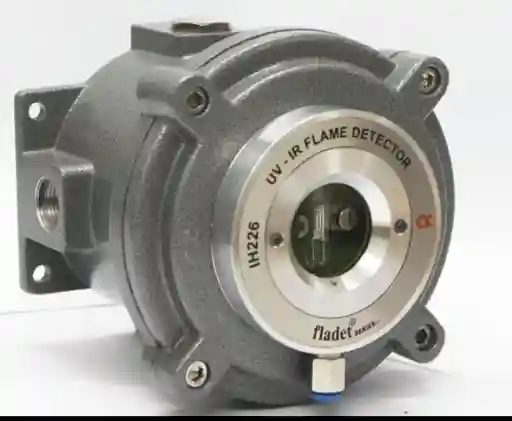
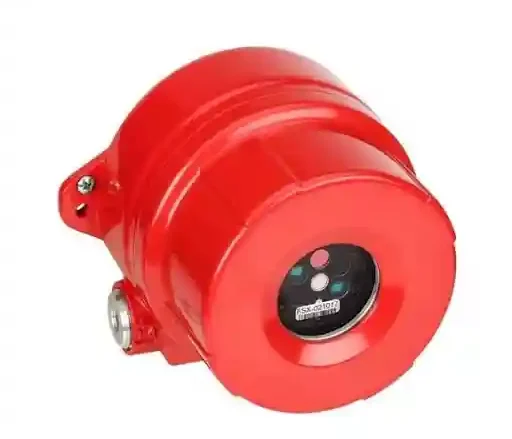
These detect the light produced by a burning fire. They are used in areas where a quick response is needed and fires would be flammable liquid or gas fires. This could be areas such as machinery spaces, around the boilers, fuel handling areas and areas with lots of oil.

  • Infrared (IR) flame detectors detect the infrared light produced by a flame. Many also detect the flickering patterns produced by flames to make sure it is a real fire and not a constant source of heat.
  • Ultraviolet (UV) flame detectors detect the ultraviolet light produced by a flame. They are very quick but can be tricked by other sources of UV light such as welding arcs and sunlight.
  • Combination UV/IR detectors will only activate if both signs are present. This reduces false alarms.

There must be a clear line of sight to the fire. If there is something in the way of the detector such as a bracket, dirty lens or poor angle then there will be a lack of coverage.

Flame Detectors

Multi-sensor and Addressable Detectors

Many modern systems use multi-sensor detectors. These use two or more sensing methods in the same head. For example smoke and heat. The detector will have its own electronics to compare the signals and therefore can make a more intelligent decision on if it is a fire. This reduces false alarms and can detect fires that would not be picked up by just one method.

Many ships use addressable systems. Traditional systems will have detectors wired in zones in loops. The panel will just show you what zone it is but not which detector. An addressable system will have each detector with its own address. This means the panel will tell you exactly which detector has activated. This is very helpful when looking around a large ship quickly. Addressable panels can also tell you the status of each detector. For example if it is getting dirty.

Sample Extraction Smoke Detection

Cargo holds are a special case. They are large, enclosed areas and often full of cargo. There will be no one in them. A sample extraction system will extract air from each cargo area using small pipes to a central cabinet. The smoke can be detected here. The system can also be used to discharge fire fighting gas such as CO 2 into the correct hold.

As it is constantly extracting air from the areas it can detect smoke very early. However the pipes must be kept clear and the system regularly checked to ensure air is flowing from each area.

Manual Call Points

Manual Call Points

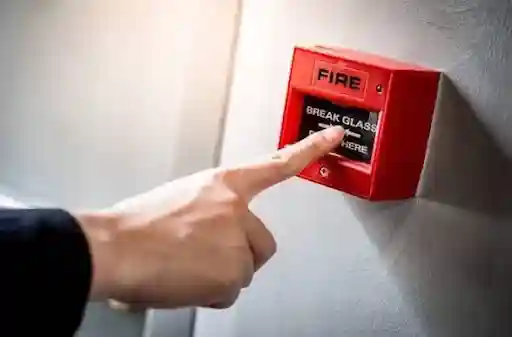
Sometimes a fire will be detected by a person. They may see flames or smell smoke. Manual call points allow anyone to raise the alarm immediately. They are fitted in corridors, near exits, machinery spaces and other areas where there will likely be someone. They work with the same panel as the detectors so an alarm will sound across the ship. The panel will also show you where the alarm has come from.

Fire Alarm Panel

Fire Alarm Panel

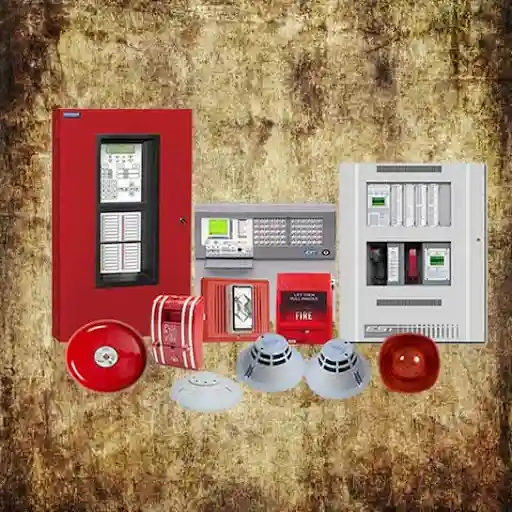
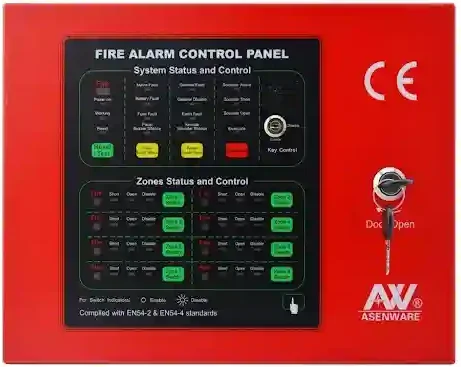
All of the devices will feed into a central panel. This is usually located on the bridge or fire control station. The panel will:-

  • Tell you which zone or detector has activated.
  • Make audible alarms and visual indications.
  • Continuously monitor the detector circuits for faults such as open circuit, short circuit and detector removed. It will show a fault so there is no blind spot.
  • Log the events.

In some cases it can activate other actions. For example stopping the ventilation fans or closing fire doors. This depends on how the ship has been set up.

The system must be reliable so it has a reliable power supply. It uses the main supply but has an emergency supply and will automatically change over. This means if there was a blackout the ship will still have fire detection. The cabling will also be set up so if there was a fire in one area the whole system would not be lost.

Where each type is used

The right type of detector should be used in the area:-

  • Accommodation, cabins and corridors – Smoke detectors and manual call points.
  • Galleys and laundries – Heat detectors as smoke detectors would activate from cooking smells and steam.
  • Machinery spaces – A mixture is often used. Smoke, heat and flame detectors.
  • Boilers and fuel handling areas – Flame detectors as they need a quick detection of oil fires.
  • Cargo holds – Sample extraction smoke detection or another approved system.
  • Control rooms and electrical areas – Smoke detectors (sometimes aspirating for very early detection).

Testing and Maintenance

Detectors should be tested regularly. Depending on the type of detector you will use the correct test. Smoke detectors will be tested with test smoke, heat detectors with a heat source and flame detectors with a test lamp. The test should confirm that the whole system is working from detector to panel to alarm sounders.

Routine maintenance will include keeping the detector heads clear of dust, ensuring nothing is blocking them (paint, covers left on after maintenance or items stored). The flame detectors should also be cleaned. The panel should also be checked to ensure the batteries and emergency power are working. Detectors are often covered during painting or hot work. The most important thing is to ensure they are uncovered.

Common Issues and False Alarms

The most common issue is false alarms. This is usually caused by steam, cooking smells, dust, welding, engine exhaust and condensation. Constant false alarms can be a real nuisance and people begin to ignore the alarm. This can be solved by using the correct detector for the area, keeping the detectors clean and investigating each alarm.

Issues can also occur with the system. If the detector is dirty, damaged or disconnected or there is corrosion or damage to the wiring then there will be a blind spot. The panel has a fault monitoring function so this should always be investigated.

Detectors can become disabled or isolated during maintenance and never turned back on. It is worth confirming the whole system is live.

Conclusion

The detectors work together. Smoke detectors give the earliest warning, heat detectors are slower but more reliable in areas where smoke detectors would cause false alarms. Flame detectors give a quick response to fires in oily or fuel heavy areas. Gas detection will give a warning of danger before ignition. Manual call points cover any blind spots of the detectors. The panel brings everything together, tells you where the issue is and continuously monitors itself. Using the correct detector for the area, testing, keeping them clean and investigating each alarm will ensure the system works as intended. It will give the crew time to deal with the fire before it becomes a disaster.

Frequently Asked Questions (FAQs)

Smoke detectors (Ionisation, Photoelectric, Projected Beam), Heat detectors (Fixed Temperature, Rate of Rise), Flame detectors (IR, UV, Combination) and Gas Detection. Manual call points are also used. Sample extraction in cargo holds.

Smoke detectors would constantly be activated due to cooking smells and steam. Heat detectors will only activate when there is a real temperature rise so there are very few false alarms.

Fixed temperature detectors will activate when the air reaches a set temperature. Rate of rise detectors will activate when the temperature rises faster than a set amount. This means they will activate quicker for rapidly growing fires.

Each detector has its own address. This means the panel will tell you exactly which detector has activated. This saves time when searching and the panel can tell you the status of each detector.

They detect the light from the flame. If there is something in the way or the lens is dirty they may not see the fire.

The system will automatically switch to the emergency power.

Check the panel to see which zone/detector has activated. Investigate onsite. Don’t just reset.

Disclaimer :- The opinions expressed in this article belong solely to the author and may not necessarily reflect those of Merchant Navy Decoded. We cannot guarantee the accuracy of the information provided and disclaim any responsibility for it. Data and visuals used are sourced from publicly available information and may not be authenticated by any regulatory body. Reviews and comments appearing on our blogs represent the opinions of individuals and do not necessarily reflect the views of Merchant Navy Decoded. We are not responsible for any loss or damage resulting from reliance on these reviews or comments.

Reproduction, copying, sharing, or use of the article or images in any form is strictly prohibited without prior permission from both the author and Merchant Navy Decoded.

DIWALI SALE

Decoded Discount Alert! up to 50% OFF

DIWALI SALE

Decoded Discount Alert! up to 50% OFF

Use Coupon Code Deep50

Days
Hours
Seconds
0
Would love your thoughts, please comment.x
()
x