Hi this is Team Merchant Navy Decoded !!!
Please fill the below form with your query and we will get back to you in next 12 hours.
Rest assured your data is safe with us !!!🙂
Ask Your Query| For Beginner | For Professional |
|---|---|
| GME | Engine Side |
| G.P. Rating | Deck Side |
| ETO | G.P. Rating |
| IMUCET & Sponsorship | Combo Offers |
| Free Course | MEO |
| Free Course |
| For Beginner | For Professional |
|---|---|
| GME | Engine Side |
| G.P. Rating | Deck Side |
| ETO | G.P. Rating |
| IMUCET & Sponsorship | Combo Offers |
| Free Course | MEO |
| Free Course |
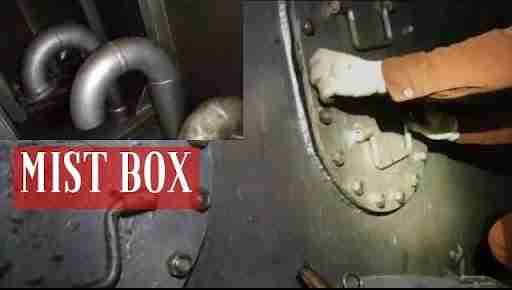
The Mist Box is an important part of the ventilation and air handling systems within the engine room of a ship. It removes droplets of oil or water from the air stream. The Mist Box will generally refer to a Mist Eliminator installed in the air vent, ventilation duct or machinery related piping depending on the design of the ship.
Keeping the oil mist and moisture at low levels whilst at sea will help to keep the environment clean, protect equipment and reduce the chances of contamination. Regular inspection and cleaning of the Mist Box will ensure the droplets are effectively removed and the system will operate efficiently.
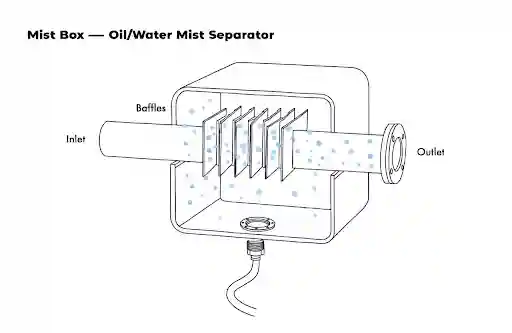
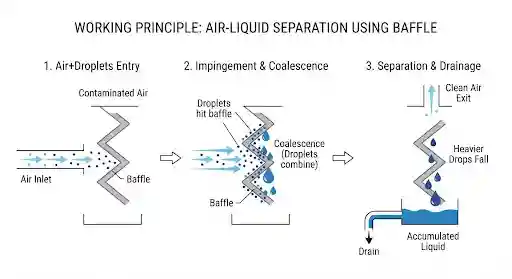
The Mist Box is a container containing baffles, mesh pads or other separation components to remove liquid droplets from the air or gas stream. As the air passes through the Mist Box the droplets will collide with the internal components and combine to form larger droplets. These will then fall due to gravity.
Depending on the application, the Mist Box can be constructed using wire mesh, specially designed plates or filters.
The main components will generally consist of:
Not all of these components will be present on all Mist Boxes, depending on the application.
The Mist Box will remove suspended oil or water droplets from the air stream. Depending on the design, this will stop any liquid carry over into the ventilation ducts, exhaust arrangement or machinery.
Air containing oil and moisture will quickly cause a mess on surrounding surfaces and equipment. An efficient Mist Box will reduce the amount of dirt and oily deposits.
By removing liquid droplets from the system, there will be less mist carry over. However, it may not be designed to remove gases, vapours or very fine particles.
The liquid will pool on the internal components and will drain down to the specific drain point. It is important to have an efficient drain system to prevent pooling.
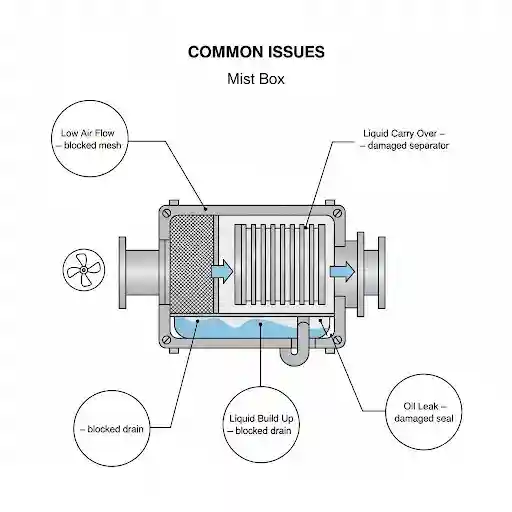
A clean Mist Box will allow the air/gas to pass through with the correct resistance. If the Mist Separator becomes blocked this will cause a restriction in the air flow and cause the connected system to perform poorly.
The operation of a mist box is based on the separation of liquid droplets from a moving air or
gas stream.
The general working process is as follows:
The efficiency of separation depends on the design, airflow rate, droplet size, condition of the separator elements and proper drainage.
To keep the Mist Box running as efficiently as possible regular maintenance should be carried out. Always follow the manufacturers manual and the ships Planned Maintenance System.
Open the Mist Box and inspect the casing, covers, baffles and separation components. Ensure there is no damage, corrosion, heavy deposits or distortion. Check the outside of the Mist Box for signs of oil leakage or unusual accumulation.
Over time the baffles or mesh will become covered in oil sludge, dirt and other debris. Remove the removable components and clean using an approved cleaning method and correct chemical. Be careful when cleaning to avoid damaging the mesh or distorting the baffles.
Check the drain pipe, drain valve and collection system. Ensure nothing is blocked or leaking. If the drain is blocked this will cause the liquid to back up in the Mist Box. This will cause the Mist Box to be inefficient and can cause liquid to be sucked out of the outlet.
Check the gaskets, seals, bolts and inspection covers for signs of wear. Once the maintenance has been completed ensure the casing is securely fixed to prevent oil leakage and unwanted air ingress.
If pressure gauges are fitted on the system, check the pressure drop across the Mist Box. Compare this to the normal operating range from the manufacturers manual. If there is a high pressure drop this is an indication the Mist Box is blocked, has heavy deposits or is causing a restriction.
Inspect the casing and components for signs of corrosion, cracking or loose fittings. Repair or replace any damaged components following the manufacturer guidelines.
Ensure all inspections, cleaning, repairs and replacements have been recorded in the ships Planned Maintenance System. Keeping good records will help the crew identify recurring issues and determine the best maintenance schedule.
Before removing any bolts or cleaning the Mist Box ensure you know what system it is connected to and follow the ships safety procedures.
The Mist Box is a useful component within a ship. It removes oil or water droplets from the air/gas stream. To ensure the Mist Box performs efficiently the separation components are kept clean, drainage is clear, sealing is good and air flows freely. Regular inspections and basic maintenance will prevent any blockages, leaks or liquid carry over. This will ensure the machinery operates efficiently and the engine room will be much cleaner.
The main purpose of a Mist Box is to remove suspended liquid droplets such as oil or water mist.
The Mist Box contains internal baffles, wire mesh or separation components to trap the droplets. The droplets will combine to form larger droplets and will fall due to gravity.
If the Mist Box becomes blocked this will cause an increase in air flow resistance and reduce the performance of the system. Depending on what it is connected to it will cause inefficient separation or liquid carry over.
This will depend on the system, how dirty it gets and what the manufacturer recommends. The Mist Box should be inspected and cleaned as part of the ship’s planned maintenance schedule.
The drain allows the liquid to be removed from the Mist Box. If it becomes blocked this will cause the liquid to pool in the casing and cause the Mist Box to not work as intended.
Excess fuel is returned to maintain stable supply conditions and to allow the system to circulate more fuel than the engine consumes.
Disclaimer :- The opinions expressed in this article belong solely to the author and may not necessarily reflect those of Merchant Navy Decoded. We cannot guarantee the accuracy of the information provided and disclaim any responsibility for it. Data and visuals used are sourced from publicly available information and may not be authenticated by any regulatory body. Reviews and comments appearing on our blogs represent the opinions of individuals and do not necessarily reflect the views of Merchant Navy Decoded. We are not responsible for any loss or damage resulting from reliance on these reviews or comments.
Reproduction, copying, sharing, or use of the article or images in any form is strictly prohibited without prior permission from both the author and Merchant Navy Decoded.
Decoded Discount Alert! up to 50% OFF
Use Coupon Code Deep50