Hi this is Team Merchant Navy Decoded !!!

Please fill the below form with your query and we will get back to you in next 12 hours.

Rest assured your data is safe with us !!!🙂

Ask Your Query

Cylinder Liner in Auxiliary Engine

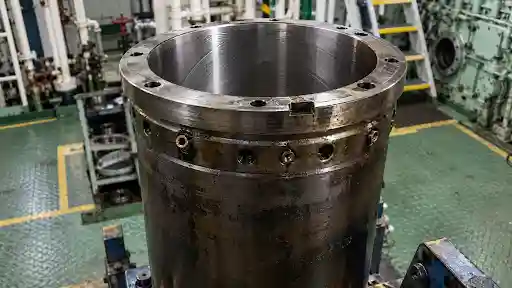
None of the piston work happens in isolation,  Every piston runs inside a cylinder liner, and the liner is doing just as much of the real work: containing combustion pressure, giving the piston rings a surface to actually seal against, and carrying away a genuinely large share of the heat combustion produces.

It’s also one of the most closely measured components in the whole engine  and one with its own specific fault patterns, its own removal and fitting procedure, and its own dedicated hardware just to keep it running clean. Worth covering properly, start to finish.

What the Cylinder Liner Actually Does

Cylinder Liner in Auxiliary Engine

A cylinder liner is a replaceable sleeve fitted inside the engine block, forming the actual wall the piston and rings run against. It’s built replaceable on purpose  the liner takes the wear so the engine block itself doesn’t have to be scrapped or re-bored every time that wear adds up.

Its jobs, includes:-

  • To Contain the  combustion pressure and guide the piston through its stroke
  • Gives the piston rings a true, precisely sized surface to seal against
  • Conducts heat away from the combustion space into the cooling water
  • Provides the running surface the cylinder oil actually has to protect

Construction and Materials

Cylinder liners are almost universally made from cast iron, chosen for its natural wear resistance and its ability to hold a fine surface finish that retains a lubricating oil film. Modern liners typically use alloyed cast iron, with chromium, molybdenum, and vanadium added specifically to improve hardness and wear resistance beyond what plain grey cast iron offers.

The liner sits in the engine block on a machined seating lip, usually near the top, with the cylinder cover holding it down once fitted. This seating arrangement matters mechanically, it lets the liner expand downward slightly as it heats up during running, rather than expanding against a rigid constraint in both directions, which reduces the thermal stress the liner has to absorb every time the engine warms up.

Table of Contents

Wet Liners vs. Dry Liners

Wet Liners vs. Dry Liners

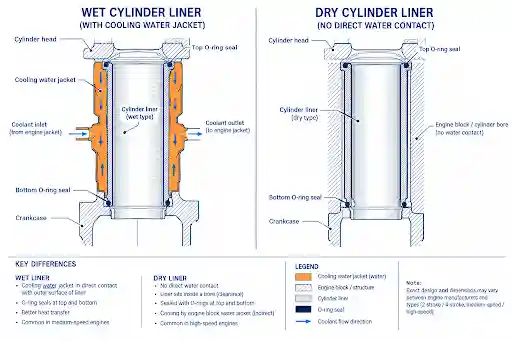
Auxiliary engines almost always use wet liners – the cooling water jacket is in direct contact with the outside of the liner, sealed at top and bottom by O-rings between the liner and the engine block.

A dry liner, by contrast, sits inside a bore that’s already cooled indirectly through the surrounding block, with no direct water contact on the liner’s outer surface.

Wet liners dominate in marine auxiliary engines because direct water contact cools the liner more effectively  genuinely important given how much heat a liner absorbs continuously. The tradeoff is that sealing now matters a great deal: a failed O-ring lets cooling water leak either into the crankcase or into the combustion space, neither of which is a small problem.

That’s exactly why most wet liner installations include a tell-tale hole between the upper and lower seals – a small drilled passage that lets any leak past the first seal drain outward and get noticed, rather than silently working its way further into the engine.

The Anti-Polishing Ring

Anti-Polishing Ring

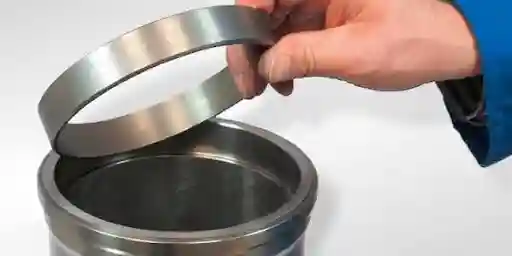
Fitted into the upper end of the liner, just above where the top piston ring travels, the anti-polishing ring has one specific job: scraping carbon deposits off the piston’s top land before they can reach the liner wall.

Why it’s needed: carbon builds up naturally on the piston crown and top land during normal combustion. Left alone, that carbon eventually contacts the liner surface and because carbon is abrasive it starts wearing down the microscopic peaks in the liner’s surface finish. This is called bore polishing, and it’s a genuine problem rather than a cosmetic one: those peaks and the valleys between them are exactly what holds a thin film of lubricating oil against the liner wall. Polish them away, and the liner surface can no longer retain oil properly.

The ring itself has a slightly smaller inside diameter than the liner it’s fitted into, so as the piston travels past it on every stroke, it physically scrapes carbon off the top land before that carbon ever gets the chance to reach the main liner surface. It’s a small, continuously working piece of hardware doing a job that would otherwise fall entirely on regular manual decarbonising.

Bore Polishing: What Happens When Carbon Wins

Bore Polishing

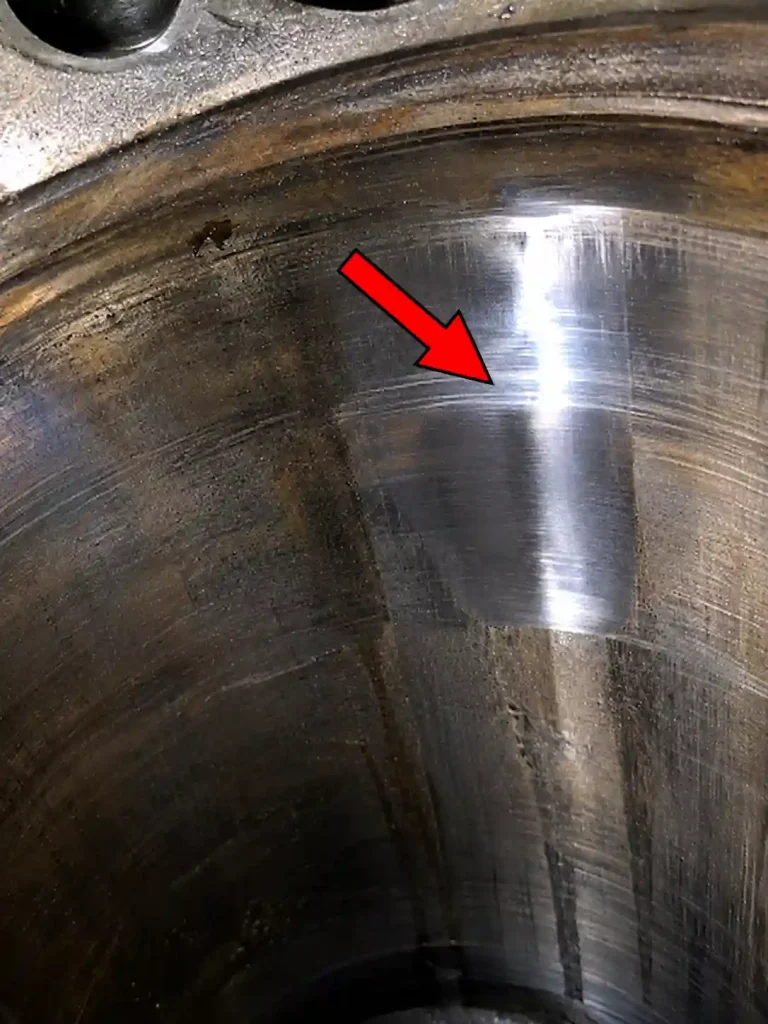
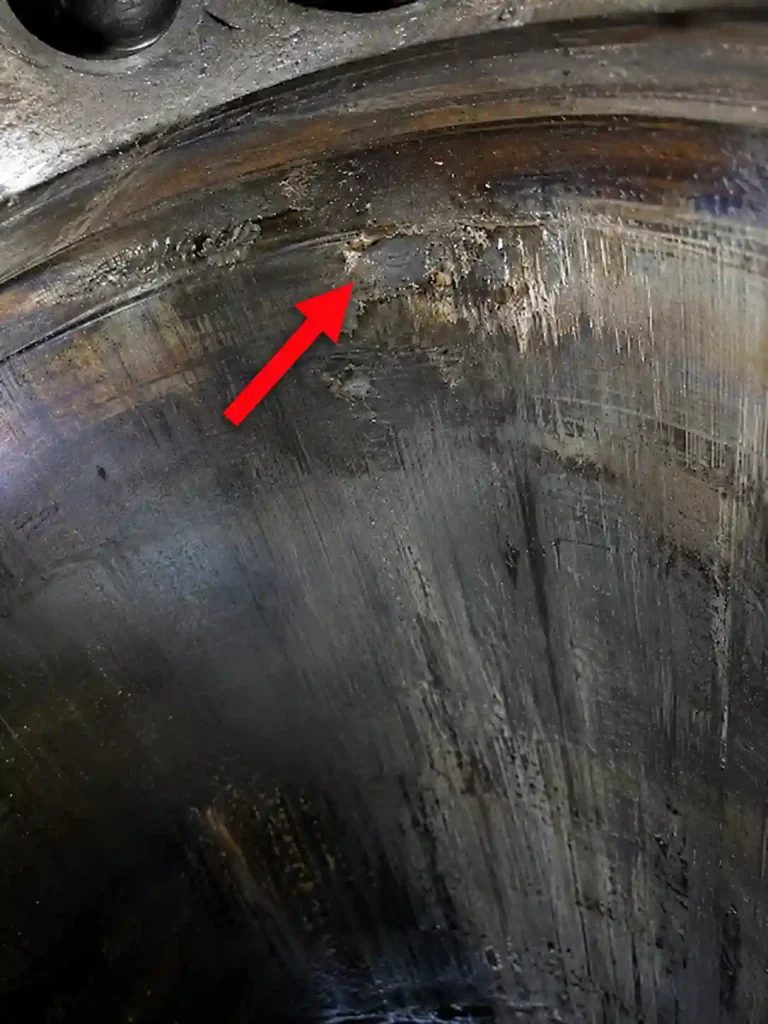
Bore polishing is what develops when carbon deposits are allowed to work against the liner surface over time, whether from a missing/ineffective anti-polishing ring, a fouled one, or simply excessive carbon formation from poor combustion.

What it looks like: a liner surface that’s gone mirror-smooth in patches  which, is a bad sign, not a good one. The hydrodynamic oil film that should sit in the liner’s surface texture can no longer form properly on a polished patch.

What it leads to:

  • Rising lube oil consumption, since the liner can no longer hold onto the oil film that would normally control it
  • Increased risk of scuffing, since a thinning oil film means more direct metal-to-metal contact between ring and liner
  • Gas blow-by past the rings, as the sealing surface itself degrades

Once bore polishing has set in on a patch of liner, it doesn’t reverse itself  the liner needs re-honing to restore a working surface texture, or renewal if the wear has gone too far for honing to fix.

Scuffing: The Failure Mode Bore Polishing Leads Toward

Scuffing

Scuffing is a localised welding between particles of the piston ring and the liner surface, caused when the oil film between them breaks down completely and friction heat is enough to actually fuse the two metal surfaces together momentarily before they tear apart again.

It happens most often near top dead centre, and for a specific reason: that’s where combustion pressure pushes the ring hardest against the liner wall, while piston speed is close to zero  the exact combination of high load and minimal sliding speed that makes it hardest to maintain a proper oil film. It’s also disproportionately common early in an engine’s life or shortly after a liner or ring change, which is exactly why correct running-in procedure matters as much as it does.

Liner Cracking

Liner Cracking

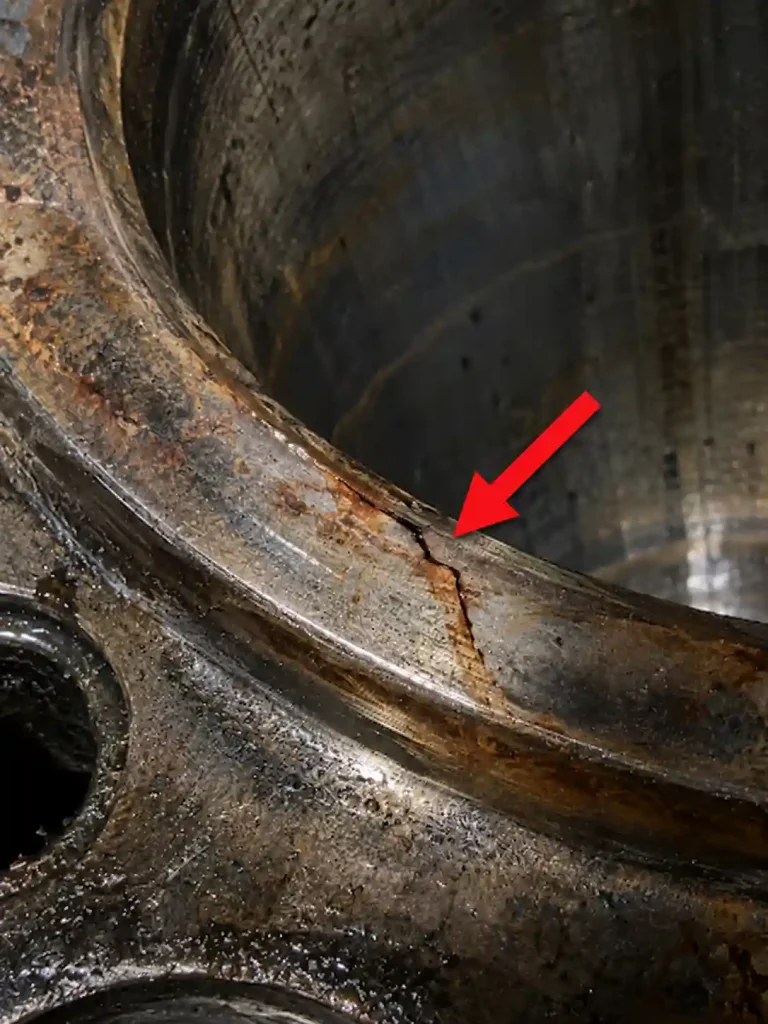
Cracking is a less common but more serious failure than wear or polishing, and it tends to show up in one of two ways:-

  • Flange cracking, at the seating lip that supports the liner’s weight – This is where wear and thermal stress both concentrate, particularly near TDC where stresses are highest, and a cracked flange can lose its ability to properly support the liner
  • Thermal stress cracking, caused by uneven heating or cooling – A liner that’s fired before it’s properly warmed through, or cooled unevenly due to a partially blocked cooling passage, is under exactly the kind of thermal stress that eventually cracks cast iron

A cracked liner is never a “monitor and see” situation. Any confirmed crack means renewal, since a liner that loses structural support at the flange, or that’s already cracked under thermal stress, is only getting worse from that point on.

Why Liners Wear the Way They Do

Liner wear is friction wear between the piston rings and the liner surface, but the rate and pattern depends on more than just running hours.

Mechanical factors:

  • Sliding speed between rings and liner
  • Load on the engine, including sustained low-load or overload operation
  • Lubrication quality and cylinder oil feed rate

Corrosive factors:

  • Burning fuel with sulphur content produces acidic combustion by-products. Cylinder oil is alkaline specifically to neutralise that acid, but if moisture condenses inside the combustion space  more likely at low combustion chamber temperatures, which is exactly what sustained low-load running produces  that moisture combines with the acid to form corrosive sulphuric acid on the liner wall. This is sometimes called cold corrosion.

Interestingly, a small, controlled amount of this corrosion is actually considered healthy for the liner  it’s part of what keeps the surface from polishing over in the first place. The balance matters: too little alkalinity in the cylinder oil and cold corrosion runs unchecked; too much, and it leaves excess deposit on the piston that itself drives bore polishing. Getting cylinder oil feed rate and base number right is genuinely a balancing act, not a “more is always safer” situation.

Reading Liner Condition by Eye, Before You Even Measure

A liner’s surface tells you a lot before a micrometer ever comes out.

What you see

What it actually means 

Worn-bright, slightly oily surface 

Healthy this is what a properly lubricated liner should look like

Mirror-like dry finish (bore polishing)

Trouble local lubrication has failed and the oil retaining surface texture is gone

Black patches 

Piston rings are leaking combustion gas past them

Ridges at stroke extremes or near ports 

Normal wear pattern from repeated piston travel needs grinding out during overhaul 

Visible cracking, especially near the flange 

Serious, liner requires renewal,not repair 

Any scoring, ridges, or surface damage found this way gets addressed with grind stones or oil stones as appropriate, before the liner goes back into service.

How Liner Wear Is Actually Measured

Liner wear measurement, often called calibration, happens during a unit overhaul, once the cylinder head, piston, and running gear are already out of the way.

The procedure, in sequence:-

  1. Isolate the engine – Cool it down, drain jacket water, open indicator cocks, engage turning gear
  2. Cover the stuffing box to keep debris out of the crankcase
  3. Remove the top anti-polishing ring if one is fitted
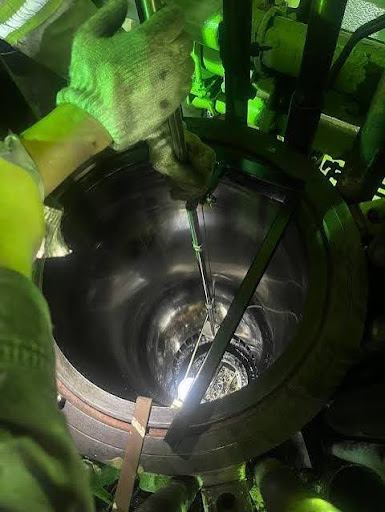
  4. Lower an inspection ladder into the unit and thoroughly clean the liner wall
  5. Hang a gauging template – A flat bar with holes drilled at standardised measuring points  from the top of the liner
  6. Take readings at each hole in two directions: fore-and-aft, and athwartships (port-starboard)
  7. Apply a temperature correction if the gauge and liner aren’t at the same temperature, since metal expands measurably with heat
  8. Compare against the manufacturer’s wear limit and the previous recorded readings

Readings are normally taken at 8 to 10 vertical positions covering the full area the piston rings actually sweep, and every gauging session gets logged so a genuine wear rate    can be tracked over the liner’s life.

What the readings are checked for:

  • Total wear against limit – Most manufacturers set an acceptable wear limit around 0.6–0.8% of the liner’s original bore diameter
  • Ovality – The difference between the fore-aft and athwartship readings at the same height, since a liner rarely wears perfectly round
  • Top-of-stroke wear – The upper third of the liner, nearest TDC, typically shows the most wear, for the same reason scuffing concentrates there: highest ring pressure combined with the thinnest oil film

Projected wear rate matters as much as the current reading of a liner, a liner that’s within limits today but on track to exceed them before the next scheduled overhaul needs planning for now, not at the next inspection.

Removing a Liner

Liner removal only happens once the piston, connecting rod, and cylinder head are already out  it’s not a job done on its own.

Sequence:

  1. Confirm the unit is fully isolated and the piston has already been withdrawn
  2. Remove the anti-polishing ring, if fitted
  3. Disconnect and drain the cooling water jacket connections at that unit
  4. Fit the correct lifting tool to the liner – liners are heavy, precisely fitted, and not something to lever out by hand
  5. Draw the liner upward and out through the top of the block, keeping it as square as possible to avoid scoring the bore on the way out
  6. Inspect the O-ring seating grooves in the block immediately, since this is the easiest point to catch a seal groove that’s corroded or damaged before a new liner ever goes in

Fitting a Liner

Fitting a new or reconditioned liner is where a rushed job creates problems that won’t show up until the engine’s already running.

  • Lightly lubricate the liner’s outer surface with clean engine oil or an approved assembly lubricant before fitting, easing entry and reducing the risk of scoring
  • Fit new O-rings every time  reusing old seals on a refitted liner is a false economy given what a failed seal actually costs to fix later
  • Lower the liner in squarely, using a proper liner installation tool rather than forcing it by hand
  • Check the liner’s protrusion above the block face against the manufacturer’s specification once seated  too much or too little affects how well the cylinder head gasket seals when the head goes back on
  • Hone the liner surface before final fitting if it’s new or has been reconditioned, cutting the cross-hatch pattern that lets the surface actually hold an oil film from the very first start
  • Follow the manufacturer’s specified running-in procedure once the engine is back together  this is exactly the window where scuffing risk is highest, and it’s not a step worth rushing to get the unit back in service faster


Maintenance and When a Liner Gets Renewed

  • Cylinder liners are typically gauged at every major overhaul, commonly cited around 12,000–24,000 running hours depending on engine type, or sooner if performance has clearly dropped
  • Honing helps the surface retain a thin oil film in its cross-hatch grooves, which is what prevents scuffing and supports proper ring seating, particularly important after fitting new rings or a new liner
  • Correct running-in of a new or reconditioned liner, exactly as the manufacturer specifies,  rushing this step is a common cause of early scuffing that a slower break-in would have avoided
  • A liner is renewed once wear or ovality exceeds the manufacturer’s limit, once bore polishing has gone beyond what honing can correct, or once any cracking is confirmed

Conclusion

The cylinder liner and the piston are really one working pair,  everything about ring clearance only makes sense because there’s a liner surface on the other side of it, taking the same wear from the opposite direction. Understanding the liner’s construction, why it wears and cracks the way it does, what the anti-polishing ring is actually fighting against, and how it’s measured, removed, and refitted properly, is what turns a liner overhaul from a routine teardown into a genuine condition assessment. Keep the wear rate trending, respect the running-in period every single time, and a liner will tell you well in advance when it’s actually time to renew it.

Frequently Asked Questions (FAQs)

A wet liner has cooling water in direct contact with its outer surface, sealed by O-rings at top and bottom, the standard choice in marine auxiliary engines for effective cooling. A dry liner sits in a bore cooled indirectly through the surrounding engine block, with no direct water contact on the liner itself.

It scrapes carbon deposits off the piston’s top land before they can reach the main liner surface, preventing bore polishing where carbon wears away the liner’s oil-retaining surface texture and leads to rising oil consumption and scuffing risk.

A controlled degree of cold corrosion helps prevent the liner surface from becoming polished, since a polished, over-smooth surface can’t hold an oil film properly. Getting cylinder oil alkalinity and feed rate right is a genuine balance; too little allows excess corrosion, too much promotes the deposit buildup that drives bore polishing.

That’s where combustion pressure pushes the ring hardest against the liner while piston speed is close to zero, creating the worst possible combination for maintaining a lubricating oil film high load with minimal sliding motion to help distribute oil across the surface.

A crack, particularly at the flange that supports the liner’s weight, only worsens under continued thermal and mechanical stress. There’s no reliable repair that restores the liner’s structural integrity, so renewal is the only safe option once a crack is confirmed.

Disclaimer :- The opinions expressed in this article belong solely to the author and may not necessarily reflect those of Merchant Navy Decoded. We cannot guarantee the accuracy of the information provided and disclaim any responsibility for it. Data and visuals used are sourced from publicly available information and may not be authenticated by any regulatory body. Reviews and comments appearing on our blogs represent the opinions of individuals and do not necessarily reflect the views of Merchant Navy Decoded. We are not responsible for any loss or damage resulting from reliance on these reviews or comments.

Reproduction, copying, sharing, or use of the article or images in any form is strictly prohibited without prior permission from both the author and Merchant Navy Decoded.

DIWALI SALE

Decoded Discount Alert! up to 50% OFF

DIWALI SALE

Decoded Discount Alert! up to 50% OFF

Use Coupon Code Deep50

Days
Hours
Seconds
0
Would love your thoughts, please comment.x
()
x