Hi this is Team Merchant Navy Decoded !!!

Please fill the below form with your query and we will get back to you in next 12 hours.

Rest assured your data is safe with us !!!🙂

Ask Your Query

Merchant Navy vs Shore Job

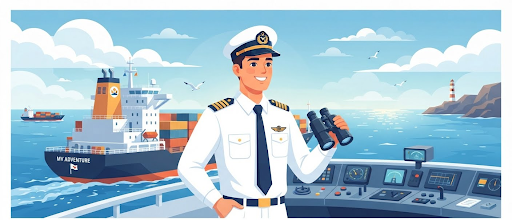
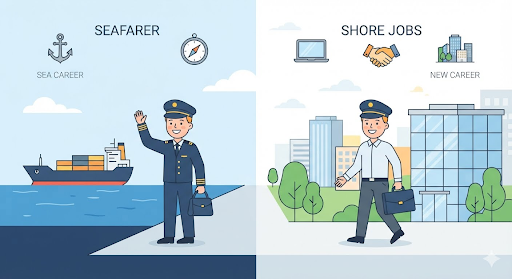
Merchant Navy vs shore job is a decision many seafarers start thinking about after spending a few years at sea or reaching senior ranks such as Captain or Chief Engineer. Sailing offers strong income, a structured career path, international exposure, and long periods of leave, while a shore job can offer greater physical presence with family, wider professional exposure, continuous learning, and a different kind of career growth. Neither option is automatically better; the right choice depends on why you want to leave sailing and what kind of life you want in the long term.

Why Is a Merchant Navy Career So Attractive?

Merchant Navy vs Shore Job

A Merchant Navy career follows a relatively structured path. A deck cadet can progress through officer ranks toward Master, while an engine cadet or junior engineer can eventually work toward becoming Chief Engineer. Responsibilities, hierarchy, examinations, sea service, and promotions give seafarers a fairly clear idea of what the next stage of their career looks like.

Merchant Navy Offers Strong Salary and Long Leave

Merchant Navy Offers Strong Salary

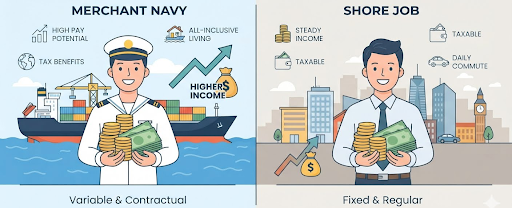
One of the biggest advantages of sailing is the earning potential. Experienced officers, Masters, and Chief Engineers can earn strong salaries, while their leave pattern may also give them several weeks or months completely away from work.

When a seafarer signs off, there may be little day-to-day involvement with ship operations until the next contract. This can provide something many normal office employees rarely receive: a long block of uninterrupted time with family, hobbies, travel, or personal interests.

International Exposure Is a Major Advantage

Working onboard exposes seafarers to people from different countries, cultures, backgrounds, and working styles. They also face challenging operational situations that require discipline, teamwork, responsibility, and quick decision-making.

The onboard environment is generally structured, with a clear chain of command and defined responsibilities. This can make seafarers highly disciplined and hardworking, but it can also mean that moving into a less structured shore environment takes some adjustment.

Table of Contents

Why Do Seafarers Want to Move to Shore Jobs?

Why Do Seafarers Want to Move to Shore Jobs

After reaching a certain point in their sailing career, many seafarers begin asking themselves whether they should become a superintendent, join a shipping office, explore another industry, or even start a business.

Family is often one of the biggest reasons. Months away from children, a spouse, and parents can become increasingly difficult, especially as family responsibilities grow. A shore job appears attractive because it allows the seafarer to return home every evening and be available during important moments.

Does a Shore Job Really Give More Family Time?

Does a Shore Job Really Give More Family Time

This is where expectations need a reality check. Coming ashore may mean being physically present at home every day, but it does not automatically mean having more quality time with family.

A normal shore job may involve travelling to the office, working eight or nine hours, commuting back, and continuing to respond to calls or messages after reaching home. Shipping also operates 24/7, so people in operational shore roles may still have vessels contacting them outside normal working hours.

Physical Presence Still Has Its Own Value

Physical Presence

Although quality time may be limited, being physically present can still matter enormously. You may be available when your children need you, attend important events, support your spouse, handle emergencies, and watch your family grow every day.

This is one of the biggest differences between sailing and working ashore. A seafarer may get months of uninterrupted family time during leave, while a shore professional may get smaller amounts of family time every day.

Merchant Navy vs Shore Job Salary

Merchant Navy vs Shore Job Salary

Salary is one of the biggest concerns during a ship-to-shore transition. A senior seafarer earning as a Master or Chief Engineer should not expect to receive the same level of income immediately after taking the first shore job.

Moving ashore can almost feel like becoming a cadet again because the professional environment changes. Your sea experience remains valuable, but you may need to learn office systems, commercial thinking, presentations, communication, management, technology, and new operational responsibilities.

Can Shore Salary Eventually Match Sailing Salary?

Shore careers may provide faster and less rigid growth for people who perform well. Unlike shipboard promotions, where career progression generally follows ranks, examinations, and sea service, shore careers can move in many different directions.

Over a long period, a capable and ambitious person may potentially build a shore income comparable to or even higher than sailing income. However, this is not guaranteed. Shore growth depends heavily on performance, learning ability, opportunities, networking, and career decisions.

Learning Is One of the Biggest Benefits of a Shore Career

One of the strongest arguments for moving ashore is the opportunity to learn continuously. A seafarer may be highly skilled onboard, but shipboard responsibilities remain connected to a defined department and rank.

Ashore, you may encounter commercial operations, finance, technology, business development, people management, negotiations, presentations, clients, and completely different types of problems. This can significantly broaden your understanding of both shipping and business

Merchant Navy vs Shore Job Career Growth

Merchant Navy career growth is relatively predictable. If a seafarer gains the required sea service, clears examinations, performs well, and continues progressing, there is usually a recognisable path toward senior ranks.

Ashore, the career path can be far less predictable. Someone who stops learning may remain in the same role for years, while another person who continuously develops skills and takes responsibility may progress much faster. Shore jobs therefore offer more uncertainty, but they can also offer more freedom.

Why Networking Becomes More Important Ashore

At sea, your professional circle may remain largely connected to the vessel, company, and maritime community. Moving ashore can dramatically increase the number and variety of people you interact with.

A stronger network can introduce you to new jobs, mentors, clients, partnerships, and business opportunities. Your network does not replace knowledge or hard work, but it can become an important part of long-term professional growth ashore.

Can Sailing Become a Comfort Zone?

Can Sailing Become a Comfort Zone

Once a seafarer reaches senior rank, sailing may become professionally comfortable. The system is familiar, responsibilities are understood, income can be strong, and the career path is known.

There is nothing wrong with staying in that comfort zone if you genuinely enjoy the profession. The mistake is believing that you must move ashore simply because others are doing it or because shore life appears easier from a distance.

Shore Job Is Not Automatically an Easier Life

A shore job can bring its own pressures. There may be daily commuting, office politics, deadlines, constant communication, competition, and less uninterrupted leave.

Entrepreneurship can be even more demanding. Instead of Saturday and Sunday being guaranteed breaks, every day may feel like a working day. The advantage is not necessarily that life becomes easier; it is that your challenges and opportunities become different.

Who Should Consider Moving Ashore?

Moving Ashore

A shore career may suit seafarers who genuinely want broader professional exposure, enjoy learning new skills, are comfortable starting again in certain areas, and can accept an initial reduction in salary or status.

It can be particularly rewarding for people who are ambitious, curious, willing to network, and prepared for a less predictable career. Someone moving ashore only because one sailing contract was difficult may be making the decision for the wrong reason.

Final Advice on Merchant Navy vs Shore Job

There is no universal winner in Merchant Navy vs shore job. Sailing offers strong earnings, structured progression, international exposure, and long periods of leave, while shore careers can provide daily family presence, wider learning, networking, and less restricted long-term growth.

Before making the transition, understand the sacrifices on both sides, start developing shore skills while you are still sailing, and leave the Merchant Navy only for the right reasons. Seafarers exploring their next career step can also use Sailor Pro app to access practical information and organise important career decisions more effectively

Frequently Asked Questions (FAQs)

Neither is automatically better. Merchant Navy offers strong income, structured career progression, international exposure, and long leave periods, while shore jobs can offer daily family presence, wider professional learning, and different long-term career opportunities.

A seafarer, especially a senior officer, may initially earn less after moving ashore. Future salary growth depends on performance, skills, experience, opportunities, and the chosen shore career.

Shore jobs generally provide greater physical presence with family, but not necessarily more quality time. Commuting, office hours, and after-work responsibilities can still take up a large part of the day.

Useful skills include Excel, PowerPoint, communication, presentation, networking, management, commercial understanding, and other skills connected with the intended shore role.

Merchant Navy provides a more structured and predictable career ladder. Shore careers are less predictable but may offer faster or broader growth for people who continuously learn and perform well.

It depends on personal goals. Senior seafarers should consider expected salary changes, family priorities, learning opportunities, career goals, and whether they are comfortable starting again in a different professional environment.

Preparation should ideally begin while still sailing. Use onboard and leave periods to develop shore-based skills, research career options, and build a professional network before resigning.

Family can be a valid reason, but seafarers should understand that a shore job does not automatically provide large amounts of free time. It offers greater physical presence, while quality family time can still depend on the demands of the job.

Disclaimer :- The opinions expressed in this article belong solely to the author and may not necessarily reflect those of Merchant Navy Decoded. We cannot guarantee the accuracy of the information provided and disclaim any responsibility for it. Data and visuals used are sourced from publicly available information and may not be authenticated by any regulatory body. Reviews and comments appearing on our blogs represent the opinions of individuals and do not necessarily reflect the views of Merchant Navy Decoded. We are not responsible for any loss or damage resulting from reliance on these reviews or comments.

Reproduction, copying, sharing, or use of the article or images in any form is strictly prohibited without prior permission from both the author and Merchant Navy Decoded.

DIWALI SALE

Decoded Discount Alert! up to 50% OFF

DIWALI SALE

Decoded Discount Alert! up to 50% OFF

Use Coupon Code Deep50

Days
Hours
Seconds
0
Would love your thoughts, please comment.x
()
x