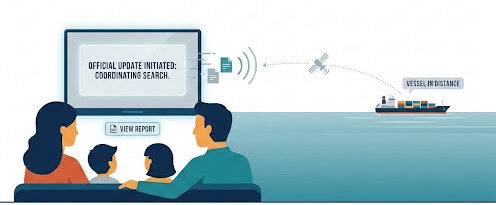
A message saying that a seafarer is missing at sea can be frightening for the entire family. The ship may be far from land, communication may be limited, and correct information may not be immediately available.
During this time, relatives may receive different messages from colleagues, agents and social media groups. This can create more fear and confusion.
However, there is an official process. It includes search and rescue, reporting, investigation, family updates and further action depending on whether the seafarer is found alive, found dead or remains missing.
What Is the First Step When a Seafarer Goes Missing
The first priority is to search for the missing seafarer.
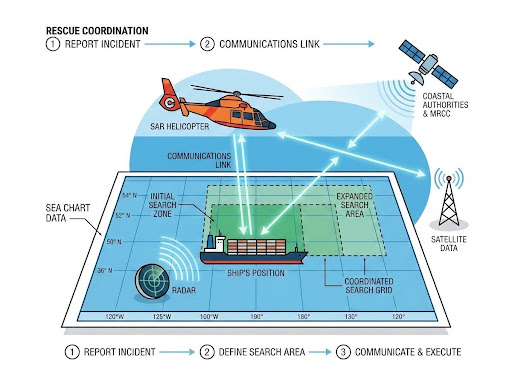
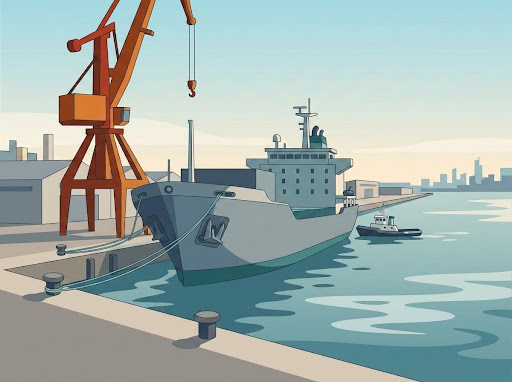
According to the DG Shipping Crew Manual, the Master of the vessel must inform the concerned parties and start search and rescue procedures when a seafarer is found missing at sea. The search is carried out according to the applicable procedure and international search and rescue guidance.
At this stage, the crew may check the vessel, review the last known location and gather information about when the person was last seen.
The family may not receive complete information immediately because rescue work is the first priority.
How Search and Rescue Starts at Sea
The ship’s Master and crew begin the search based on the available information.
Important details may include the time the seafarer was last seen, the vessel’s position, weather, visibility, sea conditions and the ship’s movement.
Depending on the location, the vessel may coordinate with a Maritime Rescue Coordination Centre, nearby ships, coastal authorities, company representatives and other rescue agencies.
The IAMSAR Manual provides international guidance for organising and coordinating maritime search and rescue operations. It is jointly published by the International Maritime Organization and the International Civil Aviation Organization.
Who Informs the Seafarer’s Family
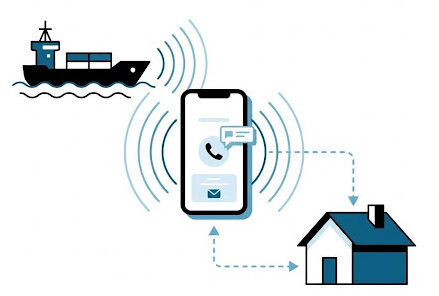
The ship normally reports the matter to the company or ship manager. The company or RPSL agency should then contact the family or the person listed as the Next of Kin.
The DG Shipping Crew Manual states that shipowners and recruitment and placement service agents are responsible for giving updates about the search and rescue process. The family or Next of Kin may also inform the concerned DG Shipping communication channel and request updates.
This is why every seafarer must provide correct Next of Kin details before joining.
Old phone numbers or incorrect family information can delay important communication.
How Families Should Get Official Updates
Families should depend on updates from the shipping company, RPSL agency and concerned government authorities.
They should avoid believing every WhatsApp message or social media post. Information shared by crew members or friends may be incomplete or incorrect.
Ask the company to provide updates in writing whenever possible. Save emails, messages and the names of the officials contacted.
It is also helpful to maintain a simple record containing the date of every update, what the company said and whether any documents were requested.
Correct information is more important than receiving frequent but unverified messages.
What Happens If the Seafarer Is Found Alive
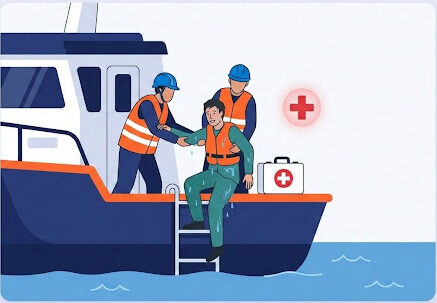
When the missing seafarer is found alive, rescue and medical care become the first priority.
The seafarer may need medical examination, rest and mental health support depending on the circumstances.
All concerned parties, including the company and family, should be informed. The incident will still need to be properly reported and investigated.
The investigation may check whether the incident happened because of a fall overboard, medical emergency, fatigue, unsafe working conditions, personal action or another reason.
Finding the seafarer alive does not mean the process ends immediately. The company and authorities must still understand what happened.
What Happens If the Seafarer Is Found Dead
If the seafarer is found dead, the body may be recovered and taken to an appropriate port.
The company, family, Flag State and other concerned authorities should be informed. Local authorities may conduct an investigation and post-mortem according to the law of the country where the body is landed.
After the required formalities, arrangements may be made to send the body back to the family.
The DG Shipping Crew Manual explains that Flag inspectors, P&I representatives and local law enforcement agencies may be involved in the investigation and repatriation process.
What Happens If the Seafarer Is Not Found
Sometimes, a seafarer is not found even after a detailed search.
The search may eventually be stopped after the authorities decide that continuing is no longer practical. The vessel may then proceed to its next port.
However, the case does not end when the search is stopped.
The incident must still be investigated. Flag State officials, P&I representatives and local authorities may review the ship’s records, statements, safety procedures and other evidence.
Reports may then be submitted to the Flag State and DG Shipping for further action.
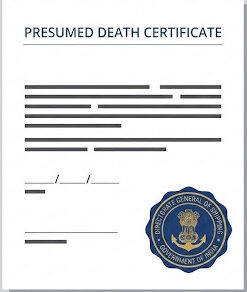
When Is a Presumed Death Certificate Issued
When a missing seafarer is not found, the family may need an official document before claiming compensation or settling other legal matters.
The DG Shipping Crew Manual describes a process in which the investigation report is reviewed. Depending on the findings, the Shipping Master may be directed to complete further steps, including action related to the seafarer’s CDC and the issue of a Presumed Death Certificate.
A Presumed Death Certificate does not normally appear immediately after the search ends. Official reports and required checks must be completed first.
The family should follow the instructions provided by the company and authorities.
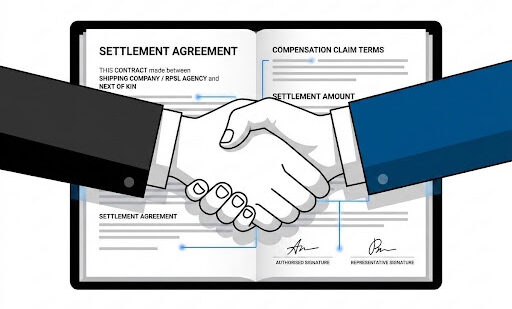
How Can the Family Claim Compensation
The family should first contact the shipping company or RPSL agency and ask for the claim process in writing.
Compensation may depend on the seafarer’s contract, CBA, insurance cover, P&I arrangements and the findings of the investigation.
If the seafarer remains missing, the Presumed Death Certificate may become an important document for insurance and compensation claims.
The person officially listed as the Next of Kin or nominee may be asked to provide identity documents, bank details and proof of relationship.
The family should not depend only on verbal promises. Every claim and follow-up should be made in writing.
What Happens to Pending Salary and Personal Belongings
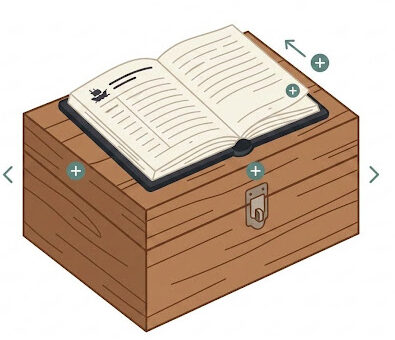
The seafarer may have unpaid salary, cash, documents and personal belongings on board.
The Merchant Shipping Act contains provisions related to the money, personal effects and wages of a seafarer who dies during a voyage. It also requires relevant details to be entered in the ship’s official records.
The family should ask the company for a written list of the seafarer’s belongings and pending wages.
Items such as mobile phones, certificates, clothes, cash and other personal effects should be properly recorded and returned through the official process.
Which Documents Should the Family Keep Ready
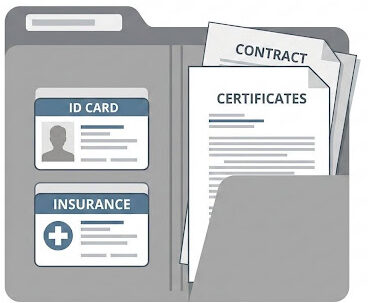
Every seafarer should prepare a family safety folder before joining a vessel.
It should contain copies of the passport, CDC, INDOS details, signed contract, CBA, joining letter, insurance papers and bank information.
The folder should also include company details, RPSL information, vessel name, Next of Kin form, nomination details and emergency contact numbers.
Keep printed and digital copies. The family should know where these documents are stored and how to access them.
Important records should not remain only inside the seafarer’s locked mobile phone or with an agent.
What Should the Next of Kin Do After Receiving the News
The Next of Kin should remain in contact with the company and request the name of the person handling the case.
Ask for the vessel name, incident date, last known position and current search status.
Do not sign unfamiliar forms without understanding them. Read every document and ask for clarification where necessary.
Save all emails, claim forms, reports and messages. Keep copies of every document submitted.
If updates or compensation are unusually delayed, the family may raise the matter with DG Shipping and provide proof of earlier communication with the company.
Why Families Should Avoid Rumours
A missing seafarer case is highly emotional, and rumours can make it even more painful.
Someone may say that the seafarer has been found when there is no official confirmation. Others may wrongly claim that the search has stopped or compensation has been approved.
Families should share updates publicly only after confirming them with responsible authorities.
Unofficial information can harm the family and disturb rescue or investigation work.
One trusted family member should handle communication with the company. This can reduce confusion and prevent different relatives from receiving different versions of the same information.
Table of Contents
Final Advice for Indian Seafarers
Before joining a ship, update your Next of Kin details and keep your contract, CBA, insurance papers and company information safely. Make sure your family knows whom to contact and where every important document is stored.
You can also use the Sailor Pro App to organise your maritime documents, receive certificate expiry reminders and stay updated with important information for seafarers. Preparing your family before sailing is not scary. It is my responsibility.
Final Advice for Indian Seafarers
Before joining a ship, update your Next of Kin details and keep your contract, CBA, insurance papers and company information safely. Make sure your family knows whom to contact and where every important document is stored.
You can also use the Sailor Pro App to organise your maritime documents, receive certificate expiry reminders and stay updated with important information for seafarers. Preparing your family before sailing is not scary. It is my responsibility.
The Master and crew begin search and rescue procedures based on the seafarer’s last known location, time last seen, weather, sea conditions, and vessel movement. The company and relevant maritime authorities are also informed.
The shipping company, ship manager, or concerned RPSL agency should contact the person registered as the seafarer’s Next of Kin. This is why seafarers must provide correct and updated family contact details before joining a vessel.
The duration depends on the location, weather, sea conditions, available rescue resources, and the possibility of finding the seafarer. The responsible search and rescue authorities decide when continuing the operation is no longer practical.
The seafarer is rescued and provided medical care. The company, family, and concerned authorities are informed. The incident may still be investigated to understand whether it involved an accident, medical emergency, unsafe condition, fatigue, or another cause.
The body may be recovered and taken to an appropriate port. Local authorities may conduct an investigation and post-mortem. After completing the required formalities, arrangements may be made to return the body to the family.
The search may eventually be stopped, but the case remains under investigation. Authorities may examine vessel records, witness statements, safety procedures, and other evidence. Further action may include the process for issuing a Presumed Death Certificate.
A Presumed Death Certificate is not normally issued immediately after the search ends. The investigation report and other required documents must first be reviewed. The responsible authority then completes the prescribed process based on the findings.
The family may be eligible for compensation depending on the seafarer’s employment agreement, Collective Bargaining Agreement, insurance, P&I cover, nomination details, and investigation findings. The company or RPSL agency should provide the claim procedure in writing.
Disclaimer :- The opinions expressed in this article belong solely to the author and may not necessarily reflect those of Merchant Navy Decoded. We cannot guarantee the accuracy of the information provided and disclaim any responsibility for it. Data and visuals used are sourced from publicly available information and may not be authenticated by any regulatory body. Reviews and comments appearing on our blogs represent the opinions of individuals and do not necessarily reflect the views of Merchant Navy Decoded. We are not responsible for any loss or damage resulting from reliance on these reviews or comments.
Reproduction, copying, sharing, or use of the article or images in any form is strictly prohibited without prior permission from both the author and Merchant Navy Decoded.