Hi this is Team Merchant Navy Decoded !!!

Please fill the below form with your query and we will get back to you in next 12 hours.

Rest assured your data is safe with us !!!🙂

Ask Your Query

Steam System on Ships: Generation, Distribution and Auxiliary Uses

Walk around any merchant ship and steam is quietly at work in places that have nothing to do with propulsion. The crew’s hot shower water, the galley ovens, the fuel oil warm enough to pump on a cold morning, the cargo tank coils keeping viscous crude flowing, the accommodation heating keeping a North Atlantic crossing bearable; all of it very often traces back to the same boiler. 

Modern cargo ships run on diesel main engines, not steam turbines, but the steam system itself never left the vessel. It just quietly became the ship’s all-purpose heating utility instead of its propulsion source.

Steam System on Ships

That’s really the right way to think about a modern ship’s steam system: one generation point, a distribution network carrying that heat wherever it’s needed, and a long list of auxiliary services drawing on it at the far end. Understanding the system means understanding all three parts together, not just the boiler that starts the chain.

Where the Steam Actually Comes From

Two sources typically feed the same steam system, and knowing which one is running tells you a lot about what condition the ship is in:

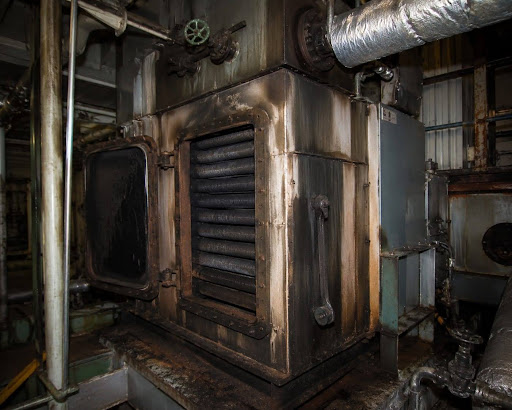
  • The exhaust gas economiser recovers waste heat from the main engine’s exhaust while the ship is under way, generating steam essentially for free from heat that would otherwise go straight up the funnel. It has no steam space of its own; it feeds steam into the auxiliary boiler, which acts as the actual steam space and distribution point.
  • The auxiliary boiler : Oil-fired, takes over whenever the main engine isn’t running  in port, at anchor, or during manoeuvring supplying the same steam demand through direct combustion instead of recovered exhaust heat.

Both routes feed the same steam main, so from the auxiliary systems’ point of view, it rarely matters which one is actually producing the steam at any given moment  the demand side just draws from a common supply.

Quick pointer: If you notice unusually heavy auxiliary boiler oil consumption while the main engine is running normally at sea, it’s worth checking economiser performance before assuming the boiler itself has a problem. A fouled or underperforming economiser quietly shifts more of the load back onto oil firing than it should.

Key Components of the System

Before following the steam and condensate around the system, it’s worth having the core hardware straight  most of it recurs constantly in any discussion of how the system actually behaves:

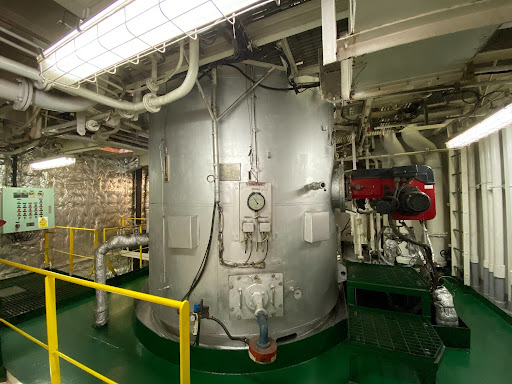
  • Auxiliary boiler : The oil-fired unit providing the steam space and distribution point for the system, taking over supply whenever the economiser isn’t producing enough or the main engine is stopped.
  • Exhaust gas economiser–Recovers waste heat from main engine exhaust while under way and feeds the steam it generates into the auxiliary boiler’s steam space.

Key Components of the System

  • Cascade tank (hotwell) : The collection and deaeration point for returning condensate and make-up water; it’s the point where the steam system’s condensate loop and the boiler’s feed supply meet.
  • Boiler feed pumps : Draw from the hotwell and deliver water back to the boiler, maintaining the water side of the cycle that produces the steam in the first place.
  • Pressure reducing valves : Step boiler-pressure steam down to whatever lower pressure a given service actually requires.
  • Dump valve and dump condenser: Protect the boiler from overpressure during low-demand periods by diverting surplus steam to a seawater-cooled condenser, with the resulting condensate returned to the feed system.
  • Auxiliary condenser : Condenses returning steam from accommodation, galley, and other services before it rejoins the feed water system.
  • Steam traps : Positioned throughout the distribution network to drain condensate continuously while holding steam back in the line until it has given up its heat.
  • Salinity sensor : Fitted in the condensate return path, typically near the dump or auxiliary condenser, to catch any seawater leakage before contaminated condensate reaches the boiler feed system.

Key Components of the System

Quick pointer: Notice how many of these components are shared with, or feed directly into, the boiler feed water system covered separately – the steam system and the feed water system aren’t really two systems so much as two halves of the same water-and-steam cycle, split for the sake of explaining each clearly.

Table of Contents

Distribution: Getting Steam Where It's Needed Safely

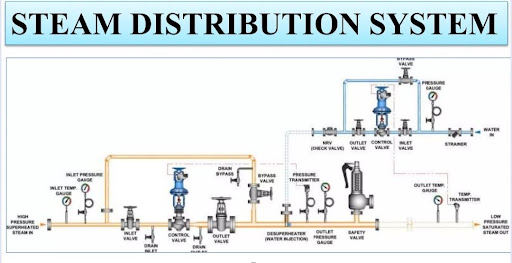
Steam Distribution system

Steam leaving the boiler doesn’t go directly to every consumer at full pressure. The distribution side of the system exists specifically to manage that safely:

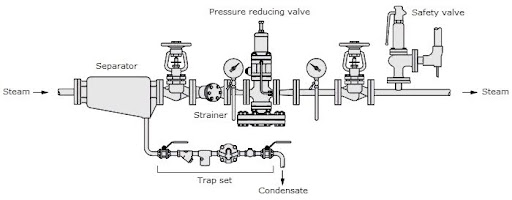
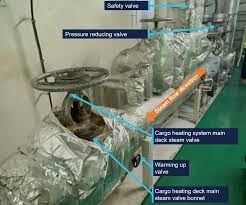
  • Pressure reducing valves step steam down from boiler pressure to whatever lower pressure a given service actually needs: Accommodation heating and calorifiers, for instance, don’t need anywhere near boiler pressure, and running them at full pressure would be both wasteful and unsafe.
  • The dump condenser protects the boiler from overpressure during periods of low demand. When consumers aren’t drawing enough steam to keep boiler pressure at its normal working level, pressure creeps up; once it rises roughly 0.1–0.2 bar above normal, a dump valve opens automatically and diverts surplus steam to a seawater-cooled dump condenser, with the resulting condensate returned to the feed system rather than wasted.
  • Warming-through procedure matters before opening any steam line that’s been shut down. Drains on the piping and steam-driven equipment are opened, steam traps are checked, and the isolating valve to that section is opened very slowly. This isn’t caution for its own sake , Rapid thermal expansion in a cold pipe run can cause serious water hammer and damage flange gaskets, particularly after a long voyage with a system that’s been sitting cold.
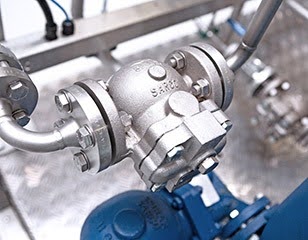
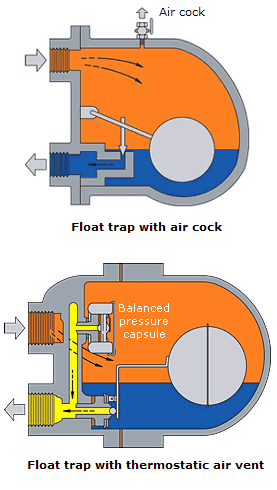
  • Steam traps are positioned throughout the distribution and heating network to do one specific job: let condensate drain away continuously while holding steam back in the line until it has actually given up its heat. Mechanical (float-type), thermostatic, and thermodynamic traps all achieve this differently, but the principle is the same across all three.

        Distribution system

Float trap air clock or vent

Quick pointer: A steam trap that’s failed open is easy to miss because the system still “works” : It just wastes live steam straight into the condensate return instead of holding it back to do useful heating first. Checking traps periodically rather than only when something stops heating properly is what actually catches this.

What The Auxiliary Services Steam Actually Powers

This is where the system earns its purpose on a modern motor vessel, and the list is longer than most non-engineers would expect:

Domestic and accommodation

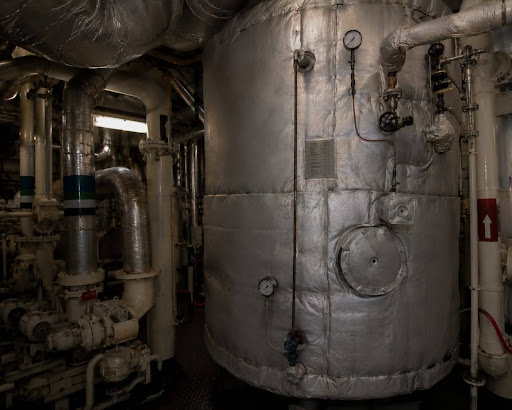
  • Calorifiers – Steam-heated hot water tanks supplying the crew’s showers, galley and other domestic hot water needs, often paired with an electric heating element as backup or for use when steam isn’t available.

Calorifiers

  • Accommodation heating – Steam passed through an air heater or heat exchanger, with the warmed air then circulated through the accommodation spaces.
  • Galley services – Steam for cooking equipment, hot water and steam cleaning of stainless surfaces and galley decks.

Fuel and lubricating systems

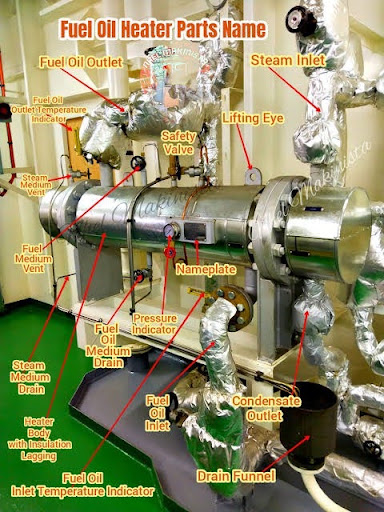
  • Fuel oil heating – Heavy fuel oil needs to be kept warm enough to pump and atomise properly, both in storage/settling tanks and immediately before the main engine’s injectors; steam heating coils and heaters handle this throughout the fuel system.

Fuel oil heater parts name

  • Purifier heaters – Fuel and lube oil purifiers rely on heated oil to separate water and sediment effectively, and steam is a common heating medium for this.

Cargo and deck operations

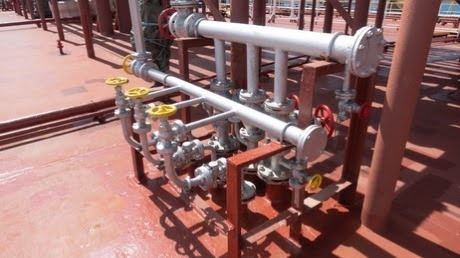
  • Cargo tank heating – Particularly on tankers carrying viscous or high pour-point cargoes, steam coils running through the cargo tanks keep the cargo fluid enough to pump.

Cargo and deck operations

Cargo and deck operations

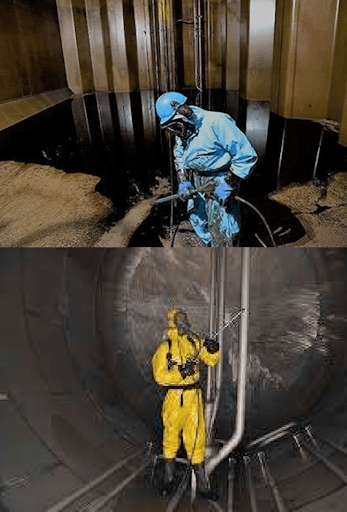
  • Tank cleaning and tank washing– Steam is used both directly and to heat wash water for cleaning cargo tanks between cargoes.

Tank cleaning and tank washing

  • Deck machinery – On some vessel types, particularly in the oil tankers where electrical equipment in hazardous areas is undesirable, steam-driven winches, pumps, and cargo pump turbines are still in service.
  • Sea chest and pipeline tracing – Steam tracer lines run alongside pipework and sea chests in cold climates specifically to prevent freezing.

Other engine room and safety uses

  • Freshwater generation – Evaporators use steam as the heat source to distill freshwater from seawater.


  • Soot blowing – Steam is used to blow accumulated soot deposits off boiler heating surfaces, maintaining heat transfer efficiency.


  • Fire fighting – Steam smothering/drenching systems are fitted in some cargo spaces and machinery spaces as a fixed fire suppression method.


  • Steam ejectors – Used as the motive medium for ejector pumps and vacuum-producing devices in various engine room systems.


Quick pointer: When you’re troubleshooting an unrelated-seeming problem: A purifier not separating well, cargo that won’t pump, an accommodation space that’s cold it’s worth checking whether a steam supply issue somewhere upstream is the actual root cause. Steam’s fingerprints are on more systems than the obvious “heating” ones.

Closing the Loop: Condensate Return

Steam that’s given up its heat in any of the services above condenses back to water, and that condensate is far too valuable  both in terms of the heat energy already spent processing it and simple fresh water cost  to throw away. It’s collected and returned through dedicated piping back to the engine room, typically into an auxiliary condenser or the same cascade tank and feed system that supplies the boiler, closing the loop back to feed water treatment covered in the boiler feed water system itself.

A salinity sensor is commonly fitted in this return path, particularly where a sea-water-cooled dump condenser is involved, specifically to catch any seawater leakage into the condensate before it reaches the boiler feed system a genuinely important safeguard, since contaminated feed water undoes the water treatment effort covered in that system entirely.

Safety Considerations

  • Never rush warming through a cold steam line. The slow-opening procedure with drains and traps checked beforehand exists specifically to prevent water hammer and gasket damage; a shortcut here risks a genuinely dangerous pipe failure under pressure, not just a maintenance inconvenience.


  • Treat the dump valve and dump condenser as safety equipment, not just an operational convenience; they’re what prevents boiler overpressure during low-demand periods, and their correct function should be verified rather than assumed.


  • Isolate and allow lines to cool before maintenance. Both the steam valve and drain valve should be shut in the correct sequence, with time allowed for the line to cool, to avoid forming a vacuum in the line as trapped steam condenses, a vacuum can pull air and contamination back into an otherwise clean system.


  • Treat steam burns as a real, ever-present risk. Leaking joints, failed traps, and even properly operating drain lines all present live steam or near-boiling condensate  situational awareness around any steam system is not optional.


  • After repairs involving oil-contaminated systems  such as a fuel heater or purifier heater  the drain line, drain trap, observation tank, and any oil content monitor probe need to be thoroughly cleaned, since residual oil in the condensate return can contaminate the boiler feed system downstream.

Maintenance Across the System

  • Check steam traps on a routine schedule across all services, not only when a heating problem is reported – A trap stuck in either position (blocking condensate or passing live steam) degrades system efficiency quietly.


  • Inspect pressure reducing valves and dump valves for correct set points and smooth operation, since both are central to keeping the distribution side of the system safe and efficient.


  • Monitor the salinity sensor in the condensate return path and investigate any reading outside normal range immediately, given the downstream risk to boiler feed water quality.


  • Keep insulation on steam lines and heating coils in good condition damaged lagging isn’t just a heat-loss inefficiency, it’s also a burn hazard for anyone working nearby.


  • Verify calorifier backup heating (electric elements, where fitted) functions correctly, so domestic hot water supply doesn’t depend entirely on steam availability.


  • Review soot blower operation and effectiveness periodically, since declining boiler heat transfer efficiency often traces back to soot buildup the blower isn’t adequately addressing.


Conclusion


A modern ship’s steam system rarely gets to move the vessel anymore, but it still touches nearly every corner of shipboard life: the crew’s hot water, the fuel that keeps the main engine running, the cargo that has to stay pumpable, and the accommodation that has to stay warm. Understanding it means following the same heat from wherever it’s generated, through a distribution network built specifically to deliver it safely at the right pressure, out to a long list of auxiliary services, and back again as condensate closing the loop. Respect the warming-through procedure, keep the traps and reducing valves in good order, and this quiet utility system will keep doing dozens of unrelated-looking jobs without most of the crew ever thinking about where the heat actually came from.

Frequently Asked Questions (FAQs)

No  most modern cargo ships use diesel main engines for propulsion. The steam system remains on board as an auxiliary heating utility, generated by an exhaust gas economiser while under way and an oil-fired auxiliary boiler when the main engine isn’t running.

The economiser recovers waste heat from main engine exhaust gas to generate steam essentially for free while under way, but has no steam space of its own. The auxiliary boiler, which is oil-fired, provides the steam space and takes over supply entirely when the main engine isn’t running, such as in port or at anchor.

A calorifier is a steam-heated (sometimes also electrically heated) hot water tank that supplies domestic hot water to the crew’s accommodation, including showers and galley use, often replenished from the ship’s fresh water pressure tank.


Opening a cold steam line quickly can cause rapid thermal expansion and water hammer, risking damage to pipework and flange gaskets. The correct procedure involves opening drains, checking steam traps, and very slowly opening the isolating valve to allow the line to warm gradually.

A steam trap allows condensate to drain continuously from a steam line while holding back live steam until it has given up its heat, improving heating efficiency by ensuring steam’s latent heat is actually used rather than passing straight through to the condensate return.

Disclaimer :- The opinions expressed in this article belong solely to the author and may not necessarily reflect those of Merchant Navy Decoded. We cannot guarantee the accuracy of the information provided and disclaim any responsibility for it. Data and visuals used are sourced from publicly available information and may not be authenticated by any regulatory body. Reviews and comments appearing on our blogs represent the opinions of individuals and do not necessarily reflect the views of Merchant Navy Decoded. We are not responsible for any loss or damage resulting from reliance on these reviews or comments.

Reproduction, copying, sharing, or use of the article or images in any form is strictly prohibited without prior permission from both the author and Merchant Navy Decoded.

DIWALI SALE

Decoded Discount Alert! up to 50% OFF

DIWALI SALE

Decoded Discount Alert! up to 50% OFF

Use Coupon Code Deep50

Days
Hours
Seconds
0
Would love your thoughts, please comment.x
()
x