Hi this is Team Merchant Navy Decoded !!!

Please fill the below form with your query and we will get back to you in next 12 hours.

Rest assured your data is safe with us !!!🙂

Ask Your Query

Engine Room Simulator: How It Works, How It's Used, and Why It Matters for Training

Every engineer remembers the first time they started a real main engine  and most will admit the version that actually prepared them for that moment wasn’t a textbook, it was a simulator. A darkened blackout scenario  with an instructor quietly introducing a second fault while you’re still chasing the first. A crash-stop manoeuvre that goes wrong because you froze half a second too long. The engine room simulator exists to manufacture exactly those moments, safely, before they happen for real with a ship, a crew, and cargo actually depending on the outcome.

It’s easy to think of a simulator as just “a video game version of the engine room,” but the mathematical modelling and certification standard behind a genuine full-mission simulator is a lot closer to a flight simulator than to any game. Worth understanding both how it actually works and how it’s used, since the two shape each other directly.

Engine Room Simulator

What an Engine Room Simulator Actually Is

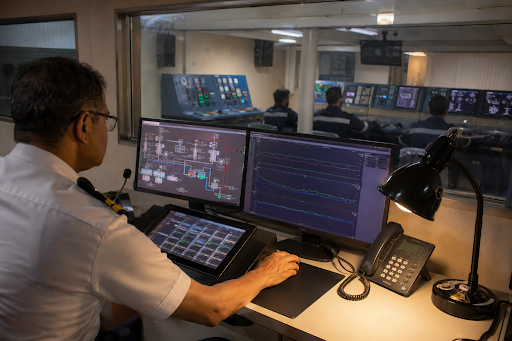
At its core, an engine room simulator is a training system built around mathematical models of real ship machinery :  Main engine, generators, boilers, pumps, purifiers, electrical systems  that respond dynamically to trainee actions the same way the physical equipment would. Move a valve, and downstream pressures and temperatures shift accordingly. Trip a generator, and the electrical load redistributes, potentially cascading into a blackout if the trainee doesn’t respond correctly. This is the “man-computer” interface at the heart of every serious simulator : The trainee interacts with realistic control panels and displays and the underlying model computes a believable machinery response in real time.

Simulators are generally built and certified against recognised standards  DNV’s Standard for Certification of Maritime Simulator Systems and ClassNK certification are common benchmarks and structured around IMO Model Course 2.07, which defines the competencies a marine engineering simulator course is meant to deliver in line with STCW requirements.

Quick pointer: If you’re evaluating or choosing between simulator platforms, the certification standard and modelled engine type (which manufacturer’s engine, what propulsion configuration) matter more than how polished the graphics look. A simulator’s value comes from how accurately the underlying model behaves, not from its visual finish.

Types of Engine Room Simulators

Simulators aren’t one-size-fits-all, the type in use shapes what kind of training is realistically possible:

Types of Engine Room Simulators

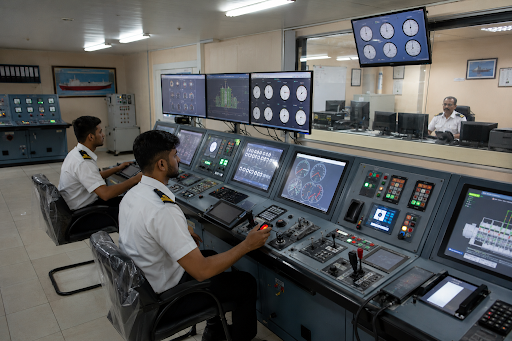
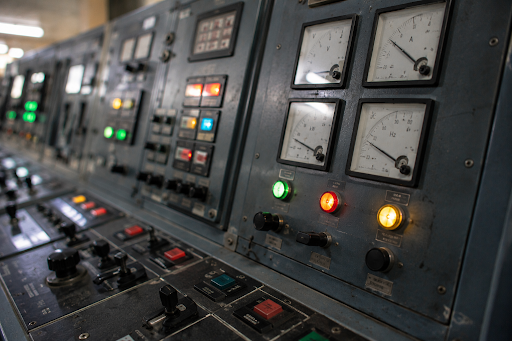
  • Full mission simulators – Complete replicas of an engine control room and machinery spaces, with full-size switchboard panels, control consoles, sound and communication systems, and networked workstations. These support team-based training, human factors, and emergency management exercises that require multiple trainees working together exactly as an engine room watch would.
  • Networked class / part-task simulators – Instructor-led classroom setups with interactive workstations, generally used for troubleshooting practice and structured coursework without the full physical replica.
  • Cloud and desktop simulation– Browser or PC-based access to the same underlying models, offering flexible, lower-cost training away from a dedicated simulator room.
  • Immersive VR and smart-reality modules : 3D walkthroughs and procedural training, increasingly used for tasks like high-voltage breaker isolation where physical risk during real training would otherwise be significant.

Most institutes also offer three training levels on the same platform – Familiarisation, standard watchkeeping operation, and advanced troubleshooting  so the same simulator scales from a first-year cadet’s introduction to an experienced second engineer’s fault-diagnosis assessment.

Table of Contents

Working Principle: How a Training Scenario Actually Runs

Setup

  • The instructor selects a machinery configuration matching the training objective — a specific main engine model, propulsion type, and initial operating condition (for example, “vessel at sea, normal cruising load”).
  • Trainee roles are assigned at the consoles, mirroring a real engine room watch structure where a full-mission exercise involves more than one person.

During the exercise

Training Scenario

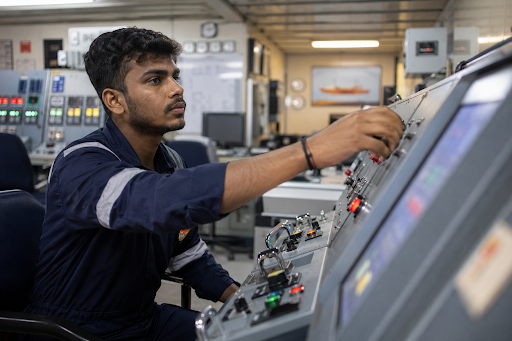
  • Trainees operate the simulated machinery through the same control panels and procedures used on a real vessel – Starting, stopping, load changes, transfers, alarm response.
  • The instructor station allows faults to be injected at any point: A tripped pump, a stuck valve, a sensor giving a false reading, a full blackout and the underlying model propagates the consequences realistically through connected systems.

Working Principle of engine simulator

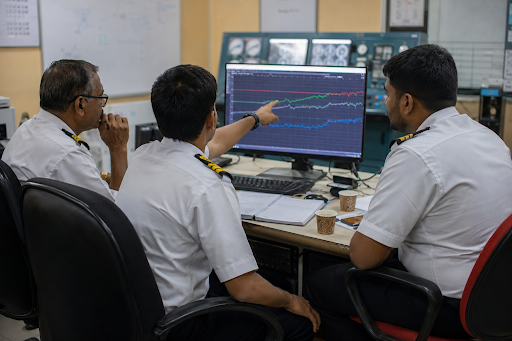
  • Automatic data logging captures trainee actions and machinery response throughout, which is what makes structured assessment possible afterward rather than relying purely on the instructor’s memory of what happened.

Debrief

  • The logged data is reviewed against the exercise objectives, letting the instructor show precisely when a trainee’s action (or inaction) changed the outcome, rather than relying on a general impression of how the exercise went.

engine simulator

  • Recurring faults or hesitation points across a class often point to a specific concept that needs reinforcing before trainees return to consoles.

Quick pointer: The debrief is where most of the actual learning happens, not the exercise itself. A trainee who fumbles a blackout recovery but then walks through exactly why it happened and what the correct sequence should have been retains that lesson far better than one who “passes” without ever seeing the breakdown of their own decisions.

What Simulator Training Is Actually Used For

  • Watchkeeping competence : Routine monitoring, parameter interpretation, and the disciplined habits (like accurate log-keeping) that carry directly into real engine room practice.
  • Fault diagnosis and troubleshooting : Working through abnormal conditions in a setting where a wrong diagnosis costs nothing but time, rather than equipment or safety.
  • Emergency and crisis management : Blackout recovery, fire, flooding, and other high-consequence scenarios that would be reckless to train for on a live vessel.
  • Engine room resource management : Team coordination, communication, and situational awareness under pressure, which STCW explicitly recognises as a competency distinct from individual technical skill.
  • Type-specific familiarisation : Many simulators model specific engine manufacturers and configurations, letting engineers train on a system close to what they’ll actually sail with before joining a vessel.

Safety and Assessment Considerations

  • Simulator assessment carries real weight: Many certificates of competency require documented simulator training and assessment, so records and logged performance data need to be handled with the same integrity expected of any other official maritime record.
  • Fault injection should be progressive, not punitive: Good instructor practice introduces complexity in a way that builds genuine competence  piling on unrealistic simultaneous failures mostly teaches panic, not troubleshooting.
  • Team exercises need honest role rotation: In a full-mission setting, it’s easy for one confident trainee to dominate the console while others coast, deliberate rotation ensures the assessment reflects everyone’s actual competence, not just the strongest personality in the room.
  • A simulator is a training aid, not a substitute for real machinery familiarity: Even the most accurate model can’t fully replicate the smell of an overheating bearing or the specific feel of a real valve. Simulator training complements, rather than replaces, supervised hands-on experience.

Maintenance and Currency of the Simulator Itself

  • Machinery models should be kept current with real-world engine and system updates, since a simulator trains toward equipment that exists today, not equipment as it was configured when the platform was purchased.
  • Certification against DNV, ClassNK, or equivalent standards should be maintained and renewed as required, since it’s what gives simulator hours their recognised value toward STCW competency requirements.
  • Instructor familiarity with fault-injection scenarios and the debrief data system matters as much as the hardware; a well-maintained simulator run by an instructor who doesn’t use its full capability delivers a fraction of its training value.
  • Regular calibration checks between the simulated response and real machinery behaviour help catch model drift before it teaches trainees a habit that doesn’t match reality.

Conclusion

An engine room simulator earns its place in training not because it looks like the real thing, but because the mathematical models underneath it behave like the real thing  closely enough that the habits, instincts, and diagnostic reasoning built during a scenario carry over to an actual engine room. The certification standards, the fault-injection capability, and above all the debrief are what separate genuine competency training from something closer to a game. Used properly, it’s one of the few places an engineer can genuinely fail safely, repeatedly, and instructively  before it ever matters for real.

Frequently Asked Questions (FAQs)

It’s used to train and assess marine engineering personnel in watchkeeping, fault diagnosis, emergency response, and engine room resource management, using mathematical models of real ship machinery that respond dynamically to trainee actions, in line with STCW competency requirements and IMO Model Course 2.07.

A full mission simulator is a complete physical replica of an engine control room and machinery spaces, supporting team-based training with full-size panels and consoles. A networked class simulator is a classroom setup with interactive workstations, generally used for structured coursework and troubleshooting practice without the full physical replica.

From the instructor station, faults such as a tripped pump, stuck valve, false sensor reading, or full blackout can be injected at any point during the exercise, and the underlying machinery model propagates the realistic consequences through connected systems for the trainee to diagnose and respond to.

Yes simulators built to recognised standards, such as DNV’s certification for maritime simulator systems or ClassNK certification, and structured around IMO Model Course 2.07, are recognised as valid training and assessment toward STCW competency requirements, provided the training institute and course meet the applicable regulatory criteria.

No simulator complements rather than replaces supervised hands-on experience. Even highly accurate models can’t fully replicate every real-world sensory cue, so simulator training is generally paired with actual sea time and practical familiarisation rather than substituting for it entirely.

Disclaimer :- The opinions expressed in this article belong solely to the author and may not necessarily reflect those of Merchant Navy Decoded. We cannot guarantee the accuracy of the information provided and disclaim any responsibility for it. Data and visuals used are sourced from publicly available information and may not be authenticated by any regulatory body. Reviews and comments appearing on our blogs represent the opinions of individuals and do not necessarily reflect the views of Merchant Navy Decoded. We are not responsible for any loss or damage resulting from reliance on these reviews or comments.

Reproduction, copying, sharing, or use of the article or images in any form is strictly prohibited without prior permission from both the author and Merchant Navy Decoded.

DIWALI SALE

Decoded Discount Alert! up to 50% OFF

DIWALI SALE

Decoded Discount Alert! up to 50% OFF

Use Coupon Code Deep50

Days
Hours
Seconds
0
Would love your thoughts, please comment.x
()
x