Hi this is Team Merchant Navy Decoded !!!

Please fill the below form with your query and we will get back to you in next 12 hours.

Rest assured your data is safe with us !!!🙂

Ask Your Query

Engine Room Log Book: What It Records, How to Fill It and Why It Matters More Than It Looks

Ask most cadets what the least exciting book in the engine room is, and they’ll point straight at the log book. Rows of numbers, filled in watch after watch, the same gauge readings at the same intervals  it doesn’t feel like it’s doing much. Then something goes wrong. A machinery breakdown, a grounding, a P&I claim, a port state inspection with awkward questions  and suddenly that unglamorous book is the single document everyone wants to see first.

This isn’t a mechanical system, so there’s no working principle to trace. What it needs instead is a clear picture of what actually belongs in it, how to fill it out properly, and why the discipline behind those routine entries matters far more than the entries themselves seem to.

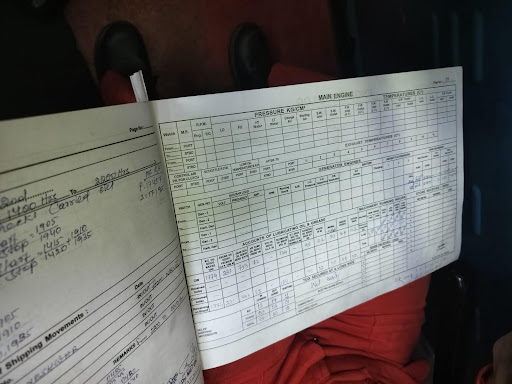
Engine Room Log Book

What the Engine Room Log Book Actually Is

At its core, the engine room log book is a running record of machinery parameters, performance, and events : Pressures, temperatures, RPM, fuel and lube oil quantities, running hours, maintenance carried out and anything unusual that happened during a watch. It’s kept alongside, but separate from, the deck log book, the oil record book, and other statutory logs, each of which covers a distinct area of the ship’s operation.

It’s two jobs run in parallel, and it’s worth keeping both in mind whenever you’re filling it in :-

  • Operational : It lets engineers compare current readings against design and trial conditions to track how machinery is actually performing over time, catching a slow drift in a bearing temperature or a fuel consumption trend long before it becomes a breakdown.
  • Evidentiary : It’s a legal and commercial record. Surveyors, port state control, insurers and investigators treat it as primary evidence after an accident, a machinery failure, or an insurance claim. What’s written or not written  in that book can carry real weight months or years later even after the watch has ended.

Quick pointer: Every time you’re tempted to treat an entry as “just routine” remember that routine is exactly what makes the record valuable later. A logbook full of genuine, careful readings is what lets an investigator tell a real anomaly from normal variation. A logbook full of copied numbers can’t do that for anyone.

What Goes Into It, Watch by Watch

The exact format varies by company and flag state, but the entries that recur across virtually every engine room log book fall into a few clear groups:

Machinery parameters

  • Main engine RPM, load, and running status (SBE, FWE, COSP, EOSP)
  • Ship’s speed
  • Auxiliary engine running hours and load
  • Fuel oil and lube oil quantities remaining on board, by grade and tank
  • Cooling water and lube oil temperatures and pressures throughout the engine room
  • Boiler, purifier, refrigeration, and air conditioning plant readings

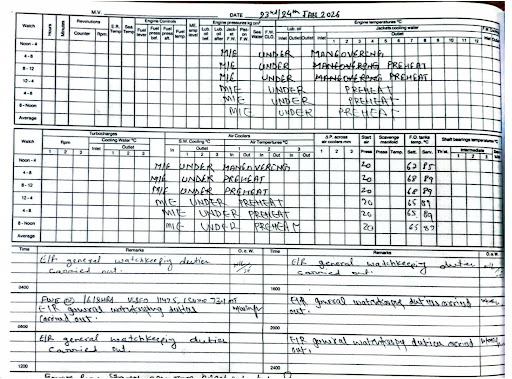
Engine Room Log Book

Operational events

Engine Room Log Book

  • Any bunkering operation – Time, place and quantity
  • Sludge and garbage disposal operations
  • Tank transfers, with tank names and final parameters
  • Spare parts or machinery loaded or discharged in port
  • Crew changes in the engine department

Incidents and exceptions

  • Fire, flooding, or any other engine room incident
  • Grounding, collision, or other accidents
  • Major overhauls of important machinery
  • Port state or coastal state interventions, including any detention
  • Remarks relevant to surveys or PSC inspections

Administrative record

  • Name, number, and time of any checklist completed (arrival, departure, UMS checklist, etc.)
  • Signature and comments of the duty engineer for each watch
  • Chief engineer’s daily countersignature

Quick pointer: If an event doesn’t fit neatly into any of the printed columns, it still belongs in the remarks section. The printed layout covers the routine; the remarks are where the log book earns its keep on the days that aren’t routine.

Filling It Out Properly: The Actual Procedure

During the watch

  • Take engine room rounds with enough time left in the watch to do it properly , roughly an hour before handover is the usual guidance rather than rushing through in the last few minutes.

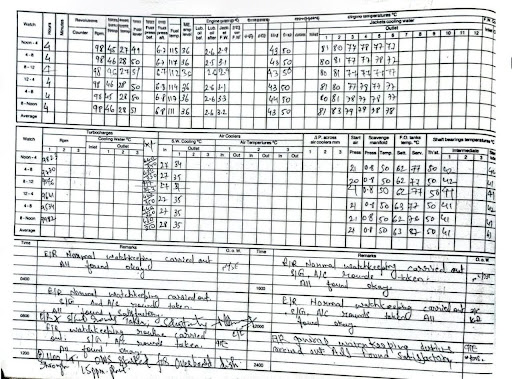
Filling It Out Properly

  • Note pressures, temperatures, RPM, tank levels and any other required parameters directly from the gauges at the time of the round, not from memory afterward.
  • Record any operational event as it happens : Bunkering, tank transfers, maintenance started or completed  rather than trying to reconstruct the watch from memory at the end.

Completing the entry

  • Use a ballpoint pen only. Log books are official records, and ink pens or pencils invite exactly the kind of tampering concern the book exists to avoid.
  • Write legibly and record events clearly, briefly and accurately  a log book entry should make sense to someone who wasn’t there.
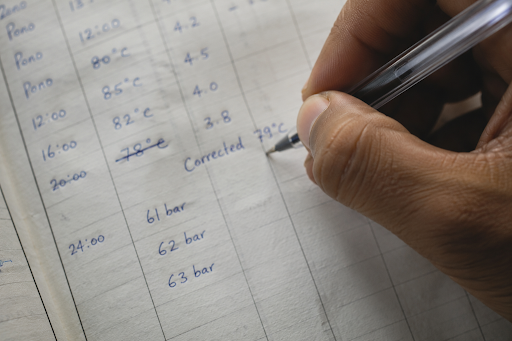
  • If a wrong reading is written by mistake, cross it out with a single line, write the correct figure beside it, and sign next to the correction. Never scribble it out completely or use correction fluid.

Completing the entry

  • Sign the entry for your watch, with a brief comment on any significant operation carried out during it.

After the watch

  • The chief engineer countersigns the log book daily to confirm entries have been made in line with company and regulatory requirements. This isn’t a formality, it’s the first line of quality control on the record.


  • Any entry required by the master, the company, or the flag state administration beyond the standard columns should still be recorded without fail.

Table of Contents

Where Engineers Actually Go Wrong

The failure  with log books is rarely dramatic  it’s quiet erosion of the habit over time, and it tends to show up in a few predictable ways :-

  • Filling it in from assumption rather than observation : A busy watch, a maintenance job running long, or simple fatigue leads to entries based on what the parameters “probably” are rather than what they actually read.
  • Copying the previous watch’s figures : This is the most damaging version of the above; it doesn’t just introduce error, it erases the very thing the log book exists to capture: change over time.
  • Rushing the pre-handover round:Taking rounds in a hurry at the very end of the watch means parameters get missed or estimated, and the log book inherits that haste.
  • Treating remarks as optional : A log book with clean numbers but no narrative around an unusual event is far less useful later than one with a few honest sentences explaining what happened and what was done about it.

Quick pointer: If you ever find yourself about to write down a number you didn’t actually check, that’s the moment to go back and check it, not the moment to estimate. It takes far less time than the conversation that happens later when the number turns out to matter.

Why This Book Carries Legal Weight

The engine room log book isn’t just an internal operational tool  it’s typically a statutory requirement, with specifics varying by flag state and vessel type and its entries are treated as formal evidence in several contexts:

  • Insurance claims – Insurers, surveyors and P&I clubs use log book entries as reference evidence when assessing machinery breakdown or accident claims.
  • Accident investigation – After a grounding, collision, fire, or major machinery failure, the log book is examined closely to reconstruct the sequence of events and the condition of machinery beforehand.
  • Port state control and audit – Inspectors cross-check log book entries against other records and physical machinery condition, and gaps or inconsistencies invite exactly the kind of scrutiny a vessel doesn’t want.
  • Handover continuity –The log book is part of what a relieving chief engineer reviews on signing on, giving them an honest picture of the vessel’s recent machinery history before they take responsibility for it.

Digital vs. Paper Log Books

Many fleets have moved to electronic log book systems, which bring real advantages – Automatic data logging from sensors, easier trend analysis, and no risk of illegible handwriting but the underlying discipline doesn’t change. A digital system that lets an engineer auto-populate a field with the last reading is exactly as vulnerable to the “copied figures” problem as a paper book filled in from memory. Whatever the format, the same standard applies: entries must reflect an actual observation at the time it was taken, with a clear, auditable record of who entered what and when.

Digital vs. Paper Log Books

Maintenance and Custody of the Log Book Itself

  • Log books should be kept in a secure, accessible location in the engine room, with completed volumes retained on board (or archived per company policy) for the period required by flag state regulation.
  • Ensure continuity between volumes – New books should begin exactly where the previous one ended, with no gap in dates or watches.
  • Review entries periodically, not just at handover, to catch a drifting habit – such as increasingly brief remarks or suspiciously identical readings  before it becomes routine.
  • Treat corrections as a normal, expected part of accurate record-keeping, not something to avoid; a log book with occasional honest corrections is more credible than one that looks suspiciously perfect.

Conclusion

The engine room log book doesn’t do anything mechanically impressive; it just asks an engineer to look at the actual gauges, write down what they actually say and sign their name to it, watch after watch. But that discipline is what turns a page of numbers into a genuine operational and legal record, one that can vindicate a well-run engine room or expose a poorly run one, often long after the watch that produced it is forgotten. Treat every entry as if someone will need to rely on it later, because eventually, someone will.

Frequently Asked Questions (FAQs)

It serves two purposes: Operationally, it lets engineers track machinery performance against design and trial conditions over time; Legally and commercially, it acts as a primary evidentiary record used by surveyors, insurers, and investigators after accidents, breakdowns, or claims.

The watchkeeping engineer fills in and signs the log book for their own watch. The chief engineer countersigns the book daily to confirm entries comply with company and regulatory requirements.

Cross out the incorrect entry with a single line, write the correct reading beside it, and sign next to the correction. The original entry should remain legible, never obscure or erase it completely.

Copying previous readings defeats the entire purpose of the log book, which exists to capture genuine change in machinery condition over time. It also creates a false record that can mislead both operational trend analysis and any later investigation.

Yes, in principle , What matters is that entries reflect genuine observations recorded at the time, with a clear, auditable trail of who made each entry and when. The format doesn’t change the underlying standard of accuracy and integrity the record is expected to meet.

Disclaimer :- The opinions expressed in this article belong solely to the author and may not necessarily reflect those of Merchant Navy Decoded. We cannot guarantee the accuracy of the information provided and disclaim any responsibility for it. Data and visuals used are sourced from publicly available information and may not be authenticated by any regulatory body. Reviews and comments appearing on our blogs represent the opinions of individuals and do not necessarily reflect the views of Merchant Navy Decoded. We are not responsible for any loss or damage resulting from reliance on these reviews or comments.

Reproduction, copying, sharing, or use of the article or images in any form is strictly prohibited without prior permission from both the author and Merchant Navy Decoded.

DIWALI SALE

Decoded Discount Alert! up to 50% OFF

DIWALI SALE

Decoded Discount Alert! up to 50% OFF

Use Coupon Code Deep50

Days
Hours
Seconds
0
Would love your thoughts, please comment.x
()
x