Hi this is Team Merchant Navy Decoded !!!
Please fill the below form with your query and we will get back to you in next 12 hours.
Rest assured your data is safe with us !!!🙂
Ask Your Query| For Beginner | For Professional |
|---|---|
| GME | Engine Side |
| G.P. Rating | Deck Side |
| ETO | G.P. Rating |
| IMUCET & Sponsorship | Combo Offers |
| Free Course | MEO |
| Free Course |
| For Beginner | For Professional |
|---|---|
| GME | Engine Side |
| G.P. Rating | Deck Side |
| ETO | G.P. Rating |
| IMUCET & Sponsorship | Combo Offers |
| Free Course | MEO |
| Free Course |
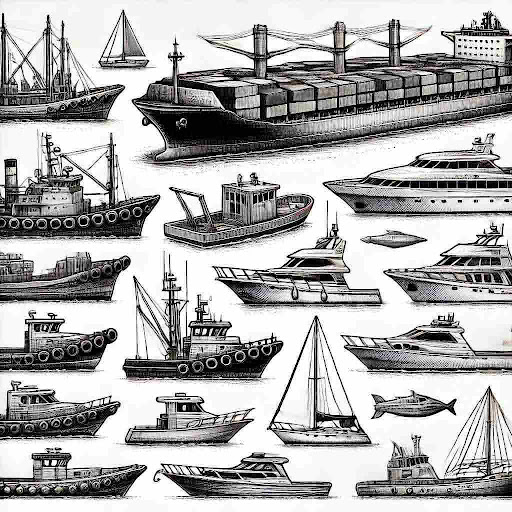
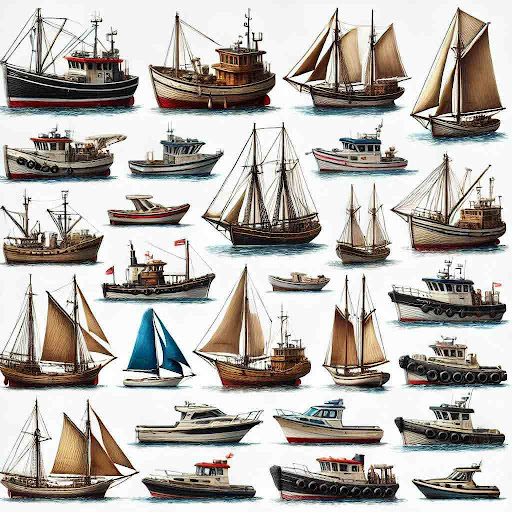
Water transportation is the movement of goods and people from one place to another over water bodies such as rivers, lakes, seas, and oceans. In the past, ships were used to carry both cargo and people together. Nowadays, different types of ships are specially designed to carry either cargo or people, depending on their purpose.
The main 5 types of water transportation are given below. These are later divided into more categories.
Water transport is used to carry people and cargo over short as well as long distances. Water transportation is one of the cheapest, quickest, and most efficient ways to transfer cargo and people from one place to another. There are overall 2 types of transportation on water:
Inland water transport plays a major role in the growth of developing nations like India, especially when we have almost 14,500 km of navigable waterways which include rivers, canals, and lakes.
Oceanic water transport refers to the movement of goods and passengers from one place to another via ocean and sea routes. Almost 90% of the world’s cargo is transported through the oceanic waterways.
Passenger ships are like cargo ships but instead of transporting cargo, they transport people from one place to another. Passenger ships are equipped with all the necessary luxury facilities to give the best services to the passengers while on the journey.
Transportation through water allows us to transport cargo in a large quantity simultaneously. The largest container ship can carry 24,000 TEUs, which will require at least 44 mile-long freight trains to carry the same unit. The normal VLCC or ULCC oil tankers can carry almost 2,000,000 barrels simultaneously without any issue.
We know that we can transport large volumes of cargo over long distances, which makes transportation through water the cheapest mode of transportation. The use of natural waterways minimizes the need for infrastructure ultimately reducing the cost when compared with land transportation.
Water transportation provides coverage all around the world. With water transportation, we can connect even the small ports to the larger stream of transportation. To enhance the connection between ports, we are constantly developing sea routes, creating canals, and improving the waterways all around the country and the world.
Transportation through water gives us the flexibility to carry a large variety of cargo simultaneously. Ships are designed to carry almost everything from daily items to specialized cargo. For example: container ships can carry almost anything that can be packed in a container from refrigerated cargo, to clothes, electronics, and other cargo. Tankers can transport crude oils, chemicals, product oils, and natural gases making the water transport more diverse.
Water transportation is one of the safest ways of transportation. Ships are designed to withstand harsh climates and minor accidents such as grounding and collision. IMO also keeps introducing new rules and regulations to make the ships safe and secure for transporting cargo as well as crew and passengers onboard.
With being efficient and cheap, transportation on water is a time-consuming process. Sometimes the cargo may even take up to a month to reach the discharging port making the whole transportation process quite slow.
Transportation on water has many advantages but still, it faces some reliability issues, due to the weather conditions, slow speed, vessel traffic, and risk of cargo loss which you can never retrieve back.
Port accessibility is a huge disadvantage in the transportation on water due to the limitation of huge ships to enter the small ports which ultimately makes the shipping process time-consuming.
One more disadvantage of water transport is that it is difficult to track the status of cargo when en route. Ships generally travel through areas with limited connectivity and network which makes the tracking of the cargo difficult.
The main 5 types of water transportation on the water are Inland Waterways, coastal transport, ocean shipping, passenger lines, and specialized cargo ships.
Water is used for transportation by moving goods and people across rivers, lakes, and oceans using vessels like ships, boats, and ferries.
The best mode of water transportation depends on the purpose, but container ships are ideal for global trade, while ferries are best for short-distance passenger and cargo transport.
Water transport is cheap, efficient, eco-friendly, and ideal for heavy cargo over long distances.
Water transport is slow, weather-dependent, limited to areas with waterways, and less reliable for time-sensitive goods.
Disclaimer :- The opinions expressed in this article belong solely to the author and may not necessarily reflect those of Merchant Navy Decoded. We cannot guarantee the accuracy of the information provided and disclaim any responsibility for it. Data and visuals used are sourced from publicly available information and may not be authenticated by any regulatory body. Reviews and comments appearing on our blogs represent the opinions of individuals and do not necessarily reflect the views of Merchant Navy Decoded. We are not responsible for any loss or damage resulting from reliance on these reviews or comments.
Reproduction, copying, sharing, or use of the article or images in any form is strictly prohibited without prior permission from both the author and Merchant Navy Decoded.
Decoded Discount Alert! up to 50% OFF
Use Coupon Code Deep50