Hi this is Team Merchant Navy Decoded !!!
Please fill the below form with your query and we will get back to you in next 12 hours.
Rest assured your data is safe with us !!!🙂
Ask Your Query| For Beginner | For Professional |
|---|---|
| GME | Engine Side |
| G.P. Rating | Deck Side |
| ETO | G.P. Rating |
| IMUCET & Sponsorship | Combo Offers |
| Free Course | MEO |
| Free Course |
| For Beginner | For Professional |
|---|---|
| GME | Engine Side |
| G.P. Rating | Deck Side |
| ETO | G.P. Rating |
| IMUCET & Sponsorship | Combo Offers |
| Free Course | MEO |
| Free Course |
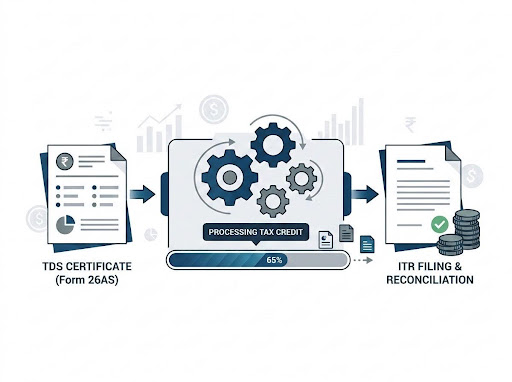
Many seafarers see TDS in salary records, Form 16, Form 26AS, AIS, bank interest statements, rent records, or investment reports. Confusion starts when they assume that TDS is an extra tax or that once TDS has been deducted, their tax work is complete. This is not correct. TDS means Tax Deducted at Source. In simple words, tax is deducted before the payment reaches you. The payer deducts tax and deposits it with the government, and later this TDS is adjusted while filing ITR.
TDS means Tax Deducted at Source. The Income Tax Department explains that under the TDS system, a person liable to make certain specified payments deducts tax at source and deposits it with the Central Government. The person from whose income tax has been deducted can claim credit based on Form 26AS or the TDS certificate issued by the deductor. For seafarers, TDS may appear on salary, interest, rent, dividends, capital gains, or other India-related income depending on the case.
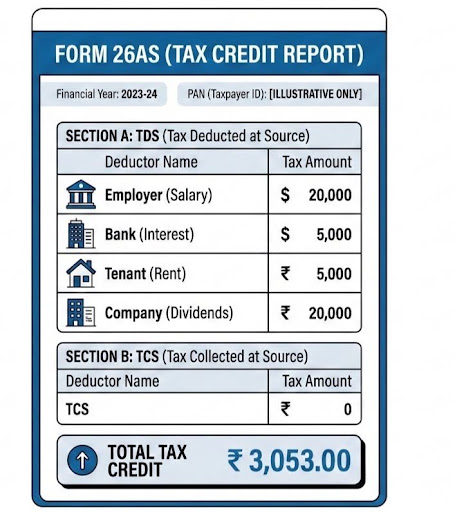
The person or organisation making the payment is usually responsible for deducting TDS. This person is called the deductor. For example, an employer may deduct TDS from salary, a bank may deduct TDS from interest, a tenant may deduct TDS from rent, and a company may deduct TDS from dividend payments. The seafarer receiving the income is the deductee. The deducted amount is not lost; it becomes tax credit against the seafarer’s PAN if reported correctly.
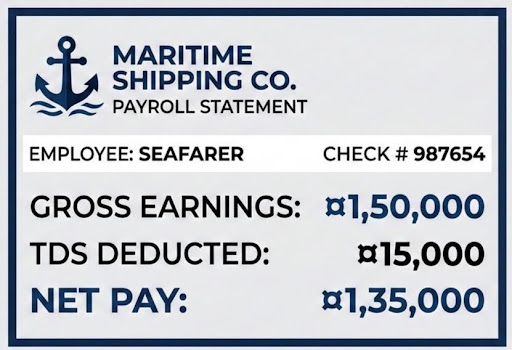
Salary TDS is deducted by the employer. Under Section 192, any person responsible for paying salary must deduct income tax at the time of payment, based on the estimated salary income for that financial year. For seafarers, this needs careful checking because salary may come from different company structures. If salary TDS is deducted, it may appear in Form 16, Form 26AS, and AIS. The ITR should match these records properly before filing.
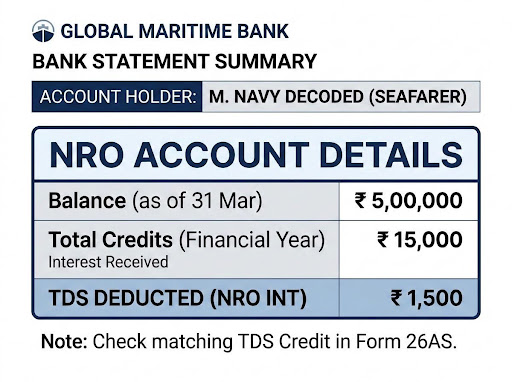
Banks or financial institutions may deduct TDS on interest income where applicable. The Income Tax Department’s TDS rate table lists TDS on income by way of interest other than interest on securities under Section 194A, and also mentions TDS on certain interest on securities under Section 193. For seafarers, NRO interest is especially important because many seafarers maintain both NRE and NRO accounts. If TDS appears on interest income, it should be matched before filing ITR.
TDS on NRO interest is generally deducted by the bank where the NRO account is maintained, subject to applicable tax rules. Many seafarers miss this point because they focus only on salary and ignore bank interest. If NRO interest appears in AIS or Form 26AS, it should be checked carefully. NRE interest and NRO interest are not treated in the same way. This is why seafarers should not file ITR by checking only salary slips or salary credits.
If a seafarer owns property in India and receives rent, TDS may be deducted by the tenant depending on the applicable section and conditions. The Income Tax Department’s TDS rate table mentions TDS under Section 194-I for rent, including rent for land, building, furniture, or fittings. If rent TDS is deducted, the seafarer should check whether it is correctly reflected in Form 26AS. Rent income and TDS credit should both be reported properly while filing ITR.
TDS on dividends may be deducted by the company or paying entity, depending on the applicable rules. The Income Tax Department’s TDS rate table lists Section 194 for income by way of dividend. For seafarers who invest in Indian shares or mutual funds, dividend entries may appear in AIS or Form 26AS. Even if the amount looks small, it should not be ignored because mismatches between reported income and ITR can create problems later.
Capital gains-related tax treatment depends on the type of asset, residential status, buyer, transaction structure, and applicable section. For seafarers, this can matter in cases of property sale, shares, mutual funds, or other Indian assets. A broker, buyer, company, or other responsible party may report transaction details or deduct tax where rules apply. Since capital gains can become complicated, seafarers should check demat statements, capital gains reports, AIS, Form 26AS, and take CA guidance before filing.
No, TDS is not extra tax for seafarers. It is tax already deducted and deposited on your behalf. The deducted amount can be adjusted against your final tax liability while filing ITR. If TDS is more than your actual tax payable, you may be eligible for refund. If TDS is less than your actual tax payable, you may need to pay balance tax. This is why TDS should be treated as tax credit, not as an additional burden.
TDS is not always final tax for seafarers. Your final tax is calculated only after checking total income, residential status, deductions, exemptions, tax regime, and available tax credits. If your foreign salary is not taxable in India in a particular case, Indian-source income may still need reporting. If Indian income has TDS and you do not file correctly, a mismatch may appear. TDS is only one part of the tax file; ITR decides the final result.
TDS matters more for seafarers because their tax situation may be different from shore-based employees. A seafarer may be NRI, resident, or RNOR depending on stay days and other conditions. They may also have foreign salary, Indian salary, NRO interest, rent, dividends, mutual funds, capital gains, or property income. If TDS is deducted on Indian income and the income is not reported correctly, it can create mismatch, refund delay, or tax notice risk.
Form 26AS is important because it shows tax credit information linked with PAN. The Income Tax portal explains that Form 26AS contains details such as TDS, TCS, advance tax, self-assessment tax, regular assessment tax, refund received, and other tax-related information. Before filing ITR, seafarers should check salary TDS, interest TDS, rent TDS, dividend TDS, and other entries. If an entry is missing or incorrect, it should be checked with the deductor before filing.
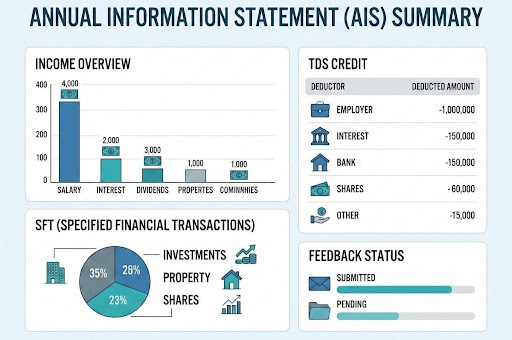
AIS means Annual Information Statement. The Income Tax Department explains that AIS provides information about a taxpayer for a financial year, including income, financial transactions, and tax details. Taxpayers can access AIS through the income-tax e-filing account and submit feedback if needed. For seafarers, AIS may show interest, dividends, securities transactions, capital gains, and other financial information. This helps identify income that may not be visible only through salary slips or bank messages.
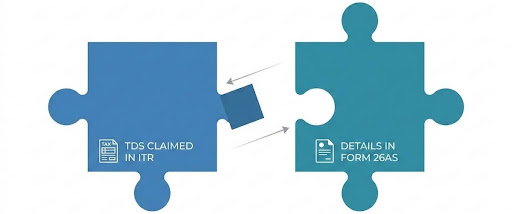
If the TDS claimed in ITR does not match Form 26AS, tax credit mismatch can occur. The Income Tax portal says the mismatch service shows differences between TDS, TCS, or income tax paid details provided in the ITR and the amounts reflected in Form 26AS. For seafarers, this mismatch may happen due to wrong PAN, delayed TDS filing by deductor, employer error, bank reporting issue, or missing income entry in ITR.
Before filing ITR, seafarers should check Form 16, Form 16A, Form 26AS, AIS, salary slips, NRE and NRO bank statements, rent records, dividend details, demat statements, capital gains reports, and investment records. The Income Tax portal also advises taxpayers to download AIS and Form 26AS, check actual TDS, TCS, and tax paid, and reconcile any discrepancy with the employer, tax deductor, or bank. Filing without checking these records can create avoidable problems.
The biggest mistake is assuming that TDS means tax filing is complete. Another mistake is treating TDS as extra tax. Some seafarers check only salary and ignore NRO interest, rent, dividends, and capital gains. Others claim TDS without matching Form 26AS or AIS. Some do not follow up with the deductor when TDS is missing. These mistakes can delay refunds, create mismatch, or lead to unnecessary tax communication. Correct checking before filing is always safer.
Seafarers should take CA help if they have foreign salary, NRI or resident status confusion, NRO interest, rent from Indian property, dividends, capital gains, property sale, multiple employers, missing TDS, Form 26AS mismatch, or AIS mismatch. Seafarer taxation can become complicated because residential status and income source matter a lot. If you are unsure who deducted TDS, why it was deducted, or how to claim it, professional guidance can prevent mistakes.
TDS is deducted by the person or organisation making certain specified payments. For seafarers, this may be the employer, bank, tenant, company, broker, buyer, or another deductor depending on the type of income. TDS is not extra tax and it is not always final tax. It is tax already deducted and adjusted while filing ITR. Before filing, check Form 26AS, AIS, salary TDS, interest TDS, rent TDS, dividend records, and capital gains records properly.
Taxation planning for seafarers should not only be considered at the end of the year while filing the return. It should include proper assessment of residential status, NRI or resident exemptions, Indian income, foreign income, NRE and NRO accounts, investments, tax credits, and long-term financial planning. Download Sailor Pro App – Built for Seafarers, an Initiative by Merchant Navy Decoded, to stay more organised and confident in your financial planning.
TDS is deducted by the person or organisation making specified payments. For seafarers, this may include an employer, bank, tenant, company, broker, buyer, or other deductor depending on the type of income.
Salary TDS is deducted by the employer at the time of salary payment, based on estimated taxable salary and applicable income tax rules. It may appear in Form 16, Form 26AS, and AIS.
TDS on NRO interest is generally deducted by the bank where the NRO account is maintained, subject to applicable rules. Seafarers should match this with Form 26AS, AIS, and bank statements.
If a seafarer owns property in India and receives rent, the tenant may deduct TDS depending on applicable rules and conditions. The rent income and TDS credit should be checked before filing ITR.
No, TDS is not extra tax. It is tax already deducted and deposited on your behalf. It is adjusted against your final tax liability while filing ITR.
No, TDS is not always final tax. Final tax depends on total income, residential status, deductions, exemptions, tax regime, and tax credits. ITR filing decides the final result.
Seafarers can check TDS details in Form 26AS and AIS through the income tax e-filing portal. They should also match these entries with Form 16, Form 16A, bank statements, salary slips, and investment records.
If TDS is deducted but not showing in Form 26AS, the seafarer should contact the employer, bank, tenant, company, or deductor. The issue may be due to wrong PAN, delayed TDS return filing, or incorrect reporting.
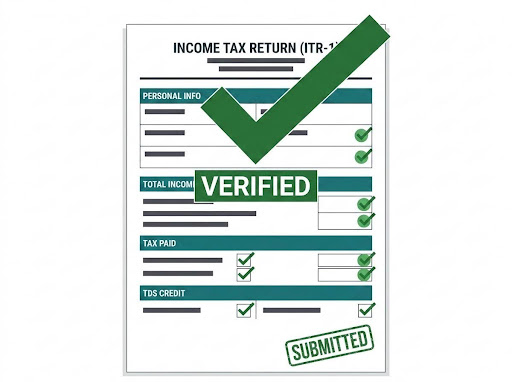
Yes, seafarers may get refund if the total TDS or tax paid is more than their final tax liability. To claim it, they must file ITR correctly, claim the available tax credit, and complete verification.
Disclaimer :- The opinions expressed in this article belong solely to the author and may not necessarily reflect those of Merchant Navy Decoded. We cannot guarantee the accuracy of the information provided and disclaim any responsibility for it. Data and visuals used are sourced from publicly available information and may not be authenticated by any regulatory body. Reviews and comments appearing on our blogs represent the opinions of individuals and do not necessarily reflect the views of Merchant Navy Decoded. We are not responsible for any loss or damage resulting from reliance on these reviews or comments.
Reproduction, copying, sharing, or use of the article or images in any form is strictly prohibited without prior permission from both the author and Merchant Navy Decoded.
Decoded Discount Alert! up to 50% OFF
Use Coupon Code Deep50