Hi this is Team Merchant Navy Decoded !!!

Please fill the below form with your query and we will get back to you in next 12 hours.

Rest assured your data is safe with us !!!🙂

Ask Your Query

When Is a Seafarer Considered Missing at Sea?

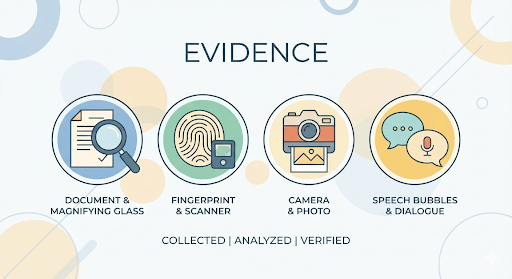
A seafarer may be considered missing at sea when the person cannot be located and the available evidence shows that they disappeared during the course of a voyage or maritime incident. The classification is not normally based on only one factor. Witness statements, Search and Rescue results, ship records, CCTV footage, the last known location, and the findings of the maritime casualty investigation can all play an important role.

What Does “Missing at Sea” Mean?

Missing at Sea

A missing seafarer is someone whose location and condition cannot be confirmed after a disappearance connected with a vessel or voyage. At the initial stage, the authorities may record the person as missing while Search and Rescue operations and investigations continue. Depending on the circumstances and evidence, the terminology may later change to “missing, presumed dead.”

Witness Evidence

Witness evidence can be one of the most important factors in determining what happened to a seafarer. Crew members may confirm when and where the person was last seen onboard, what duty they were performing, or whether anything unusual was noticed before the disappearance.

In some cases, a witness may have actually seen the seafarer fall overboard. Such evidence can help investigators establish a clearer timeline and understand whether the disappearance is likely connected with a man-overboard incident or another event.

Search and Rescue Operation

Search and Rescue Operation

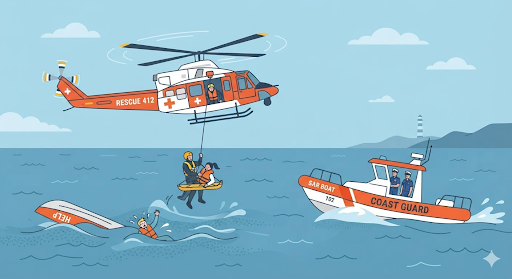
Once a seafarer is reported missing, a Search and Rescue (SAR) operation may be conducted by the Coast Guard or other relevant rescue authorities. The search may involve the vessel itself and other available rescue resources depending on the circumstances.

If an extensive search is conducted for a reasonable period and the person is still not located, this becomes an important part of the investigation. The fact that the Search and Rescue operation has ended without finding the seafarer can support the classification of the person as missing or presumed lost at sea.

Table of Contents

Ship’s Logbook and Duty Records

Ship’s Logbook and Duty Records

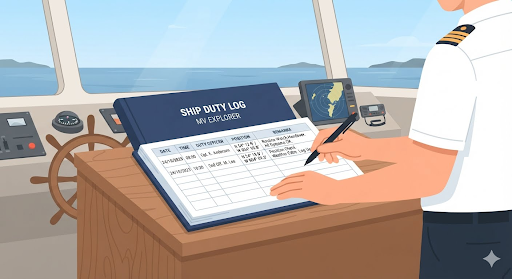
Investigators may examine the ship’s logbook and other records to understand the seafarer’s last known activities. Watchkeeping schedules, duty records, work assignments, and other onboard documentation can help establish when the person was last confirmed to be onboard.

These records can also help investigators compare witness statements and reconstruct the timeline. For example, they may show whether the seafarer was expected to report for watch or duty but failed to appear.

CCTV Footage and Last Known Location

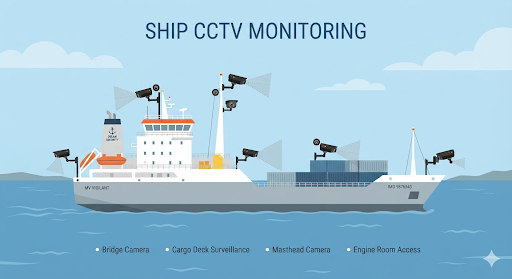
Where CCTV footage is available, investigators may use it to determine the last place and time the seafarer was seen. Footage from accommodation areas, passageways, decks, or other monitored locations can provide valuable evidence during a missing-person investigation.

The last known location can become particularly important when there is no direct witness to the disappearance. Investigators may use CCTV together with the logbook, duty records, and witness statements to understand what may have happened.

Time Passed After the Search

Time Passed After the Search

The amount of time that has passed since the disappearance and the completion of the Search and Rescue operation can also influence how the case is classified. A person may initially remain officially listed as missing while the authorities continue gathering information.

If the search has ended, the seafarer has not been recovered, and the circumstances indicate that survival is highly unlikely, the person may eventually be described in investigation records as missing, presumed dead.

Role of the Maritime Casualty Investigation

An official investigation may be conducted by the relevant flag State or maritime authority. The purpose is to establish the circumstances surrounding the disappearance and document the available evidence in a maritime casualty investigation report.

The investigation can consider witness statements, search results, vessel records, CCTV footage, the last known position of the seafarer, and other relevant information. The final terminology used in the report depends on the findings and circumstances of the particular case.

Final Advice for Seafarers and Families

A missing-seafarer case is normally determined through evidence rather than assumption. Witness statements, Search and Rescue results, ship records, CCTV footage, time elapsed, and the official maritime investigation all help establish what happened and how the person should be classified.

Seafarers who want to keep their professional and financial journey more organised can also explore Sailor Pro app, a platform built specifically to support seafarers with practical tools and guidance.

Frequently Asked Questions (FAQs)

A seafarer may be considered missing when the person cannot be located after disappearing during a voyage or maritime incident and Search and Rescue efforts have not found them.

Investigators may examine witness statements, Search and Rescue results, CCTV footage, the ship’s logbook, duty records, and the seafarer’s last known location.

The relevant flag State or maritime authority may conduct a marine casualty investigation into the circumstances surrounding the disappearance.

It generally means that the person has not been recovered, but the circumstances and available evidence indicate that the chances of survival are extremely low.

No. Ending the search can be an important factor, but the final status depends on the investigation, available evidence, and applicable procedures.

Compensation may eventually become payable depending on the investigation findings, employment agreement, CBA, applicable law, and whether the case is treated as a death.

Disclaimer :- The opinions expressed in this article belong solely to the author and may not necessarily reflect those of Merchant Navy Decoded. We cannot guarantee the accuracy of the information provided and disclaim any responsibility for it. Data and visuals used are sourced from publicly available information and may not be authenticated by any regulatory body. Reviews and comments appearing on our blogs represent the opinions of individuals and do not necessarily reflect the views of Merchant Navy Decoded. We are not responsible for any loss or damage resulting from reliance on these reviews or comments.

Reproduction, copying, sharing, or use of the article or images in any form is strictly prohibited without prior permission from both the author and Merchant Navy Decoded.

DIWALI SALE

Decoded Discount Alert! up to 50% OFF

DIWALI SALE

Decoded Discount Alert! up to 50% OFF

Use Coupon Code Deep50

Days
Hours
Seconds
0
Would love your thoughts, please comment.x
()
x