Hi this is Team Merchant Navy Decoded !!!
Please fill the below form with your query and we will get back to you in next 12 hours.
Rest assured your data is safe with us !!!🙂
Ask Your Query| For Beginner | For Professional |
|---|---|
| GME | Engine Side |
| G.P. Rating | Deck Side |
| ETO | G.P. Rating |
| IMUCET & Sponsorship | Combo Offers |
| Free Course | MEO |
| Free Course |
| For Beginner | For Professional |
|---|---|
| GME | Engine Side |
| G.P. Rating | Deck Side |
| ETO | G.P. Rating |
| IMUCET & Sponsorship | Combo Offers |
| Free Course | MEO |
| Free Course |
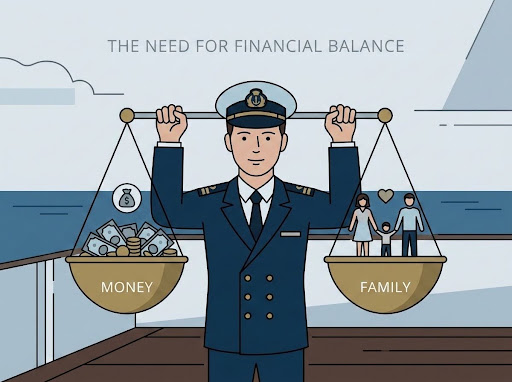
Many seafarers earn well during contracts, but earning money is only the first step. The real challenge is managing that money wisely. A good salary can support a family, pay bills, clear loans, and improve lifestyle. But without a clear financial plan, even high income can disappear quickly. Asset allocation helps seafarers divide money into different parts based on safety, growth, emergency needs, protection, and long-term goals. In simple words, it gives every rupee a clear job.
Seafarers do not always have regular monthly income like shore-based employees. During contract, income may be high. During leave or between contracts, income may stop or reduce. But family expenses, EMIs, insurance premiums, school fees, medical needs, travel, and document renewal continue. Asset allocation helps seafarers prepare for both good months and difficult months. It spreads money across emergency funds, insurance, fixed deposits, mutual funds, gold, and property based on purpose.
Asset allocation means dividing money into different asset classes based on your goals, risk comfort, income, and time period. SEBI’s investor education material explains asset allocation as a strategy of investing money into different asset classes such as equity and debt, suitable to an investor’s income and risk profile. In simple words, asset allocation means not keeping all money in one place. It creates balance between safety, liquidity, protection, and growth.
A high salary feels powerful, but it can disappear without planning. Many seafarers spend heavily during leave, take loans, buy expensive items, or invest randomly. The problem is not always low income. The problem is often poor money direction. A proper financial plan helps decide how much money should stay safe, how much should be invested, how much should protect the family, and how much can be used for lifestyle. Salary should build future security, not only current comfort.
Keeping all money in one place can create problems. If all money is in savings, growth may be low. If all money is in mutual funds, market falls can create stress. If all money is in property, emergency access can become difficult. If all money is in gold, the plan may not support every goal. Different assets have different roles. A balanced plan gives safety for today and growth for tomorrow. This is why diversification matters.
An emergency fund is the first part of asset allocation. This is money kept aside for unexpected situations like delayed joining, medical needs, family emergencies, urgent travel, document renewal, or contract gaps. Emergency money should not be used for lifestyle spending or risky investing. It should be available when needed. For seafarers, an emergency fund is very important because income may not come every month. It gives confidence to the family during uncertain periods.
A practical emergency fund for seafarers can be around 6 to 8 months of family expenses. This can include household expenses, EMIs, school fees, insurance premiums, medical needs, travel, and other regular commitments. The exact amount depends on family size, loan burden, rank, income stability, and contract pattern. A young unmarried seafarer may need less. A seafarer with family and loans may need more. The goal is simple: family should not panic during income gaps.
Emergency money should stay safe and easy to access. It should not be placed in high-risk products. If emergency money is invested in market-linked products and the market falls, you may be forced to withdraw at the wrong time. Savings accounts, fixed deposits, or other liquid options may be used based on personal comfort. Emergency money is not for high returns. It is for protection, peace of mind, and quick access during difficult situations.
Before chasing high returns, seafarers should check family protection. Investment helps money grow, but insurance protects the family from sudden financial shocks. If the family depends on the seafarer’s income, insurance becomes important. Medical expenses can disturb savings. An unfortunate event can create major financial pressure for dependents. Insurance is not mainly for showing returns. Its main purpose is protection. A strong financial plan should first protect the family, then focus on wealth creation.
Many seafarers depend on company medical cover, but family needs may continue even when the seafarer is not onboard. Personal medical insurance can help protect savings from large hospital bills. Medical emergencies can come suddenly, and treatment costs can disturb financial planning. A seafarer should check coverage amount, family members covered, waiting periods, exclusions, room rent limits, claim process, and renewal rules. Medical insurance should be understood properly before buying. Do not buy only because someone suggested it.
Term insurance is important if the family depends on the seafarer’s income. Its purpose is simple: provide financial support to the family if something unfortunate happens. Term insurance is mainly protection, not investment. A seafarer should check cover amount, premium, policy duration, exclusions, nominee details, and claim process. Do not confuse term insurance with savings or investment plans. If your family depends on your income, term insurance can become a strong protection tool in your financial plan.
Fixed deposits are simple and familiar. Many seafarers trust FDs because they feel safe and predictable. Fixed deposits can be useful for short-term goals, backup money, and stable savings. DICGC insures eligible bank deposits up to ₹5,00,000 per depositor per bank, including principal and interest, subject to rules. This makes bank deposits useful for safety, but seafarers should still understand limits, interest rate, tax, and premature withdrawal rules before relying on FDs fully.
Seafarers can use fixed deposits for money needed in the short term or for safer planning. Examples include course fees, document renewal, family expenses, travel, emergency backup, or money that should not face market risk. FD gives stability, but it should be used for the right purpose. Before opening an FD, check interest rate, tenure, premature withdrawal penalty, tax impact, and whether you may need the money earlier. Fixed deposit is useful, but not for every goal.
Fixed deposits give stability, but they may not be enough for long-term wealth creation. Long-term goals like children’s education, retirement, home planning, and financial freedom need growth. If all money stays only in low-growth products, inflation can reduce its future value. This does not mean FDs are bad. It means FDs should do the job of safety, not the full job of wealth creation. Long-term money may need growth-oriented planning based on risk comfort.
Mutual funds can support long-term goals like children’s education, retirement, home planning, and financial freedom. They can invest in equity, debt, hybrid, index, or other categories depending on the scheme objective. But mutual funds should be selected carefully. SEBI says the choice of investment avenues depends on financial goals, risk tolerance, investment horizon, and overall financial situation. For seafarers, this means mutual funds should match goals, not social media tips or recent returns.
Mutual funds are useful, but they are not risk-free. AMFI clearly states that mutual fund schemes are not guaranteed or assured return products, and mutual fund units involve risks including possible loss of principal. This is important for seafarers because salary is hard-earned. Do not invest emergency money in high-risk funds. Understand fund category, time period, risk level, expense ratio, exit load, and goal suitability before investing. Growth needs patience and understanding.
Gold has a strong emotional value in many Indian families. It can act as a support asset during uncertain times. Some people use gold as a hedge or backup. But gold should not become the full financial plan. Physical gold has issues like making charges, purity, storage, and safety. Gold may help preserve value in some situations, but it may not always create strong long-term growth. For seafarers, gold should be used carefully and in balance.
Seafarers can keep gold as a small support asset if it fits their financial plan. But it should not be bought only because of emotion, family pressure, or social status. Before buying gold, ask: Is this for investment, marriage planning, emergency backup, or tradition? Physical gold and investment gold are not the same. Making charges and storage risk should be considered. Gold can support diversification, but it should not replace emergency funds, insurance, or long-term growth investments.
Many seafarers dream of buying land, a flat, or a house. Property can be a long-term asset and can give family security. But it needs careful planning. Before buying property, check location, legal documents, builder record, loan burden, EMI, maintenance cost, registration cost, and future cash flow. A badly planned property decision can create pressure for years. Property should not be bought only because salary is high during contract. It should fit the complete financial plan.
Property is not easily liquid. This means it cannot always be sold quickly when money is needed. Selling property may take time, paperwork, legal checking, and the right buyer. If a seafarer needs money urgently, property may not help immediately. This is why emergency money should never depend only on property. Property can be useful for long-term security, but short-term money and emergency money should remain separate. Liquidity is very important in a seafarer’s financial plan.
A simple asset allocation example can look like this: emergency money in savings or FD, family protection through insurance, short-term money in safer options, long-term money in suitable mutual funds, small support exposure to gold, and property only after careful planning. This is only an example, not a fixed rule. Every seafarer’s plan will be different. Age, rank, family responsibility, loans, risk comfort, and future goals should decide the actual allocation. Balance is more important than copying others.
Before placing money anywhere, ask why the money is needed. Is it for an emergency? Is it for children’s education? Is it for retirement? Is it for buying a house? Is it for short-term expenses? The goal decides the asset. Short-term money should stay safer. Emergency money should be liquid. Long-term money can take growth risk if the investor understands the product. Family protection should be handled through insurance. Goal-based planning reduces random decisions.
Short-term goals are needs coming soon, such as travel, course fees, document renewal, school fees, or family expenses. These goals need safety and easy access. Long-term goals include retirement, children’s higher education, home planning, and financial freedom. These goals need growth over time. A seafarer should not use the same product for every goal. Short-term money should not be exposed to high market risk. Long-term money should not remain idle without growth planning.
Liquidity means how quickly money can be accessed when needed. For seafarers, liquidity is important because joining may get delayed, medical needs can come suddenly, or family may need urgent support while the seafarer is onboard. Savings accounts and liquid options give quick access. Property and some investments may take time to convert into cash. A balanced plan should always keep enough liquid money. Without liquidity, even a person with assets may feel financially stuck during emergencies.
A simple plan can start with emergency fund first. Then take medical insurance and term insurance if needed. Keep short-term money in safer options like savings or fixed deposits. Invest long-term money gradually according to goals and risk comfort. Keep gold and property as support assets, not the full plan. Review the allocation once or twice a year. Increase investments as income grows. Reduce unnecessary liabilities. This simple structure can help seafarers build balance and confidence.
Common mistakes include keeping all money in savings, putting all savings in fixed deposits, investing heavily in mutual funds without emergency money, buying property without checking liquidity, buying gold emotionally, and ignoring insurance. Another mistake is copying friends or seniors without checking personal goals. Asset allocation is personal. What suits one seafarer may not suit another. Your rank, income pattern, family needs, loans, and goals are different. Avoid random investing. Build a plan that fits your life.
For seafarers, financial planning is not only about selecting one product. It is about understanding your goals, knowing the risks, protecting your future, and making disciplined financial decisions. Download Sailor Pro app – Built for Seafarers, an Initiative by Merchant Navy Decoded, to stay more organised and confident in your financial planning. You can also follow finance_for_seafarers on Instagram and join the WhatsApp channel Financial Management for Seafarer for practical money guidance created especially for seafarers.
Asset allocation means dividing money into different assets like savings, fixed deposits, insurance, mutual funds, gold, and property based on purpose, risk, and time period.
It is important because seafarers may have contract-based income. Asset allocation helps manage emergencies, family protection, short-term needs, and long-term wealth goals.
Seafarers should divide money by purpose. Emergency money should stay safe, family protection should be through insurance, and long-term money can be invested for growth.
Many seafarers can aim for around 6 to 8 months of family expenses, depending on loans, family responsibility, income stability, and contract pattern.
No. Fixed deposits are useful for safety and short-term goals, but long-term wealth creation may need growth-oriented investments.
Mutual funds can be useful for long-term goals if selected properly. Seafarers should understand risk, fund category, time period, and goal suitability.
Gold can be a small support asset if it fits the plan, but it should not become the full investment strategy.
Property can be useful if bought carefully, but it is not easily liquid. Legal checks, EMI, location, and cash flow should be reviewed first.
Liquidity is important because seafarers may need money quickly during contract gaps, medical issues, family emergencies, or delayed joining.
A simple plan includes an emergency fund, insurance, fixed deposits for short-term safety, mutual funds for long-term growth, and careful use of gold and property.
Disclaimer :- The opinions expressed in this article belong solely to the author and may not necessarily reflect those of Merchant Navy Decoded. We cannot guarantee the accuracy of the information provided and disclaim any responsibility for it. Data and visuals used are sourced from publicly available information and may not be authenticated by any regulatory body. Reviews and comments appearing on our blogs represent the opinions of individuals and do not necessarily reflect the views of Merchant Navy Decoded. We are not responsible for any loss or damage resulting from reliance on these reviews or comments.
Reproduction, copying, sharing, or use of the article or images in any form is strictly prohibited without prior permission from both the author and Merchant Navy Decoded.
Decoded Discount Alert! up to 50% OFF
Use Coupon Code Deep50