A seafarer earns with hard work, long contracts, night watches, inspections, documents, exams, and months away from family. After every contract, money comes into the bank account, but the big question starts after that: what should be done with this money? Some seafarers keep everything in savings accounts. Some open fixed deposits. Some start buying random shares after watching short videos or listening to friends. But investing without time, knowledge, and discipline can become risky. This is where mutual funds can become a simple starting point for seafarers.
The Money Problem Most Seafarers Face
Life at sea is not like a normal office job. A seafarer may be onboard for months with limited internet, less personal time, and a busy duty schedule. During this period, tracking the stock market daily is not easy. Even when salary is good, money can get used quickly if there is no plan. Family expenses, loan EMIs, home plans, education costs, medical needs, certificates, travel, and gaps between contracts can affect savings. That is why seafarers need a simple and disciplined investment approach.
The Simple Idea Behind Mutual Funds
A mutual fund is a way where many investors put their money together into one common pool. This pooled money is then invested in different options such as shares, bonds, government securities, and money market instruments. AMFI explains that a mutual fund collects and pools money from many investors and invests it in assets like equities, bonds, government securities, and money market instruments. In simple words, instead of one seafarer trying to select every share alone, professional managers manage the money according to the fund’s objective.
Imagine It Like a Common Investment Pool
Think of a mutual fund like a common investment pool. Many people contribute money into that pool. A professional team then decides where that money should be invested. Some funds invest mainly in shares. Some invest in debt instruments. Some invest in a mix of both. As an investor, you receive units of the mutual fund. The value of those units can increase or decrease depending on how the investment performs. This makes mutual funds market-linked products, not fixed-return products.
Who Handles the Investment Decisions?
Mutual funds are managed by Asset Management Companies, also called AMCs. Inside an AMC, there are fund managers, research analysts, risk teams, and market professionals. The fund manager’s job is to manage the scheme according to its investment objective. This professional management is useful for seafarers because they may not have the time to study companies, sectors, balance sheets, interest rates, and market news every day. However, professional management does not mean guaranteed profit. It only means the money is managed through a structured process.
Why Seafarers Should Not Depend Only on Random Stock Tips
Many seafarers start investing in direct shares after hearing tips from friends, social media videos, or WhatsApp groups. This can be dangerous if there is no proper research. Buying shares directly means you must understand the company, business model, management quality, financial results, valuation, market conditions, and exit plan. For a seafarer onboard, this is not always practical. Mutual funds do not remove risk, but they reduce the need to personally select every company. SEBI’s investor guidance also advises investors to choose schemes based on investment objective and risk appetite and to read documents carefully.
Mutual Funds vs Direct Shares for Seafarers
Direct shares give more control, but they also demand more time and knowledge. You decide what to buy, when to buy, how much to buy, and when to exit. A wrong decision can directly affect your money. Mutual funds work differently. The fund manager selects investments based on the scheme objective. The money is usually spread across multiple companies, sectors, or assets depending on the fund type. For seafarers who cannot track the market daily, this can be a more organised way to start investing.
Mutual Funds Are Not Fixed Deposits
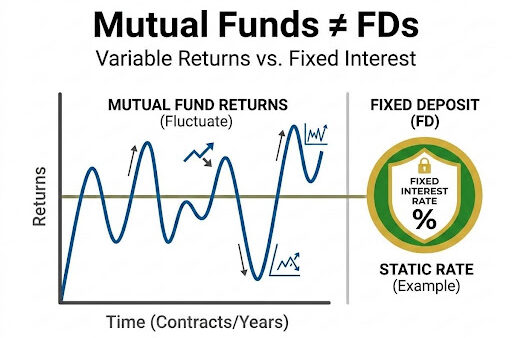
One big mistake seafarers should avoid is treating mutual funds like fixed deposits. Fixed deposits usually give a fixed interest rate, but mutual funds are market-linked. Their value can go up or down. AMFI clearly states that mutual fund schemes are not guaranteed or assured return products, and investment in mutual fund units involves risks, including possible loss of principal. This means seafarers should invest only after understanding the risk, time horizon, and purpose of the fund.
Can Seafarers Get Guaranteed Returns From Mutual Funds?
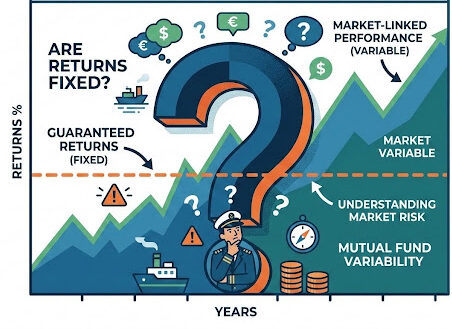
No. Mutual funds do not guarantee returns. Returns depend on market performance, fund strategy, interest rates, economic conditions, and investment period. A fund that performed well earlier may not perform the same way in the future. AMFI also explains that past performance does not necessarily guarantee better returns in future. Seafarers should not invest only by looking at last year’s return. The better approach is to match the fund with the goal, risk capacity, and investment duration.
What Type of Seafarer Can Consider Mutual Funds?
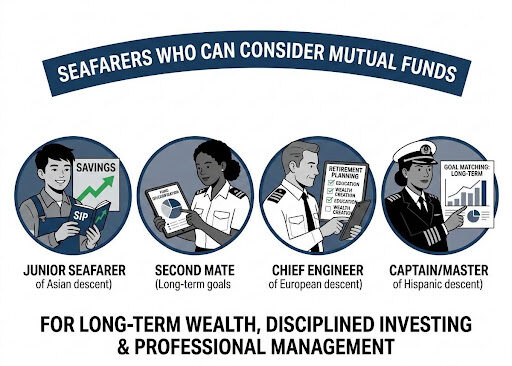
Mutual funds can be considered by seafarers who want long-term wealth creation, disciplined investing, and professional management. A junior seafarer may use them slowly after building an emergency fund. A senior officer may use them for retirement planning, children’s education, home goals, or long-term wealth creation. A seafarer with irregular income can also plan investments around contract income. But the fund type should match the goal. Short-term money, emergency funds, and long-term wealth goals should not be treated in the same way
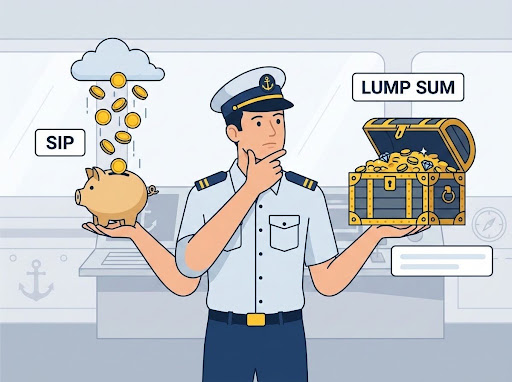
SIP or Lump Sum: What Fits a Seafarer?
A seafarer may not always have a fixed monthly income like a shore employee. Because of this, both SIP and lump sum investing may be used depending on the situation. SIP means investing a fixed amount regularly. It can help build discipline. Lump sum means investing a larger amount at once, usually after receiving contract income. But investing a large amount randomly without planning can be risky. Seafarers should first decide the goal, time period, emergency requirement, and risk comfort before choosing SIP or lump sum.
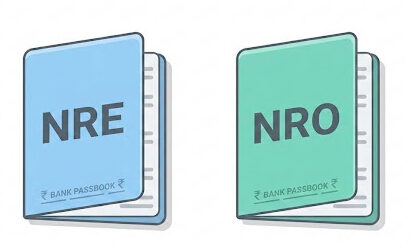
NRE and NRO Account Angle for Seafarers
Many seafarers maintain NRE and NRO accounts. This becomes important while investing. SEBI investor education material states that an NRI having an NRE or NRO bank account can invest in Indian mutual funds after completing KYC, on repatriable and non-repatriable basis. Seafarers should check their residential status, bank account type, FATCA details, and mutual fund platform requirements before investing. The account used for investment can also affect repatriation and tax handling, so proper guidance may be useful.
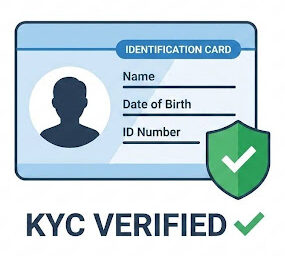
KYC Before Mutual Fund Investment
Before investing in mutual funds, KYC is required. AMFI explains that Know Your Customer is a mandatory process to invest in mutual funds and helps ensure compliance and security in the securities market. For seafarers, this means PAN, identity proof, address proof, bank details, FATCA declaration, and nominee details should be updated properly. Since seafarers travel frequently, it is better to complete KYC and keep documents organised before joining a vessel.
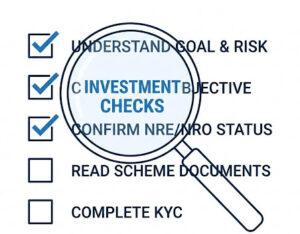
What Seafarers Should Check Before Investing
Before investing, seafarers should check the fund objective, risk level, expense ratio, exit load, investment horizon, past performance, fund category, portfolio quality, and tax impact. SEBI’s investor website explains the Riskometer as a tool that shows the risk level of a mutual fund scheme, ranging from low to very high, and it is mandatory for asset management companies to display it. This helps investors understand the risk level before investing. A seafarer should never ignore the Riskometer.
Emergency Fund Comes Before Mutual Funds
Before starting mutual funds, a seafarer should first create an emergency fund. This is important because there can be gaps between contracts, sudden family expenses, medical issues, travel needs, or course and certificate expenses. Emergency money should be safe and easily accessible. Mutual funds, especially equity mutual funds, are better suited for planned goals and suitable time horizons. If emergency money is invested in risky funds, the seafarer may be forced to withdraw during a market fall.
Insurance Comes Before Aggressive Investing
Many seafarers focus only on investment returns and forget protection. This is a mistake. If family members depend on the seafarer’s income, insurance planning becomes important. Term insurance, medical coverage, emergency funds, and basic protection should come before aggressive investing. Mutual funds can help in wealth creation, but they cannot replace protection. A strong financial plan should first protect the family, then build savings, and then grow money through suitable investments.
Common Mistakes Seafarers Make in Mutual Funds
Common mistakes include investing only by looking at past returns, choosing funds from social media tips, investing without a goal, ignoring risk, not checking exit load, not understanding tax impact, investing emergency money in equity funds, and not updating nominee details. Some seafarers also invest a big lump sum after contract without understanding market risk. Another mistake is stopping investments whenever the market falls. Mutual funds require patience, planning, and discipline, not emotional decision-making.
How Mutual Funds Can Support Long-Term Goals
Mutual funds can help seafarers plan for long-term goals like buying a house, children’s education, retirement, family security, and wealth creation. The important point is to match the fund with the goal. Short-term goals need safer planning. Long-term goals may allow more market-linked exposure depending on risk capacity. The aim should not be quick profit. The aim should be disciplined investing over time. For seafarers, this discipline is important because income may come in contract-based cycles.
What Should a Beginner Seafarer Do First?
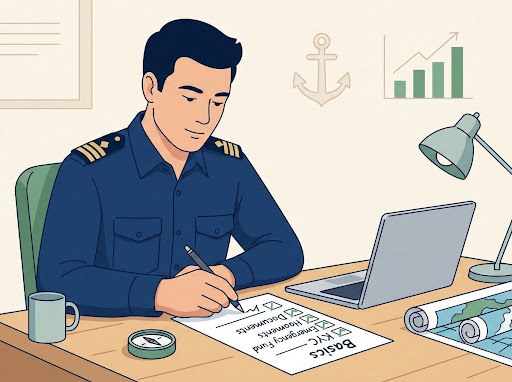
A beginner seafarer should not start by chasing the highest-return fund. First, understand the basics. Build an emergency fund. Complete KYC. Keep PAN, bank account, nominee, and documents ready. Decide financial goals. Understand risk. Start small if needed. Read scheme documents carefully. Avoid random advice. If confused, consult a qualified financial professional or a SEBI-registered investment adviser. Mutual funds can be useful, but they should be selected after understanding the purpose and risk.
Table of Contents
Final Advice on Mutual Funds for Seafarers
Mutual funds can be a useful investment option for seafarers who want to invest without tracking the market daily. They provide professional management, diversification, and a structured way to participate in market-linked investing. But mutual funds are not magic products. They do not guarantee returns and they carry risk. Seafarers should invest only after understanding their goals, risk capacity, time horizon, account type, KYC requirements, and tax impact. Your job is sailing safely. Your money also needs a safe and planned direction.
Stay Financially Prepared at Sea
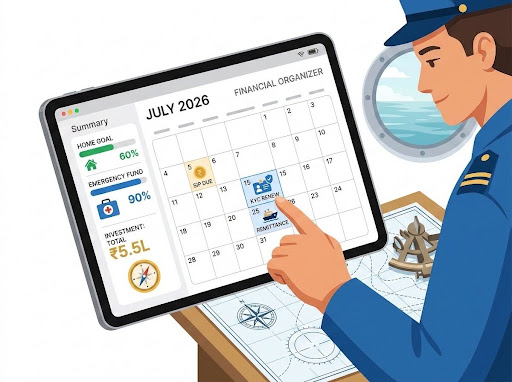
For seafarers, mutual fund investing is not only about selecting one scheme. It is about understanding goals, managing risk, protecting family, and making disciplined financial decisions. Download Sailor Pro app Built for Seafarers, an Initiative by Merchant Navy Decoded, to stay more organised and confident in your financial planning. You can also follow finance_for_seafarers on Instagram and join the WhatsApp channel Financial Management for Seafarer for practical money guidance created especially for seafarers.
Mutual funds are investment products where money from many investors is pooled and professionally invested in assets like shares, bonds, government securities, and money market instruments.
Mutual funds are regulated investment products, but they are not risk-free. Their value can go up or down depending on market conditions and the type of fund selected.
Yes, eligible seafarers, including NRIs with NRE or NRO bank accounts, can invest in Indian mutual funds after completing KYC, subject to applicable rules and platform requirements.
For many seafarers, mutual funds may be easier than direct shares because professional managers handle investment decisions. Direct shares require more time, research, and market knowledge.
Both can be used depending on income pattern, goals, and risk capacity. SIP helps build discipline, while lump sum investing may be planned after contract income.
Seafarers should check fund objective, risk level, expense ratio, exit load, time horizon, tax impact, fund category, and whether the fund matches their financial goal.
Yes. KYC is mandatory for mutual fund investment. Seafarers should keep PAN, identity proof, address proof, bank details, nominee, and FATCA details updated.
Seafarers should take professional advice when they are unsure about fund selection, NRE/NRO account usage, taxation, risk level, goal planning, or large investments.
Disclaimer :- The opinions expressed in this article belong solely to the author and may not necessarily reflect those of Merchant Navy Decoded. We cannot guarantee the accuracy of the information provided and disclaim any responsibility for it. Data and visuals used are sourced from publicly available information and may not be authenticated by any regulatory body. Reviews and comments appearing on our blogs represent the opinions of individuals and do not necessarily reflect the views of Merchant Navy Decoded. We are not responsible for any loss or damage resulting from reliance on these reviews or comments.
Reproduction, copying, sharing, or use of the article or images in any form is strictly prohibited without prior permission from both the author and Merchant Navy Decoded.