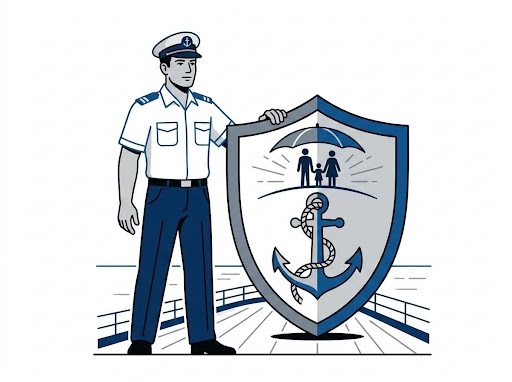
Term insurance is life insurance mainly designed for protection. If the insured person dies during the policy term, the family receives the sum assured as per policy conditions. IRDAI explains that life insurance provides financial cover for risks linked with human life, such as death, disability, and accident, where loss of life or disability can create loss of income for the household. For seafarers, this matters because family income may depend heavily on sea salary.
What Is a Term Insurance Rider?
A term insurance rider is an additional benefit attached to a basic term plan for an extra premium. The base policy mainly pays a death benefit when the insured dies during the covered period. A rider may add protection for critical illness, accidental death, permanent disability, or future premium payments. IRDAI records show that insurers offer different rider types, but their availability and conditions vary between products and companies.
Why Term Insurance Riders Matter for Seafarers
Seafarers often support their entire household through one income. A serious illness, accident, or disability may stop sea service even when the person survives. During contract gaps, the family may also depend heavily on savings. Riders can add protection for risks that a death-only term plan may not address. However, a rider helps only when the event meets its exact definition. The rider’s name does not mean that every illness, accident, or disability will be covered.
Base Term Insurance Cover Comes First
Before selecting riders, a seafarer should calculate sufficient base term insurance. The main cover should support the family after death by considering household expenses, outstanding loans, children’s education, dependent parents, and inflation. Riders should strengthen a suitable base policy, not replace it. Buying several riders with a small base cover can leave the family underinsured. The first priority should be an adequate death benefit during the years when the family depends on the seafarer’s income.
What Is a Waiver of Premium Rider?
A waiver of premium rider may remove future premium payments after a covered event while keeping the main policy active. Depending on the rider, the trigger may be permanent disability, critical illness, or another listed condition. This can be useful when a seafarer cannot work and regular income stops. The benefit does not apply to every medical problem. The policy defines the qualifying event, required medical evidence, waiting conditions, and the premiums that may be waived.
Why Premium Waiver Can Help a Seafarer
A serious illness or disability can stop a seafarer’s income. Paying future term insurance premiums may become difficult during treatment or permanent medical unfitness. When the event qualifies under the rider, the insurer may keep the life cover active without collecting certain future premiums. This can prevent the family’s protection from ending during a financial crisis. Check whether the waiver applies only to the base plan or also covers premiums charged for other riders.
What Is a Critical Illness Rider?
A critical illness rider may pay a fixed benefit after diagnosis of an illness or completion of a medical procedure listed in the rider. Payment depends on the policy definition, not only on the name used by the doctor. Covered illnesses, disease stages, waiting periods, survival requirements, and exclusions can differ. IRDAI product records include critical illness riders, but seafarers must check the benefits in the individual policy wording.
Why Critical Illness Cover Is Important
A serious disease can create medical expenses and income loss at the same time. A seafarer diagnosed with cancer, stroke, or a major heart condition may remain medically unfit for months or permanently. A critical illness benefit can help with household costs, loan payments, rehabilitation, or income gaps. However, payment is made only when the illness and its stage meet the rider’s conditions. A general diagnosis does not automatically create a valid rider claim.
Critical Illness Rider vs Health Insurance
Health insurance and a critical illness rider perform different jobs. Health insurance generally pays eligible treatment and hospital expenses. A critical illness rider usually pays a fixed amount after a covered diagnosis or procedure. It may not cover every stage of a disease and may end after one valid claim. Seafarers should not cancel health insurance after buying this rider. One helps manage treatment costs, while the other can provide money for wider financial needs.
What Is an Accidental Death Rider?
An accidental death rider pays an additional amount when death occurs because of an accident covered under the rider. For example, a ₹1 crore base cover with a ₹20 lakh accident rider may provide ₹1.2 crore after a valid accidental death claim. IRDAI records show that accidental death riders are available, but definitions and exclusions differ. Death from another covered cause would normally receive the base benefit without the additional accident amount.
Accident Rider vs Higher Base Cover
Before adding an accidental death rider, compare its cost with increasing the base term cover. A larger base cover can protect the family after death from any covered cause. An accident rider pays only when its accident conditions are satisfied. A higher base cover may therefore be simpler when the family needs the same support regardless of how death occurs. Compare written quotations, eligibility conditions, exclusions, and the total benefit before deciding between these options.
What Is a Permanent Disability Rider?
A permanent disability rider may pay when the insured suffers a disability that meets the policy definition. It may cover permanent total disability, permanent partial disability, or only disability caused by an accident. IRDAI listings show accidental death and disability riders in different forms. Seafarers must check the disability table, covered causes, exclusions, assessment process, and whether payment is made as a lump sum, instalments, or premium waiver.
Why Disability Protection Matters for Seafarers
Medical fitness is necessary for working onboard. A seafarer may survive an accident but lose eyesight, movement, a limb, or the ability to perform sea duties. A basic term plan may not pay because the insured person is alive. Health insurance may cover eligible treatment but not years of lost sea income. Disability protection can therefore be as important as death protection, especially when the seafarer is the main earning member of the family.
Understand the Disability Definition
The words “permanent disability” may sound simple, but policy definitions can be strict. One rider may require the loss of specific limbs or senses. Another may require complete inability to perform any occupation. Some riders cover only accidental disability and exclude illness-related disability. Claims may require specialist reports, medical-board assessments, or certificates from approved doctors. Read the definition before buying and compare it with medical risks that could end a seafarer’s sailing career.
Rider Exclusions and Claim Conditions
Every rider has its own conditions. Important areas may include waiting periods, survival periods, age limits, occupational restrictions, excluded activities, substance-related events, self-inflicted injuries, and non-disclosure of medical information. The exact exclusions vary and should never be assumed. IRDAI provides a framework for filing life insurance products and riders, but policyholders must still read the issued contract, benefit illustration, and rider wording for their selected plan.
Disclose Your Seafaring Occupation Correctly
A seafarer should disclose rank, vessel type, sailing duties, travel pattern, health history, smoking status, and hazardous work details requested in the proposal form. Never allow an agent to describe a sea-going job as a normal office occupation only to obtain a lower premium. Riders may contain occupational conditions. Incorrect or incomplete information can create problems during underwriting or a claim. Read the completed proposal form, correct mistakes, and keep a copy with the policy.
Compare the Rider Cost and Benefit
Every rider increases the premium, so adding more riders does not automatically create better insurance. Compare the additional cost with the benefit amount, duration, exclusions, and claim trigger. Also compare the rider with a separate critical illness, health, or personal accident policy. A rider may be convenient, while a separate policy may provide different benefits or limits. The correct option depends on income, health, family responsibilities, existing protection, and the specific financial risk being covered.
Avoid Making Term Insurance Too Complex
A term plan with many small riders can become difficult for the family to understand during a claim. Each benefit may have a different expiry age, definition, document requirement, and payment rule. Simplicity is valuable. A strong base term cover with one or two carefully selected riders may be more useful than a complicated policy filled with small benefits. The spouse should understand which events are covered and where all policy and rider documents are stored.
What Seafarers Should Check Before Adding Riders
Check the extra premium, benefit amount, policy duration, exclusions, waiting period, survival period, medical requirements, occupational conditions, and claim documents. Understand whether the rider gives a lump-sum payment, monthly income, premium waiver, or only an additional death benefit. Also ask whether a rider claim reduces the main term cover. Get answers from the policy wording or written insurer communication. Do not depend only on an agent’s verbal explanation or promotional brochure.
Questions to Ask About Term Insurance Riders
Ask what event activates the rider and how the insurer defines that event. Check when the rider ends, whether the premium remains fixed, and what happens if the base plan lapses. Ask whether multiple rider benefits can be claimed for the same event. Find out who assesses disability and which medical documents are required. These questions can help a seafarer compare products properly and avoid discovering important restrictions only after illness, disability, or an accident.
Review Riders When Responsibilities Change
Riders should be reviewed after marriage, childbirth, a home loan, promotion, salary growth, or changes in health. A benefit selected early in a career may become insufficient when responsibilities increase. Check benefit amounts, expiry ages, premiums, nominee details, and duplicate protection from other policies. Do not cancel an existing policy until a replacement has been issued and accepted. Regular review helps ensure that the policy continues to match the family’s present financial needs.