Hi this is Team Merchant Navy Decoded !!!
Please fill the below form with your query and we will get back to you in next 12 hours.
Rest assured your data is safe with us !!!🙂
Ask Your Query| For Beginner | For Professional |
|---|---|
| GME | Engine Side |
| G.P. Rating | Deck Side |
| ETO | G.P. Rating |
| IMUCET & Sponsorship | Combo Offers |
| Free Course | MEO |
| Free Course |
| For Beginner | For Professional |
|---|---|
| GME | Engine Side |
| G.P. Rating | Deck Side |
| ETO | G.P. Rating |
| IMUCET & Sponsorship | Combo Offers |
| Free Course | MEO |
| Free Course |
A temperature transmitter is an important instrument used in industrial and marine systems to measure temperature and convert it into a standardized electrical signal. This signal is then transmitted to monitoring, control, or automation systems for further operation. Temperature transmitters are widely used onboard ships because machinery and engine systems require continuous temperature monitoring for safe and efficient functioning.
In marine applications, temperature transmitters help monitor critical parameters such as engine cooling water temperature, lubricating oil temperature, exhaust gas temperature, boiler temperature, and fuel oil heating systems. They improve automation, safety, and machinery protection onboard ships.
The working principle of a temperature transmitter is based on sensing temperature changes and converting them into electrical signals.
The transmitter mainly works in three stages:
First, a temperature sensing element such as an RTD (Resistance Temperature Detector) or thermocouple detects the temperature of the process fluid or machinery surface.
In an RTD, the electrical resistance of the sensing element changes with temperature. As temperature increases, resistance also increases. The transmitter measures this resistance variation and converts it into a proportional electrical signal.
In a thermocouple, two dissimilar metals joined together generate a small voltage when exposed to temperature changes. The transmitter measures this voltage and converts it into a standardized output signal.
The temperature transmitter then processes the sensor signal using electronic circuitry and converts it into a standard output, usually:
This output signal is transmitted to:
For example:
This allows accurate remote monitoring of temperature conditions onboard ships.
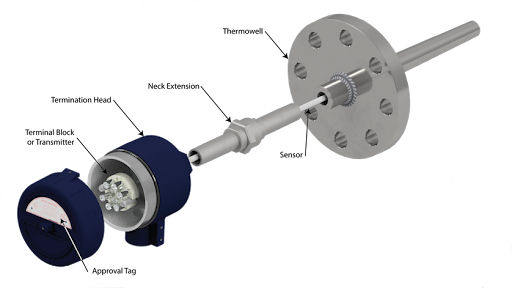
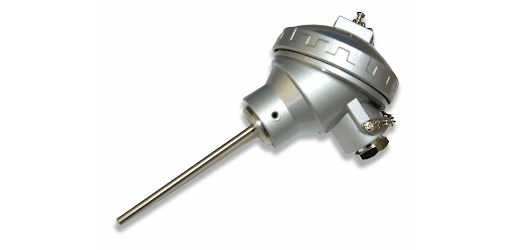
A temperature transmitter mainly consists of:
Regular maintenance ensures accurate temperature monitoring and prevents machinery failures.
Temperature transmitters are vital instruments used for measuring and transmitting temperature signals in marine and industrial systems. They convert temperature changes into standardized electrical outputs that can be used for monitoring, automation, and machinery protection.
Onboard ships, temperature transmitters play an important role in engine monitoring, boiler control, refrigeration systems, and cargo operations. Their accuracy, reliability, and compatibility with automation systems make them essential components in modern maritime engineering.
Disclaimer :- The opinions expressed in this article belong solely to the author and may not necessarily reflect those of Merchant Navy Decoded. We cannot guarantee the accuracy of the information provided and disclaim any responsibility for it. Data and visuals used are sourced from publicly available information and may not be authenticated by any regulatory body. Reviews and comments appearing on our blogs represent the opinions of individuals and do not necessarily reflect the views of Merchant Navy Decoded. We are not responsible for any loss or damage resulting from reliance on these reviews or comments.
Reproduction, copying, sharing, or use of the article or images in any form is strictly prohibited without prior permission from both the author and Merchant Navy Decoded.
Decoded Discount Alert! up to 50% OFF
Use Coupon Code Deep50