Hi this is Team Merchant Navy Decoded !!!

Please fill the below form with your query and we will get back to you in next 12 hours.

Rest assured your data is safe with us !!!🙂

Ask Your Query

TDS on Property Purchase Above ₹50 Lakh for Seafarers

Buying property in India is a big financial decision for many seafarers. After working hard on ships and saving money during contracts, many seafarers plan to buy a flat, house, land, or apartment in India. But before making the payment, one important tax rule should not be missed: TDS on property purchase. If the property value is ₹50 lakh or more, the buyer may have to deduct TDS before paying the seller.

What is TDS on Property Purchase for Seafarers?

TDS on Property Purchase

TDS means Tax Deducted at Source. In simple words, tax is deducted before the full payment is given to the receiver. In a property purchase, if the rule applies, the buyer deducts a small part of the payment and deposits it with the government. Under Section 194-IA, a buyer of immovable property is liable to deduct tax at 1% from the consideration payable to the seller and deposit it with the Central Government.

When Does TDS Apply on Property Purchase for Seafarers?

TDS Apply on Property Purchase

TDS on property purchase applies when the amount of consideration or the stamp duty value of the immovable property is ₹50 lakh or more. This means seafarers should not check only the basic property price. They should check the agreement value, stamp duty value, and total payment structure before making payment. If the property value crosses the threshold, TDS may apply under Section 194-IA.

₹50 Lakh Limit for Property TDS for Seafarers

₹50 Lakh Limit for Property

The ₹50 lakh limit is the most important trigger. If both the consideration paid or payable and the stamp duty value are below ₹50 lakh, TDS under Section 194-IA may not be required. But if the consideration or stamp duty value is ₹50 lakh or more, the buyer should check the TDS requirement carefully. For seafarers buying property while onboard or abroad, this check should be done before payment, not on registration day.

Table of Contents

What Property Value Includes for Seafarers

Property Value Includes

While checking the ₹50 lakh limit, do not look only at the basic price. In many property deals, the total cost may include parking charges, club membership charges, maintenance charges, electricity or water facility charges, advance fees, or similar charges connected with the property transfer. Seafarers should ask the builder, seller, or broker for the full payment breakup. A wrong assumption about the property value can lead to incorrect TDS deduction and later tax complications.

Buyer Deducts TDS, Not Seller, for Seafarers

Many people think the seller will handle all tax matters, but under Section 194-IA, the buyer has the responsibility to deduct TDS if the rule applies. The simple flow is clear: the buyer deducts TDS, deposits it with the government, and pays the balance amount to the seller. The seller can later see the TDS credit in tax records and use it while filing ITR. So, if a seafarer is buying property, the compliance responsibility should not be ignored.

TDS Rate on Property Purchase for Seafarers

The TDS rate under Section 194-IA is generally 1%. For example, if the property value is ₹60 lakh, the TDS amount may be ₹60,000. The buyer should deduct this amount and deposit it correctly. The balance amount is paid to the seller. The official TDS rate table also lists Section 194-IA for payment on transfer of certain immovable property other than agricultural land at 1%.

TDS on Installment Payment for Seafarers

TDS on Installment Payment

Many seafarers buy property through installment payments, builder-linked plans, bank loans, or family-managed payment schedules. If the property is covered under Section 194-IA, TDS should be planned properly for each payment stage. Do not wait until the final payment or registration day. If payment is made in parts, the TDS treatment should be checked before every major transfer. This is especially important when the seafarer is onboard and family members are coordinating the property payment from India.


How to Deposit Property TDS for Seafarers

How to Deposit Property

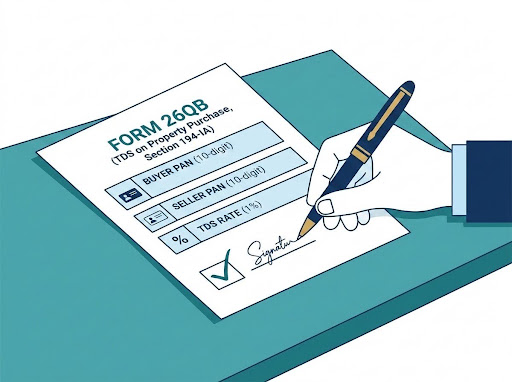
After deducting TDS, the buyer must deposit it with the government through the applicable challan-cum-statement process. The Income Tax portal identifies Form 26QB for TDS on purchase of immovable property under Section 194-IA. It also mentions that the buyer needs the valid PAN of the seller before filing Form 26QB, and multiple forms may be needed if there are multiple buyers or sellers.

Form 26QB for Property TDS for Seafarers

Form 26QB for Property TDS

Form 26QB is used for reporting and paying TDS on the purchase of immovable property under Section 194-IA. Seafarers should keep seller PAN, buyer PAN, property details, agreement details, payment details, and TDS amount ready before filling the form. Some portal updates may restructure forms over time, so always follow the latest option shown on the official e-filing portal. The main principle remains the same: property TDS must be deposited and reported correctly.

30-Day Deadline for Property TDS for Seafarers

30-Day Deadline for Property

Timing is very important. The Income Tax portal states that TDS under Sections 194-IA, 194-IB, 194M, and 194S, including purchase of immovable property, has a due date of 30 days from the end of the month in which the tax is deducted. This means seafarers should not delay the deposit after deducting TDS. If you are sailing, coordinate early with your family, bank, broker, or CA.

Form 16B for Property Seller

After depositing TDS, the buyer should provide Form 16B to the seller. TRACES allows the buyer of immovable property to download Form 16B after registration, and the buyer is required to issue Form 16B to the seller for the TDS deducted and deposited with the government. This helps the seller match the TDS credit later while filing ITR. For clean property records, Form 16B should not be skipped.

Why PAN is Important for Property TDS for Seafarers

PAN is very important in property TDS compliance. The buyer’s PAN and seller’s PAN should be correct in the challan, agreement, and tax records. If the seller’s PAN is wrong, the seller may not get proper TDS credit. If PAN details are incorrect, correction can become difficult later. Seafarers should check PAN spelling, PAN number, seller name, buyer name, payment amount, property details, and challan details carefully before submitting the TDS form.

What If Seller Does Not Give PAN to Seafarers?

If the seller does not provide PAN, higher TDS issues can arise. The official e-brochure on PAN-based TDS provisions mentions a 20% rate where PAN or Aadhaar is not available for Section 194-IA compliance. This is why seafarers should never make large property payments casually without collecting seller PAN. Before agreement or payment, ask for seller PAN, verify the details, and keep a copy for property and tax records.

Form 26AS and AIS for Property TDS for Seafarers

Form 26AS and AIS for Property

Form 26AS and AIS matter because they show tax-related information linked with PAN. Form 26AS includes details such as TDS, TCS, advance tax, self-assessment tax, refunds, and details of tax deducted on sale of immovable property under Section 194-IA in the case of the seller. For the buyer also, proper records are important because wrong challan details, PAN mistakes, or payment mismatch can create correction issues later.

Resident Seller vs NRI Seller for Seafarers Buying Property

Resident Seller vs NRI Seller

This point is very important. Section 194-IA mainly applies when the seller is a resident transferor of immovable property. If the seller is an NRI, Section 195 may apply instead, and the buyer should not blindly deduct only 1%. The official threshold guidance specifically refers to the resident transferor condition under Section 194-IA. Seafarers buying property from an NRI seller should take CA guidance before payment.

Why NRI Seller Cases Need CA Help for Seafarers

If the seller is an NRI, TDS can be more complicated because Section 195 may apply. In such cases, TDS may depend on capital gains, seller residential status, lower deduction certificate, surcharge, cess, DTAA position, and other facts. A seafarer should not assume that every property purchase needs only 1% TDS. Before paying an NRI seller, take professional guidance so that both buyer and seller avoid future tax complications.

Common Mistakes Seafarers Make in Property TDS

Common Mistakes Seafarers Make in Property TDS

The biggest mistake is ignoring TDS until registration day. Another mistake is assuming that the seller will handle the tax. Some seafarers check only the basic property price and ignore stamp duty value or additional charges. Others deduct TDS but delay depositing it. Some enter wrong PAN details or forget to issue Form 16B. These mistakes can create tax mismatch, penalty risk, seller disputes, and unnecessary stress during ITR filing.

What Seafarers Should Check Before Buying Property

Before buying property above ₹50 lakh, seafarers should check property value, stamp duty value, seller residential status, seller PAN, buyer PAN, agreement amount, payment schedule, loan disbursement plan, TDS amount, applicable challan form, TDS payment proof, Form 16B process, and tax records. If the seafarer is onboard or outside India, these points should be coordinated early with family, bank, builder, broker, and CA.

Documents Required for Property TDS for Seafarers

Seafarers should keep the property agreement, builder allotment letter, payment receipts, bank loan documents, seller PAN, buyer PAN, challan acknowledgement, Form 26QB or applicable challan-cum-statement, Form 16B, bank payment proof, stamp duty details, registration documents, Form 26AS, and AIS records. If there are multiple buyers or sellers, keep separate details for each person. Clean documentation helps avoid confusion during ITR filing or future property sale.

Final Advice on TDS on Property Purchase for Seafarers

Final Advice on TDS

TDS on property purchase is not something to ignore. If a seafarer is buying property in India and the value is ₹50 lakh or more, Section 194-IA may require the buyer to deduct 1% TDS, deposit it correctly, and keep proper records. This is not only for companies or business buyers. Individual buyers may also have to follow this rule. If there is any confusion, take CA guidance before payment, not after the mistake happens.

Buy Property With Clean Tax Planning for Seafarers

Buy Property With Clean Tax Planning

Taxation planning for seafarers should not only be considered at the end of the year while filing the return. It should include proper assessment of residential position, NRI or resident exemptions, Indian income, foreign income, NRE and NRO accounts, investments, property purchase, TDS records, and long-term financial decisions. Download Sailor Pro App – Built for Seafarers, an Initiative by Merchant Navy Decoded, to stay more organised and confident in

Frequently Asked Questions (FAQs)

TDS on property purchase means the buyer deducts tax before making full payment to the seller and deposits it with the government. For property purchase covered under Section 194-IA, the buyer may need to deduct 1% TDS.

TDS generally applies when the consideration or stamp duty value of immovable property is ₹50 lakh or more. Seafarers should check the full property value before making payment.

The buyer deducts TDS, not the seller. If a seafarer is buying property and the rule applies, the seafarer as buyer is responsible for deducting and depositing TDS.

The TDS rate under Section 194-IA is generally 1% when applicable. If PAN is not furnished, higher deduction may apply.

No, TAN is not required for tax deduction under Section 194-IA, according to the Income Tax Department’s guidance on TDS from purchase of immovable property.

Form 26QB is the challan-cum-statement used for TDS on purchase of immovable property under Section 194-IA. Seafarers should fill it carefully with buyer, seller, property, payment, and PAN details.

TDS on purchase of immovable property should be deposited within 30 days from the end of the month in which the tax is deducted.

Form 16B is the TDS certificate issued by the buyer to the seller after TDS is deposited. It helps the seller claim TDS credit while filing ITR.

Not blindly. Section 194-IA mainly applies to resident sellers. If the seller is NRI, Section 195 may apply, and CA guidance should be taken before making payment.

Seafarers should check property value, stamp duty value, seller residential status, PAN details, payment schedule, TDS amount, challan process, Form 16B, Form 26AS, AIS, and bank payment records.

Disclaimer :- The opinions expressed in this article belong solely to the author and may not necessarily reflect those of Merchant Navy Decoded. We cannot guarantee the accuracy of the information provided and disclaim any responsibility for it. Data and visuals used are sourced from publicly available information and may not be authenticated by any regulatory body. Reviews and comments appearing on our blogs represent the opinions of individuals and do not necessarily reflect the views of Merchant Navy Decoded. We are not responsible for any loss or damage resulting from reliance on these reviews or comments.

Reproduction, copying, sharing, or use of the article or images in any form is strictly prohibited without prior permission from both the author and Merchant Navy Decoded.

DIWALI SALE

Decoded Discount Alert! up to 50% OFF

DIWALI SALE

Decoded Discount Alert! up to 50% OFF

Use Coupon Code Deep50

Days
Hours
Seconds
0
Would love your thoughts, please comment.x
()
x