Hi this is Team Merchant Navy Decoded !!!

Please fill the below form with your query and we will get back to you in next 12 hours.

Rest assured your data is safe with us !!!🙂

Ask Your Query

Should Seafarers Do Trading?

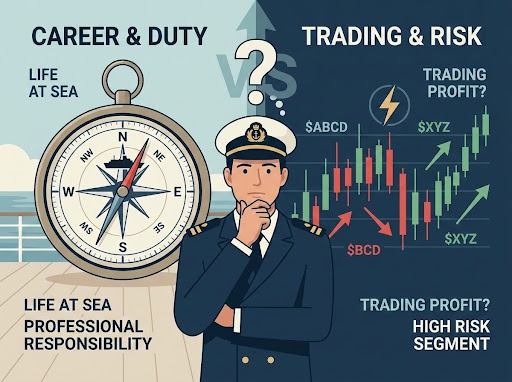
Many seafarers earn a good income during their contract, but that money does not come easily. It comes after months of hard work, long duty hours, time away from family, and the challenges of life at sea. That is why a seafarer’s salary should never be treated like casino money. Trading can look attractive because it promises quick profit, but it also carries serious risk. Before entering trading, every seafarer should ask one question: can I afford to lose this money?

What Is Intraday Trading?

Should Seafarers Do Trading

Intraday trading means buying and selling on the same day. The trader does not hold the position for the long term. The aim is to make money from short-term price movement. This needs fast decisions, constant market tracking, and emotional control. For seafarers, this can be difficult because duty hours, watchkeeping, safety work, port operations, and weak internet can disturb focus. Intraday trading is not a casual activity. It needs time, discipline, and proper risk management.

What Is F&O Trading?

F&O Trading

F&O means Futures and Options. These are derivative products where the value depends on an underlying asset like a stock or index. SEBI explains that derivatives are used by investors for purposes such as hedging and managing price risk. But many beginners use F&O for quick profit without understanding the risk. F&O can move very fast. A small market movement can create a big profit or a big loss. Seafarers should not enter F&O casually.

Why F&O Trading Is Risky for Seafarers

F&O Trading Is Risky for Seafarers

F&O trading is risky because it needs market knowledge, speed, capital control, and emotional strength. Prices can move quickly, and losses can increase before the trader reacts. For seafarers, the risk becomes higher because they may be onboard with limited internet, long duty hours, and no proper time to track the market. F&O should not be treated like easy income. It is a high-risk segment where lack of knowledge can damage hard-earned sea salary.

What Is Leverage in Trading?

Leverage means taking a larger market position with a smaller amount of money. It can make profits look attractive, but it can also increase losses. For example, a trader may control a much bigger position than the actual capital available. If the trade goes right, profit may look big. If the trade goes wrong, loss can also become big. This is why leverage should be handled carefully. Borrowed power can quickly become borrowed pain.

How Leverage Can Increase Losses

How Leverage Can Increase Losses

Leverage increases both profit and loss. Many beginners focus only on the profit side and ignore the loss side. If the market moves against your position, your capital can reduce very quickly. In some cases, traders may need to add more margin or exit at a loss. For seafarers, this is dangerous because sea salary is earned with sacrifice. A single leveraged mistake can wipe out weeks or months of savings. Never use leverage without deep understanding.

Table of Contents

Why Trading From Ship Can Be Difficult

Trading From Ship Can Be Difficult

Trading from ship can be difficult because the market needs attention, but ship life demands duty. Internet may be weak. Network may drop. Duty calls can come suddenly. Port operations may become busy. A price may move sharply when you are not available. If you cannot monitor a trade properly, risk increases. A seafarer should be honest about this. If the ship schedule does not allow active tracking, trading can become stressful and unsafe.

Internet, Duty Hours and Market Timing Problems

Internet, Duty Hours and Market Timing Problems

Trading needs timing. A few minutes can change profit into loss. But seafarers may not have stable internet or free time during market hours. Watchkeeping, engine-room duties, deck operations, safety drills, paperwork, inspections, and rest hours can disturb trading decisions. If you enter a trade and cannot exit on time, losses may increase. This is why active trading does not match every seafarer’s lifestyle. Your profession should come first. Trading should never disturb safety or duty.

Why Seafarers Should Avoid Trading Tips

Seafarers Should Avoid Trading Tips

Trading tips from friends, WhatsApp groups, Telegram channels, reels, or random influencers can be dangerous. The person giving the tip does not know your salary, family responsibility, emergency fund, loans, or risk capacity. They may not even be qualified to guide you. A tip may sound confident, but confidence is not proof. A seafarer should never trade only because someone said, “This will go up.” If you do not understand the trade, do not enter.

Why “Sure-Shot” Trading Calls Can Be Dangerous

No trading call is truly sure-shot. Markets can move against any prediction. Words like guaranteed profit, jackpot trade, sure-shot call, double money, and daily income should be treated carefully. These words create greed and reduce discipline. A seafarer may enter a trade thinking it is safe, but the market may move suddenly. A confident message cannot protect your capital. If someone promises fixed profit from trading, ask for proof, risk details, and regulatory registration.

Why Emergency Money Should Never Be Used for Trading

Emergency Money Should Never Be Used for Trading

Emergency money should never be used for trading. This money is for family safety, medical needs, travel, contract gaps, document renewal, and urgent expenses. Trading money can be lost. Emergency money should be safe and accessible. If a seafarer loses emergency funds in trading, the family can face pressure during real-life problems. First build emergency savings. Then protect family with insurance. Only after that, any high-risk activity should be considered with surplus money only.

Can Seafarers Trade With Surplus Money?

Seafarers can use surplus money for trading only if they fully understand the risk and can afford to lose that amount. Surplus money means money left after emergency fund, insurance, family expenses, loan EMIs, children’s education, and long-term investments are already planned. It should not be borrowed money. It should not be family safety money. Even with surplus money, learning is needed. Trading without skill can still create loss. Surplus money does not mean careless money.

How Much Money Can Seafarers Risk in Trading?

How Much Money Can Seafarers Risk in Trading

There is no fixed amount suitable for every seafarer. A cadet, junior officer, senior officer, married seafarer, and person with loans will all have different risk capacity. The simple rule is this: never risk money that can disturb your family, emergency fund, insurance, documents, loans, or future goals. Trading capital should be small, controlled, and separate. If losing that amount will affect your peace of mind or family planning, that amount is too high.

Why Trading Needs Time, Skill and Emotional Control

Trading Needs Time, Skill and Emotional Control

Trading is not only about buying and selling. It needs knowledge, timing, risk management, position sizing, stop loss, tax understanding, brokerage calculation, and emotional control. A trader must know when to enter, when to exit, and when to stay away. Many beginners lose because they cannot control greed and fear. A seafarer should not treat trading like a side game. If you do not have time and skill, trading can become a financial and mental burden.

You Are Competing With Professional Traders

In the market, you are not only trading against beginners. You may be competing with professional traders, big institutions, algorithms, and people who track markets full-time. They may have advanced systems, research teams, fast internet, and years of experience. A seafarer may be working onboard with limited time and unstable internet. This is not an equal setup. That does not mean success is impossible, but it means blind confidence is dangerous. Know the competition before risking salary.t57y

Why Most Beginners Lose Money in Trading

Most Beginners Lose Money in Trading

Most beginners lose money because they enter without knowledge, use leverage, follow tips, overtrade, ignore stop loss, and cannot control emotions. Many beginners also increase trade size after a small profit and panic after a small loss. Trading requires discipline that many people underestimate. For seafarers, the risk is higher if they cannot track the market properly. A trading loss is not only a number on a screen. It can affect family plans and confidence.

SEBI Study on F&O Trading Losses

SEBI Study on F&O Trading Losses

SEBI’s 2024 study showed a serious warning for individual traders. SEBI reported that 93% of more than 1 crore individual traders incurred losses in equity F&O between FY22 and FY24, and aggregate losses exceeded ₹1.8 lakh crore over three years. This does not mean nobody can trade profitably. It means most individual traders in F&O lost money. Seafarers should treat this data seriously before entering high-risk trading.

Trading Losses Can Affect Family Financial Safety

Trading Losses Can Affect Family Financial Safety

A trading loss can affect more than your trading account. It can reduce emergency savings, delay children’s education planning, disturb loan payments, create stress at home, and reduce confidence. If losses are hidden from family, the problem becomes bigger. Seafarers already face contract gaps and family responsibilities. Trading should never put family safety at risk. A responsible seafarer protects the base first. Family financial safety is more important than chasing quick market profit.

Better Alternatives to Risky Trading for Seafarers

Better Alternatives to Risky Trading

Instead of risky trading, seafarers can first focus on emergency funds, insurance, fixed deposits, mutual funds, bonds, gold, and long-term investments based on goals. These options also have risks and limitations, but they can be planned with more discipline. A seafarer does not need to become a trader to build wealth. Wealth can also be built slowly through regular investing, asset allocation, controlled spending, and patience. Slow wealth is better than fast loss.

Mutual Funds vs Trading for Seafarers

Mutual funds and trading are very different. Mutual funds are managed products where money is invested based on the scheme objective. Trading requires active buying and selling decisions by the trader. Mutual funds also carry market risk, but they can be easier for busy seafarers than active trading. SEBI’s investor education material explains that mutual funds can provide professional management, diversification, and ease of access. A seafarer should still understand fund type, risk, and time horizon before investing.

Long-Term Investing vs Short-Term Trading

Long-Term Investing vs Short-Term Trading

Long-term investing focuses on goals, time, discipline, and risk management. Short-term trading focuses on price movement, speed, and timing. Long-term investing may suit seafarers better because it does not require constant market tracking every minute. This does not mean long-term investing is risk-free. It means the process can be more manageable for a busy seafarer. A sailor should choose a financial path that matches his time, knowledge, family responsibility, and risk capacity.

What Seafarers Should Do Before Trading

Before trading, seafarers should build an emergency fund, take proper insurance, clear high-interest debt, and create a basic investment plan. Then they should learn risk management, position sizing, stop loss, brokerage, taxes, and product rules. They should also decide the maximum loss they can accept. Never start with borrowed money. Never use family money. Never trade from tips. Learn on paper first if needed. Real money should come only after serious preparation.

Common Trading Mistakes Seafarers Should Avoid

Common Trading Mistakes

Common mistakes include using emergency money, trading from ship without proper internet, following tips, using high leverage, overtrading, ignoring stop loss, averaging losses blindly, hiding losses from family, and borrowing money to trade. Another mistake is treating one profit as proof of skill. A seafarer should not risk salary just because a few trades went right. Trading discipline is tested during losses, not during profits. Avoid emotional decisions and protect your sea salary first.

Final Advice: Should Seafarers Do Trading?

For seafarers, financial planning is not only about selecting one product. It is about understanding your goals, knowing the risks, protecting your future, and making disciplined financial decisions. Download Sailor Pro app – Built for Seafarers, an Initiative by Merchant Navy Decoded, to stay more organised and confident in your financial planning. You can also follow finance_for_seafarers on Instagram and join the WhatsApp channel Financial Management for Seafarer for practical money guidance created especially for seafarers.

Frequently Asked Questions (FAQs)

Seafarers should avoid blind trading. Trading should be considered only after learning, risk control, emergency fund, insurance, and family safety planning.

Intraday trading means buying and selling within the same trading day. It needs fast decisions, market tracking, and emotional control.

Yes. F&O trading can be very risky because leverage and fast price movement can increase losses quickly.

Leverage allows traders to take a bigger position than their actual capital. It can increase profit, but it can also increase loss.

Trading from ship can be difficult because of weak internet, duty hours, sudden work pressure, and limited market tracking time.

No. Emergency money should never be used for trading. It should be kept safe for family needs and urgent situations.

No. Trading tips from reels, groups, friends, or channels can be risky. They may not match your risk capacity or financial situation.

They can consider it only if the money is truly surplus, risk is understood, and loss will not affect family or financial goals.

Seafarers can focus on emergency funds, insurance, fixed deposits, mutual funds, bonds, gold, and long-term investing based on goals.

The best rule is simple: never gamble with sea salary. Protect family first, invest with discipline, and take risk only after learning.

Before trading, seafarers should build an emergency fund, take proper insurance, clear high-interest debt, and create a basic investment plan. Then they should learn risk management, position sizing, stop loss, brokerage, taxes, and product rules. They should also decide the maximum loss they can accept. Never start with borrowed money. Never use family money. Never trade from tips. Learn on paper first if needed. Real money should come only after serious preparation.

Common Trading Mistakes Seafarers Should Avoid

Common mistakes include using emergency money, trading from ship without proper internet, following tips, using high leverage, overtrading, ignoring stop loss, averaging losses blindly, hiding losses from family, and borrowing money to trade. Another mistake is treating one profit as proof of skill. A seafarer should not risk salary just because a few trades went right. Trading discipline is tested during losses, not during profits. Avoid emotional decisions and protect your sea salary first.

Disclaimer :- The opinions expressed in this article belong solely to the author and may not necessarily reflect those of Merchant Navy Decoded. We cannot guarantee the accuracy of the information provided and disclaim any responsibility for it. Data and visuals used are sourced from publicly available information and may not be authenticated by any regulatory body. Reviews and comments appearing on our blogs represent the opinions of individuals and do not necessarily reflect the views of Merchant Navy Decoded. We are not responsible for any loss or damage resulting from reliance on these reviews or comments.

Reproduction, copying, sharing, or use of the article or images in any form is strictly prohibited without prior permission from both the author and Merchant Navy Decoded.

DIWALI SALE

Decoded Discount Alert! up to 50% OFF

DIWALI SALE

Decoded Discount Alert! up to 50% OFF

Use Coupon Code Deep50

Days
Hours
Seconds
0
Would love your thoughts, please comment.x
()
x