Buying land, a flat, a house, or commercial property is a big dream for many seafarers. After working hard at sea, staying away from family, clearing exams, and earning a good salary, property feels like a major achievement. In many Indian families, property is also seen as security and success. But real estate is not a small financial decision. One wrong deal can trap your salary for years. A seafarer should buy land or a flat only after understanding location, legal papers, loan cost, liquidity, and risk.
Is Real Estate Good for Seafarers?
Real estate can be good for seafarers if it is bought at the right time, in the right location, and with clear legal documents. A good property can support family stability and long-term wealth. But real estate can also become a burden if bought without planning. A poor location, unclear title, builder delay, high EMI, low resale demand, or legal dispute can create stress. So, real estate is not automatically good or bad. The decision depends on planning.
Why Seafarers Should Think Carefully Before Buying Property
Seafarers usually earn well during contract, but income may not come every month like a shore-based job. There can be gaps between contracts, medical needs, family responsibilities, exams, document renewal, and travel expenses. If a big EMI continues during a non-earning period, pressure can increase quickly. That is why a seafarer should not buy property only because salary is high. Property should fit the full financial life, not only the current contract salary.
Why Buying Property Is a Big Financial Decision
Buying property is not only about the purchase price. It also includes down payment, stamp duty, registration charges, loan interest, maintenance, society charges, repairs, taxes, legal charges, brokerage, and sometimes furnishing cost. These costs can increase the total burden. A seafarer should calculate the full cost before paying the booking amount. Many buyers focus only on EMI and forget other expenses. A smart property decision starts with full cost calculation, not emotion.
What is Real Estate in Simple Words?
Real estate means property. It includes land, flats, houses, shops, offices, and commercial spaces. Real estate can grow in value over time, but it usually needs a large amount of money. It is also not always easy to sell quickly. This is why property should be planned carefully. A seafarer should understand whether the property is for family living, rental income, future resale, or long-term wealth. The purpose should be clear before buying.
Land vs Flat: What Should Seafarers Understand?
Land and flats are different. Land may give better long-term appreciation if the location develops, but it can have risks like unclear ownership, boundary disputes, encroachment, and low liquidity. A flat may be easier for family living and rental use, but it can have builder risk, maintenance cost, society charges, and construction quality issues. A seafarer should not ask only “land or flat?” The better question is: which one fits my goal, budget, family need, and risk capacity?
Why Property Is Not Always Easy Money
Many people believe property always gives profit. This is not true. Property value depends on location, demand, legal status, infrastructure, market cycle, and resale interest. A property bought in the wrong place can remain stuck for years. A flat with poor construction or weak builder reputation can create problems. Land with unclear title can lead to legal stress. Real estate can create wealth, but it can also block money if the decision is not checked properly.
Why Location Matters Before Buying Property
Location is one of the most important factors in real estate. A good location can support resale value, rental demand, family convenience, and future growth. Check roads, transport, schools, hospitals, markets, safety, water supply, drainage, and nearby development. A cheap property in a weak location may not be a good deal. A seafarer should visit the area, compare prices, speak to local people, and understand future development plans before buying. Location can decide whether property becomes an asset or burden.
Why Legal Documents Matter Before Buying Land or Flat
Legal documents are extremely important in property buying. A seafarer should check title deed, ownership history, sale deed, encumbrance certificate, approved layout, building approvals, tax receipts, possession status, and seller rights. For flats in registered projects, buyers should also check RERA registration where applicable. The official RERA portal states that real estate projects need registration with the State Real Estate Regulatory Authority under the Real Estate Regulation and Development Act, 2016. Never buy property without proper legal verification.
Why Seafarers Should Avoid Unclear Property Deals
Unclear property deals can become dangerous. If the seller does not have clear ownership, if the land has family dispute, if approvals are missing, or if payment terms are not transparent, the buyer may suffer later. Seafarers are often away at sea, so they may not be able to follow up regularly. This makes due diligence even more important. Do not trust only verbal promises. Take help from a property lawyer, check original documents, and keep all payments properly recorded.
Why Black Money in Property Deals Can Be Risky
A seafarer should avoid any property deal where payment is not fully transparent. Cash-heavy or unclear payment structures can create tax, legal, and documentation problems later. Property should be bought with proper records, banking channels, and correct agreement values. If someone says, “Pay some amount in cash, it is normal,” be careful. What looks normal in the market can become a problem during resale, loan processing, tax scrutiny, or legal dispute. Clean documentation is safer than a risky discount.
Why Low Liquidity Is a Big Risk in Real Estate
Low liquidity means your money is locked and cannot be easily converted into cash. Property may be worth a big amount, but selling it quickly at the right price can be difficult. This is a major risk for seafarers because emergencies can come suddenly. Medical needs, contract gaps, family expenses, or career changes may require quick money. If most savings are locked in property, financial stress can increase. Do not put all liquid money into one property.
Why Flats Can Have Builder and Maintenance Risks
Flats can be convenient, but they also have risks. Check builder reputation, project approvals, RERA registration where applicable, possession timeline, construction quality, carpet area, maintenance cost, society rules, parking, and occupancy certificate. Builder delay can disturb financial planning. High maintenance can become a monthly burden. Poor construction can reduce resale value. A seafarer should not buy a flat only because the sample flat looks beautiful. Check documents, actual progress, builder history, and total cost before booking.
Table of Contents
Why Big EMI Can Become a Financial Burden
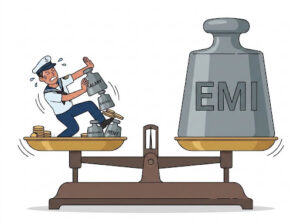
A big EMI can slowly control your life. If a large part of income goes into home loan EMI, you may struggle to save, invest, travel, support family, or handle emergencies. During contract, EMI may look manageable. During sign-off or delayed joining, the same EMI can feel heavy. A seafarer should not take a loan only because the bank is ready to give it. The question is not “How much loan can I get?” The question is “How much EMI can I safely handle?”
How Home Loan EMI Can Control a Seafarer’s Life
Home loan EMI is a long-term commitment. It can continue for 10, 15, 20, or more years. If the EMI is too high, a seafarer may feel forced to keep sailing only to pay the loan. This can create mental pressure. RBI’s home loan FAQ says borrowers may reduce interest burden by paying more than EMI periodically, but they should check stipulations while taking the loan. So, understand EMI, tenure, interest, and prepayment rules before taking a loan.
Why Seafarers Should Not Take Maximum Loan
A bank may offer a high loan based on salary, but that does not mean you should take the maximum amount. The bank checks repayment ability from its side. You must check your full life situation. Family expenses, contract gaps, insurance, investments, children’s needs, parents’ needs, and emergency fund also matter. A large loan can reduce freedom. RBI has stated that banks are not permitted to charge foreclosure or pre-payment penalties on floating-rate home loans, but borrowers should still check current loan terms carefully.
Why Emergency Fund Should Come Before Property
Before buying property, emergency money should be ready. A seafarer may face delayed joining, medical emergency, family need, exam cost, document renewal, or sudden travel. If all money is used for down payment, one emergency can disturb the entire plan. Emergency money should be safe and easily accessible. Property is not an emergency fund because it cannot always be sold quickly. First build safety. Then plan property. This order protects your family and reduces pressure.
Why Insurance Is Important Before Buying Property
Insurance should come before a big property loan if your family depends on your income. Medical insurance can protect against hospital expenses. Term insurance can support the family if something unfortunate happens. A property loan without protection can become a burden for the family during difficult times. A seafarer should not focus only on asset buying and ignore family protection. Real estate is important, but family security is more important. Build protection before taking a large liability.
When Should Seafarers Buy Property?
Seafarers should buy property when their emergency fund is ready, insurance is in place, loan EMI is comfortable, legal documents are clear, and the property fits a real goal. Do not buy only because relatives are pressuring you. Do not buy only because friends are buying. Do not buy only because the price looks low. Buy when the decision is financially comfortable and legally clean. Property should improve your financial life, not trap your salary.
What Seafarers Should Check Before Buying Land
Before buying land, check title deed, ownership chain, encumbrance certificate, land use, zoning, mutation, tax receipts, survey number, boundaries, access road, approach road width, nearby disputes, and future development. Visit the land personally or send a trusted person. Speak to local authorities and nearby people. Take legal help before payment. Land can be good for long-term growth, but only if documents and location are strong. Never buy land only because the rate looks cheap.
What Seafarers Should Check Before Buying a Flat
Before buying a flat, check RERA registration where applicable, builder reputation, possession date, approved plan, carpet area, amenities, parking, maintenance cost, occupancy certificate, construction quality, payment schedule, loan approval, and cancellation terms. The official RERA portal is meant to support regulation and registration of real estate projects under the RERA framework. A seafarer should compare multiple projects before booking. Do not pay a large amount before document verification. A beautiful brochure is not proof of a safe property.
Property for Living vs Property for Investment
Buying property for living and buying property for investment are different decisions. If it is for living, focus on family comfort, location, school, hospital, safety, transport, and long-term settlement. If it is for investment, focus on rental yield, resale demand, future development, liquidity, and return after all costs. Many buyers mix emotion with investment and then regret later. A seafarer should decide the purpose clearly. A family home may not always be the best investment, and an investment property may not always suit family living.
Why Rental Yield Matters Before Buying Property
Rental yield means annual rent compared to the property price. If you buy property for rental income, this number matters. A costly flat with very low rent may not be a strong investment. Also include maintenance, tax, vacancy period, repairs, and society charges. Do not assume rent will cover EMI automatically. Many times, rent is much lower than EMI. A seafarer should calculate realistic rental income before buying investment property. Emotion should not replace numbers.
Why Seafarers Should Not Put All Money in Property
Putting all money in property can reduce flexibility. Property can be useful, but it is not enough alone. A seafarer also needs emergency money, insurance, liquid savings, and growth investments. SEBI’s investor education material explains that mutual funds offer diversification and can be useful for investors who lack skills to invest directly in capital markets. The same logic applies to overall planning: do not depend on one asset. Balance can reduce stress and improve financial control.
Smart Real Estate Planning for Seafarers
Smart real estate planning means buying property after checking goal, budget, documents, location, loan, liquidity, and family needs. A property should support your financial journey, not control your life. Keep emergency money separate. Do not break all investments for down payment. Do not take an oversized EMI. Check resale demand and rental possibility. Take professional legal advice. Compare land and flat based on your real purpose. The right property at the right time can create stability.
Common Property Buying Mistakes Seafarers Should Avoid
Common mistakes include buying under pressure, ignoring legal checks, trusting verbal promises, taking maximum loan, putting all savings into down payment, ignoring maintenance, buying in poor location, not checking resale demand, and not keeping emergency money. Another mistake is buying only because salary is high. High income does not make every property affordable. A seafarer should avoid emotional buying. Property decisions should be taken slowly, with documents, numbers, and proper advice.
Final Advice: Should Seafarers Buy Land or Flat?
Seafarers can buy land or a flat, but only after proper planning. Land may suit long-term appreciation if documents and location are strong. A flat may suit family living or rental use if builder, approval, and maintenance are clear. Do not buy only because the deal looks cheap. Do not buy only because others are buying. First build an emergency fund, insurance, and basic investments. Then buy property when EMI, documents, and location are safe.
Make Smarter Property Decisions at Sea
For seafarers, financial planning is not only about selecting one product. It is about understanding your goals, knowing the risks, protecting your future, and making disciplined financial decisions. Download Sailor Pro app – Built for Seafarers, an Initiative by Merchant Navy Decoded, to stay more organised and confident in your financial planning. You can also follow finance_for_seafarers on Instagram and join the WhatsApp channel Financial Management for Seafarer for practical money guidance created especially for seafarers.
Land may suit long-term growth, but needs strong legal checking. A flat may suit family living or rental use, but builder and maintenance risks matter.
No. Seafarers should not put all money in property. A balanced plan should include emergency fund, insurance, liquid savings, and investments.
Disclaimer :- The opinions expressed in this article belong solely to the author and may not necessarily reflect those of Merchant Navy Decoded. We cannot guarantee the accuracy of the information provided and disclaim any responsibility for it. Data and visuals used are sourced from publicly available information and may not be authenticated by any regulatory body. Reviews and comments appearing on our blogs represent the opinions of individuals and do not necessarily reflect the views of Merchant Navy Decoded. We are not responsible for any loss or damage resulting from reliance on these reviews or comments.
Reproduction, copying, sharing, or use of the article or images in any form is strictly prohibited without prior permission from both the author and Merchant Navy Decoded.