Hi this is Team Merchant Navy Decoded !!!

Please fill the below form with your query and we will get back to you in next 12 hours.

Rest assured your data is safe with us !!!🙂

Ask Your Query

Scavenge Fire in Marine Diesel Engine: Causes, Indications, Prevention and Actions

What is Scavenge Fire?

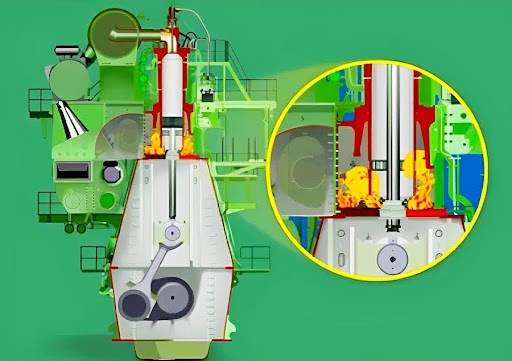
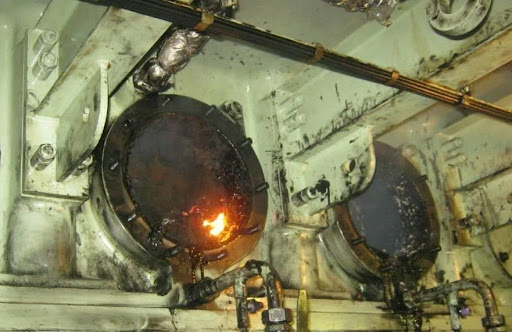
A Scavenge Fire is a dangerous condition in a marine diesel engine where accumulated lubricating oil, carbon deposits, or combustible material inside the scavenge space (under-piston space) catches fire. It is one of the most common engine room emergencies encountered onboard ships and can lead to severe engine damage if not controlled promptly.

Scavenge fires generally occur in large two-stroke marine diesel engines where unburnt fuel, carbon deposits, and scraped cylinder oil accumulate in the scavenge space.

How Does a Scavenge Fire Occur?

Like any fire, a scavenge fire requires the three elements of the Fire Triangle:

1. Combustible Material

  • Scraped cylinder lubricating oil
  • Carbon deposits
  • Unburnt fuel particles

2. Heat Source

  • Blow-past of hot combustion gases
  • Burning carbon particles
  • Incorrect exhaust valve timing

3. Air (Oxygen)

  • Continuous supply of scavenge air

When these three conditions combine inside the under-piston space, a scavenge fire may develop.

Table of Contents

Complete Process of Scavenge Fire

The sequence of events leading to a scavenge fire is:

Step 1: Deposit Formation

Poor combustion results in carbon particles and unburnt fuel deposits accumulating inside the scavenge space.

Step 2: Excess Cylinder Oil Accumulation

Cylinder lubricating oil scraped down by piston rings collects in the under-piston area.

Step 3: Blow-Past of Hot Gases

Due to worn piston rings or liner wear, hot combustion gases escape into the scavenge space.

Step 4: Temperature Rise

Burning carbon particles and hot gases increase the temperature of accumulated deposits.

Step 5: Ignition

The deposits eventually ignite, resulting in a scavenge fire.

Main Causes of Scavenge Fire

Several factors may contribute to the occurrence of a scavenge fire:

Poor Combustion

Incomplete fuel combustion leads to carbon deposit formation.

Excessive Blow-By

Worn piston rings allow hot combustion gases to enter the scavenge space.

Excess Cylinder Lubrication

Over-lubrication causes oil accumulation beneath the piston.

Incorrect Exhaust Valve Timing

Improper valve adjustment may cause blowback of hot gases.

High Exhaust Back Pressure

Increased back pressure can force hot gases back into the scavenge ports.

Poor Maintenance

Dirty scavenge spaces and blocked drains increase fire risk.

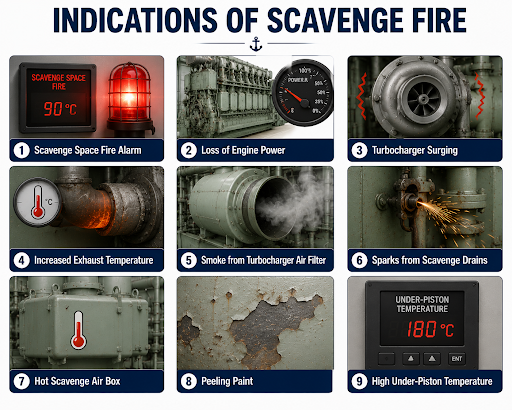
Indications of Scavenge Fire


The following warning signs may indicate a scavenge fire:

1. Scavenge Space Fire Alarm

Usually activated around 90°C.

2. Loss of Engine Power

The engine may run irregularly and lose efficiency.

3. Turbocharger Surging

Unstable turbocharger operation is a common symptom.

4. Increased Exhaust Temperature

The affected cylinder unit often shows a higher exhaust temperature.

5. Smoke from Turbocharger Air Filter

Smoke may appear around the turbocharger inlet.

6. Sparks from Scavenge Drains

Burning particles may emerge through drain lines.

7. Hot Scavenge Air Box

The scavenge box becomes unusually hot.

8. Peeling Paint

Paint around the affected area may blister or peel due to heat.

9. High Under-Piston Temperature

Temperature monitoring systems may indicate overheating.

Actions to be Taken During a Minor Scavenge Fire

A minor scavenge fire is usually localized to one cylinder unit.

Immediate Actions

    1. Continue running the engine at reduced speed.
    2. Cut off fuel supply to the affected cylinder.
    3. Increase cylinder lubrication to prevent seizure.
    4. Close all scavenge drains.
    5. Keep personnel clear of scavenge and crankcase doors.
    6. Monitor temperatures continuously.
    7. Wait for the fire to die out naturally (typically 15–30 minutes).
    8. Restore fuel carefully after temperatures return to normal.
    9. Gradually return cylinder lubrication to normal levels.

Actions to be Taken During a Major Scavenge Fire

A major scavenge fire requires immediate emergency response.

Emergency Procedure

  1. Reduce engine speed immediately.
  2. Stop the engine as soon as possible.
  3. Switch off auxiliary blowers.
  4. Shut off fuel oil supply.
  5. Stop lubricating oil supply.
  6. Cover turbocharger air intake filters.
  7. Inject CO₂ or approved firefighting medium.
  8. Apply external cooling if required.
  9. Wait until temperatures fall below 80°C.
  10. Open scavenge doors only after complete extinguishment.
  11. Ventilate and inspect thoroughly.
  12. Repair any damaged components.
  13. Identify and eliminate the root cause before restarting.

How to Prevent Scavenge Fire?

Proper maintenance is the key to preventing scavenge fires.

Regular Scavenge Space Cleaning

Remove carbon deposits and sludge regularly.

Maintain Scavenge Drains

Ensure drains are clear and functioning properly.

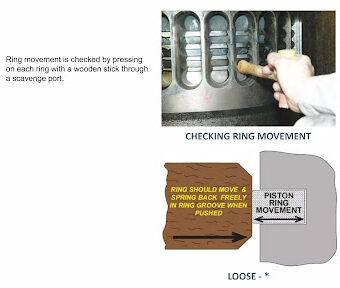
Monitor Piston Rings

Check piston ring condition and maintain proper clearances.

Maintain Scraper Rings and Packing Rings

Prevent lubricating oil from entering the scavenge space.

Keep Fuel Injection Equipment in Good Condition

Ensure proper atomization and combustion.

Monitor Cylinder Liner Wear

Calibrate liners periodically and replace when wear exceeds limits.

Maintain Proper Cylinder Lubrication

Avoid both under-lubrication and over-lubrication.

Effects of Scavenge Fire

A severe scavenge fire may result in:

  • Damage to piston rings
  • Cylinder liner scoring
  • Turbocharger damage
  • Reduced engine efficiency
  • Engine shutdown
  • Increased maintenance costs
  • Risk of secondary crankcase explosion

Conclusion

A Scavenge Fire is one of the most serious hazards in a marine diesel engine. It occurs when lubricating oil, carbon deposits, oxygen, and a heat source combine within the scavenge space. Early detection through alarms, regular inspections, proper maintenance of piston rings, cylinder liners, fuel injectors, and scavenge drains are essential to prevent engine damage and ensure safe ship operations.

Frequently Asked Questions (FAQs)

The main cause is the ignition of accumulated carbon deposits and lubricating oil by hot blow-past combustion gases.

Most scavenge fire alarms are set at approximately 90°C.

It reduces heat generation and prevents the fire from intensifying.

To prevent sparks and burning oil from entering the engine room.

Yes. If left uncontrolled, excessive heat may spread and increase the risk of a crankcase explosion.

Disclaimer :- The opinions expressed in this article belong solely to the author and may not necessarily reflect those of Merchant Navy Decoded. We cannot guarantee the accuracy of the information provided and disclaim any responsibility for it. Data and visuals used are sourced from publicly available information and may not be authenticated by any regulatory body. Reviews and comments appearing on our blogs represent the opinions of individuals and do not necessarily reflect the views of Merchant Navy Decoded. We are not responsible for any loss or damage resulting from reliance on these reviews or comments.

Reproduction, copying, sharing, or use of the article or images in any form is strictly prohibited without prior permission from both the author and Merchant Navy Decoded.

DIWALI SALE

Decoded Discount Alert! up to 50% OFF

DIWALI SALE

Decoded Discount Alert! up to 50% OFF

Use Coupon Code Deep50

Days
Hours
Seconds
0
Would love your thoughts, please comment.x
()
x