Hi this is Team Merchant Navy Decoded !!!
Please fill the below form with your query and we will get back to you in next 12 hours.
Rest assured your data is safe with us !!!🙂
Ask Your Query| For Beginner | For Professional |
|---|---|
| GME | Engine Side |
| G.P. Rating | Deck Side |
| ETO | G.P. Rating |
| IMUCET & Sponsorship | Combo Offers |
| Free Course | MEO |
| Free Course |
| For Beginner | For Professional |
|---|---|
| GME | Engine Side |
| G.P. Rating | Deck Side |
| ETO | G.P. Rating |
| IMUCET & Sponsorship | Combo Offers |
| Free Course | MEO |
| Free Course |
Piping systems are the arteries of a ship, transporting fuel, lubricating oil, seawater, freshwater, steam, compressed air, hydraulic fluid, chemicals, and cargo safely throughout the vessel. From the engine room to the cargo deck, every marine operation depends on a reliable piping network designed to withstand high pressures, temperatures, corrosion, vibration, and harsh sea conditions.
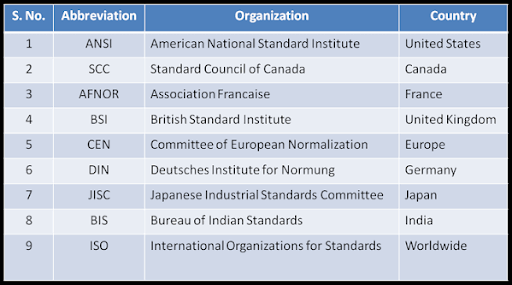
Marine piping systems are designed according to international standards to ensure safety, reliability, and compliance. These standards are developed by organizations such as IMO, ISO, ASME, ASTM, ANSI, IACS, and major classification societies like DNV, LR, ABS, BV, and IRS.
Pipe standards are globally accepted technical specifications that specify the dimensions, materials, manufacturing processes, pressure ratings, tolerances, testing protocols, and installation specifications of pipes and pipeline components.
These standards ensure that piping systems are:
Standardisation also simplifies ship construction, repairs, spare parts procurement, and classification approval.
Unlike land-based industries, ships operate in one of the harshest environments on Earth. Marine piping systems are continuously exposed to:
Failure of a piping system can lead to flooding, pollution, fire, explosion, machinery damage, or cargo loss. Pipe standards minimize these risks by ensuring that every pipe is designed, manufactured, and tested to withstand its intended service conditions.
The American Society of Mechanical Engineers (ASME) develops globally accepted piping standards widely used in shipbuilding.
Important ASME standards include:
These standards specify allowable stresses, welding procedures, inspection methods, and pressure design requirements.
ASTM standards define material specifications for marine pipes.
Common examples include:
These standards ensure mechanical strength, chemical composition, and corrosion resistance.
ANSI establishes dimensional standards for piping components.
These include:
ANSI standards improve compatibility between components manufactured by different companies.
The International Organization for Standardization develops globally harmonized marine standards covering:
ISO standards promote uniformity across international shipbuilding projects.
Every commercial vessel must comply with the rules of its classification society.
Common classification societies include:
These organizations review piping designs, approve materials, witness pressure tests, and inspect installations before certification.
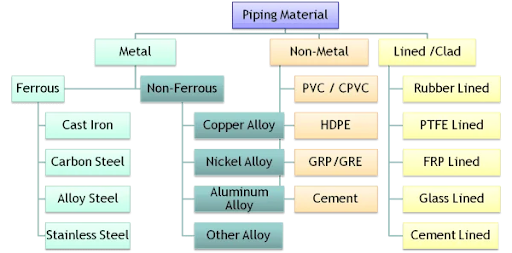
Selecting the correct pipe material is critical because different systems carry different fluids under varying temperatures and pressures.
Carbon Steel
Carbon steel pipes are widely used for:
Advantages include high strength, moderate cost, and good weldability.
Stainless Steel
Stainless steel offers excellent corrosion resistance and is commonly used for:
Grades such as 304 and 316L are frequently used in marine environments.
Copper-Nickel (Cu-Ni)
Copper-nickel alloys provide outstanding resistance to seawater corrosion and biofouling.
They are commonly installed in:
Duplex Stainless Steel
Duplex stainless steel combines high mechanical strength with excellent corrosion resistance.
It is widely used in offshore platforms, FPSOs, chemical tankers, and seawater systems.
Plastic Pipes
Modern vessels increasingly use plastic piping such as:
These materials are lightweight, corrosion-resistant, and require minimal maintenance.
Pipe wall thickness is designated by Schedule (SCH).
Common schedules include:
As the schedule number increases, wall thickness increases, allowing the pipe to withstand higher internal pressures.
Selecting the proper schedule depends on:
Marine piping systems are designed for specific pressure classes.
Typical pressure classifications include:
Pressure ratings determine the required pipe thickness, flange class, valve selection, and testing pressure.
Hydraulic systems may operate above 200 bar, while service water systems generally operate below 10 bar.
Marine piping systems employ several joining techniques depending on operating conditions.
The strongest and most reliable method.
Used for:
Used where equipment requires periodic dismantling.
Commonly installed near:
Suitable only for small-diameter, low-pressure pipes.
Generally used in instrumentation and compressed air systems.
Frequently used in hydraulic and instrumentation piping due to their leak-proof performance.
Before entering service, piping systems undergo rigorous testing.
Hydrostatic Testing
Water is used to pressurize the piping above its design pressure.
The system is inspected for:
Pneumatic Testing
Compressed air or inert gas is used where hydrostatic testing is impractical.
Extra precautions are necessary because compressed gases store significant energy.
Non-Destructive Testing (NDT)
Weld quality is verified using methods such as:
These methods detect hidden defects without damaging the pipe.
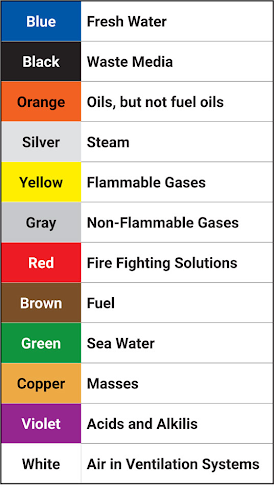
International color coding enables crew members to identify pipe contents quickly.
examples include:
Directional arrows indicate the flow direction, improving operational safety and emergency response.
Routine maintenance ensures long service life and prevents failures.
Key maintenance activities include:
The dimensions, materials, pressure ratings, testing procedures, and installation specifications for marine piping systems are all outlined in pipe standards.
Under challenging maritime conditions, they provide safety, reliability, compatibility, regulatory compliance, and operational effectiveness.
Guidelines from ASME, ASTM, ANSI, ISO, IACS, and classification societies like DNV, LR, ABS, BV, and IRS are frequently utilised.
A pipe schedule shows how thick a pipe’s walls are. Greater pressure resistance and thicker walls are correlated with higher schedule numbers.
Disclaimer :- The opinions expressed in this article belong solely to the author and may not necessarily reflect those of Merchant Navy Decoded. We cannot guarantee the accuracy of the information provided and disclaim any responsibility for it. Data and visuals used are sourced from publicly available information and may not be authenticated by any regulatory body. Reviews and comments appearing on our blogs represent the opinions of individuals and do not necessarily reflect the views of Merchant Navy Decoded. We are not responsible for any loss or damage resulting from reliance on these reviews or comments.
Reproduction, copying, sharing, or use of the article or images in any form is strictly prohibited without prior permission from both the author and Merchant Navy Decoded.
Decoded Discount Alert! up to 50% OFF
Use Coupon Code Deep50