Hi this is Team Merchant Navy Decoded !!!

Please fill the below form with your query and we will get back to you in next 12 hours.

Rest assured your data is safe with us !!!🙂

Ask Your Query

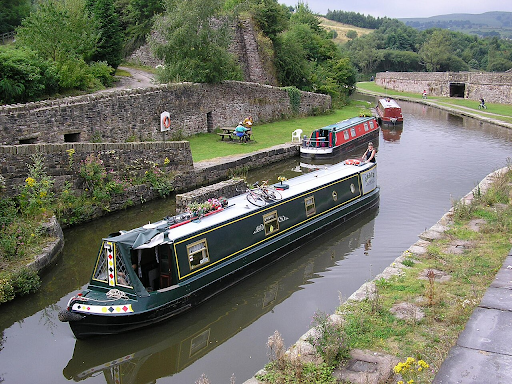
Narrow Canal Boats

When we think about marine engineering, we usually imagine large merchant ships, powerful diesel engines, turbochargers, generators and complex propulsion systems. However, the basic principles of marine engineering remain the same even when the size of the vessel is much smaller.

Narrow canal boats, particularly those operating on the inland waterways of the United Kingdom, are a good example of small-scale marine engineering. Although these vessels are smaller and operate at low speeds, they still involve important engineering systems such as propulsion, cooling, electrical systems, hull protection and planned maintenance.

For Merchant Navy cadets and aspiring marine engineers, studying narrowboats can provide a simple and practical way to understand how engineering principles are applied to a vessel.

Hull Construction and Corrosion Protection

Narrow Canal Boats

Most narrowboats are constructed from welded steel plates supported by structural frames. The construction is much smaller than that of a merchant vessel, but the basic objective remains the same: the hull must provide structural strength, maintain watertight integrity and withstand its operating environment.

Corrosion is one of the major concerns for steel vessels. Even though canal water is freshwater, corrosion can gradually reduce the thickness of the hull plating. Regular inspection and protective coatings are therefore important.

Narrowboats commonly undergo hull blacking, where the underwater portion of the hull is inspected and covered with a protective coating. A marine engineer can compare this with hull coating and inspection carried out during dry-docking of merchant ships.

Draft, Trim and Stability

Draft and trim are important for every vessel, regardless of its size.

Narrowboats operate in relatively shallow canals, so maintaining the correct draft and trim is important. The position of fuel, water, machinery and other equipment can affect the vessel’s weight distribution.

Unlike merchant ships, narrowboats generally do not use complex ballast systems. However, the engineering principle remains the same: weight must be distributed appropriately to maintain safe and efficient operation.

This is a useful concept for cadets because stability and trim are fundamental subjects in marine engineering.

Table of Contents

Propulsion Systems

Most narrowboats are powered by relatively small diesel engines, generally producing around 20–50 horsepower. Despite the difference in size, these engines require the same basic services as larger marine diesel engines:

  • Fuel supply
  • Lubrication
  • Cooling
  • Air supply
  • Exhaust
  • Starting system
  • Regular maintenance

Many narrowboat engines are based on automotive, agricultural or industrial diesel engines that have been modified for marine applications. This process is known as marinization.

marinization

The engine normally drives a reduction or reverse gearbox, which transfers power through the shaft to a fixed-pitch propeller. The basic power transmission can therefore be understood as:

Engine → Gearbox → Shaft → Propeller → Thrust

Although the equipment is smaller, the fundamental propulsion principles are similar to those found on merchant vessels.

Cooling Systems

Cooling is essential for reliable diesel-engine operation.

Many narrowboats use keel cooling, where engine coolant circulates through a closed system and transfers heat through a cooling tank or skin tank attached to the hull. The heat is then transferred to the surrounding canal water.

This arrangement can reduce the problems associated with drawing canal water directly into the cooling system because inland waterways may contain weeds, mud and other debris.

The basic principle is simple:

Engine heat → Coolant → Hull cooling surface → Surrounding water

For a cadet, this provides an easy example of the importance of maintaining an engine within its correct operating temperature.

Electrical Systems and Modern Propulsion

Narrowboats generally use relatively simple 12V or 24V DC electrical systems supported by battery banks.

Electrical power may come from engine-driven alternators, batteries, solar panels, shore power or auxiliary generators. These systems can supply lighting, pumps, navigation equipment, refrigeration and other domestic loads.

Modern narrowboats are also beginning to use lithium batteries, solar generation and hybrid propulsion systems.

Electrical Systems

For marine engineers, this is particularly interesting because the same technologies are becoming increasingly important in the wider maritime industry. Battery-electric propulsion, hybrid systems, alternative fuels, energy storage and shore power are all being investigated as part of the transition towards cleaner shipping.

Planned Maintenance

One of the most important lessons for every marine engineer is the importance of planned maintenance.

Machinery should not simply be repaired after it fails. Regular inspection and preventive maintenance can identify problems before they develop into major failures.

Typical maintenance activities on a narrowboat include:

  • Engine oil and filter replacement
  • Cooling-system inspection
  • Belt and hose checks
  • Battery inspection
  • Fuel-system checks
  • Propeller inspection
  • Stern-seal inspection
  • Corrosion monitoring
  • Electrical-system inspection

This approach is similar to the Planned Maintenance System used on merchant vessels. A good marine engineer is not only capable of repairing equipment but can also identify potential failures before they occur.

Stern Gear and Propeller Inspection

Stern Gear and Propeller Inspection

The stern arrangement requires regular attention because the propeller shaft passes through the hull. A stern gland or mechanical seal is used to control water ingress around the rotating shaft.

Narrowboats can also experience problems caused by weeds, ropes and other debris becoming trapped around the propeller. Some vessels have a weed hatch that provides access for removing such obstructions.

Stern Gear and Propeller Inspection

For a marine engineer, this is a simple example of the importance of maintaining underwater propulsion equipment.

Safety Comes First

A small vessel does not mean that safety is less important.

Fuel systems, electrical installations, ventilation, gas systems, fire protection and machinery spaces must all be maintained properly. Narrowboats operating on UK inland waterways may also be subject to the requirements of the Boat Safety Scheme, depending on the vessel and its use.

For every Merchant Navy cadet, the message is simple:

Safety is the responsibility of every marine professional, regardless of vessel size.

Career Opportunities

The knowledge gained from marine engineering can also be useful in the inland-waterway and wider marine industry.

Potential shore-based areas include:

  • Marine engine servicing
  • Boatbuilding
  • Marine electrical systems
  • Vessel surveying
  • Marina engineering
  • Hull maintenance
  • Engine marinization
  • Hybrid and electric propulsion
  • Technical inspection
  • Marine consultancy

Such roles can provide alternative career opportunities for engineers who eventually decide to move ashore.

Frequently Asked Questions (FAQs)

 A narrow canal boat is a small vessel designed to operate on narrow and shallow inland waterways, particularly canals in the United Kingdom. These boats typically use steel hulls and small diesel engines.

 Most narrowboats use small diesel engines, generally producing around 20–50 horsepower. Many are based on automotive, agricultural or industrial engines that have been modified for marine applications.

 Many narrowboats use a keel-cooling system. Engine coolant circulates through a closed circuit and transfers heat through a cooling tank or skin tank attached to the hull.

 Regular maintenance includes engine oil and filter replacement, cooling-system checks, battery inspection, fuel-system checks, propeller and stern-seal inspection, corrosion monitoring and electrical-system checks.

 Narrowboats provide a simple practical example of marine engineering principles such as propulsion, cooling, electrical load management, corrosion control, stability and planned maintenance. These fundamentals are also important when working on larger merchant vessels.

Disclaimer :- The opinions expressed in this article belong solely to the author and may not necessarily reflect those of Merchant Navy Decoded. We cannot guarantee the accuracy of the information provided and disclaim any responsibility for it. Data and visuals used are sourced from publicly available information and may not be authenticated by any regulatory body. Reviews and comments appearing on our blogs represent the opinions of individuals and do not necessarily reflect the views of Merchant Navy Decoded. We are not responsible for any loss or damage resulting from reliance on these reviews or comments.

Reproduction, copying, sharing, or use of the article or images in any form is strictly prohibited without prior permission from both the author and Merchant Navy Decoded.

DIWALI SALE

Decoded Discount Alert! up to 50% OFF

DIWALI SALE

Decoded Discount Alert! up to 50% OFF

Use Coupon Code Deep50

Days
Hours
Seconds
0
Would love your thoughts, please comment.x
()
x