Hi this is Team Merchant Navy Decoded !!!

Please fill the below form with your query and we will get back to you in next 12 hours.

Rest assured your data is safe with us !!!🙂

Ask Your Query

Marine Air Conditioning System: Working Principle, Components, and Importance on Ships

Life at sea can be challenging due to varying weather conditions, high humidity, and extreme temperatures. To ensure a comfortable living and working environment for seafarers, ships are equipped with Marine Air Conditioning (A/C) Systems. These systems not only control temperature but also regulate humidity, air quality, and ventilation within accommodation spaces, control rooms, and other enclosed areas onboard.

Marine Air Conditioning SystemA properly functioning marine air conditioning system improves crew comfort, enhances productivity, and protects sensitive electronic equipment from excessive heat and moisture.

 

What is a Marine Air Conditioning System?

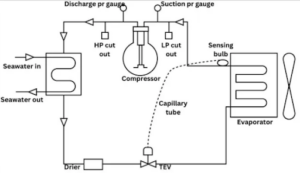
Marine Refrigeration System

A Marine Air Conditioning System is a specialized HVAC (Heating, Ventilation, and Air Conditioning) system designed for ships and offshore installations. Its primary function is to maintain a comfortable indoor climate by controlling:

  • Temperature
  • Humidity
  • Air circulation
  • Air cleanliness

Unlike land-based systems, marine air conditioning systems use seawater as a cooling medium to remove heat from the refrigerant, making them highly efficient for maritime applications.

Table of Contents

Working Principle of Marine Air Conditioning

The marine air conditioning system operates on the basic refrigeration cycle, consisting of four major processes:

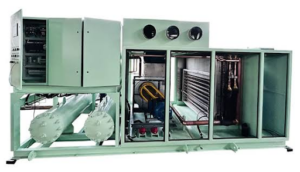
Marine Air Conditioning

1. Compression

The compressor acts as the heart of the system. It compresses low-pressure refrigerant vapor from the evaporator into a high-pressure, high-temperature vapor.

2. Condensation

The hot refrigerant enters the condenser, where seawater circulates around the condenser tubes. The seawater absorbs heat from the refrigerant, causing it to condense into a high-pressure liquid.

3. Expansion

The liquid refrigerant then passes through an Expansion Valve or Thermostatic Expansion Valve (TXV). The pressure drops suddenly, reducing the refrigerant temperature significantly.

4. Evaporation

The cold refrigerant enters the evaporator coil. Warm air from the accommodation spaces is blown over the evaporator, transferring heat to the refrigerant. The refrigerant evaporates and returns to the compressor, completing the cycle.

The cooled air is then supplied back into cabins and common areas through ducting systems.

Main Components of an Air Conditioning System

 Air Conditioning System

  1. Compressor: The compressor circulates refrigerant throughout the system and increases its pressure and temperature.
  2. Condenser: A heat exchanger where refrigerant releases heat to seawater and changes from vapor to liquid.
  3. Expansion Valve: Controls the flow of refrigerant into the evaporator while reducing its pressure.
  4. Evaporator: Absorbs heat from the cabin air and cools the surrounding space.
  5. Blower Fan: Circulates air over the evaporator coil and distributes conditioned air throughout the vessel.
  6. Seawater Pump: Draws seawater through a sea chest and circulates it through the condenser for heat rejection.
  7. Thermostat and Control System: Monitors cabin temperature and automatically controls system operation to maintain the desired temperature.

Importance of Humidity Control

Humidity control is one of the most critical functions of marine air conditioning systems. Excessive humidity can lead to:

  • Crew discomfort
  • Mold and mildew growth
  • Corrosion of equipment
  • Damage to electronic systems

An ideal marine air-conditioned environment generally maintains:

  • Temperature: 22°C – 24°C
  • Relative Humidity: 50% – 60%
  • Air Velocity: 0.15 – 0.25 m/s

These conditions provide maximum comfort and prevent moisture-related problems onboard.

Types of Marine Air Conditioning Systems

  1. Self-Contained Units: These systems have all components integrated into a single unit. They are commonly installed on smaller vessels and yachts.
  2. Split Systems: The compressor and condenser are installed separately from the evaporator unit. These systems offer quieter operation and better flexibility.
  3. Chilled Water Systems: Used on large ships and cruise vessels, chilled water systems distribute cooled water to multiple air handling units throughout the vessel.

Advantages of Marine Air Conditioning Systems

  • Provides a comfortable living environment for crew and passengers.
  • Improves air quality through filtration and ventilation.
  • Prevents excessive humidity and condensation.
  • Protects electronic and navigation equipment.
  • Enhances crew efficiency and wellbeing.
  • Maintains suitable conditions for cargo and sensitive machinery spaces.

Maintenance of Marine Air Conditioning Systems

  • Regular maintenance is essential for reliable operation. Common maintenance activities include:

    • Cleaning air filters regularly.
    • Inspecting seawater strainers and pumps.
    • Checking refrigerant levels and leaks.
    • Cleaning condenser and evaporator coils.
    • Inspecting electrical connections.
    • Monitoring system pressures and temperatures.

Neglecting maintenance can result in reduced cooling efficiency, compressor failure, and increased operating costs.

Conclusion

Marine Air Conditioning Systems play a vital role in ensuring comfort, safety, and operational efficiency onboard ships. By utilizing the refrigeration cycle and seawater cooling, these systems effectively regulate temperature and humidity in marine environments. Understanding their components, working principles, and maintenance requirements is essential for every marine engineer and seafarer. Proper operation and upkeep not only enhance crew comfort but also extend equipment life and improve overall vessel performance.

Frequently Asked Questions (FAQs)

Marine air conditioning systems maintain a comfortable temperature, control humidity, improve indoor air quality, and provide proper ventilation. They also protect electrical and electronic equipment from heat, moisture, and corrosion, ensuring safe and efficient vessel operations.

A marine air conditioning system works on the vapor compression refrigeration cycle. The compressor compresses the refrigerant, the condenser removes heat using seawater, the expansion valve lowers the refrigerant pressure, and the evaporator absorbs heat from the cabin air, providing cooled and dehumidified air throughout the ship.

The major components include the compressor, condenser, evaporator, expansion valve (TXV), blower fan, seawater pump, thermostat, and control system. Together, these components circulate refrigerant, remove heat, and maintain the desired temperature and humidity onboard.

Routine maintenance should be carried out according to the vessel’s Planned Maintenance System (PMS) and the manufacturer’s recommendations. Regular tasks include cleaning air filters, inspecting seawater strainers, checking refrigerant levels, cleaning condenser and evaporator coils, and monitoring system pressures and temperatures to ensure efficient and reliable operation.

Disclaimer :- The opinions expressed in this article belong solely to the author and may not necessarily reflect those of Merchant Navy Decoded. We cannot guarantee the accuracy of the information provided and disclaim any responsibility for it. Data and visuals used are sourced from publicly available information and may not be authenticated by any regulatory body. Reviews and comments appearing on our blogs represent the opinions of individuals and do not necessarily reflect the views of Merchant Navy Decoded. We are not responsible for any loss or damage resulting from reliance on these reviews or comments.

Reproduction, copying, sharing, or use of the article or images in any form is strictly prohibited without prior permission from both the author and Merchant Navy Decoded.

DIWALI SALE

Decoded Discount Alert! up to 50% OFF

DIWALI SALE

Decoded Discount Alert! up to 50% OFF

Use Coupon Code Deep50

Days
Hours
Seconds
0
Would love your thoughts, please comment.x
()
x