Hi this is Team Merchant Navy Decoded !!!

Please fill the below form with your query and we will get back to you in next 12 hours.

Rest assured your data is safe with us !!!🙂

Ask Your Query

Insurance vs Investment for Seafarers

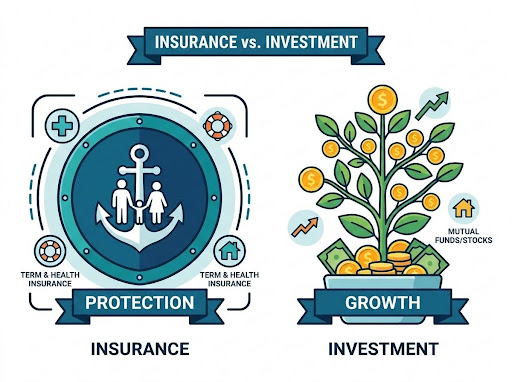
Many seafarers start earning well at a young age, but one common confusion remains: should I buy insurance or should I invest? This confusion becomes bigger when insurance is sold like an investment product. Before buying any financial product, every seafarer must understand one simple rule: insurance and investment are not the same. Insurance is mainly for protection. Investment is mainly for growth. Both are important, but both serve different purposes in your financial life.

What Is the Difference Between Insurance and Investment?

Insurance vs Investment

Insurance and investment are different tools. Insurance protects your family from financial loss if something unexpected happens. Investment helps your money grow over time for future goals. Insurance gives protection. Investment gives wealth creation. A seafarer should not buy insurance only because someone says it gives returns. Also, investment should not be treated as family protection. If these two are mixed without understanding, the result can be weak protection, average returns, confusing terms, and disappointment later.

Insurance Means Protection

Insurance works like a financial safety net. If something happens to the earning seafarer, insurance can help the family manage financial pressure. Term insurance can support the family if the main income earner is no longer there. Health insurance can help during hospitalisation. Critical illness cover can help during serious illness, depending on policy terms. Insurance does not remove emotional pain, but it can reduce financial shock. For seafarers, this protection is very important.

Investment Means Wealth Building

Wealth Building

Investment means putting money into assets that may grow over time. These assets may include mutual funds, stocks, fixed deposits, bonds, gold, property, or other suitable options. The purpose of investment is to build wealth for future goals such as retirement, children’s education, house planning, emergency corpus, or financial freedom. But investment does not replace insurance. If something unexpected happens in the early years, your investments may not be enough to protect your family.

Table of Contents

Insurance Is Not for Returns

Safety

Insurance return ke liye nahi hota, risk protection ke liye hota hai. The main job of insurance is not to make you rich. Its main job is to protect your family from financial loss. A policy that gives small protection and promises some return may look attractive, but it may not protect your family properly. Before buying any policy, ask one question: if something happens to me, will my family be financially safe? This question is more important than return.

Investment Is Not for Emergency Protection

Emergency Protection

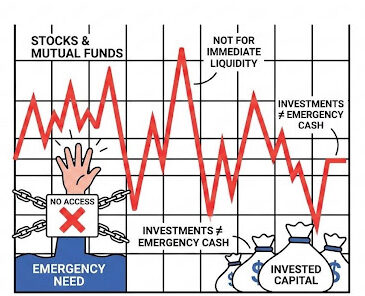
Investment helps money grow, but it is not always suitable for emergency protection. Mutual funds, stocks, property, or gold can go up or down, or may not be easy to sell quickly. AMFI clearly states that mutual fund schemes are not guaranteed or assured return products and can involve risks, including possible loss of principal. This is why investment should be planned separately from insurance and emergency money. Growth money and protection money are not the same.

Why Seafarers Need Insurance First

protection

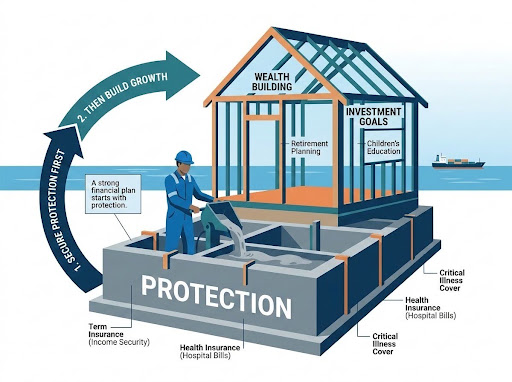
Seafarers may earn well during contract, but family expenses continue even during leave. Loans, children’s education, parents’ medical needs, household expenses, and future goals may depend on the seafarer’s income. If the earning member is not protected, the family can face serious financial stress. Insurance should come before aggressive investment. First protect your family. Then think about growth. A strong financial plan starts with protection because without protection, even good investments may not save the family during a crisis.

Why Seafarers Should Invest After Protection

Insurance

After basic protection is ready, seafarers should start investing for long-term goals. Insurance protects the family from risk. Investment builds wealth over time. Both are needed, but the order matters. If a seafarer invests without insurance, the family may remain exposed. If a seafarer buys only insurance products and never invests properly, wealth creation may become slow. The better method is simple: protect first, then invest. This gives both safety and growth.

Term Insurance for Seafarers

Term Insurance for Seafarers

Term insurance is mainly for income protection. If the family depends on the seafarer’s salary, term insurance can help provide financial support if something unfortunate happens. It is usually designed to provide a large life cover for a premium, depending on age, health, occupation, and insurer terms. Before buying, check sum assured, exclusions, premium payment term, claim process, nominee, and policy conditions. Do not buy only because someone said it is cheap. Buy because your family needs protection.

Health Insurance for Seafarers and Family

Health Insurance

Health insurance helps reduce the burden of hospital expenses. A serious illness, accident, or surgery can disturb the entire family’s financial plan. Your family should know insurer name, policy number, cashless hospital process, claim contact, and documents needed. The official policyholder portal says health insurance claims may involve documents such as claim form, discharge summary, prescriptions, bills, and reports. For seafarers, health insurance should not be ignored because medical emergencies can come suddenly.

Critical Illness Cover for Seafarers

Critical Illness Cover

Critical illness cover or rider can provide support during major illnesses such as cancer, heart attack, kidney failure, or other listed conditions, depending on policy terms. This cover is different from normal health insurance. Some policies may pay a fixed amount after diagnosis of a covered illness, subject to conditions. A seafarer should read the list of covered illnesses, waiting period, exclusions, survival period, and claim rules carefully. Do not assume every serious disease is automatically covered.

Why Insurance Cover Amount Matters

Insurance Cover

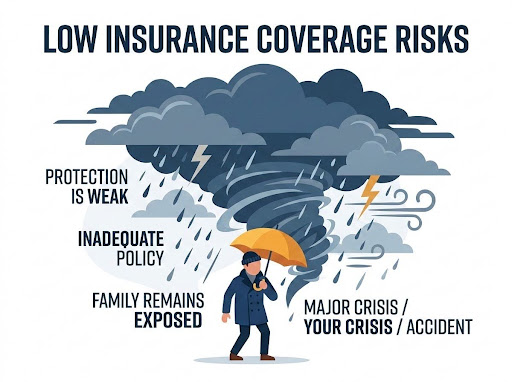
Buying insurance is not enough. The cover amount must also be enough. A very small cover may not protect the family properly. A seafarer should calculate family expenses, loans, children’s education, parents’ support, future goals, and inflation before deciding cover. If the family needs ₹1 crore protection and the policy gives only ₹10 lakh, the protection is weak. Insurance should match real responsibility. Do not buy a policy only to say that you have insurance.

Why Low Insurance Cover Can Be Risky

Low Insurance

Low insurance cover can create a false sense of safety. The seafarer may feel protected, but the family may still struggle during an emergency. For example, if there is a home loan, children’s education goal, and dependent parents, a small policy may not be enough. The purpose of insurance is to replace financial support. If the cover is too low, the family may have to break savings, sell assets, or take loans. Proper cover matters.

Why Seafarers Should Not Buy Policy Only for Returns

Return policy

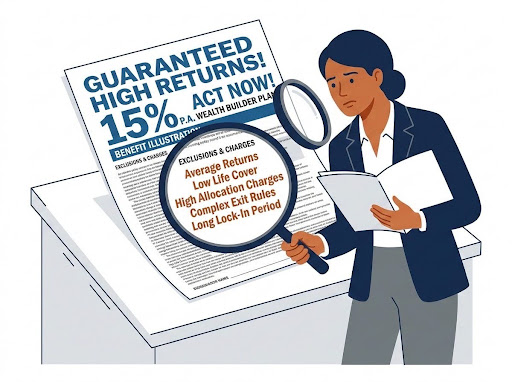
Many seafarers buy policies because someone says, “You will get returns also.” This can be a mistake if the protection is low and terms are not clear. Before buying, check whether the product is mainly for protection or investment. If the cover is small and return is average, it may not solve either goal properly. A seafarer should not buy a policy only because the maturity amount sounds attractive. Understand the real purpose first.

Why Mixing Insurance and Investment Can Create Confusion

Mixing Insurance and Investment

When insurance and investment are mixed without clarity, confusion can start. The policy may have charges, lock-in, surrender value, bonus terms, exclusions, and complicated benefit structures. Many people realise later that the cover is too low or returns are not as expected. This does not mean every combined product is bad. It means every combined product must be understood properly. A seafarer should not sign anything without knowing protection amount, return structure, exit rules, and cost.

Insurance-Cum-Investment Plans: What Seafarers Should Check

Insurance-Cum-Investment Plans

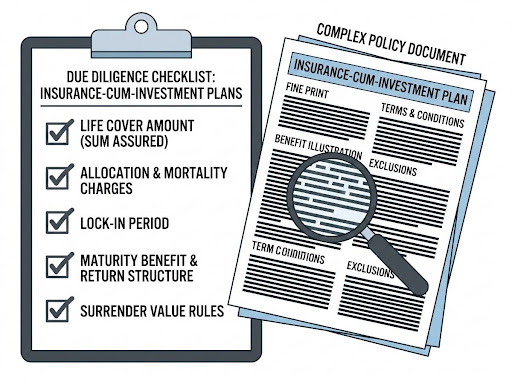
Before buying any insurance-cum-investment plan, check the life cover, premium, policy term, payment term, maturity benefit, surrender value, charges, lock-in, exclusions, and tax rules. Ask what happens if you stop paying after a few years. Ask how much your family receives if something happens early. Ask what return is guaranteed and what is only expected. Do not depend only on the agent’s words. Read the benefit illustration and policy document carefully before deciding.

What Charges and Lock-In Period Should Seafarers Check?

Charges and lock-in periods can affect your final benefit. Some products may have allocation charges, fund management charges, mortality charges, surrender charges, or other costs depending on product type. Lock-in means your money may not be freely available for some time. If a seafarer needs money during a contract gap or family emergency, locked money can create stress. Always check charges and lock-in before buying any policy or investment product. Do not decide only by premium amount.

Charges and Lock-In Period

Why Surrender Value Matters Before Buying a Policy

Surrender value means the amount you may get if you stop the policy before maturity, subject to policy terms. Many people buy policies for long periods but later cannot continue premiums. Then they realise the surrender value may be much lower than expected. For seafarers, income can have contract gaps, so premium commitment must be realistic. Before buying, ask what happens if you stop after 3, 5, or 7 years. This clarity can prevent future disappointment.

Surrender Value

Why Seafarers Should Keep Insurance and Investment Separate

A clean financial plan keeps insurance and investment separate. Buy insurance mainly for protection. Invest separately for growth. This makes the plan easier to understand and manage. Term insurance and health insurance can protect the family. Mutual funds, fixed deposits, bonds, property, gold, or other suitable assets can support growth goals. When both are separate, you can clearly see how much protection you have and how much investment you are building. Simple planning reduces confusion.

Protection and Growth

Protect First, Invest Next

The best rule is simple: protect first, invest next. First, create an emergency fund. Then arrange health insurance. Then consider term insurance if your family depends on your income. After this, start investments for long-term goals. This order matters because investing without protection can be risky. If a major emergency comes, you may be forced to break investments at the wrong time. Protection gives stability. Investment gives growth. Together, they create a stronger financial foundation.

Protect First, Invest Next

What Should Seafarers Do Before Buying Insurance?

Before buying insurance, check your family responsibility, income, loans, dependents, health condition, and long-term goals. Then decide what type of protection is needed. Check policy cover, exclusions, premium, claim process, waiting period, nominee, and insurer service. Do not buy because of pressure from relatives, agents, or friends. Ask for written details. Compare options. Understand what is covered and what is not covered. Insurance should be bought for protection, not emotion or quick promises.

Proper research complete

What Should Seafarers Check Before Investing?

Before investing, check your goal, time period, risk capacity, liquidity need, tax impact, and product type. Do not invest only because of past returns. Mutual fund returns are not guaranteed, and AMFI says historical performance is not a guarantee of future results. A seafarer should know whether the money is for emergency, short-term expense, retirement, children’s education, or wealth creation. Every goal needs a different product. Invest only after understanding risk.

Check Before Investing

Insurance vs Investment: Simple Example for Seafarers

Suppose a seafarer has dependents and earns well during contract. If he only invests ₹10,000 every month but has no insurance, the family may not be protected if something happens early. On the other hand, if he only buys return-based policies and does not invest properly, wealth creation may be slow. A better approach is to take proper protection first, then invest regularly for goals. Insurance protects the family immediately. Investment builds wealth slowly.

Insurance vs Investment

Common Mistakes Seafarers Make With Insurance and Investment

Common mistakes include buying insurance for returns, investing without insurance, ignoring health cover, buying low life cover, not updating nominees, not reading policy documents, stopping policies early, and investing only from tips. Another mistake is mixing every goal into one product. One product cannot do everything. A seafarer should not buy financial products only because someone says they are best. Best product depends on purpose, risk, family responsibility, and time period.

Common Mistakes

Simple Financial Planning Order for Seafarers

A simple order can help seafarers. First, build an emergency fund. Second, take health insurance. Third, take term insurance if your family depends on your income. Fourth, clear high-interest debt. Fifth, start investments for long-term goals. Sixth, review your plan regularly. This order gives safety and growth together. Do not jump directly into investments without protection. Do not buy random policies without understanding. A simple plan followed properly is better than a complicated plan followed blindly.

Simple Financial Planning

Final Advice on Insurance vs Investment for Seafarers

Every seafarer must remember one line: protect first, invest next. Insurance protects your family. Investment builds your wealth. One gives safety, the other gives growth. Both are important, but they should not be confused. If you buy insurance thinking only about returns, protection may be weak. If you invest without insurance, family may remain exposed. Keep insurance separate. Keep investment separate. Use both for the purpose they are meant for.

Final Advice on Insurance vs Investment

Take the Next Step

For practical financial guidance made for seafarers, explore Sailor Pro app – Built for Seafarers, an Initiative by Merchant Navy Decoded. You can also follow finance_for_seafarers on Instagram and join the WhatsApp channel Financial Management for Seafarer for more insights on insurance, savings, investments, and smart money planning at sea.


Frequently Asked Questions (FAQs)

Insurance is for protection. Investment is for wealth building. Insurance protects the family from financial loss, while investment helps money grow over time.

Seafarers should protect first and invest next. Emergency fund, health insurance, and term insurance should be planned before aggressive investing.

Insurance is mainly for protection, not returns. Some policies may offer returns, but the main purpose of insurance should be risk protection.

Term insurance can provide higher protection for family income risk. Investment policy may combine protection and returns, but terms should be checked carefully.

Health insurance helps reduce pressure from hospital bills, medical emergencies, surgeries, or treatment costs for the seafarer and family.

They can consider them only after understanding cover amount, charges, lock-in, returns, surrender value, exclusions, and policy terms.

Keeping them separate makes the plan clearer. Insurance protects family, while investments build wealth for goals.

Depending on need, seafarers may consider health insurance, term insurance, accident cover, and critical illness cover after understanding policy terms.

Seafarers can consider fixed deposits, mutual funds, bonds, gold, property, stocks, or other options based on goals, risk, and time period.

The best rule is simple: protect first, invest next. Family safety should come before chasing returns.

Disclaimer :- The opinions expressed in this article belong solely to the author and may not necessarily reflect those of Merchant Navy Decoded. We cannot guarantee the accuracy of the information provided and disclaim any responsibility for it. Data and visuals used are sourced from publicly available information and may not be authenticated by any regulatory body. Reviews and comments appearing on our blogs represent the opinions of individuals and do not necessarily reflect the views of Merchant Navy Decoded. We are not responsible for any loss or damage resulting from reliance on these reviews or comments.

Reproduction, copying, sharing, or use of the article or images in any form is strictly prohibited without prior permission from both the author and Merchant Navy Decoded.

DIWALI SALE

Decoded Discount Alert! up to 50% OFF

DIWALI SALE

Decoded Discount Alert! up to 50% OFF

Use Coupon Code Deep50

Days
Hours
Seconds
0
Would love your thoughts, please comment.x
()
x